You can tell a helmet liner needs replacing when the helmet feels looser than it used to, the padding stays flattened instead of springing back, or a bad smell survives a proper wash. Visible tears, cracking foam backing, and loose or worn cheek pads are also clear signs.
The good news is that the soft comfort liner is designed to be replaceable on many helmets. Replacing it can restore the original snug fit. Just remember it only refreshes comfort and fit — it does not repair the impact-absorbing layer underneath.
What Does It Mean When a Helmet Starts to Feel Loose?
The most common warning sign is compression set. Over months of use, the soft foam in the comfort liner slowly compresses from the pressure of your head, sweat, and heat, and it stops bouncing back to its full thickness. The helmet then sits looser, moves when you shake your head, or pushes down over your eyes more easily than before.
Do a simple check. Put the helmet on and fasten the strap as usual. Shake your head side to side and nod. If the helmet shifts noticeably, rotates when you grip the chin bar gently, or feels different from when it was new, the liner has likely packed down.
Cheek pads are often the first parts to thin out. If your cheeks no longer feel gentle pressure, or the helmet feels fine front to back but sloppy side to side, worn cheek pads are probably the reason. On many helmets, cheek pads are sold separately, so you may only need to replace those.
How Can You Check the Liner for Wear and Damage?
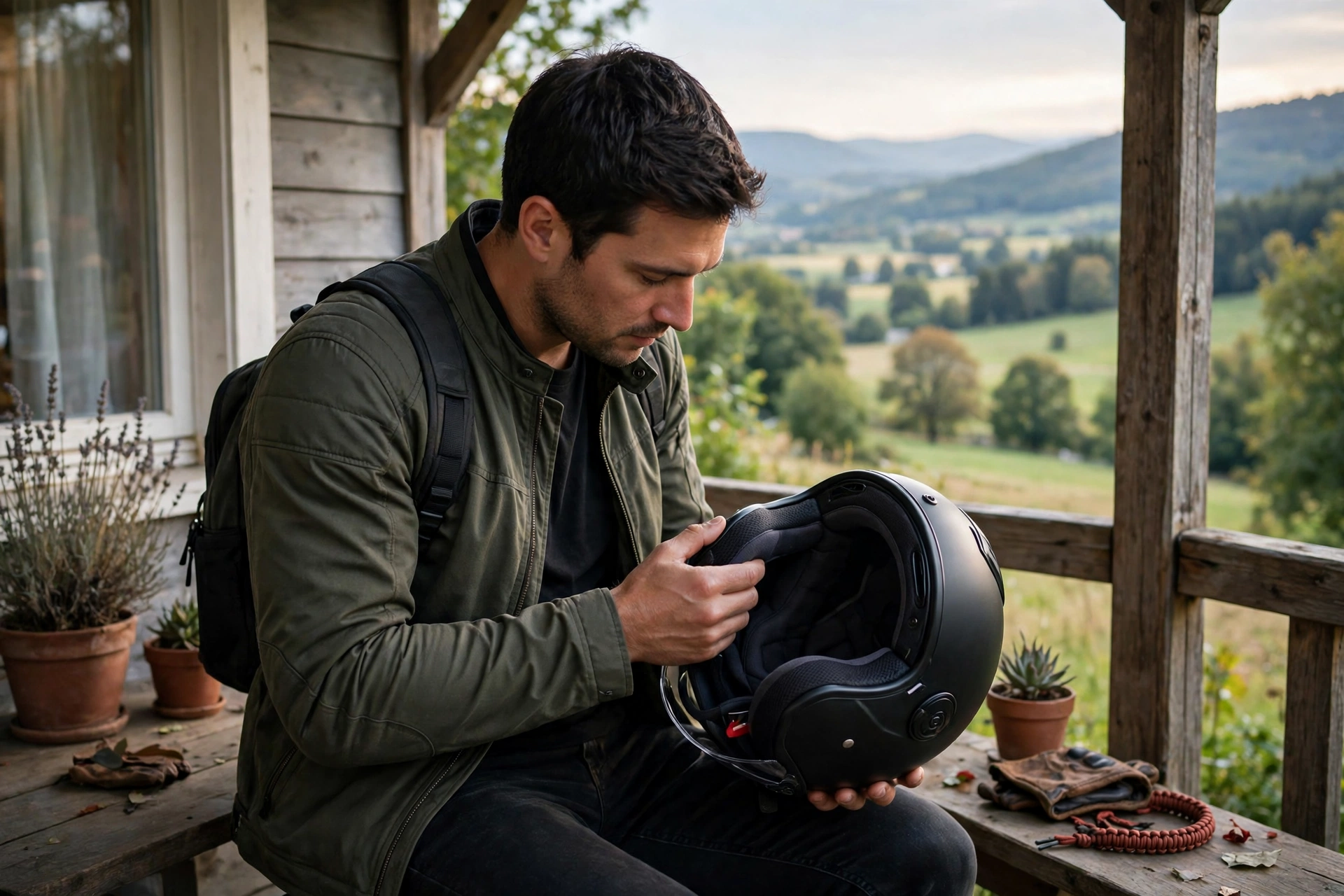
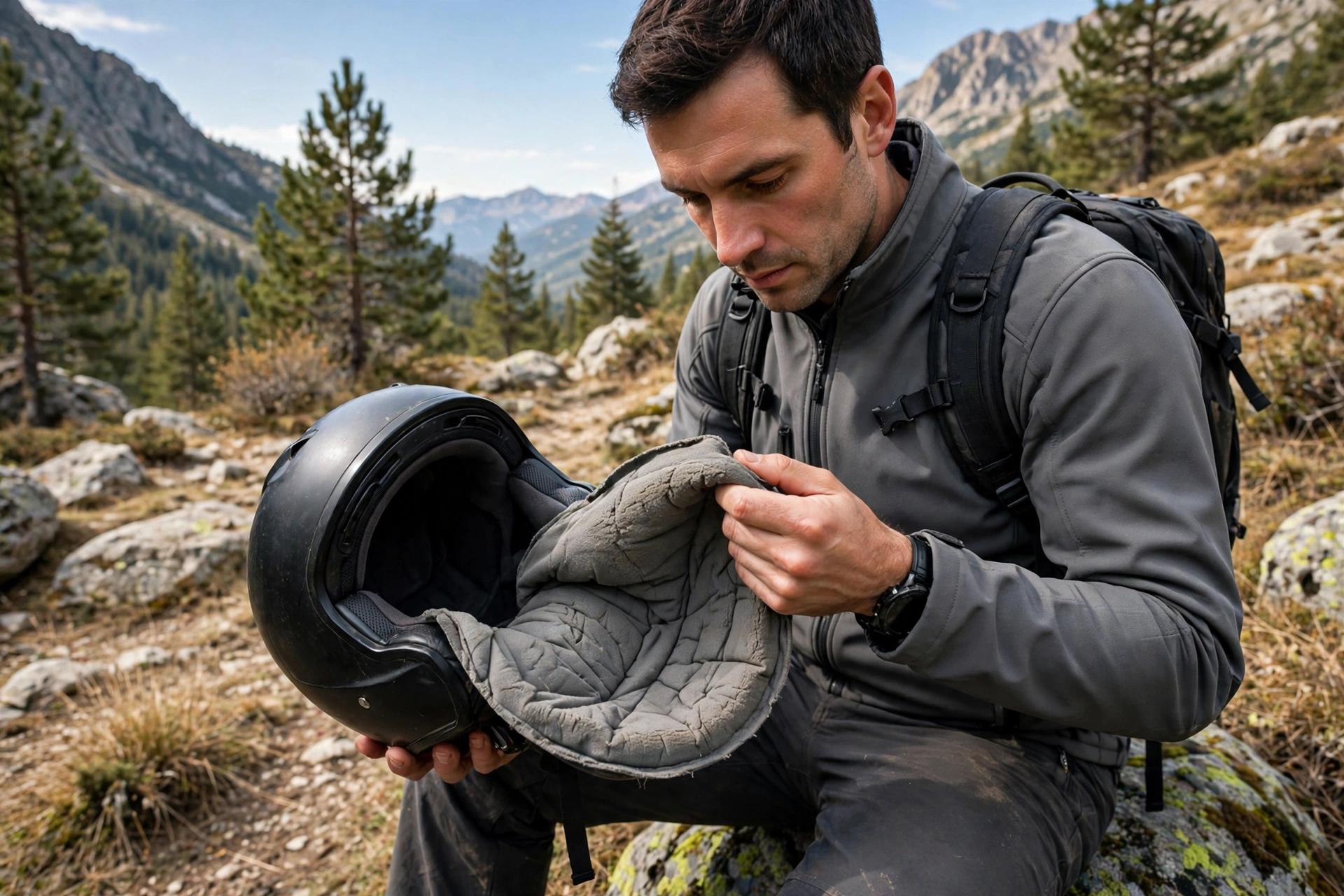
Remove the liner if your helmet allows it and look it over closely. Healthy liner foam feels springy and even. Worn liner foam feels flat, hard in spots, or crumbly, and the fabric may be torn, shiny from wear, or separating from the foam backing.
Press a thumb into the forehead padding and the crown pad. If the foam stays dented for a while instead of recovering, it has lost its resilience. Check the hook-and-loop fasteners and snaps too — if the liner no longer stays firmly in place, it can shift while riding and change the fit.
Also look at straps and the edges where the liner meets the shell. Fraying fabric alone may be cosmetic, but combined with flat foam and a loose fit, it confirms the liner has reached the end of its useful life.
Why Does a Smell That Will Not Wash Out Matter?
A persistent odor after a thorough wash is more than a nuisance. Sweat soaks deep into liner foam over time, and bacteria living in that foam produce the smell. If you wash the liner correctly with mild soap, rinse it fully, dry it completely, and the odor returns within a ride or two, the foam is saturated beyond what cleaning can fix.
Old, sweat-soaked foam also tends to be the same foam that has compressed and broken down, so smell and fit problems often arrive together. Treat a stubborn smell as a practical signal to check the fit checks above.
Before giving up on a liner, make sure it dried fully — a liner put away damp will smell regardless of age. But if a clean, fully dry liner still smells and feels flat, replacement is the honest answer, and it is usually far cheaper than a new helmet.
Keep a simple record if you ride often. Note roughly when you bought the helmet and when the fit starts to change. Riders who use a helmet daily in hot weather may find the liner noticeably thinner within a couple of seasons, while a weekend rider may go much longer. There is no universal timeline, which is exactly why these physical checks matter more than the calendar.
What Is the Difference Between the Comfort Liner and the EPS Liner?
This distinction matters for safety. The comfort liner is the soft, removable padding you see and touch. Its job is fit, comfort, and sweat management, and replacing it is normal maintenance.
Underneath it sits the EPS liner, a rigid foam layer that is bonded to the shell. EPS is the crush layer that absorbs energy in a crash by permanently deforming. EPS is not replaceable. If EPS is cracked, dented, compressed, or damaged after a drop or crash, the whole helmet must be replaced, no matter how new the comfort liner is.
Modern helmets may also add rotational impact systems above or within these layers, which is why understanding what MIPS is in a helmet helps when you inspect what is inside your own helmet. Never glue, trim, or swap in padding that was not made for your exact helmet model, because thickness changes can alter how the helmet sits and protects.
How Do You Make Sure a Replacement Liner Actually Fits?
Buy the liner made for your exact helmet model and size. Liners are shaped for a specific shell, and even helmets from the same brand can use different liner shapes across models and years. Check the helmet’s label or manual for the model name and shell size before ordering.
Note that some helmets use different liner thicknesses to fine-tune fit within one shell size. If your helmet always felt slightly loose, a thicker optional cheek pad set may be an option the maker offers. If it felt too tight when new, thinner pads may exist. Stay within the options the manufacturer lists for your model.
After installing the new liner, repeat the shake test. The helmet should feel evenly snug, with no pressure points and no shifting. If fit is still loose with a fresh, correct liner, the issue may be shell size or EPS condition, and it is time to replace the helmet itself.
Frequently Asked Questions
How often should a helmet liner be replaced?
There is no fixed schedule. Replace it when fit becomes loose, foam stays flattened, fasteners fail, or odor survives washing. Frequent riders in hot weather will wear liners out faster than occasional riders.
Can a new liner make an old helmet safe again?
No. A new comfort liner restores fit and freshness only. If the EPS crush layer is damaged or the helmet has been in a crash, the helmet must be replaced.
Can I use a liner from a different helmet model?
It is not recommended. Liners are shaped for specific models and shell sizes, and the wrong thickness or shape can create pressure points or a loose fit. Use the liner listed for your helmet.

Olivia
Writer at Helmet Today, covering helmet reviews, fit and riding safety.