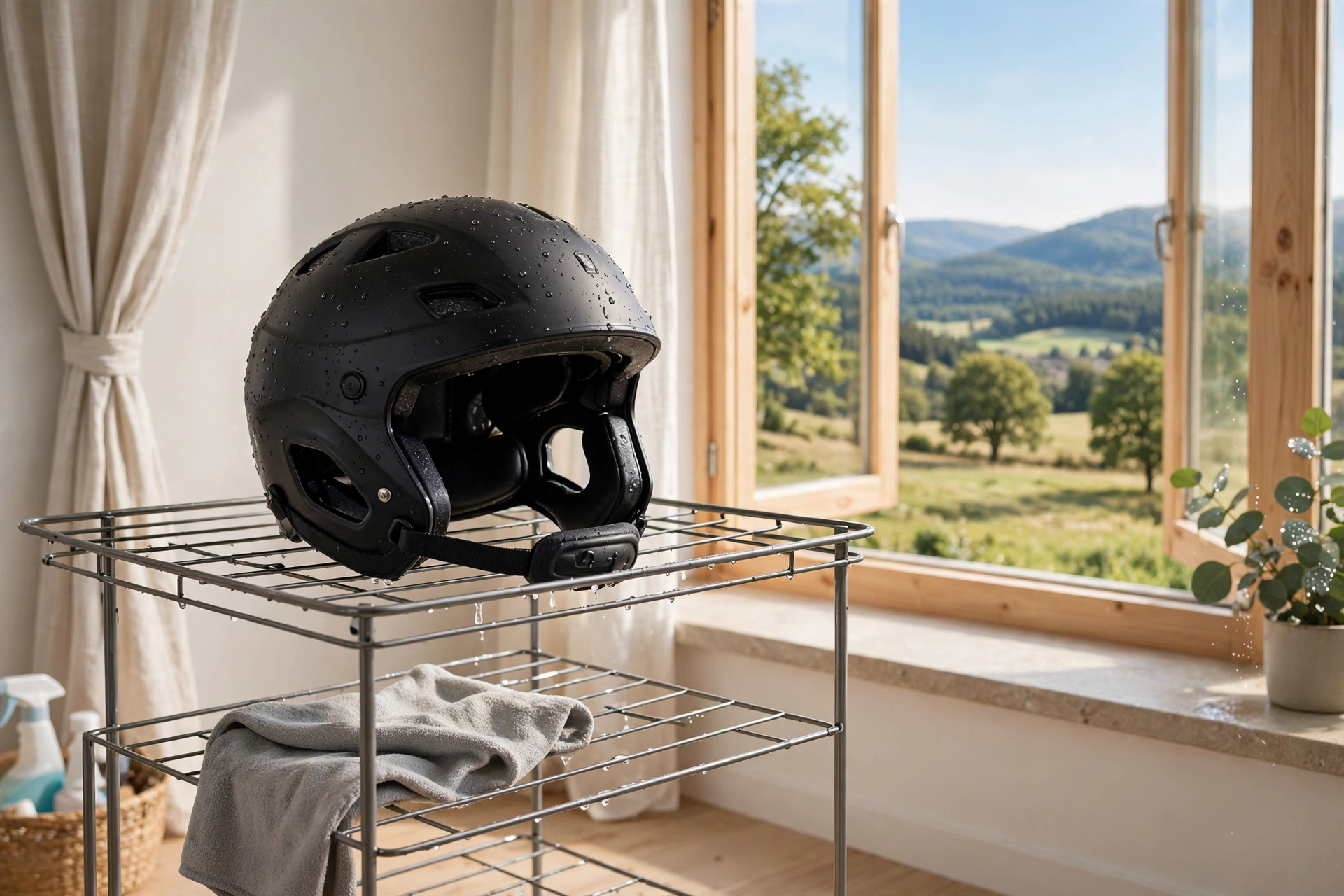
To remove odor from a sports helmet, start by washing the removable pads with mild soap and warm water, then treat any remaining smell with a baking soda soak or a helmet-safe deodorizer spray. Dry everything completely in moving air before you use or store the helmet.
Helmet odor comes from sweat and bacteria soaking into the padding, so surface wipes alone rarely fix it. A full wash, proper drying, and better storage habits will clear most smells and stop them coming back as quickly.
Why Does a Sports Helmet Start to Smell?
Your head sweats a lot during sport, and helmet padding is designed to absorb that moisture and hold the helmet snugly. Over time, sweat, skin oils, and bacteria build up deep in the foam and fabric. The bacteria are what actually produce the sour smell, especially in warm, damp padding that never fully dries between games or rides.
The smell is usually worst in the crown pad, forehead pad, and cheek or ear pads, because those areas press directly against the skin and absorb the most sweat. Helmets used several times a week, shared between players, or stored in a closed gear bag will develop odor much faster.
Understanding the source matters because it tells you the fix: you need to clean where the bacteria live — inside the padding — and then change the conditions that let them grow, which are moisture and poor airflow.
How Should You Wash Removable Helmet Pads?
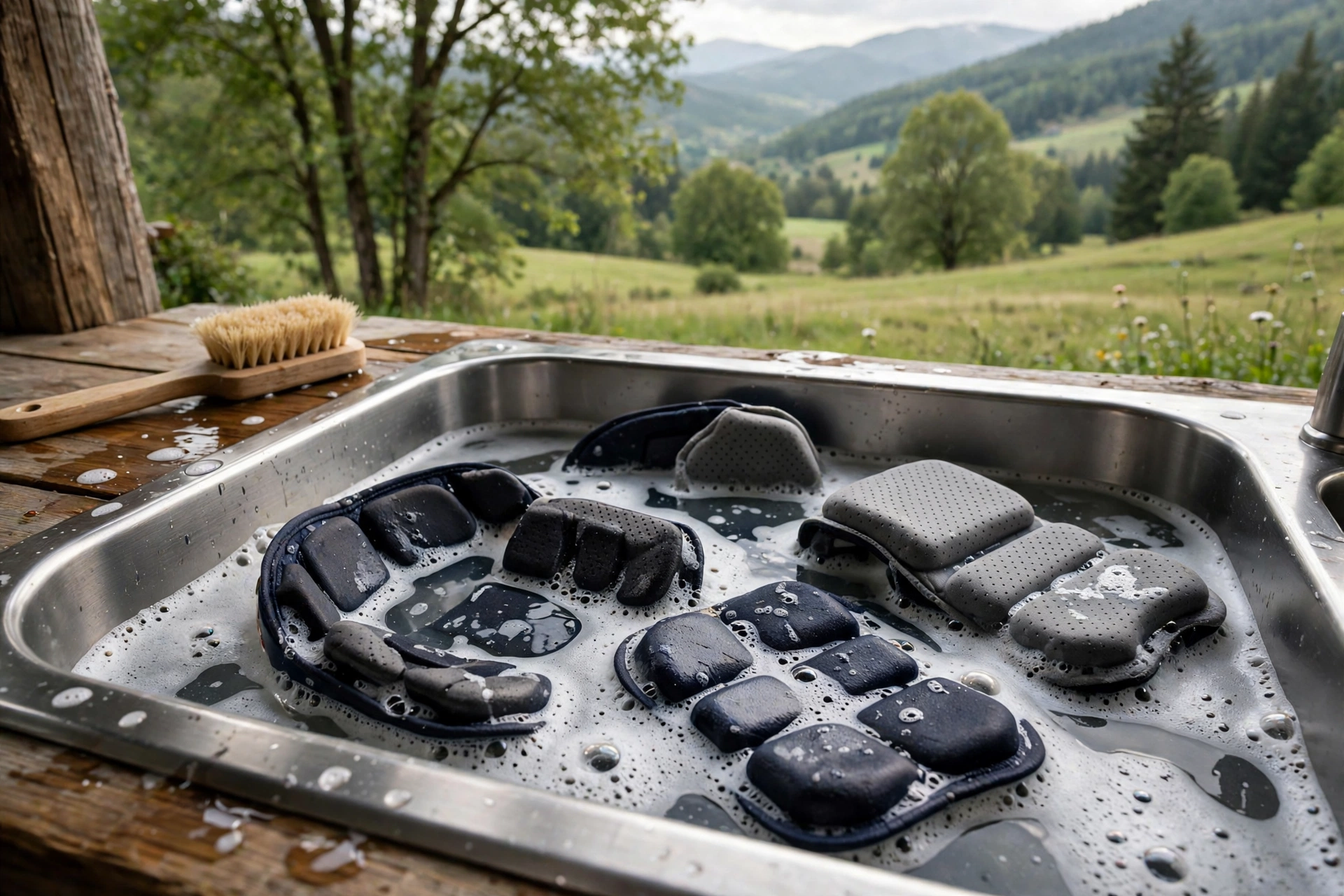
If your helmet has removable pads or a removable liner, take them out first. This applies to many football, hockey, cycling, equestrian, and motorcycle helmets. Fill a sink or bucket with warm water and a small amount of mild soap, gentle laundry detergent, or baby shampoo. Submerge the pads and squeeze them gently many times, like a sponge, to push soapy water through the foam.
You will often see the water turn gray or brown at first — that is old sweat and dirt leaving the padding. Drain, refill with clean water, and repeat until the water stays mostly clear. Then rinse thoroughly, because leftover soap can irritate skin and attract more dirt.
For pads that cannot be removed, wipe and sponge the inside carefully with the same mild soapy solution, working the moisture in and out with a soft cloth. Avoid soaking a whole helmet unless the manufacturer says it is allowed, since some glues, electronics, and safety layers should not stay wet. Learning how layered systems such as MIPS in helmets sit inside the shell is a good reminder to clean around internal parts rather than forcing them apart.
How Do Baking Soda and Deodorizer Sprays Help?
Baking soda is a simple odor neutralizer. For removable pads, you can add a spoonful to the wash water, or sprinkle dry baking soda over dry pads, leave it for several hours or overnight, then shake and brush it all out. It absorbs odor rather than covering it with perfume.
Helmet-safe deodorizer sprays are another option. Look for products made for sports gear or helmets, spray the inside lightly after washing and drying, and let the helmet air out. Antibacterial gear sprays can slow the smell returning, but they work best on an already clean helmet — spraying a dirty helmet only masks the problem for a short time.
Some players also use a mild vinegar and water mix as a rinse for pads, followed by a plain water rinse. Whatever method you choose, rinse or air the helmet well so no residue stays against your skin, and never use a strong-smelling product right before a game if scents bother you.
If the padding is glued in rather than removable, patience matters more than force. Work in sections, sponge the soapy water in, blot it out with a clean damp cloth several times, and repeat on the smelliest areas such as the forehead and crown. Two gentle passes clean better than one aggressive soak, and they protect the padding and shell while you do it.
What Should You Avoid When Deodorizing a Helmet?
Avoid bleach and harsh chemicals. Bleach, strong solvents, and aggressive cleaners can break down foam, weaken fabrics and fasteners, damage the shell finish, and possibly harm the impact-absorbing materials. If a product is not meant for sports gear or helmets, do not use it inside one.
Avoid heat when drying. Do not use a hot hair dryer, clothes dryer, radiator, or direct harsh sun for long periods. High heat can warp foam and dry out materials. Instead, press pads gently in a clean towel to remove water, then dry everything in front of a fan or in a shaded, ventilated spot until fully dry — this can take a full day for thick pads.
Also avoid putting a damp helmet straight into a closed bag or locker. That single habit causes more odor than almost anything else, because trapped moisture lets bacteria grow between every use.
How Can You Prevent Helmet Odor From Coming Back?
Dry the helmet after every use. Leave it open in moving air, ideally on a rack or hook, and take it out of your gear bag when you get home. A small fan or a helmet dryer made for sports gear can speed this up after heavy sessions.
Wear a clean skull cap, sweatband, or thin liner under the helmet when your sport allows it. These catch much of the sweat before it reaches the pads and are far easier to wash after every game. Rotating between two sets of removable pads, if your helmet maker offers spares, also helps because one set can dry fully while you use the other.
Finally, wash the pads regularly instead of waiting for a strong smell. A quick wash every few weeks during the season, or sooner in hot weather, keeps bacteria from building deep into the foam where cleaning becomes much harder.
Frequently Asked Questions
Can I put helmet pads in the washing machine?
Some makers allow it on a gentle cycle in a mesh bag, but hand washing is safer for foam and fasteners. Check the helmet manual first, and never use hot water or a hot dryer.
How long does it take to get rid of helmet smell?
A thorough wash plus full drying usually removes most odor in one day. Deeply saturated pads may need a second wash or a baking soda treatment overnight.
Is it safe to use air freshener inside a helmet?
Ordinary air fresheners only mask smell and can leave irritating residue. Use a spray made for helmets or sports gear instead, and only after the pads have been washed and dried.

Olivia
Writer at Helmet Today, covering helmet reviews, fit and riding safety.