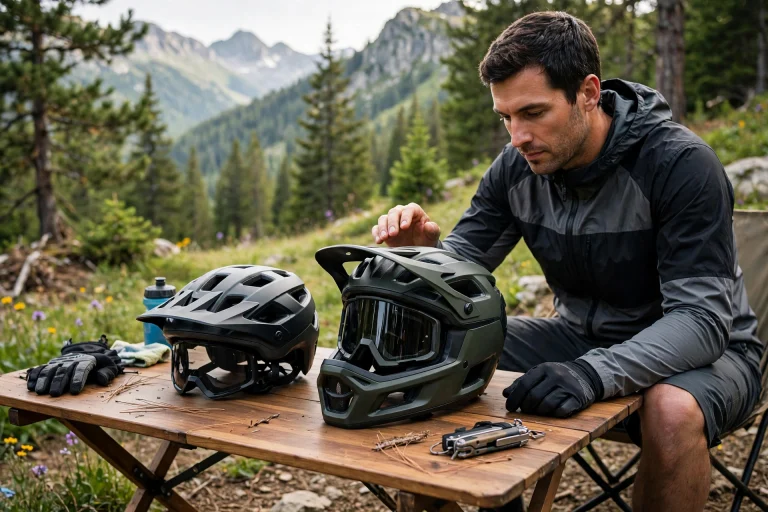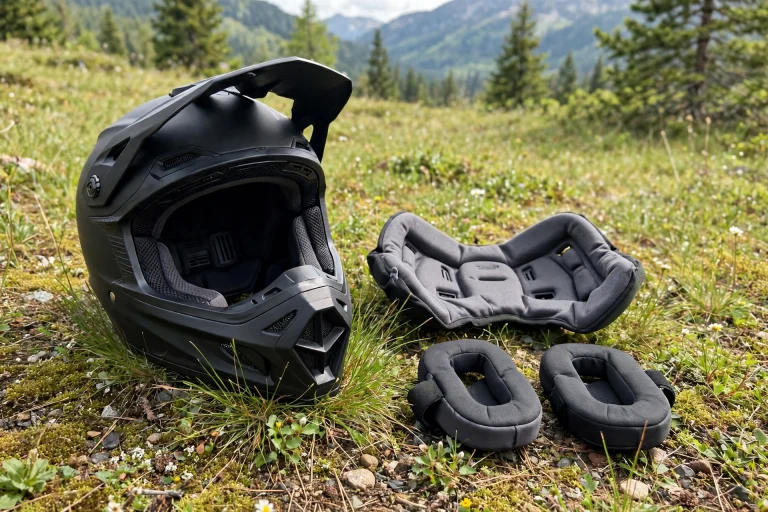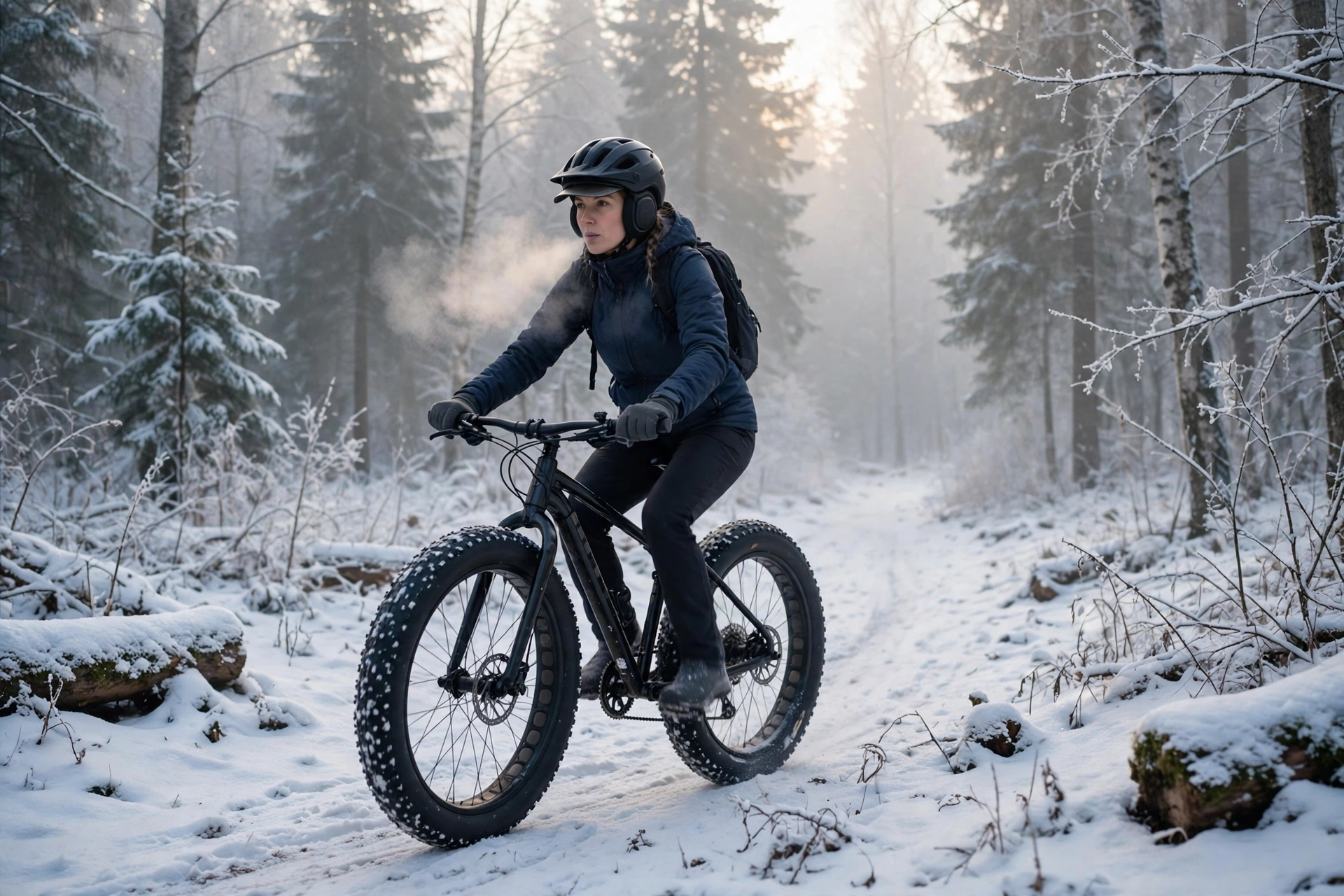
A winter cycling helmet is a bike helmet built for cold weather: it has fewer or closable vents, more coverage over the ears and back of the head, and room to fit over a thin balaclava or liner. Fat bike riders and winter commuters do not strictly need a separate winter helmet — a standard certified helmet plus the right layers works — but a winter-specific design is warmer, quieter, and far more comfortable on freezing rides.
Cold changes what a helmet has to do. Wind chill at riding speed turns open vents into air conditioning you never asked for, ears and foreheads go numb, and goggles enter the picture. Here is how winter helmets differ, who actually needs one, and how to set one up.
How Is a Winter Cycling Helmet Different From a Regular Bike Helmet?
The differences are about heat management. A summer road helmet is mostly vents; a winter helmet reduces vent count, makes the remaining vents closable, and extends the shell lower over the ears and the back of the head. Many winter models add a removable insulated liner or ear pads, a goggle strap holder at the back, and a fit system designed to work over a thin layer.
Underneath, it is the same safety product: a certified EPS foam liner inside a shell. In the US it still must meet the CPSC bicycle helmet standard. Winter features change comfort, not the certification — so never trade a certified winter helmet for an uncertified “warm” fashion helmet or a ski helmet that lacks a cycling certification for road use.
One more difference riders notice immediately is noise. Fewer open vents and better ear coverage mean much less wind roar, which makes winter rides feel calmer and reduces the hearing fatigue that builds up over a long, cold commute.
Can You Just Wear a Balaclava Under a Regular Helmet Instead?
Yes — and for many riders this is the practical answer. A thin balaclava or a cycling-specific winter liner under your normal helmet blocks wind, covers ears and neck, and costs far less than a second helmet. If you ride a handful of cold days a year, layer up and keep your regular helmet.
The catch is fit. Anything under the helmet changes how it sits, so after adding a balaclava you must re-check the fit: the helmet should still sit level about two finger-widths above your eyebrows, the fit dial should snug without maxing out, and the shake test should still pass — the helmet moving with your head, not around it. If the layer makes the helmet perch high or wobble, the shell is too small for layered use.
Regular deep-winter riders — daily commuters in northern states, fat bikers out for hours — usually cross the line where a dedicated winter helmet earns its place: no fit compromises, no frozen vents, and warmth that does not depend on a layer staying perfectly in place.
What Should Fat Bike Riders Look For in a Winter Helmet?
Fat biking is slow-speed, high-effort riding, often on snowmobile trails and frozen lakes, and it produces a specific wish list. First, warmth with some venting: you generate a lot of heat climbing at walking pace, then freeze on the descent, so closable vents you can work with gloves on matter more than total vent count.
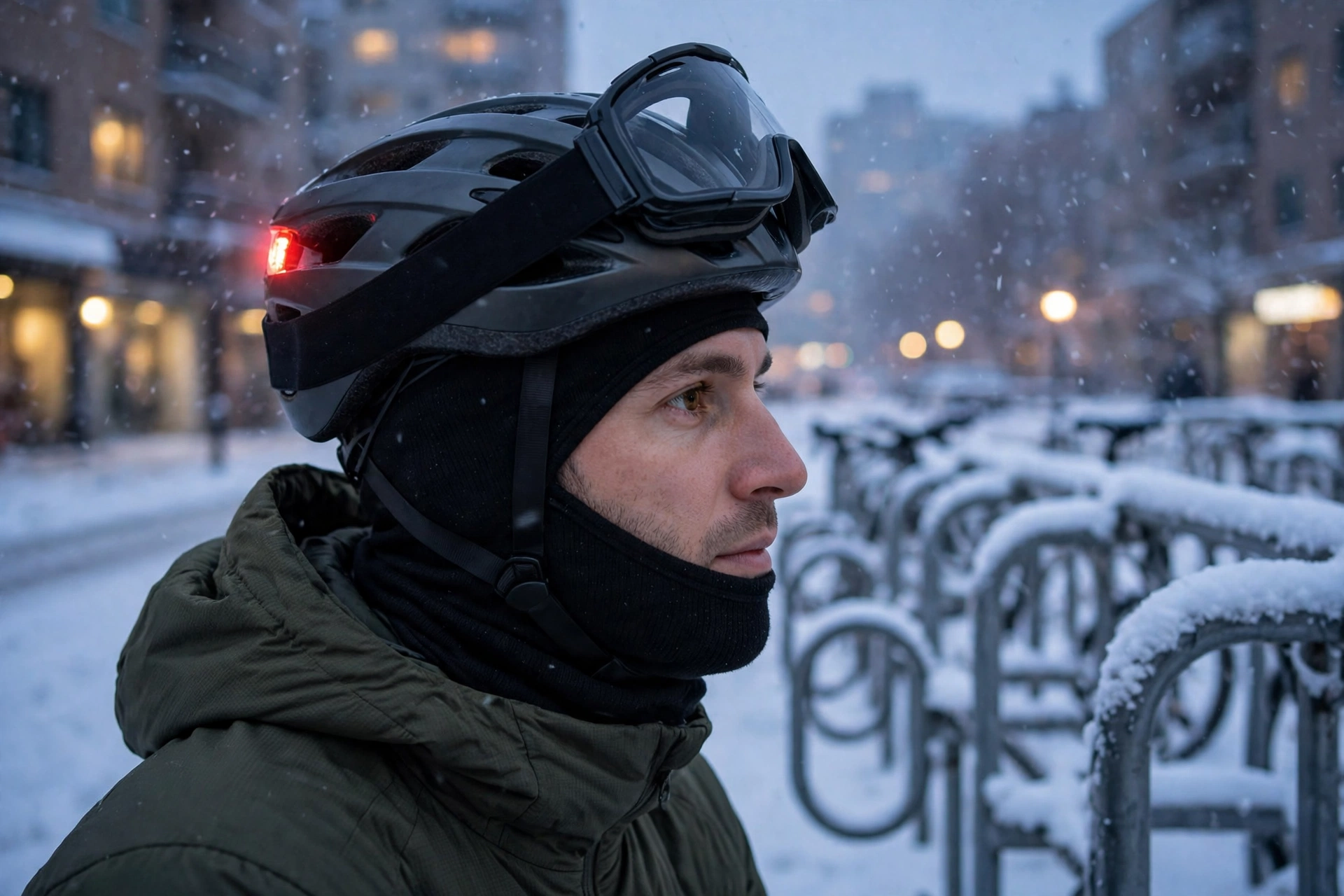
Second, goggle compatibility. Many fat bikers ride in ski goggles on cold, bright, or windy days. Look for a shell shape that meets the goggle frame without a forehead gap (the dreaded “gaper gap” that lets wind blast your forehead) and a rear goggle strap retainer so the strap stays put. A small brim helps shed snow and low sun glare.
Third, coverage and retention in deep cold: ear pads that stay flexible rather than stiffening, a dial that works with liner gloves, and straps that do not freeze into awkward shapes. Some riders also choose helmets with a rotational protection layer — covered in our guide to what MIPS is for helmets — since icy falls tend to be angled, sliding impacts.
What Do Winter Commuters Need Differently?
Commuters ride in the dark, in traffic, often in slush and freezing rain, so their priorities shift toward visibility and practicality. Reflective shell details and a rear light mount (or an integrated rechargeable rear light) are genuinely useful on dawn and dusk rides, though your bike’s own lights remain the primary setup.
A short visor earns its keep by keeping sleet and low sun off your glasses. Fewer vents mean less freezing rain reaching your head. And because a commuter helmet lives a hard daily life — lockers, hooks, being carried into the office — a slightly sturdier urban-style shell handles the routine better than a featherweight road lid.
Commuters should also think about the whole trip: if part of your journey is a train or bus, a helmet that fits in your bag or locks through a vent to the bike saves daily friction, and daily friction is what decides whether a helmet gets worn in February.
How Should a Winter Helmet Fit Over Layers?
Fit it exactly as you will ride in it — with your usual balaclava or liner on. Measure and size for that combination. The helmet should feel evenly snug with no forehead hot spot, sit level, and pass the shake test with the chin strap fastened: one or two fingers under the strap, side straps in a V under the ears.
Never solve a tight layered fit by removing the helmet’s own pads or loosening the strap until it feels easy. And never size up so far that the helmet is loose without the layer — on the first mild day you ride without the balaclava, you would be wearing an oversized helmet. If one helmet must cover both summer and winter, choose the fit for your bare head and accept a thin liner only, or keep two helmets and let each do its season properly.
Frequently Asked Questions
Is a ski helmet safe to use for winter cycling?
It depends on certification. Some helmets are dual-certified for skiing and cycling; a ski-only helmet (ASTM F2040) is not certified for cycling impacts on the road. For commuting, use a CPSC-certified cycling helmet. For off-road fat biking at low speeds, many riders accept a ski helmet, but a dual-certified model is the safer choice.
How cold is too cold for a regular vented helmet?
There is no fixed temperature — it depends on wind, ride length, and your layers. As a rough guide, below about 25°F (-4°C), most riders find an open-vent road helmet painfully cold even with a liner, and a winter helmet or a helmet cover becomes worthwhile.
Can you add a cover to a normal helmet for winter?
Yes. A helmet rain/wind cover blocks the vents and adds a surprising amount of warmth, and it is the cheapest winter upgrade there is. Combined with a balaclava, it gets a regular helmet through most winters — just confirm the cover does not interfere with straps or lights.

Olivia
Writer at Helmet Today, covering helmet reviews, fit and riding safety.