

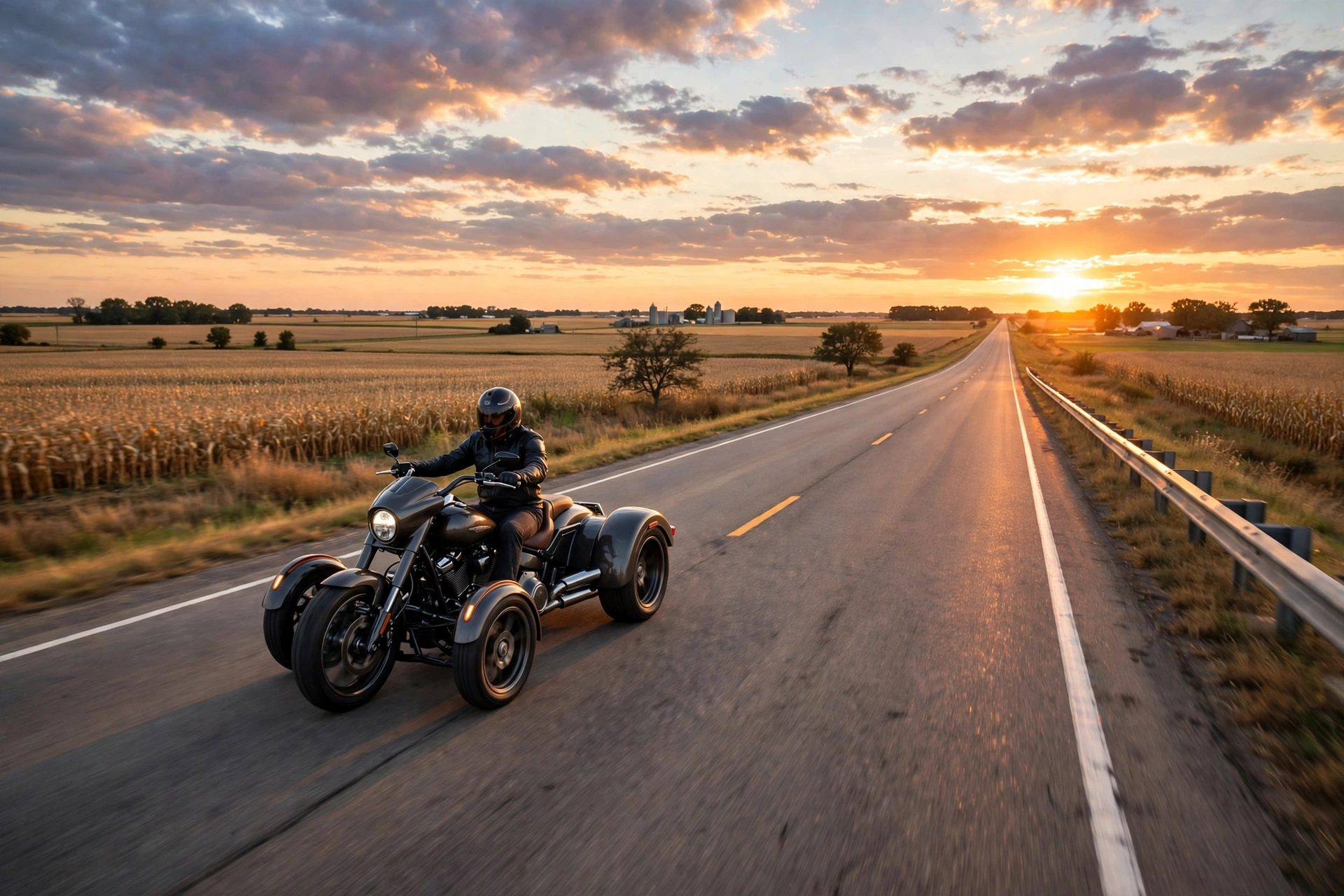
No — Illinois has no helmet law for three-wheeled motorcycles, or for any motorcycle. Illinois is one of only a few states with no motorcycle helmet requirement at all, so trike operators and passengers of any age may legally ride without a helmet. The one piece of gear Illinois does require is eye protection.
That makes Illinois very different from most of the country. Whether you ride a trike, a conventional two-wheeler, or an enclosed three-wheeled autocycle, the helmet decision is yours alone under Illinois law. Below we explain what Illinois does require, how three-wheelers are treated, and the border trap that catches Illinois riders who cross into Missouri.
Does Illinois Treat Three-Wheeled Motorcycles Differently From Two-Wheelers?
For helmet purposes, no. Illinois simply has no motorcycle helmet requirement to apply. There is no age cutoff, no experience condition, and no insurance condition — the triggers that create helmet rules in many other states never arise here because the requirement itself does not exist.
This applies equally to operators and passengers. An adult carrying a passenger on a trike faces no state helmet rule for either person, and a younger passenger is treated the same as on a two-wheeled motorcycle: Illinois law does not step in. Parents should remember, though, that the absence of a law is not the same as an absence of risk, which we return to below.
What Illinois does regulate is the machine and the rider’s license. Your three-wheeler must be properly titled and registered for road use, and the licensing rules depend on how the vehicle is classified — which matters more for paperwork than for anything you wear on your head.
One more Illinois detail worth knowing: the lack of a helmet law also means there is no helmet standard to meet if you do choose to wear one. In states with helmet laws, the helmet generally has to be a certified motorcycle helmet; in Illinois, nothing in state law grades your choice. Riders who wear one anyway should still pick a proper DOT-certified helmet, because the certification is what tells you the helmet was actually built and tested to protect your head.
What Eye Protection Does Illinois Require on a Trike?
Illinois does require motorcycle riders to protect their eyes. Operators must wear glasses, goggles, or a protective shield unless the motorcycle is equipped with a windshield. This rule applies on three-wheeled motorcycles just as it does on two-wheelers, and it applies at every age.
In practice, that means an open trike without a windshield leaves you needing proper eyewear even though a helmet is optional. Ordinary fashion sunglasses are a weak choice on the road; purpose-made riding glasses or goggles seal better against wind, dust, and gravel thrown up by traffic. Riding without the required eye protection can lead to a citation, and fines vary by court.
If your trike has a fairing and a windshield, the eye protection requirement is generally satisfied by the screen itself. Many trike riders still wear eye protection anyway, because a windshield does little against side winds and road debris on open highways.
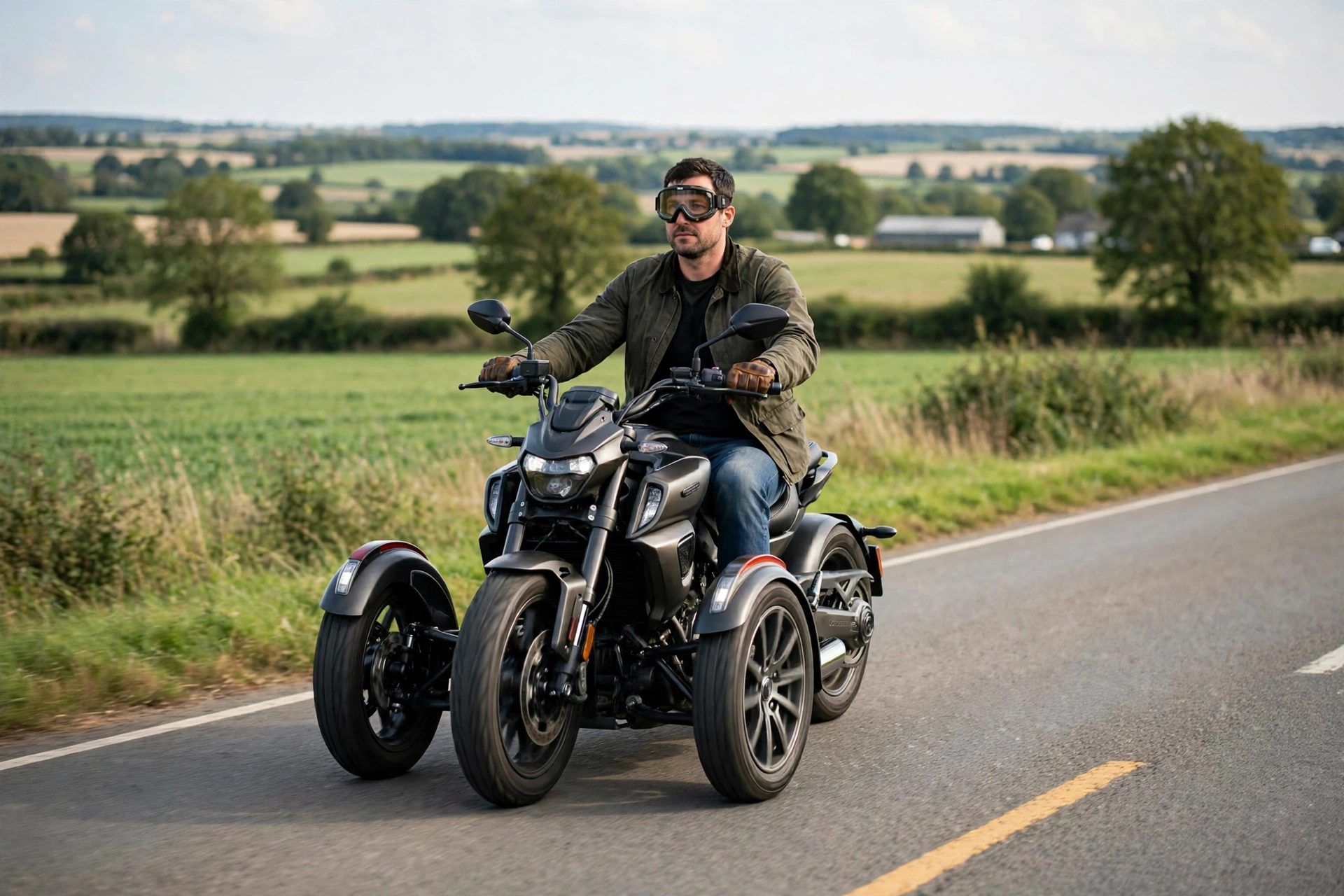
What About Enclosed Autocycles With Steering Wheels and Seat Belts?
Some three-wheelers are not traditional trikes. Enclosed or semi-enclosed autocycles with car-style controls — a steering wheel, pedals, and seat belts — are classified differently in Illinois from open motorcycle trikes. Depending on the vehicle, a qualifying autocycle may be driven on a standard driver’s license rather than a motorcycle endorsement.
For helmets, though, the classification changes nothing: Illinois requires no helmet in either type of vehicle. Where classification does matter is seat belts and licensing. If your autocycle is equipped with seat belts, wear them, and check the paperwork that came with the vehicle if you are unsure which category it falls into.
Riders comparing states will find this is not universal. You can see how each state handles these questions in our guide to helmet laws by state, because three-wheeler and autocycle treatment is one of the least consistent areas of US motorcycle law.
What Happens When You Ride Your Trike Into Another State?
Helmet law follows the state you are riding in, not the state on your license plate. Iowa, to the west, also has no motorcycle helmet law, so Illinois trike riders crossing the Mississippi into Iowa enjoy the same helmet freedom — though Iowa has its own equipment and licensing rules to respect.
Missouri is the trap. Missouri repealed its universal helmet law but kept an age- and insurance-based rule: younger riders must wear helmets, and older riders may go without only if they carry qualifying health insurance coverage. An Illinois rider used to total freedom can be stopped quickly in Missouri if they fall into a covered group and have no helmet on board.
The practical habit for touring riders is simple: carry a helmet on any multi-state trip. The strictest state on your route sets your real requirement, and a helmet in the luggage is cheaper than a citation or a forced purchase at a border-town shop.
Should You Wear a Helmet on a Trike Even Though Illinois Doesn’t Require One?
That is a personal call, but it is worth making with clear eyes. Three wheels add low-speed stability, yet trikes can still be struck by other vehicles, can roll in extreme maneuvers, and can throw a rider in a collision. Head injuries remain the most serious risk in motorcycle crashes of every configuration.
Many Illinois trike riders wear a helmet for reasons unrelated to law: weather protection, reduced wind and noise on long rides, and protection in the one crash that is usually caused by another driver. Others choose not to, which Illinois law fully permits.
There is also a financial angle riders rarely consider until it is too late. If you are hurt in a crash while riding without a helmet, the other driver’s insurer may argue that you contributed to your own injuries by going bareheaded, and use that argument to fight over medical costs. That plays out under general negligence and insurance rules rather than helmet law, but it is a real-world consequence of the choice Illinois leaves to you.
Whatever you decide, do not skip the required eye protection, keep your passenger’s safety in the conversation, and re-check the rules before any ride that crosses a state line.
Frequently Asked Questions
Are helmets required on a trike in Illinois?
No. Illinois has no motorcycle helmet law, and that includes three-wheeled motorcycles and their passengers, at any age.
Do you need a motorcycle license for a three-wheeler in Illinois?
It depends on classification. Traditional trikes generally fall under motorcycle licensing, while qualifying autocycles may be driven on a regular driver’s license. Check your vehicle’s classification.
Can Illinois trike riders be ticketed for anything gear-related?
Yes — the eye protection rule. Riding without glasses, goggles, or a shield on a motorcycle without a windshield can lead to a citation, with fines varying by court.

Olivia
Writer at Helmet Today, covering helmet reviews, fit and riding safety.


