

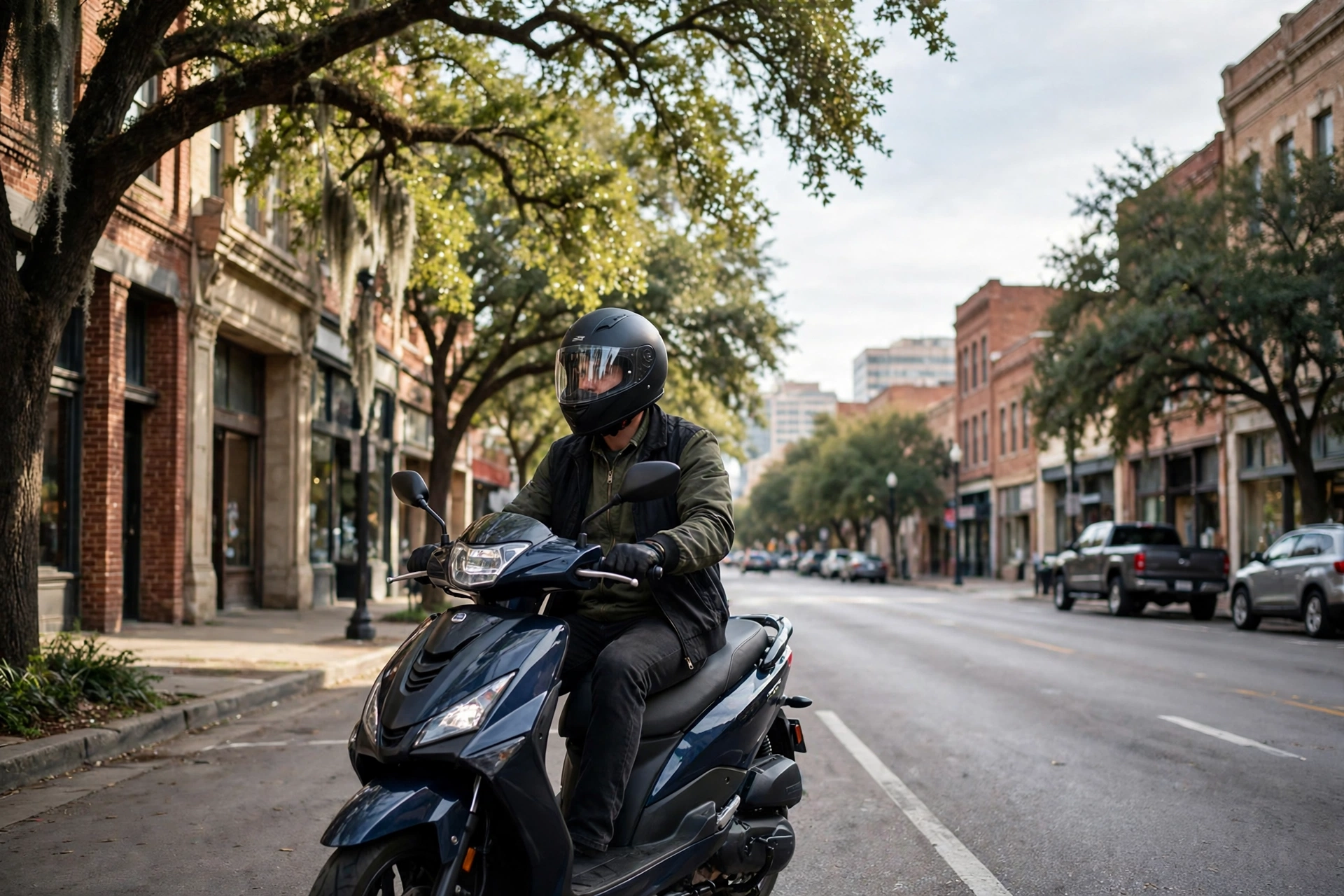
In Texas, whether you must wear a helmet on a motorized scooter depends on what kind of scooter it is. Mopeds and motor-driven cycles are treated as motorcycle-class vehicles, so the state motorcycle helmet rules apply — riders and passengers under 21 must wear a helmet. Low-powered stand-up e-scooters (what Texas law calls “motor-assisted scooters”) are regulated differently: there is no statewide helmet mandate for adults on those, and helmet rules are largely set city by city and by rental companies.
The word “scooter” covers machines with very different legal treatment in Texas, and mixing them up is the most common source of confusion. Here is how to work out which rules apply to the vehicle in front of you.
Which Scooters Follow Texas Motorcycle Helmet Rules?
If your scooter is a moped or a motor-driven cycle — a sit-down machine with an engine or motor, typically titled and registered, and ridden with a motorcycle license or moped license — Texas treats it under the motorcycle framework. That means the state motorcycle helmet law applies in full.
Under that law, every operator and passenger under 21 must wear a helmet. Riders 21 and over fall under the adult rules for motorcycles, which involve conditions such as training or insurance coverage rather than a blanket requirement. The key point for scooter riders is simple: if the vehicle is motorcycle-class, do not assume the helmet rules are lighter just because the machine is smaller.
What About Stand-Up E-Scooters and Rental Scooters?
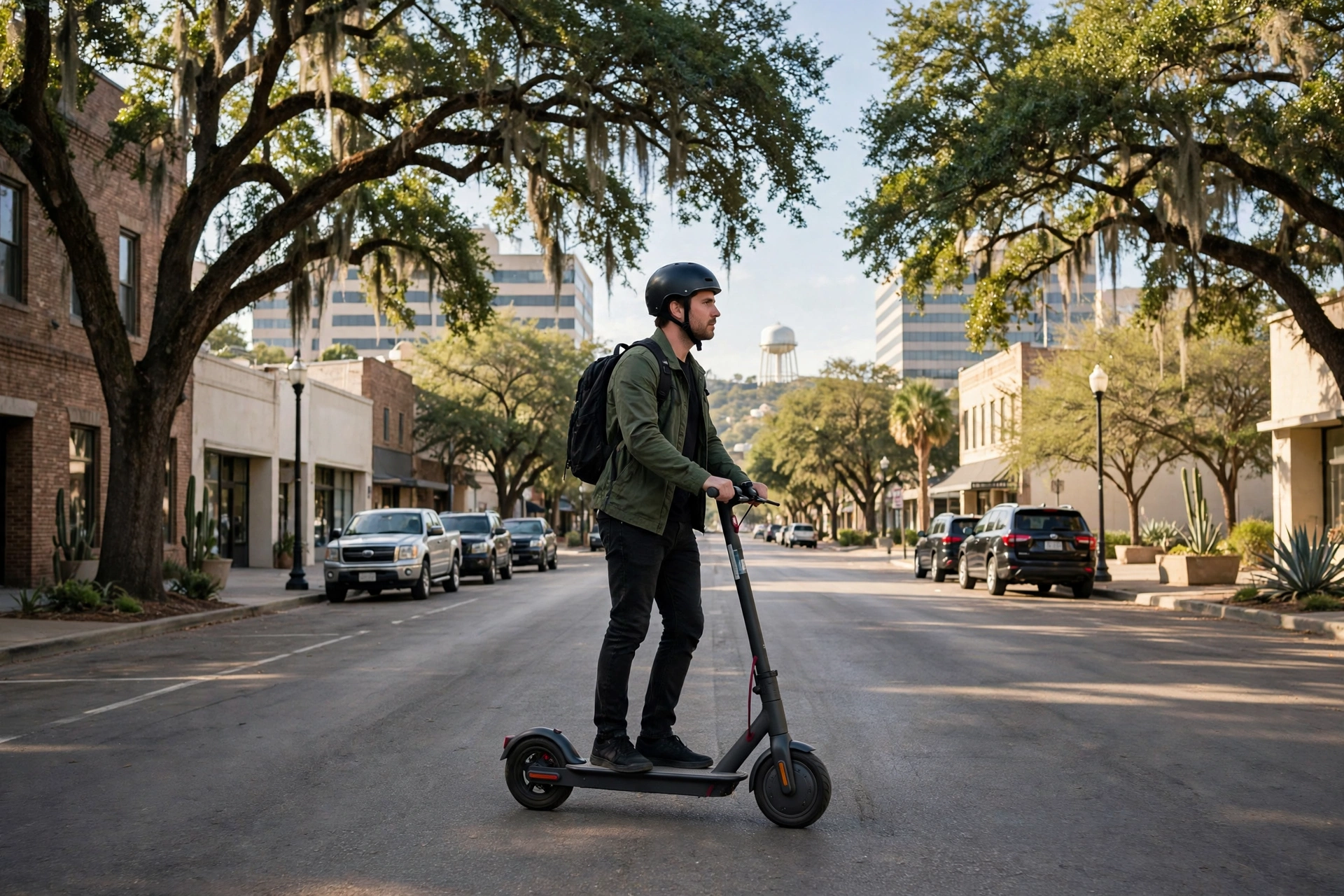
Stand-up electric scooters — the dockless rental scooters seen in Austin, Dallas, Houston, San Antonio, and other Texas cities — occupy a different legal category. Texas law treats these low-powered “motor-assisted scooters” separately from motorcycles, regulating where they can be ridden (generally streets with lower speed limits, bike lanes, and sidewalks where allowed) rather than imposing a statewide helmet requirement.
There is no statewide law requiring adults to wear a helmet on a stand-up e-scooter in Texas. Instead, the rules riders actually meet come from two places: city ordinances, which vary and can restrict where scooters may ride or park, and the rental companies’ own terms, which may require or strongly recommend helmets and set minimum rider ages in their user agreements. Rental fleets rarely supply helmets, which is a practical reason many regular e-scooter riders buy their own.
Do Under-21 Riders Need a Helmet on Any Scooter in Texas?
On anything motorcycle-class — mopeds and motor-driven cycles — yes, absolutely: under 21 means a helmet is required by state law, for the passenger as well as the operator. There is no exception for short trips or low speeds within that class.
For stand-up e-scooters, state law does not impose the same blanket under-21 helmet rule, but city rules and rental terms may still require helmets or set minimum ages, and parents should treat a helmet as standard equipment for any minor on any scooter. To see how Texas compares with the rest of the country, check our guide to helmet laws by state.
How Can You Tell Which Class Your Scooter Is In?
Ask three questions. First: does it have a seat and a step-through or motorcycle-style frame, with an engine or motor meant for road speeds? If so, it is almost certainly a moped or motor-driven cycle. Second: is it titled, registered, and plated, and does it require a license to operate? Motorcycle-class vehicles generally do. Third: is it a stand-up scooter with a small deck, bicycle-sized speed, and no seat? That is the motor-assisted scooter category, where city and rental rules dominate.
When in doubt, check the vehicle’s paperwork and your city ordinances before riding. Dealers and rental apps state the classification, and misreading it can mean riding illegally — or unprotected — without realising.
Where Can Stand-Up E-Scooters Be Ridden in Texas, and Why Does It Matter?
Texas law generally allows motor-assisted scooters on streets with speed limits of 35 mph or less, in bike lanes, and on sidewalks in many areas, though cities can and do restrict all of this — downtown cores, entertainment districts, and university areas often have their own scooter rules, geofenced slow zones, or outright bans. Where you ride affects the risks you face: a scooter mixing with car traffic at 30 mph is a very different proposition from one on a quiet neighborhood street.
That is also why the “no statewide mandate” headline needs context. The absence of a state helmet law for e-scooters reflects how Texas chose to regulate a low-speed device category; it is not a finding that helmets are unnecessary. City police can still cite riders for other violations — riding on a prohibited sidewalk, carrying a passenger on a single-rider scooter, or riding at night without lights — so the practical rulebook for an e-scooter trip is the city ordinance plus the rental agreement, not just state law.
Should You Wear a Helmet Even When Texas Does Not Require One?
For most riders, yes. Scooter crashes happen at speeds where head injuries are a leading risk, and stand-up e-scooters add their own hazards: small wheels that catch on cracks and grates, unfamiliar rental machines, and traffic mixing. A bicycle-style or certified scooter helmet is light, cheap relative to the risk, and easy to carry.
Riders on mopeds and motor-driven cycles travel at full road speeds and face the same risks as motorcyclists, so a proper DOT motorcycle helmet — not a bicycle helmet — is the right gear whenever the law’s under-21 rule does not already settle the question.
Fit matters as much as the label. A scooter helmet should sit level, feel snug without pain, and stay in place when you shake your head. Replace it after any crash or hard drop, and check young riders’ fit each season — Texas teens riding mopeds to school are exactly the group the under-21 rule was written for.
Frequently Asked Questions
Do you need a helmet on a motorized scooter in Texas?
It depends on the scooter. On mopeds and motor-driven cycles, Texas motorcycle rules apply and riders under 21 must wear a helmet. On stand-up e-scooters, there is no statewide adult helmet mandate; city rules and rental company terms apply instead.
Do rental e-scooter companies in Texas require helmets?
State law does not force adult e-scooter riders to wear one, but rental companies can set their own requirements in their user agreements, and many recommend helmets and set minimum rider ages. Check the app’s terms before you ride.
Can a teenager ride a moped in Texas without a helmet?
No. Mopeds are motorcycle-class in Texas, so the state motorcycle helmet law applies: operators and passengers under 21 must wear a helmet.

Olivia
Writer at Helmet Today, covering helmet reviews, fit and riding safety.


