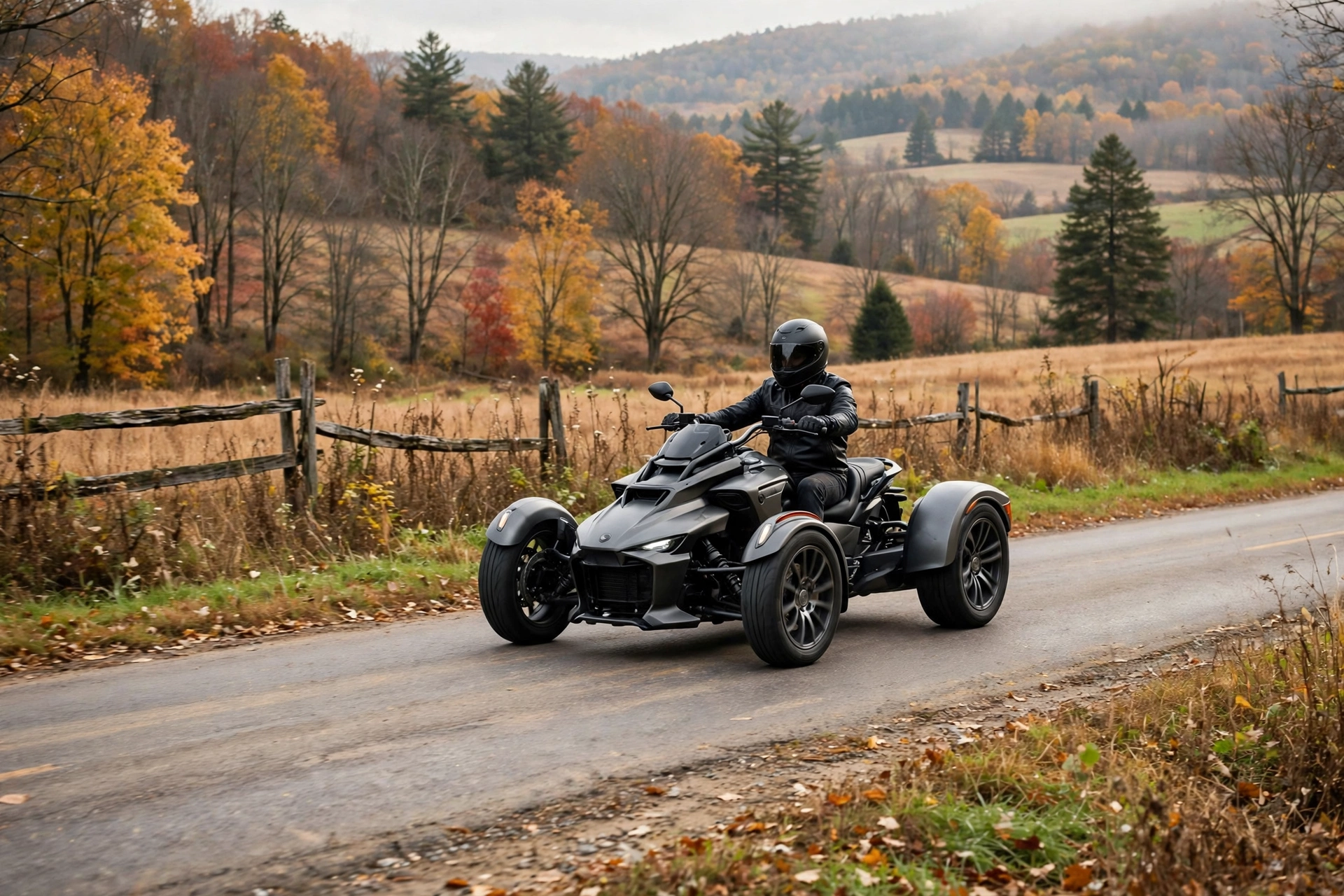
In Pennsylvania, the helmet law for a three-wheeled motorcycle depends on which kind of three-wheeler it is. An open trike — a motorcycle with two rear wheels, or a reverse trike with two front wheels, ridden with handlebars and an open saddle — follows Pennsylvania’s motorcycle helmet law: helmets are required for riders under 21, for anyone on a learner’s permit, and for riders with less than two years of riding experience unless they have completed an approved safety course. A fully enclosed autocycle, with car-style controls, a steering wheel, and seat belts, is treated differently: its operator is exempt from the helmet requirement.
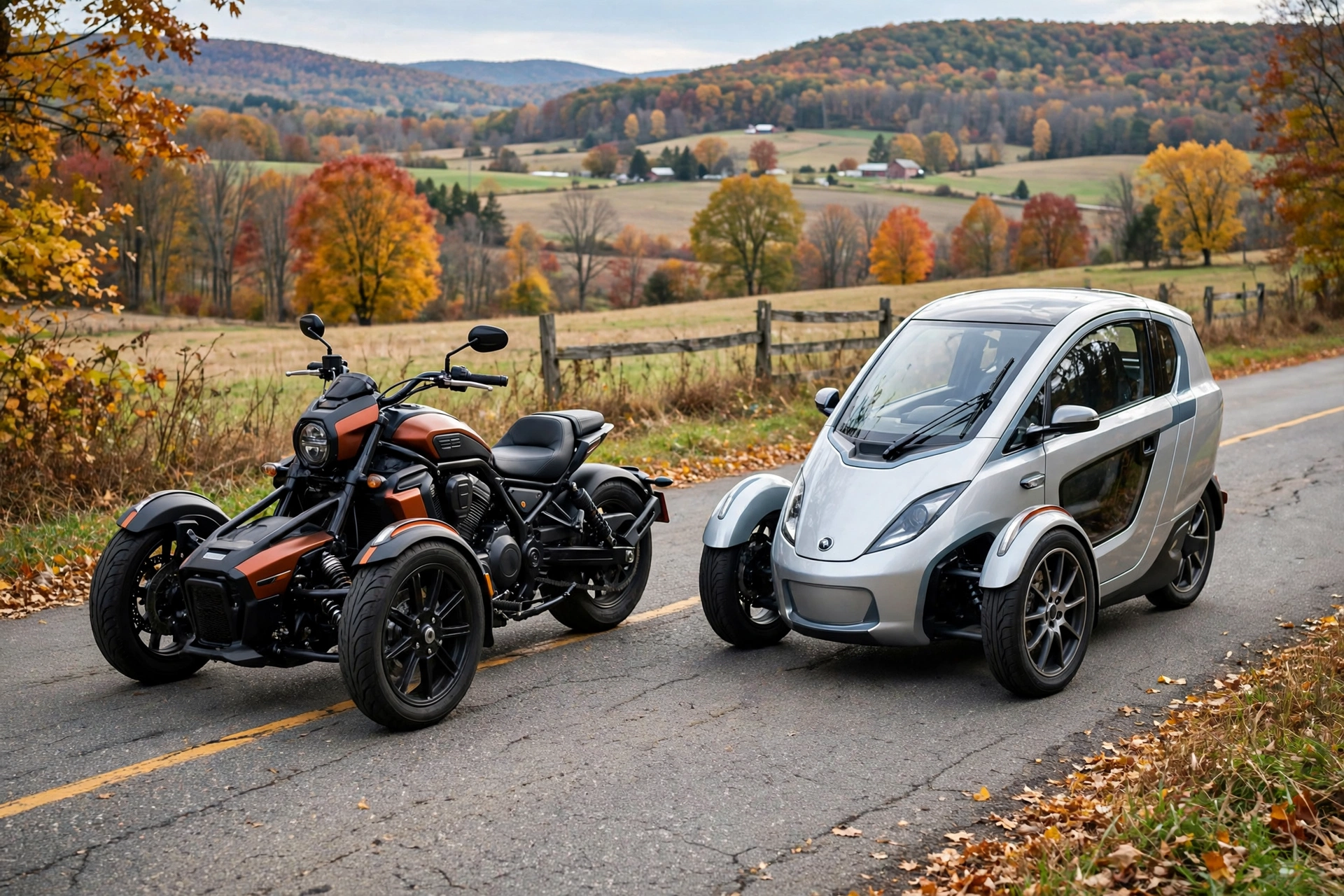
Both machines have three wheels, but Pennsylvania law sees them very differently. Identifying which one you own is the whole game.
Do Open Trikes Follow Pennsylvania’s Motorcycle Helmet Law?
Yes. A conventional trike conversion, a factory trike, or a reverse trike that you straddle and steer with handlebars is a motorcycle under Pennsylvania law, and the motorcycle helmet rules apply exactly as they do on two wheels.
That means a helmet is required if the rider is under 21 — operator or passenger. It is also required for anyone operating on a motorcycle learner’s permit, and for riders in their first two years of experience, unless they have completed a Pennsylvania-approved motorcycle safety course, which removes the requirement for experienced-track riders in general terms. Adult riders with two or more years of experience (or the safety course completed) may legally choose whether to wear one. Passengers under 21 must wear a helmet regardless of the operator’s status.
Why Are Autocycles Treated Differently?
An autocycle is a distinct vehicle class in Pennsylvania: three wheels, but built like a small car — a fully or partially enclosed cabin, a steering wheel instead of handlebars, foot pedals, car-style seating, and seat belts. Because the operator sits inside a structure and is restrained by belts rather than straddling an open machine, Pennsylvania law does not treat the autocycle as a motorcycle for helmet purposes, and its operator is exempt from the helmet requirement.
The licensing treatment differs too: autocycles are generally operated with a regular driver’s license rather than a motorcycle endorsement. For an overview of where Pennsylvania fits in the national patchwork, see our guide to helmet laws by state.
How Can You Tell Which Class Your Three-Wheeler Is In?
Start with the controls and seating. Handlebars, an open saddle you straddle, and motorcycle-style controls mean motorcycle class. A steering wheel, pedals, bucket seats, seat belts, and an enclosed or semi-enclosed cabin mean autocycle. Then confirm with the paperwork: your vehicle’s title and registration state its classification, and that classification — not the wheel count — decides the helmet rule.
Borderline designs exist, particularly among reverse trikes with partial bodywork. If the machine has handlebars and an open riding position, treat it as a motorcycle. If you are unsure, your dealer, the vehicle’s title, or PennDOT’s classification is the authority — guessing wrong in the motorcycle direction costs you nothing but wearing a helmet; guessing wrong in the other direction can mean a citation.
Do Passengers on a Trike Need Helmets in Pennsylvania?
On an open trike, yes, in the same situations as on two wheels: passengers under 21 must wear a helmet, period. An adult passenger’s requirement follows the general motorcycle rules, and in practice most operators insist every passenger wear one regardless — a passenger has the same exposure on three wheels as on two.
On an autocycle, passengers ride belted in car-style seats inside the cabin, under the autocycle’s own rules rather than the motorcycle helmet law. Even so, open-top or partially enclosed autocycle designs leave occupants exposed, and a helmet is a reasonable choice for highway use even where the law does not insist on it.
Does the Safety Course Exception Apply on a Trike?
For motorcycle-class trikes, yes, in the same way it works on two wheels. Pennsylvania’s helmet requirement falls away for riders 21 and over, and for riders under 21 the rule is strict — but the two-year experience condition that affects newly licensed adult riders can be satisfied by completing an approved motorcycle safety course instead. The course route is popular with trike riders who converted from cars later in life: it removes the probationary helmet period and, more importantly, teaches low-speed handling, which is where trikes behave most differently from both cars and two-wheel motorcycles.
One caution: the exception logic belongs to the operator. It never transfers to a young passenger. A 19-year-old passenger on the back of a trike needs a helmet even if the operator is a course graduate with decades of experience.
What Happens If You Ride an Open Trike Without a Required Helmet?
Riding a motorcycle-class trike without a helmet when Pennsylvania law requires one is a traffic violation and can result in a citation. Fines vary by court, so the amount depends on where the citation is heard. Eye protection is a separate Pennsylvania requirement for motorcyclists — riders should expect protective eyewear to be part of legal riding gear on an open trike as well.
The practical advice is simple: if your three-wheeler is an open motorcycle-class trike, gear up exactly as you would on two wheels, and if it is an autocycle, confirm the classification on the title once and ride accordingly.
Crossing state lines deserves the same care. Pennsylvania’s partial law sits among stricter neighbors — New Jersey, Maryland, Delaware, and West Virginia all require helmets for every rider. A Pennsylvania trike rider who is legal at home without a helmet becomes illegal the moment the front wheel crosses into those states, so touring riders on open trikes should simply keep a helmet with the machine on every trip.
Frequently Asked Questions
Do you need a helmet on a three-wheeled motorcycle in Pennsylvania?
On an open trike, Pennsylvania’s motorcycle helmet law applies: required under 21, on a permit, and during the first two years of experience unless an approved safety course is completed. On a fully enclosed autocycle, the operator is exempt from the helmet requirement.
Is an autocycle the same as a trike under Pennsylvania law?
No. An autocycle has car-style controls — a steering wheel, pedals, seats, and seat belts — in an enclosed or partly enclosed cabin, and it is classed separately from a motorcycle. A trike you straddle and steer with handlebars is a motorcycle.
Do trike passengers under 21 need a helmet in Pennsylvania?
Yes. On a motorcycle-class trike, passengers under 21 must wear a helmet, even if the adult operator is not required to wear one.

Olivia
Writer at Helmet Today, covering helmet reviews, fit and riding safety.