Under 12 months old, a baby should not ride in a bicycle child seat at all — so for babies, there is no ride to put a helmet on for. From your child’s first birthday onward, the answer is yes: a toddler in a child seat should always wear a properly fitted, certified helmet, and the child helmet laws in many states require one for young passengers.
Pediatric guidance on this is unusually clear, and it surprises many new parents who assume a small enough helmet makes a young baby safe. Below we explain the age rule, what helmet a toddler needs, how the helmet works with the seat itself, and what the law says.
Why Shouldn’t a Baby Under 12 Months Ride in a Child Bike Seat?
The main reason is development. A baby under one year old does not yet have the neck strength to support their own head — plus the weight of a helmet — against the bumps, braking forces, and vibrations of a bicycle ride. A baby’s head is also very large relative to their body, which makes that load even harder for weak neck muscles to manage.
The equipment is not made for them either. Bicycle helmets are designed and certified for children aged one year and older, and the smallest toddler helmets on the market are built for one-year-old heads. There is no certified helmet that properly fits a young infant, and a loose, oversized helmet is a hazard rather than protection.
For these reasons, pediatric experts advise against carrying infants on bicycles in any setup — child seat or trailer — until the child is at least 12 months old and can sit well and wear a properly fitted helmet.
How can you tell when your child is actually ready? The practical markers are that they can sit unsupported for a sustained period, hold their head steady while wearing the helmet around the house, and stay comfortable doing it. If the helmet makes their head flop forward or sideways during a living-room test, they are not ready — wait a few weeks and test again. Babies develop fast at this age, and there is no prize for starting a month early; the first ride will still be there when they are ready for it.
What Kind of Helmet Does a Toddler in a Child Seat Need?
Look for the smallest certified toddler helmet you can find, and let fit — not color or characters — make the decision. The helmet should be certified to the US bicycle helmet standard, sit level on the child’s head, and feel snug all the way around without pressure points. Measure your child’s head with a soft tape just above the eyebrows and match the measurement to the maker’s size chart.
Weight matters more than most parents expect. A toddler’s neck is still developing, so choose the lightest certified helmet that fits properly — lightweight in-mold toddler helmets are a better pick for the youngest riders than heavy skate-style shells.
Details that help: a flat-ish back profile (for the seat reasons explained next), a dial or simple pad system you can adjust as they grow, and a pinch-guard buckle so fastening the strap does not become a daily battle. Never buy a helmet “to grow into” — a helmet that is too big today protects poorly today.
Build a quick fit check into every ride, because toddler heads grow and straps loosen. The helmet should sit level, about two finger-widths above the eyebrows; the side straps should form a V under each ear; and the chin strap should be snug enough that you can fit only a finger or two beneath it. Give the helmet a gentle wiggle — it should move the skin slightly rather than sliding around on the head. If it slides, adjust or size down before you roll.
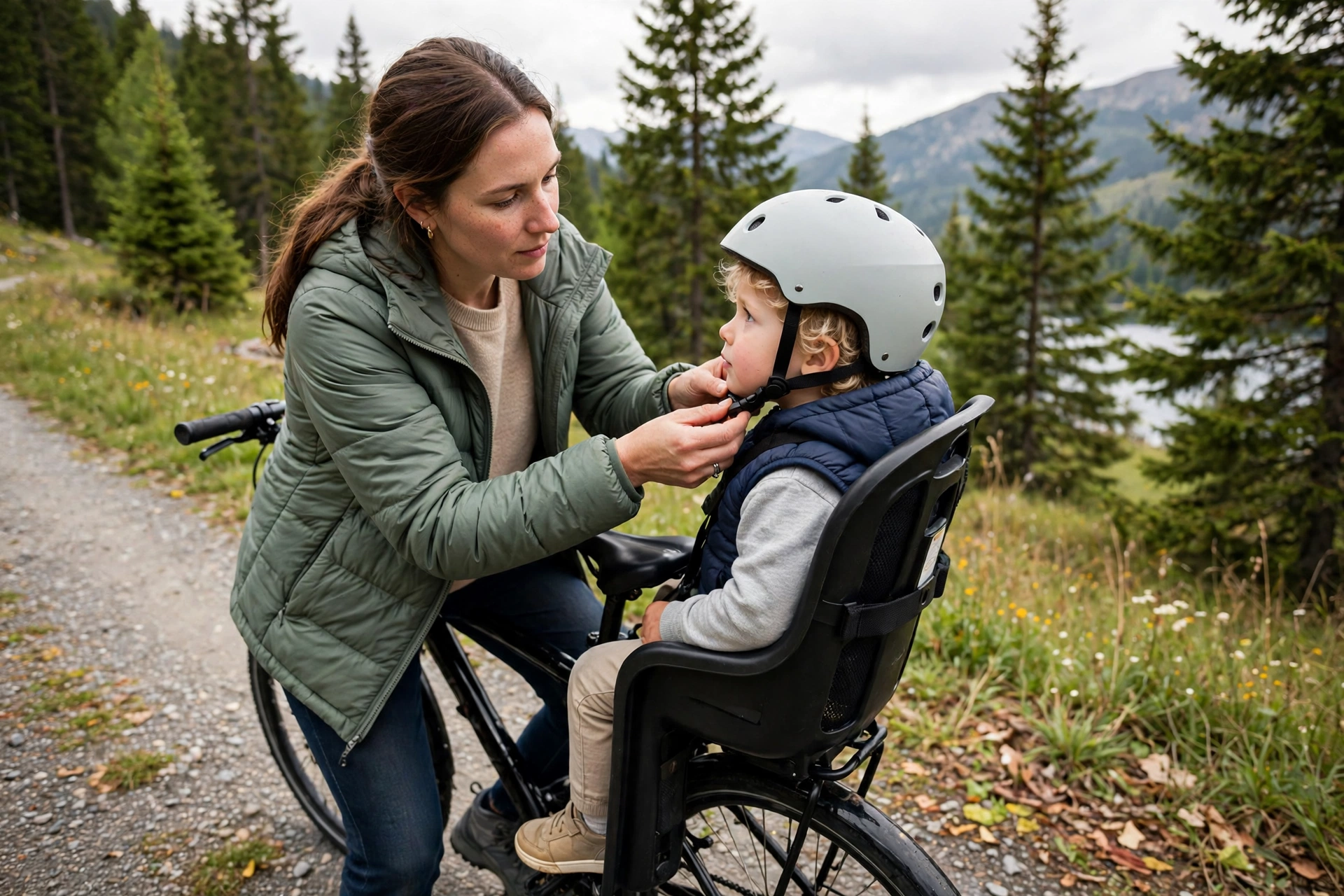
How Does the Helmet Fit Together With the Child Seat Itself?
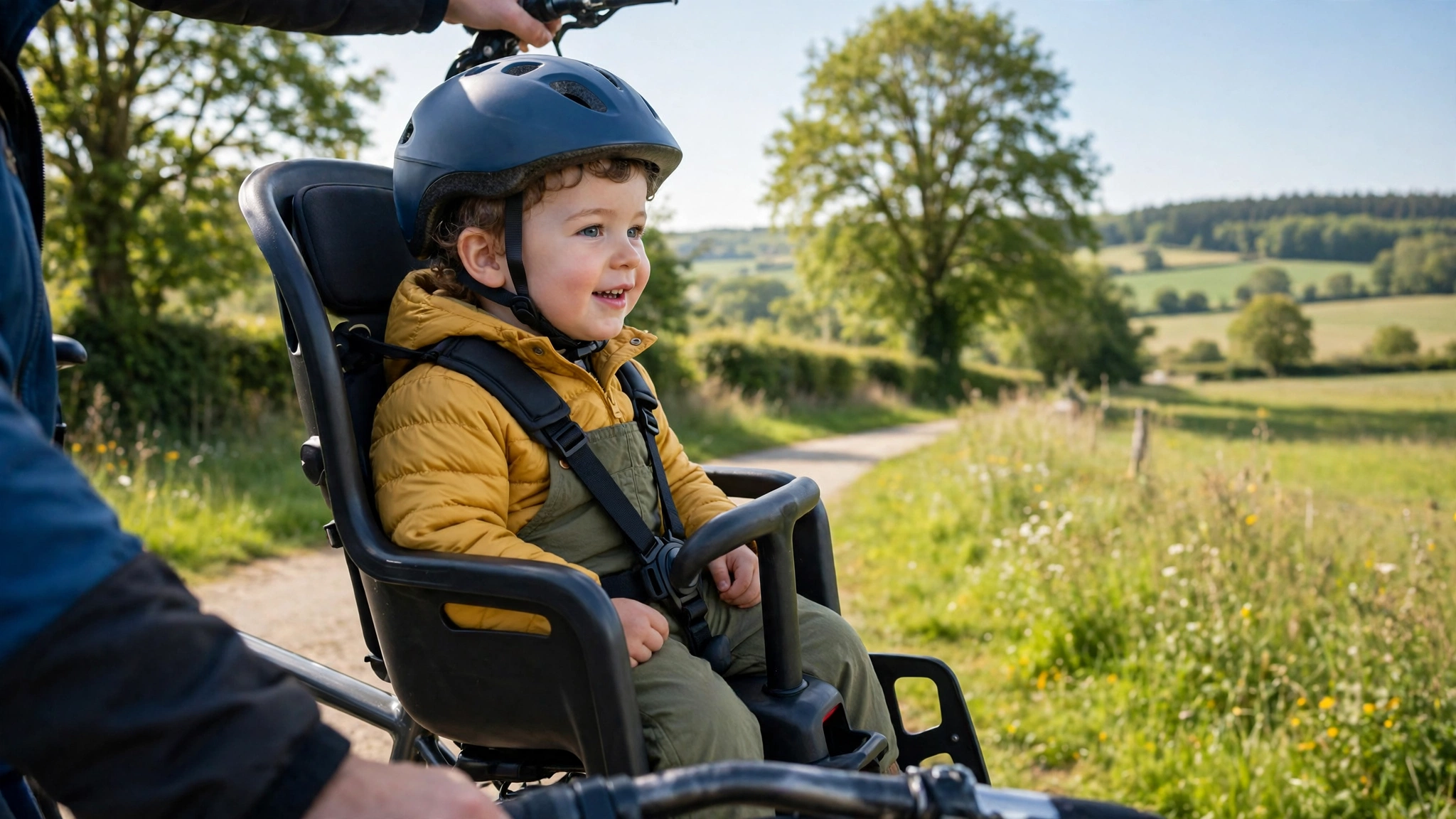
This is the step many parents miss. Most child bike seats have a high back or headrest area, and a helmet adds depth behind the child’s head. On some seat and helmet combinations, that extra depth pushes the child’s head forward, leaving them slumped with their chin drifting toward their chest — uncomfortable, and not how you want them riding.
Before your first real ride, do a full test fitting at home: helmet on, child in the seat, harness fastened. Check that the child’s head rests naturally against the seat back, that the helmet does not clash with the headrest, and that the seat’s harness straps sit flat over the shoulders and fasten as the maker intends. The helmet strap fastens under the chin as normal; it should never be routed through or trapped under the seat harness.
If the helmet pushes the head forward, try a toddler helmet with a flatter back profile, or a seat with a sculpted headrest recess. Some seats also recline slightly, which can solve the problem. The combination should look relaxed, not forced.
Does the Law Require a Helmet for a Toddler in a Bike Seat?
In many states, yes. State child bicycle helmet laws are usually written to cover young passengers as well as young riders, and a toddler sitting in a child seat counts as a passenger. The exact age covered varies a lot by state — some laws stop in the early teens, others run to 18 — but toddlers fall inside every version of these laws.
A smaller number of states add rules specific to child seats themselves, such as minimum passenger ages around one year and requirements for a properly secured seat. You can compare the picture in our guide to helmet laws by state, and it is worth checking your own state’s current wording before you ride.
Even where no law applies, treat the helmet as non-negotiable from the first birthday onward. The law is the floor, not the goal: a fall from seat height onto pavement is exactly the kind of impact a toddler helmet is built for.
Frequently Asked Questions
Can my 9-month-old ride in a bike seat if I find a small helmet?
No. Pediatric guidance says wait until 12 months, and helmets are not certified for babies under one. Your baby’s neck is not ready for the load.
What size helmet fits a 1-year-old?
Measure the head just above the eyebrows and use the maker’s chart. The smallest toddler helmets are made for heads roughly in the mid-40s centimeter range, but only the measurement decides.
Can a toddler wear a slightly big helmet to grow into?
No. An oversized helmet can shift or slip over the eyes in a fall. Buy the size that fits snugly now and replace it as your child grows.

Olivia
Writer at Helmet Today, covering helmet reviews, fit and riding safety.