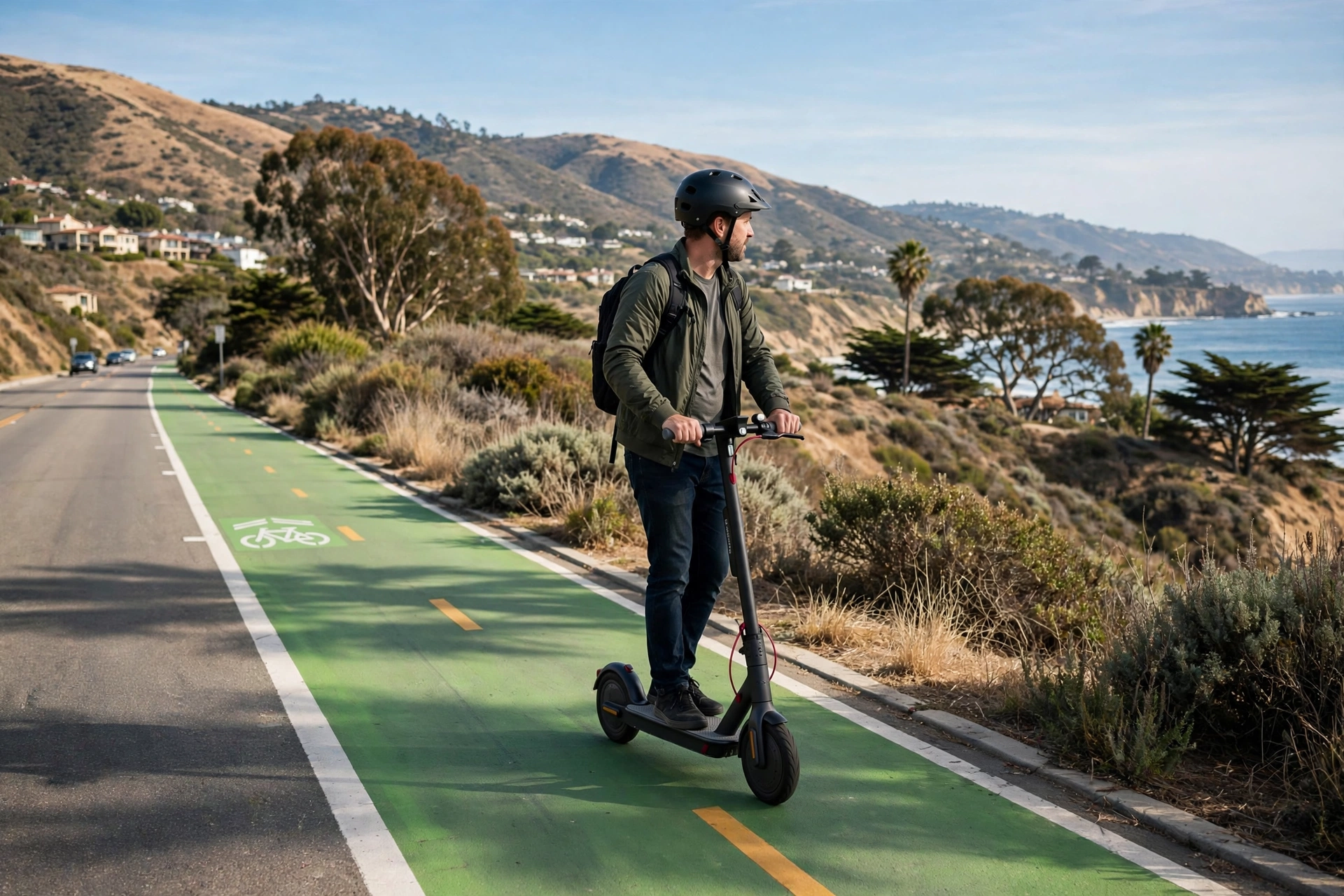
California splits motorized scooters into two very different legal worlds. On a stand-up motorized scooter, riders under 18 must wear a helmet, but adults 18 and over are not required to — California changed the law in 2019 to remove the adult helmet requirement for these scooters. On a moped or motor-driven cycle, there is no such relief: those are motorcycle-class vehicles in California, so every rider and passenger of any age must wear a DOT-approved helmet.
As in other states, the single most important step is identifying which kind of “scooter” you have. The answer changes the helmet rule completely.
What Is the Helmet Rule for Stand-Up Motorized Scooters in California?
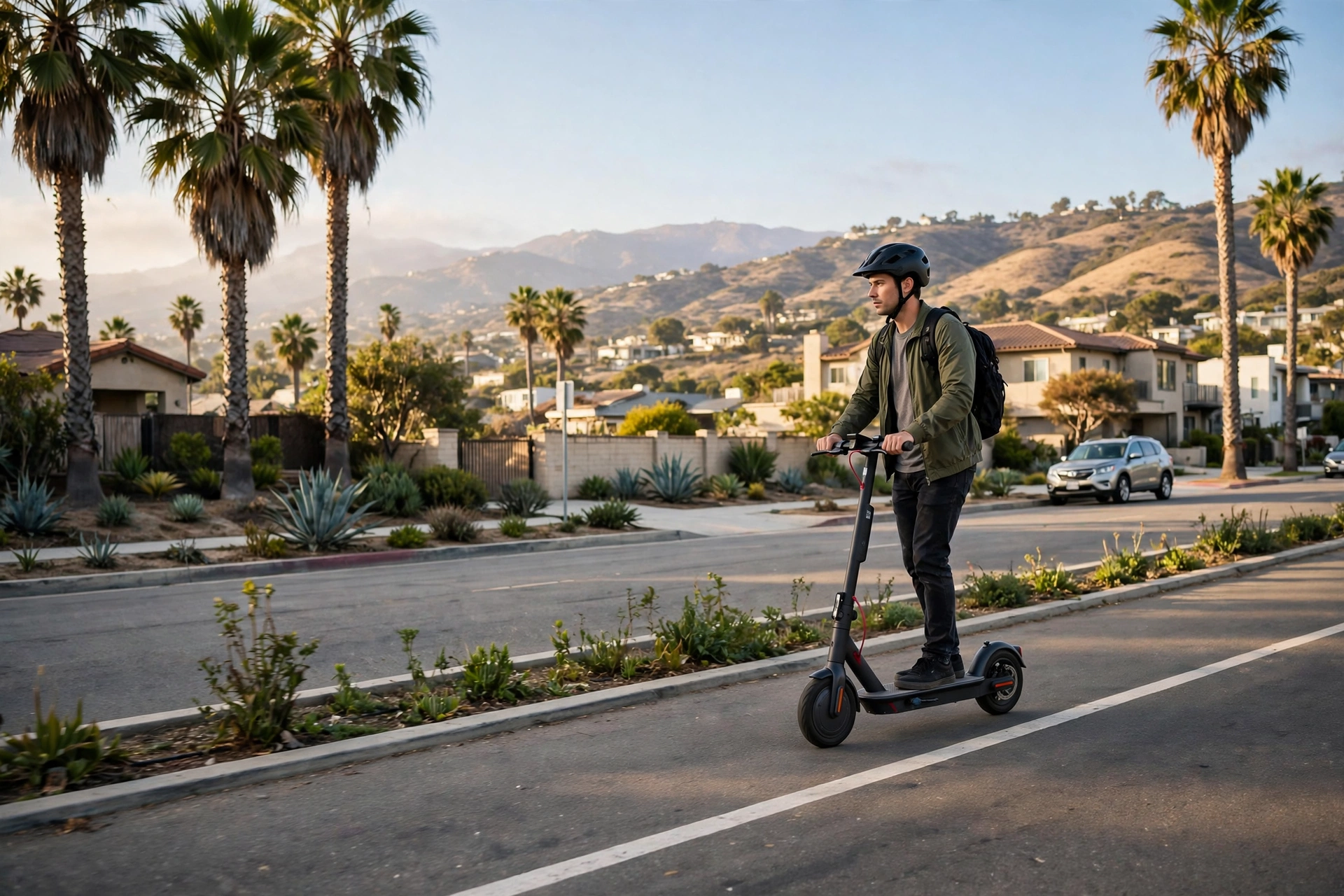
California law defines a “motorized scooter” as a two-wheeled device with handlebars and a floorboard you stand on, powered by a motor. For these stand-up scooters, the helmet rule is age-based: riders under 18 must wear a properly fitted bicycle-style helmet meeting the applicable safety standard.
Adults are treated differently than they once were. Before 2019, California required helmets for all motorized scooter riders. The law changed effective January 1, 2019: riders 18 and over no longer need a helmet on a stand-up motorized scooter as a matter of state law. Riders under 18 saw no change — their helmet requirement stayed in place. The change was debated on safety grounds at the time, and many California cities and safety advocates continue to recommend helmets for riders of every age, even though adults cannot be cited for riding without one.
Do Rental Scooter Companies Follow the Same Rule?
Not always. Rental operators can — and do — set their own terms. A rental agreement may require a helmet for all riders, set a minimum age (commonly 18), or require a driver’s license, even where state law would let an adult ride bareheaded. Breaking those terms can mean account penalties, quite apart from any traffic law.
Rental scooters also come with operating rules: they generally belong on roads and bike lanes rather than sidewalks, sidewalk riding is prohibited in many circumstances, and cities add their own parking and riding restrictions. Those local rules vary across California, so check the rules of the city you are riding in. Our guide to helmet laws by state gives the broader context for how California’s approach compares nationally.
When Is a Scooter Motorcycle-Class in California?
The moment a “scooter” has a seat, a step-through frame, and an engine or motor built for road traffic, it is usually a moped (motorized bicycle with an automatic transmission and a modest engine) or a motor-driven cycle. California classes both as motorcycle-type vehicles, and its universal helmet law then applies: every operator and passenger, of every age, must wear a DOT-approved motorcycle helmet.
Practical markers of the motorcycle class: the vehicle is registered and plated by the DMV, it requires a motorcycle license or endorsement (or an M2 for mopeds), and it is insured like a motor vehicle. If your scooter checks those boxes, the under-18 stand-up scooter rule is irrelevant — the full motorcycle helmet law governs.
Can a 16-Year-Old Ride a Stand-Up Scooter Without a Helmet in California?
No. The 2019 change helped adults only. Riders under 18 on a motorized scooter must wear a helmet, and there are additional limits on younger riders: operating a stand-up motorized scooter generally requires at least a learner’s permit or driver’s license, which effectively sets its own age floor. Teens should also expect rental companies to refuse them entirely, since most rental services set 18 as their minimum age.
Parents should note the helmet standard differs by class, too. On a stand-up scooter, a certified bicycle helmet is the specified gear. On a moped or motor-driven cycle, a DOT motorcycle helmet is required — a bicycle helmet does not satisfy the motorcycle law.
What Other Rules Apply to Stand-Up Scooters in California?
The helmet is only one part of the motorized scooter rulebook. Riders must generally stay off sidewalks except to enter or leave adjacent property, ride on roads within the scooter’s speed capability, and carry no passengers — a stand-up scooter is a one-person device, and doubling up is both illegal and unstable. A valid driver’s license or learner’s permit is required, which is why the practical minimum age for riding one is higher than the helmet rule alone suggests.
Cities layer their own rules on top: designated parking corrals, no-ride zones in busy pedestrian districts, and speed restrictions in specific areas. Rental apps enforce much of this automatically with geofencing, which can slow or stop a scooter at a zone boundary — another reason to keep both hands on the bars and your attention on the road rather than assuming the scooter will behave like it did three blocks ago.
Should Adults Wear a Helmet on a Stand-Up Scooter Anyway?
California law no longer forces the choice on adults, but the physics has not changed since 2019. Stand-up scooters have small wheels, short wheelbases, and riders standing upright with a high center of gravity — a combination that pitches riders head-first over cracks, grates, and sudden stops. Emergency-room data from the rental-scooter era consistently showed head injuries among the most common serious harms.
A lightweight certified helmet is easy to carry and removes the worst-case outcome from most scooter falls. Many regular riders in California cities treat it as standard equipment even though the state does not.
Choosing the right one is straightforward. For a stand-up scooter, pick a certified bicycle or skate-style helmet that fits snugly and sits level — brands selling into California must meet the state-referenced safety standard for these helmets. For anything in the motorcycle class, step up to a DOT motorcycle helmet sized to your head. In both cases, fasten the strap on every ride: an unbuckled helmet comes off in the first moment of a fall, which is the only moment it is really needed.
Frequently Asked Questions
Do adults need a helmet on a motorized scooter in California?
On a stand-up motorized scooter, no — since 2019, California does not require helmets for riders 18 and over. On a moped or motor-driven cycle, yes: those are motorcycle-class, and all riders must wear a DOT helmet at any age.
Do minors need a helmet on an e-scooter in California?
Yes. Riders under 18 on a stand-up motorized scooter must wear a properly fitted helmet. Rental companies typically set an 18+ minimum age on top of that.
Is a bicycle helmet enough for a moped in California?
No. Mopeds and motor-driven cycles fall under California’s universal motorcycle helmet law, which requires a DOT-approved motorcycle helmet for every rider and passenger.

Olivia
Writer at Helmet Today, covering helmet reviews, fit and riding safety.