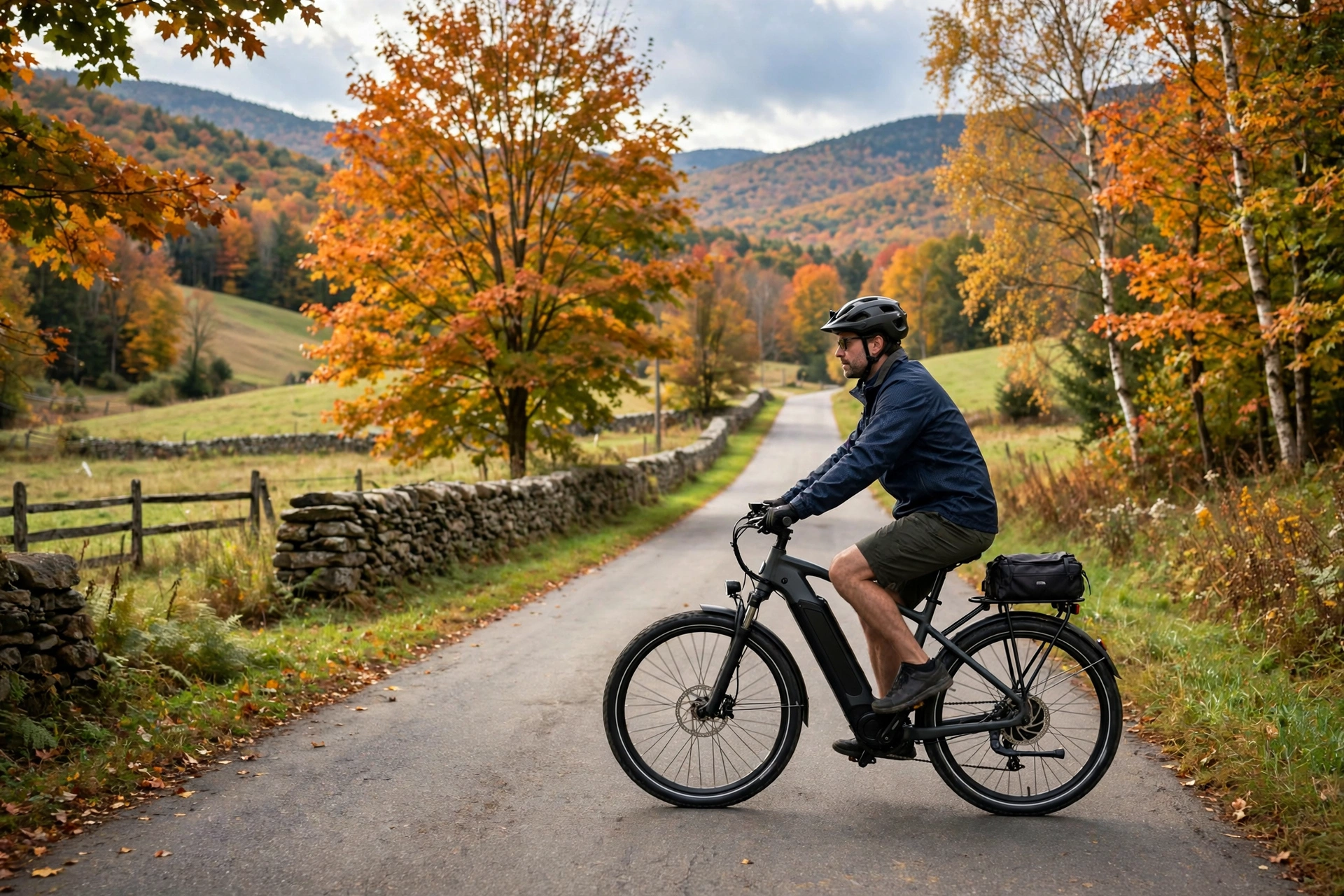
Vermont has no general bicycle helmet law — children and adults alike can legally ride a regular bicycle without one. But Class 3 e-bikes are the exception. Vermont law requires every operator and passenger on a Class 3 e-bike to wear a helmet, and no one under 16 may operate a Class 3 e-bike at all. Class 1 and Class 2 e-bike riders have no state helmet mandate.
That makes Vermont an unusual case: one of the most relaxed states for bicycle helmets, with a firm rule aimed squarely at the fastest e-bikes. This guide explains the exception, what makes a bike “Class 3,” and what riders in each class actually need to know.
Does Vermont Have a Bicycle Helmet Law?
No. Vermont is one of the states with no statewide helmet requirement for regular bicycles, for riders of any age. Parents may set their own rules, schools and programs may set theirs, but state law does not require a helmet on a conventional bike.
That surprises many people, because neighboring states take a different approach, and because Vermont does regulate other safety equipment and road behavior. Riders crossing into Vermont from New Hampshire or Massachusetts sometimes assume a helmet rule travels with them — it does not, in either direction. Vermont’s rule, or lack of one, governs while you ride in Vermont, and your home state’s rules apply again the moment you cross back. That patchwork is common across New England, and it is exactly why checking the rule for the specific vehicle and state matters. The absence of a general bicycle helmet law is exactly what makes the Class 3 e-bike rule stand out: Vermont lawmakers singled out the fastest e-bike category for a helmet requirement even while leaving ordinary bicycles unregulated. Understanding that contrast is the key to the whole topic.
What Counts as a Class 3 E-Bike in Vermont?
Vermont uses the standard three-class framework for electric bicycles:
- Class 1: Pedal-assist only, with assistance cutting off at 20 mph.
- Class 2: Throttle-assisted, able to propel the bike up to 20 mph.
- Class 3: Pedal-assist up to 28 mph — the fastest class — and generally equipped with a speedometer so the rider can see how fast they are going.
The speed is the point. A Class 3 bike travels at speeds closer to a moped than a casual bicycle, which is why Vermont attached both a helmet rule and a minimum operating age to this class alone. Your bike’s class appears on the manufacturer’s label; if there is no label or you have modified the bike, it is worth confirming which category it falls into.
Who Must Wear a Helmet on a Class 3 E-Bike in Vermont?
Everyone on the bike. Vermont’s Class 3 helmet requirement covers the operator and any passenger, at any age. There is no adult exemption and no exception for short trips.
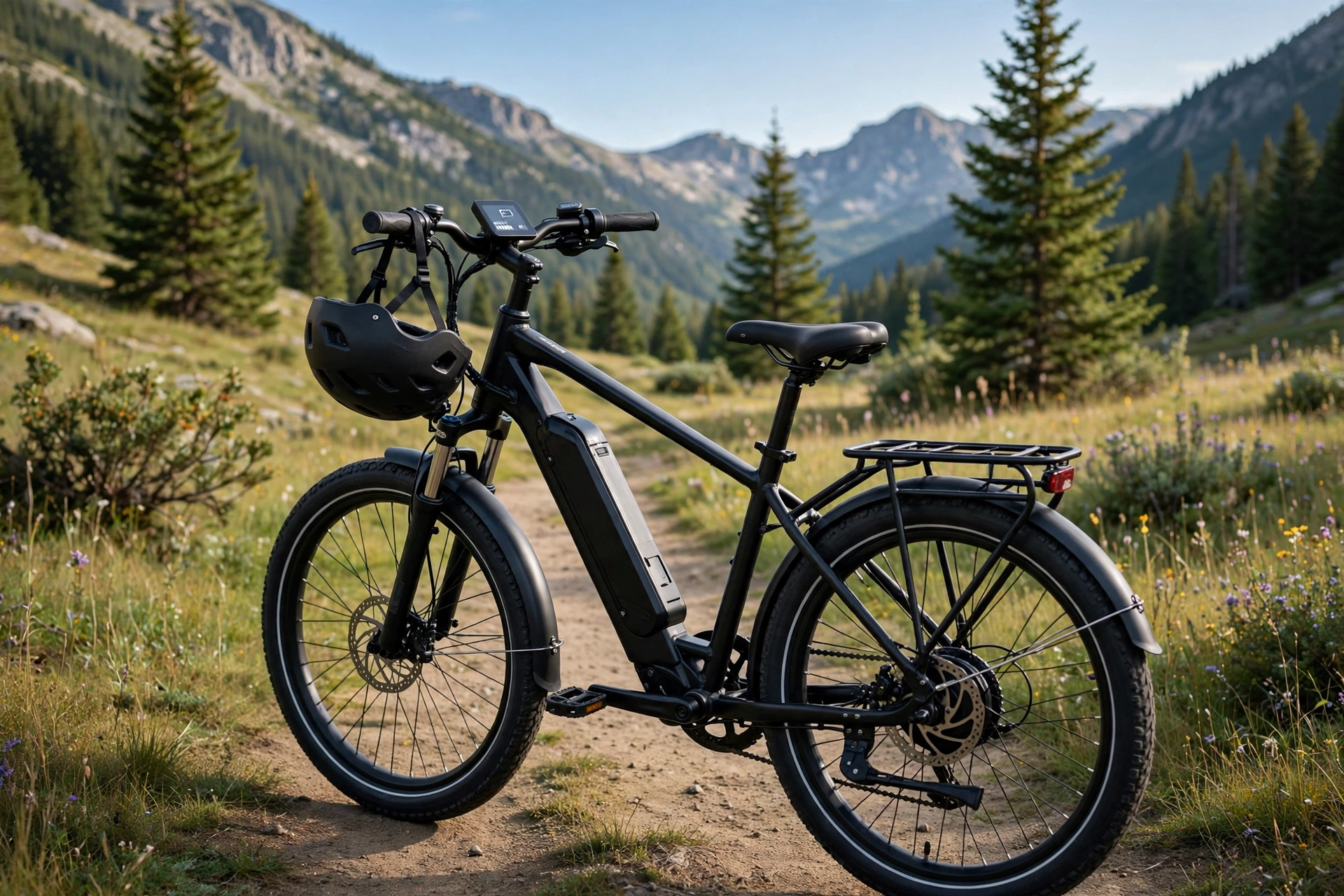
The helmet should be a proper bicycle helmet — certified to the CPSC standard, correctly sized, sitting level, with the strap fastened and snug. It must actually be worn while riding, not carried — a helmet on the handlebars satisfies neither the law nor its purpose. Because Class 3 speeds are higher, fit matters even more: a helmet that rocks or sits tilted back leaves the forehead exposed in exactly the kind of fall these speeds produce. If you regularly ride at Class 3 pace, make sure the helmet is in good condition and replace it after any crash.
For context on how Vermont’s approach compares with the rest of the country, see our state-by-state guide to what states have helmet laws.
Can Riders Under 16 Operate a Class 3 E-Bike?
No. Vermont sets a minimum age for operating a Class 3 e-bike: riders under 16 may not operate one. This is an operating restriction, not just a helmet rule — a helmet does not make it legal for a 14-year-old to ride a Class 3 bike as the operator.
Younger riders are not shut out of e-bikes entirely. Class 1 and Class 2 e-bikes carry no equivalent state operating-age rule of this kind, and of course regular bicycles are open to all ages. Families shopping for a teen should look at Class 1 or Class 2 models, and fit the rider with a helmet even though Vermont does not require one for those classes — the safety logic that produced the Class 3 rule applies to falls at lower speeds too.
Do Class 1 and Class 2 Riders Need Helmets in Vermont?
Under state law, no. Vermont imposes no helmet mandate on Class 1 or Class 2 e-bike riders of any age, matching its hands-off approach to regular bicycles. But two cautions apply. First, local rules and land managers can set their own conditions — a trail network, park, rental shop, or organized event may require helmets for everyone. Second, the physics do not change just because the law is silent: e-bikes are heavier and faster than the bicycles most people grew up on.
Visitors should note the reverse situation, too. If you bring a Class 3 e-bike into Vermont from a state with no Class 3 helmet rule, Vermont’s requirement applies while you ride here — the law follows the road you are on, not the registration or the rider’s home state. Rental shops in Vermont are well aware of the rule and will typically supply a helmet with a Class 3 rental.
The sensible default for most Vermont riders is simple: helmet on for Class 3 because the law requires it, and helmet on for everything else because it works. Vermont leaves the choice to you on slower bikes — it is a choice worth making well.
Frequently Asked Questions
Q: Does Vermont require helmets for e-bike riders?
A: Only for Class 3 e-bikes. Everyone operating or riding on a Class 3 e-bike must wear a helmet at any age. Class 1 and Class 2 riders have no state helmet mandate, and Vermont has no general bicycle helmet law.
Q: Can a 15-year-old ride a Class 3 e-bike in Vermont with a helmet?
A: No. Riders under 16 may not operate a Class 3 e-bike at all — the age rule is separate from the helmet rule. Teens should use Class 1 or Class 2 e-bikes instead.
Q: What makes an e-bike a Class 3 model?
A: A Class 3 e-bike provides pedal assistance up to 28 mph and is generally equipped with a speedometer. Check the manufacturer’s label on the bike to confirm its class.

Olivia
Writer at Helmet Today, covering helmet reviews, fit and riding safety.