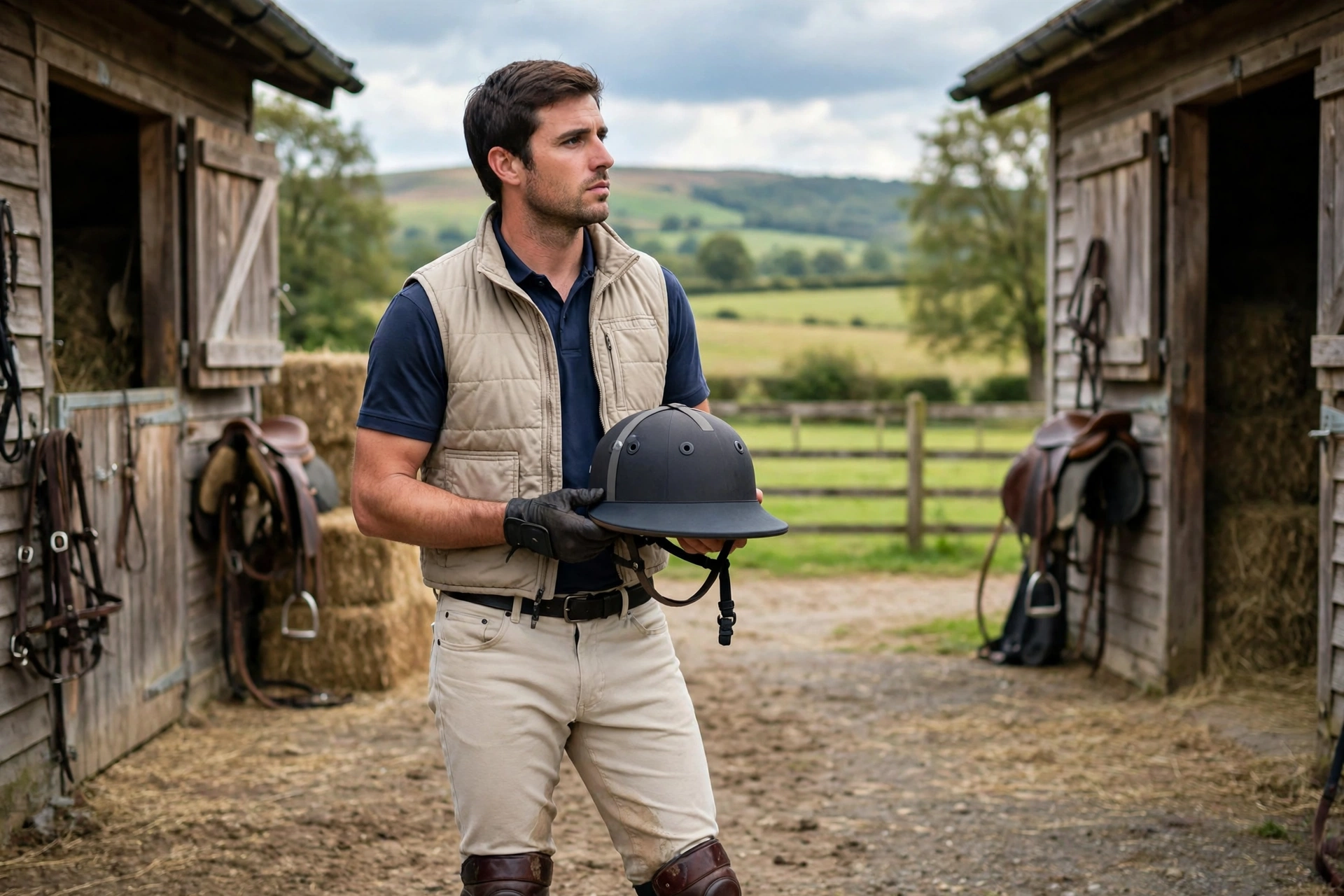
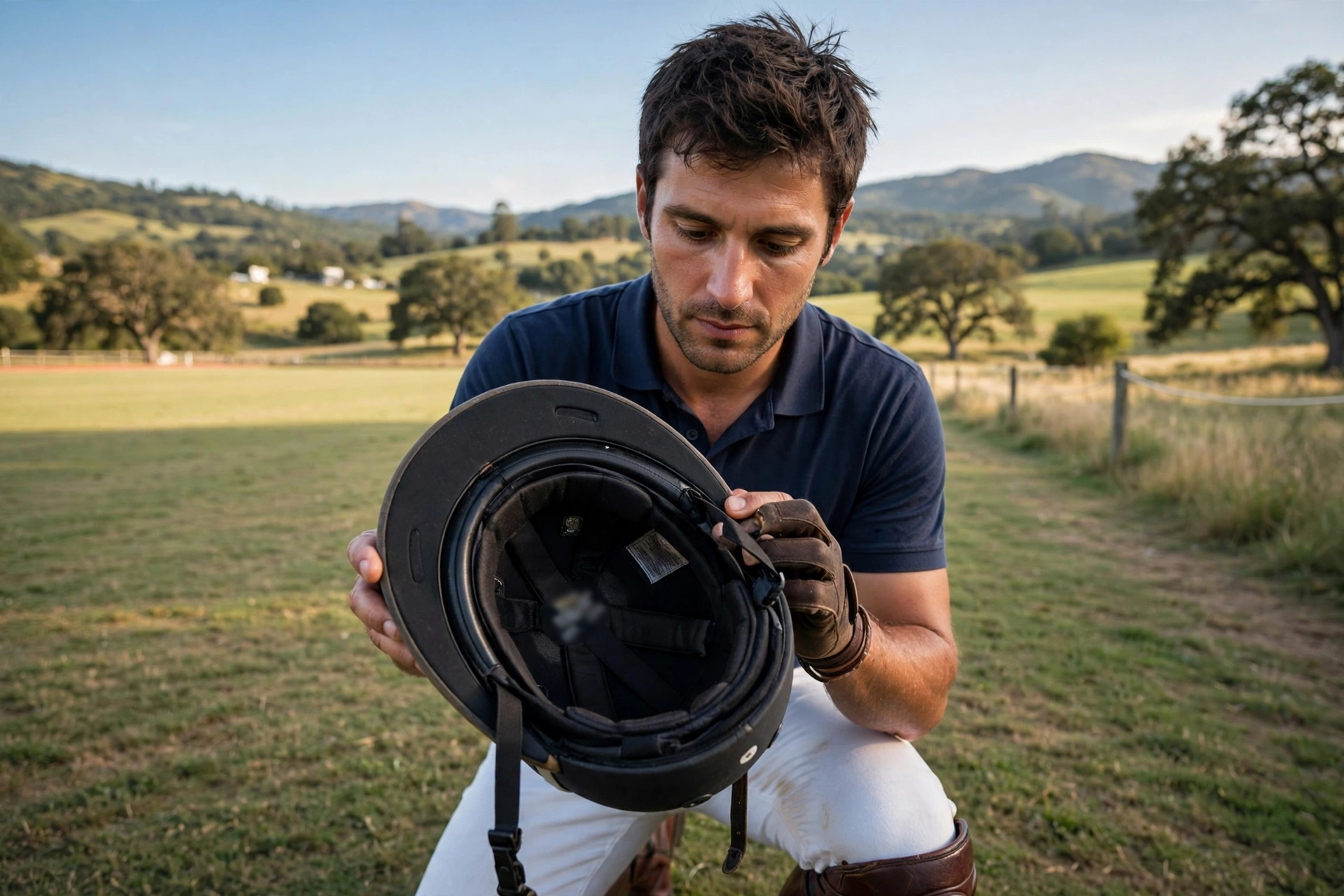
A polo helmet should be certified to one of the recognized polo helmet standards — principally PAS 015 or the NOCSAE polo standard. Those two certifications are the ones polo associations around the world point to, and polo’s governing bodies require certified helmets for sanctioned play. When you shop, flip the helmet over and check the label inside: it should name the standard and the helmet’s certification details. No label naming PAS 015 or the NOCSAE polo standard means it is not a certified polo helmet, no matter how it is marketed.
This guide explains what those standards mean, how to verify a helmet before you buy, and why a general riding helmet — even a certified one — is not automatically a polo helmet.
What Are PAS 015 and the NOCSAE Polo Standard?
PAS 015 is a British-published specification for equestrian and polo helmets that sets out how a helmet must perform in impact testing, how much of the head it must cover, how strongly the harness must retain it, and how it is marked and labeled. It has been the benchmark referenced by polo associations internationally for many years, and helmets meeting it have passed laboratory impact testing administered through recognized test houses.
The NOCSAE polo standard comes from the National Operating Committee on Standards for Athletic Equipment, the US body known for setting standards across American sports equipment. NOCSAE developed a standard specifically for polo helmets, and helmets certified to it undergo testing and ongoing quality checks under NOCSAE’s certification program.
The practical meaning is the same for both: an independent standard exists, the helmet model was tested against it, and the label inside the individual helmet is your proof. Polo’s governing bodies — including the United States Polo Association for sanctioned play in the US — require helmets meeting the recognized standards, and clubs and tournaments enforce that requirement at the field.
How Do You Check a Polo Helmet’s Certification Before Buying?
Verification takes two minutes and matters more than brand, color, or price:
- Find the label. Look inside the helmet, under the liner or on the crown padding area. A certified helmet carries a permanent label naming the standard (PAS 015 or the NOCSAE polo standard) and usually the size, batch, and date of manufacture.
- Match the model. The model name on the box and in the product listing should be a certified model, not just a certified brand. Manufacturers sell uncertified styles alongside certified ones.
- Buy from a recognized polo outfitter. Specialist polo suppliers stock certified helmets and can confirm certification on the spot. Be cautious with marketplace listings and fashion retailers.
- Beware styling copies. Polo’s look is fashionable, and uncertified “polo-style” helmets are sold for costume, photo, and casual use. They may carry no protective certification at all.
If a seller cannot tell you which standard a helmet meets, treat that as your answer and walk away. The certification is the product; everything else is styling.
Is a Certified Riding Helmet the Same as a Polo Helmet?
Not necessarily — and this trips up riders who cross over from other equestrian sports. General riding helmets are commonly certified to standards such as ASTM/SEI for horseback riding. That certification is legitimate, but it tests for the falls and impacts of general riding. Polo adds hazards general riding does not: mallet swings near the head, ball strikes, collisions between horses at speed, and falls in traffic with other riders around you.
Polo helmets are therefore built and tested for the game — typically with coverage and retention designed for polo’s impacts, and often with a faceguard option that many players use. A helmet certified only to a general riding standard may not satisfy polo association rules for sanctioned matches, even though it is a perfectly good helmet for schooling or trail riding.
The reverse also holds: if you borrow a helmet at a polo club, check its label rather than assuming. And if you play in different countries, confirm the local association accepts your helmet’s standard, since associations specify which certifications they recognize. (Helmet technology differs across every sport — our explainer on what MIPS is in a helmet covers a rotational-impact system common in cycling; polo certification focuses on the impact and retention demands of the game itself.)
What Else Should You Look for Beyond Certification?
Certification is the entry ticket, not the whole decision. Once you have confirmed PAS 015 or NOCSAE polo certification, evaluate:
- Fit: Snug all around with no rocking, sitting level, with the harness adjusted so the helmet cannot shift in a fall. Try it on and shake your head hard.
- Harness: Polo helmets use a retention harness rather than a simple chin strap on many models; it should adjust evenly and stay fastened under load.
- Faceguard: Optional on many helmets, chosen by many players for protection against balls and mallets. If you add one, use the guard made for that helmet model.
- Ventilation and weight: Polo is played hard in summer heat. Certified models vary in venting and weight — comfort decides whether the helmet stays on properly for four chukkers.
When Should a Polo Helmet Be Replaced?
After any significant fall or blow — a ball strike to the shell, a mallet impact, or a fall where your head hits the ground — the helmet should be replaced, or at minimum returned to the manufacturer for inspection where that service is offered. Impact-absorbing liners work by deforming; the damage is frequently invisible from outside, and a compromised helmet will not protect the same way twice.
Helmets also age out. Sweat, sun, and seasons of play degrade materials, and standards themselves evolve — older helmets certified to earlier versions of a standard may no longer satisfy current association requirements. Replace a helmet that is several seasons old, shows cracks, loose harness fittings, or a compressed liner, or whose label has become unreadable. If you cannot read the label, you cannot prove certification — and officials are within their rights to keep that helmet off the field.
Frequently Asked Questions
Q: What certification must a polo helmet have for USPA-sanctioned play?
A: A helmet certified to one of the recognized polo standards — PAS 015 or the NOCSAE polo standard. US polo’s governing body requires certified helmets for sanctioned play, and the label inside the helmet is the proof officials look for.
Q: Can I play polo in my regular ASTM-certified riding helmet?
A: Not for sanctioned play, in most cases. A general riding certification does not equal a polo certification — polo helmets are tested for the game’s specific hazards, and associations specify polo-standard helmets. Check your club or association’s current rules for casual play.
Q: Where is the certification label on a polo helmet?
A: Inside the helmet, typically under the liner or on the crown area. It names the standard (such as PAS 015 or NOCSAE), the size, and manufacturing details. No label naming a polo standard means no polo certification.

Olivia
Writer at Helmet Today, covering helmet reviews, fit and riding safety.