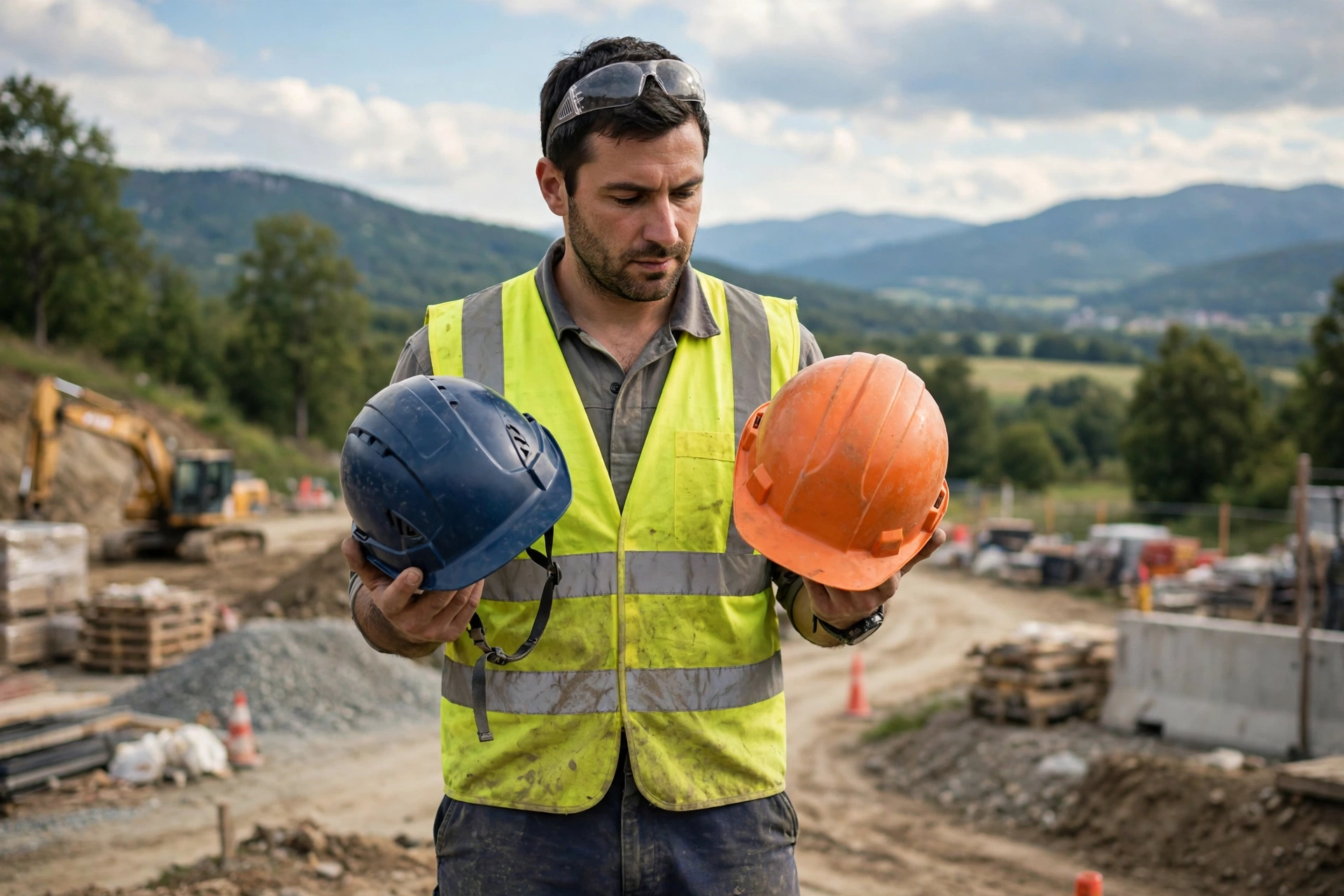
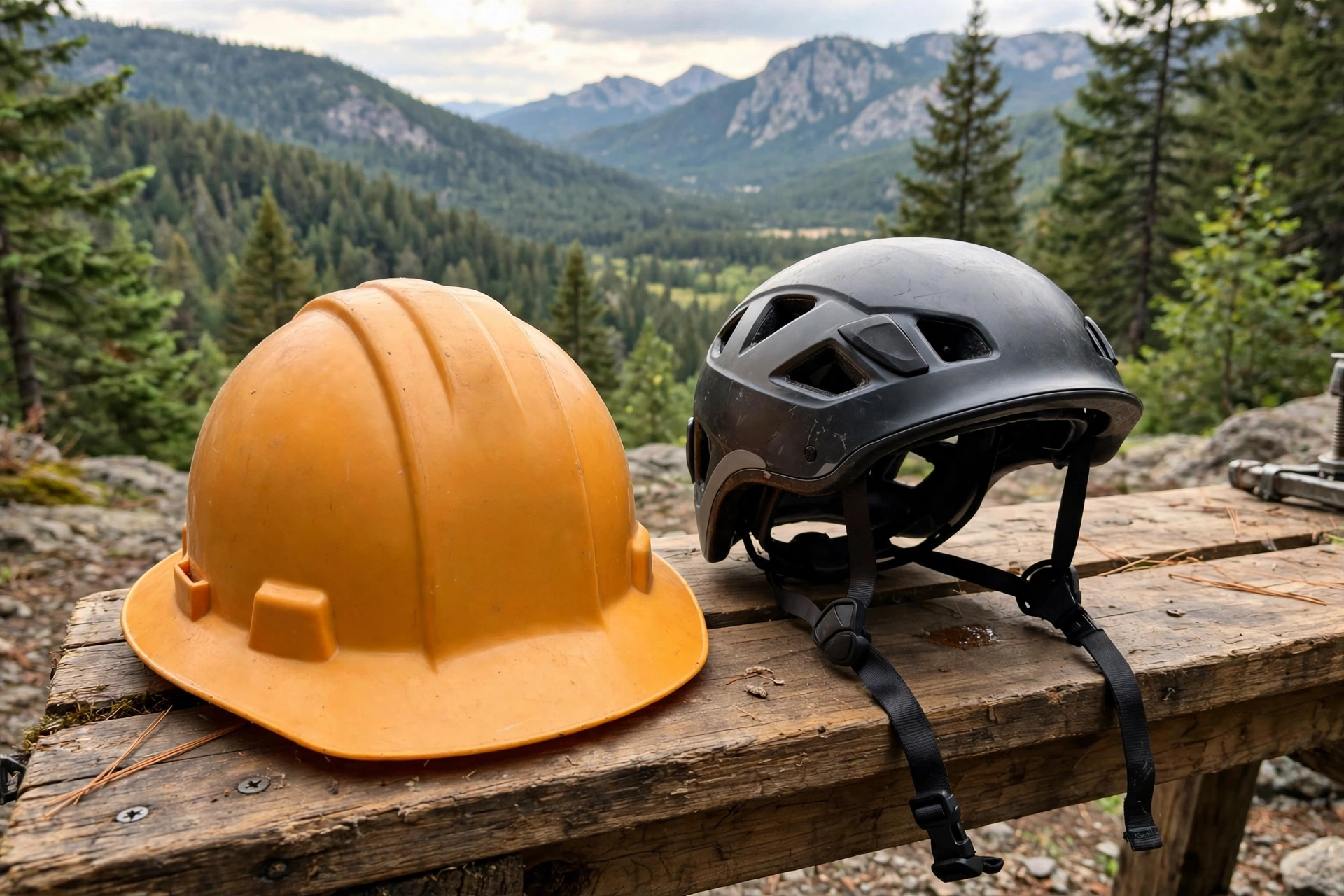
The core difference is what each one is built to do. A traditional hard hat is designed mainly to protect the top of your head from falling objects, and it typically has no chin strap — so it can be knocked or fall off. A modern safety helmet, inspired by climbing helmets, adds side-impact protection, an energy-absorbing foam liner, and a fitted chin strap that keeps it on your head during a fall. Which one you should wear depends on your site’s rules and the type of work you do.
Both fall under the same industrial head-protection standard in the US (ANSI/ISEA Z89.1, in general terms), but they are genuinely different designs. Here is how they compare and how to choose.
What Is a Traditional Hard Hat?
The hard hat is the design construction has used for decades. It consists of a rigid outer shell, usually with a full brim or a front cap brim, held away from your skull by an adjustable suspension system of straps and webbing. That gap between shell and head is the protection: a falling object strikes the shell, and the suspension spreads and absorbs the force.
Key characteristics of a traditional hard hat:
- Top impact focus. Most hard hats are rated as Type I, meaning they are tested for impacts to the top of the head — the classic dropped-tool or falling-debris scenario.
- No chin strap as standard. The suspension and headband hold it on in normal use, but in a fall, a trip, or a glancing blow, a hard hat frequently comes off — usually at the moment you need it most.
- Light, cheap, and familiar. Hard hats are inexpensive, widely stocked, and easy to fit with a quick headband adjustment.
- Accessory slots. Side slots accept ear defenders and face shields, a system the whole industry is built around.
For ground-level work where the main risk is something falling from above, a hard hat does its job well. Its weaknesses show up when the worker — not the object — is the thing falling.
What Is a Safety Helmet, and How Is It Different?
A safety helmet borrows its design from climbing and mountaineering helmets, and it has moved rapidly into construction, utilities, rescue, and work at height. Instead of a shell floating on a suspension, a safety helmet sits closer to the head with a foam liner inside the shell, much like a sports helmet.
The differences that matter:
- Side impact protection. Safety helmets are typically rated Type II, covering impacts to the sides, front, and back as well as the top — the directions your head actually strikes things in a fall or a swing into steelwork.
- A fitted chin strap. A four-point (or similar) chin strap keeps the helmet on during falls, trips, and wind. This retention is the single biggest practical difference from a hard hat.
- Foam liner. An energy-absorbing liner manages impact forces rather than relying on suspension webbing alone. Some designs even borrow slip-plane thinking from sports helmets — see our piece on how MIPS-style liners work for the general concept.
- Short or no brim. Most safety helmets have a minimal brim for a better upward view when working at height or looking up a structure.
The trade-offs: safety helmets cost more than a basic hard hat, and some workers find the closer fit warmer. In return, you get protection that stays on your head in the accidents that cause the most serious injuries.
What Do Type I, Type II, and the Electrical Classes Mean?
Both designs are classified under the same standard, so the labels are worth understanding:
- Type I helmets are tested for impact and penetration to the top of the head only.
- Type II helmets are additionally tested for impacts to the sides, front, and back, and for chin strap retention where a strap is fitted.
- Electrical class is separate from type. In general terms, Class G helmets are tested for lower-voltage contact, Class E for higher-voltage contact, and Class C offers no electrical protection.
Venting ties directly into this. A vented shell is more comfortable in heat but cannot carry an electrical rating, because the openings break the insulation. If you work around electrical hazards, you need a non-vented, appropriately classed helmet — whichever style you choose. And always check the label inside the shell rather than assuming a style implies a rating: the categories do not map perfectly onto appearance.
When Is a Safety Helmet Required or Preferred on Site?
There is no single rule everywhere — the governing answer is your site’s risk assessment and your employer’s head-protection policy, which in many industries is moving toward safety helmets. In general terms, safety helmets are required or strongly preferred where:
- Work at height is involved, because a falling worker needs the helmet to stay on — rope access, scaffolding, tower work, and arborist work are classic examples.
- Rescue and confined-space work, where helmets get knocked against structure constantly and side impacts are likely.
- Swing and slip risks exist, such as steel erection or work around moving loads where a side impact is as likely as a top one.
Traditional hard hats remain common and acceptable on many general construction sites, particularly for ground-level trades where falling-object protection is the assessed risk. Some large contractors have switched entire workforces to safety helmets to simplify the policy: one helmet that covers more scenarios.
Whatever your site issues, wear it as designed. A safety helmet with its chin strap unfastened gives up its main advantage, and a hard hat worn backwards (unless rated for reverse wearing) is not protecting you as tested.
Which Should You Choose: Comfort, Accessories, and Cost?
If the choice is yours, weigh these practical points:
- Accessories. Both styles accept eye and hearing protection, but differently. Hard hats use universal side slots for ear defenders and visors. Safety helmets increasingly offer integrated visors, mounted ear defenders, headlamps, and neck shades designed for the shell — check compatibility before buying.
- Comfort over a full shift. A safety helmet’s close fit and liner can feel secure but warmer; a hard hat’s suspension feels airier but can slip without a strap. Fit and sweatband quality matter more after hour six than in the store.
- Cost. Basic hard hats are inexpensive; safety helmets cost several times more, though prices continue to narrow. Against that, budget for suspension or sweatband replacement on hard hats and follow each maker’s stated service life for either style.
- Your actual risks. Falling objects from above only? A rated hard hat covers it. Any realistic chance of you falling, slipping, or swinging into structure? The retained, side-rated safety helmet is the honest answer.
Either way, inspect your head protection regularly and replace it after any significant impact — a point that applies to every helmet type, and which we cover for hard hats specifically in our lifespan guide on this site.
Frequently Asked Questions
Q: What is the main difference between a hard hat and a safety helmet?
A: A hard hat protects mainly against top impacts and usually has no chin strap, so it can come off in a fall. A safety helmet adds side-impact protection, a foam liner, and a fitted chin strap that keeps it on during falls.
Q: Is a safety helmet better than a hard hat?
A: It covers more impact directions and stays on better, which suits work at height and rescue. For ground-level work where the risk is falling objects, a rated hard hat is still acceptable on many sites. Your site’s risk assessment and policy decide.
Q: Can a vented helmet protect against electrical hazards?
A: No. Vented helmets cannot carry an electrical rating because the openings break the insulation. For electrical work you need a non-vented helmet with the appropriate class rating, whichever style you choose.

Olivia
Writer at Helmet Today, covering helmet reviews, fit and riding safety.