It depends on the sport. Wheelchair racers and handcyclists are required to wear helmets in competition, and sledge (para ice) hockey players wear full hockey helmets with cages. Wheelchair basketball and wheelchair rugby, by contrast, do not mandate helmets for most players. Beyond the rules, an athlete’s position, speed, and medical history — such as a shunt, a seizure condition, or a previous head injury — often decide whether head protection is a sensible personal choice.
Wheelchair sports range from low-speed court games to downhill racing at highway speeds, so a single answer was never going to fit. Here is the sport-by-sport picture and how to choose protection that works with a chair rather than against it.
Which Wheelchair Sports Require Helmets?
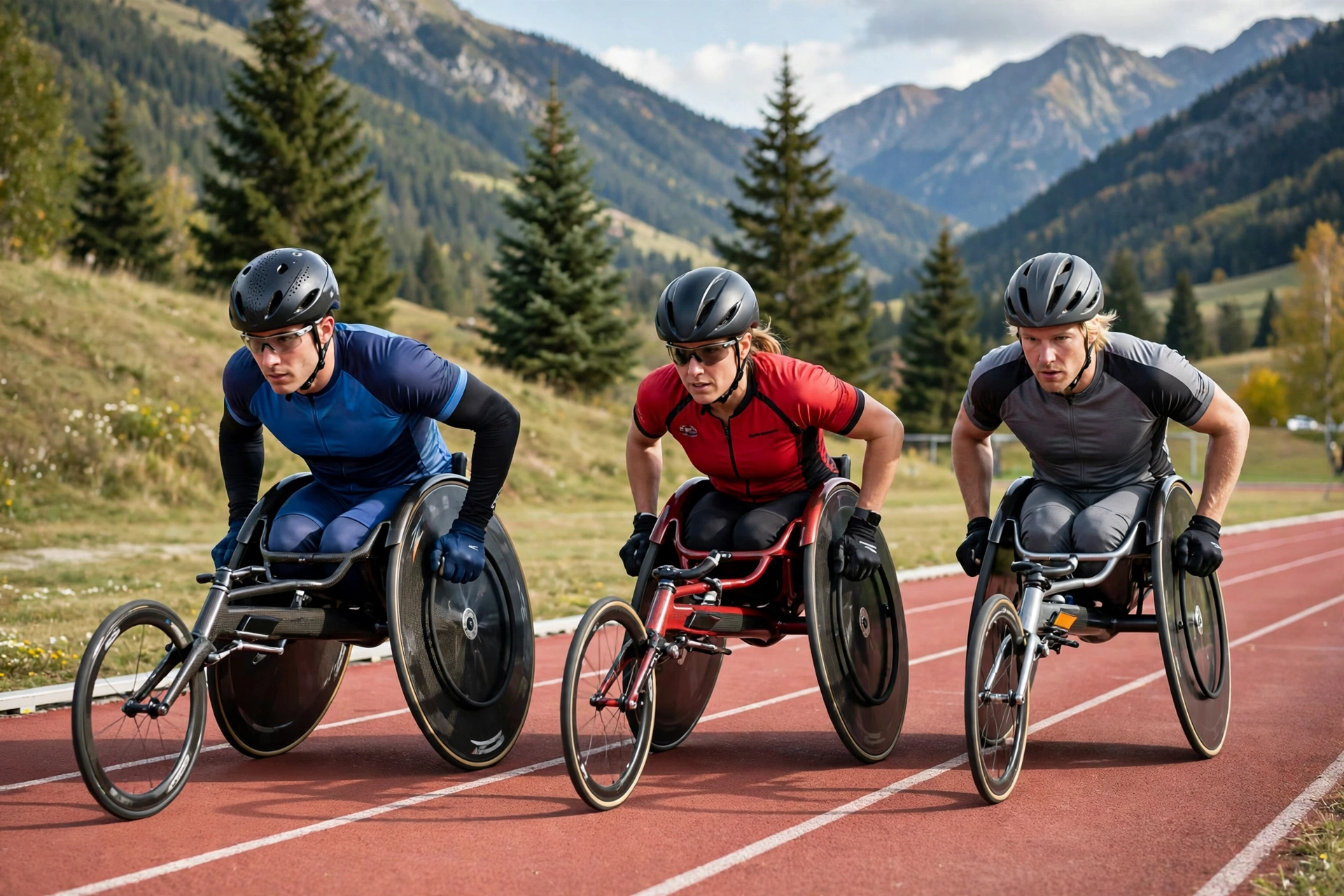
Helmets are mandatory in the wheelchair sports where speed and open-road or ice conditions dominate:
- Wheelchair racing. Track and road racers compete under para athletics rules modeled on cycling practice, and a hard-shell helmet is required equipment. At racing speeds, in a low, tucked position, this is non-negotiable.
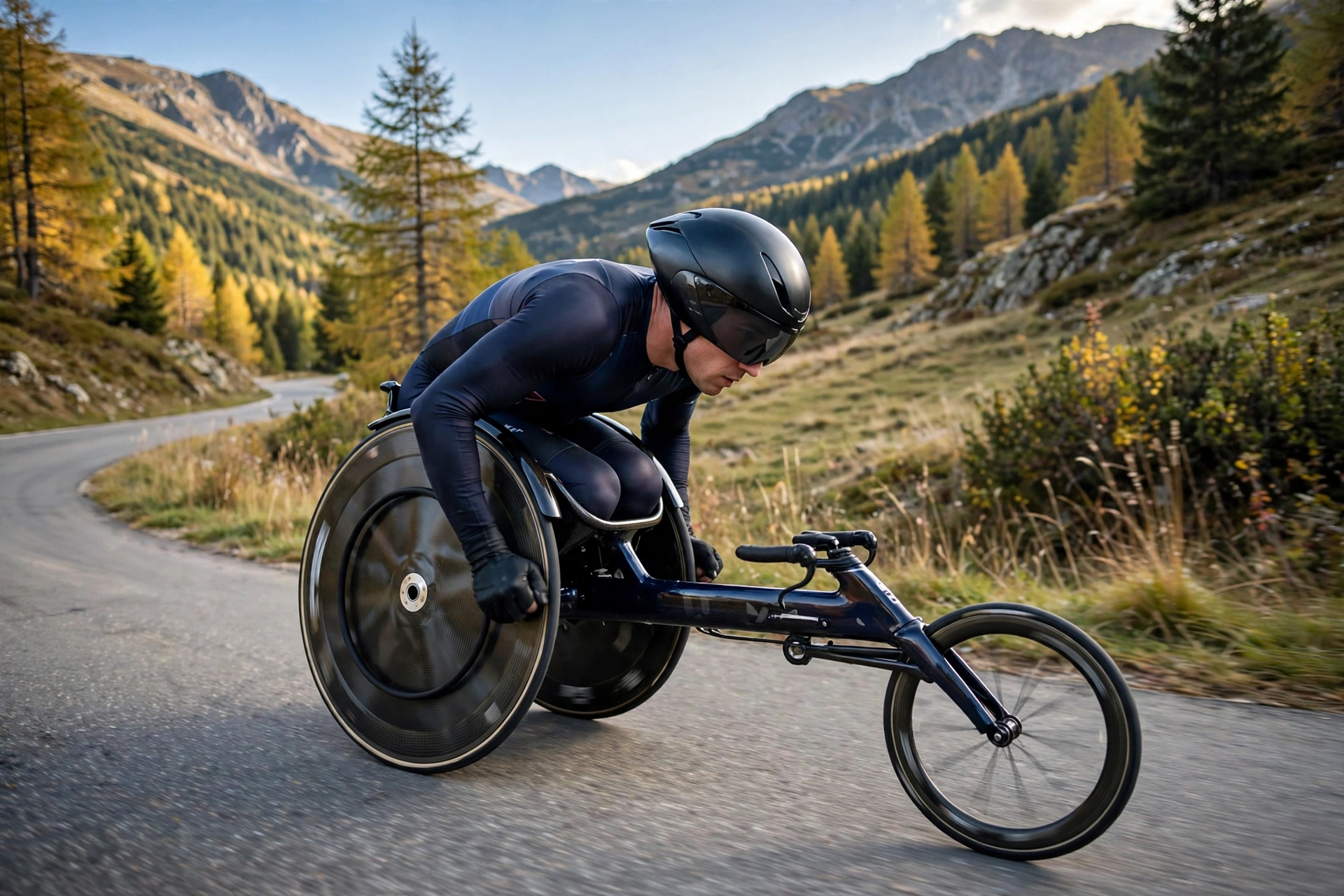
- Handcycling and paracycling. Handcyclists race on open roads under cycling-style regulations, and helmets are required just as they are for able-bodied cyclists.
- Sledge hockey (para ice hockey). Players wear full ice hockey helmets with cages or full-face protection, along with the rest of hockey’s protective kit — the game involves sticks, pucks, boards, and other sledges at speed.
- Downhill and high-speed formats. Adaptive downhill events, some off-road handcycle competitions, and other high-speed or contact-adjacent formats commonly require helmets under their event rules, in general terms.
The pattern is consistent: where wheelchair sport resembles cycling or hockey in speed and environment, it adopts cycling or hockey helmet rules. Always confirm the current rulebook of your federation or league, since requirements are updated and can differ between recreational and elite levels.
Do Wheelchair Basketball and Rugby Players Wear Helmets?
Generally, no — helmets are not mandated in mainstream wheelchair basketball or wheelchair rugby rules for most players, and most athletes compete bare-headed. That is not an oversight; the risk profile is different. These are court sports played at running speeds, where chairs collide and players do occasionally tip over, but sustained high-speed head-impact exposure is far lower than in racing or hockey.
That said, there are real exceptions and personal choices within the “not required” sports:
- Soft headgear. Some players choose padded soft headgear — not a hard helmet — to cushion knocks in falls or chair contact. It is a comfort and confidence measure rather than certified impact protection.
- Medical reasons. Athletes with a ventricular shunt, a seizure disorder, balance-related conditions, or a history of head injury are often advised by their clinicians to wear protection even where rules do not demand it. For a player who cannot reliably protect their head in a fall, that advice may extend to a hard helmet.
- Classification and position. Lower-classification players with less trunk control may tip more often and protect themselves less in a fall, which shifts the personal calculation toward headgear.
If your league does not require a helmet, the decision is a genuine judgment call to make with your coach and clinician — not something to copy from the player next to you, whose body and risks differ from yours.
Why Do the Rules Differ So Much Between Sports?
Three factors drive the differences: speed, surface, and traffic. A wheelchair racer at full pace is moving as fast as a cyclist, on asphalt, in a pack — the exact scenario bicycle helmet rules exist for. Sports helmet engineering follows the same logic; the rotational-impact principles explained in our guide to what MIPS is in a helmet come straight out of cycling, where head strikes at speed are the design case.
Court sports invert those factors. Speeds are lower, the surface is sprung wood rather than asphalt, and the dominant injuries are to hands, shoulders, and skin from chair contact — so governing bodies have historically managed head risk through chair design rules, classification, and officiating rather than helmets.
There is also a practical factor: the chair itself. A helmet that interferes with pushing, vision, or a headrest can create risk of its own — which is why “just wear one anyway” is not a universal answer, and why choosing the right helmet matters as much as choosing to wear one.
How Do You Choose a Helmet That Works With a Wheelchair?
If your sport requires a helmet, or you have decided to wear one, fit it around your chair and your style of play:
- Low profile and light. Choose a slim, lightweight helmet (for racers, an aero road-style cycling helmet is typical) that does not add leverage to your neck in your racing or playing posture.
- Headrest clearance. If your everyday or sports chair has a headrest, check the helmet does not push your head forward off it or catch on it when you turn. Test the full range of head movement you use in play.
- Pushing clearance. For handcyclists and rugby or basketball players, confirm the helmet and straps do not interfere with your stroke or with gloves on the push rims, and that straps won’t catch on wheels or chair parts.
- Fit under exertion. Fit the helmet as you will wear it — hair as worn in competition, nothing underneath — and check it stays still through a hard training effort, not just sitting in a shop. Sweat management and ventilation matter in a long race.
- Certification for the sport. Racing and handcycling helmets should meet the bicycle helmet standard your federation specifies; sledge hockey means a certified hockey helmet with the required face protection.
If you are choosing protection for medical reasons in a non-helmet sport, get the specification from your clinician first — soft headgear, a standard helmet, and a helmet worn with specific positioning are different answers, and the right one depends on what you are protecting against.
What Should New Wheelchair Athletes Do About Helmets?
Work through it in this order. First, read your sport’s current rulebook: at elite level the helmet question is usually answered for you, and showing up without required kit means not competing. Second, ask at your club — local leagues sometimes add house rules, and experienced teammates can tell you what actually gets worn and why. Third, factor in yourself: your classification, your fall history, and any medical advice you have been given.
If you are training for racing or handcycling outside competition — on open roads, in traffic — wear the helmet in training too, not just on race day. Road risk does not check whether an event is sanctioned. And in every sport, apply the universal helmet rule: replace any helmet after a significant impact, store it out of heat and sun, and re-check fit as liners compress with use.
Wheelchair sport offers everything from chess-paced tactics to genuine high-speed racing. Matching your head protection to your actual sport and your actual body is simply part of setting up like an athlete.
Frequently Asked Questions
Q: Do wheelchair sports athletes need helmets?
A: It depends on the sport. Helmets are required in wheelchair racing, handcycling, and sledge hockey. They are not mandated for most wheelchair basketball or rugby players, though some athletes choose soft headgear or a helmet for medical or personal reasons.
Q: Why don’t wheelchair basketball players wear helmets if chairs collide?
A: Court sports are slower, played on forgiving surfaces, and head-impact risk is managed through chair rules, classification, and officiating. The rules reflect that lower risk — but individual players with medical reasons may still choose protection.
Q: What kind of helmet should a wheelchair racer wear?
A: A certified, low-profile cycling-style helmet that fits snugly, clears any headrest, and stays put at racing effort. Confirm it meets the standard your federation specifies, and replace it after any significant impact.

Olivia
Writer at Helmet Today, covering helmet reviews, fit and riding safety.