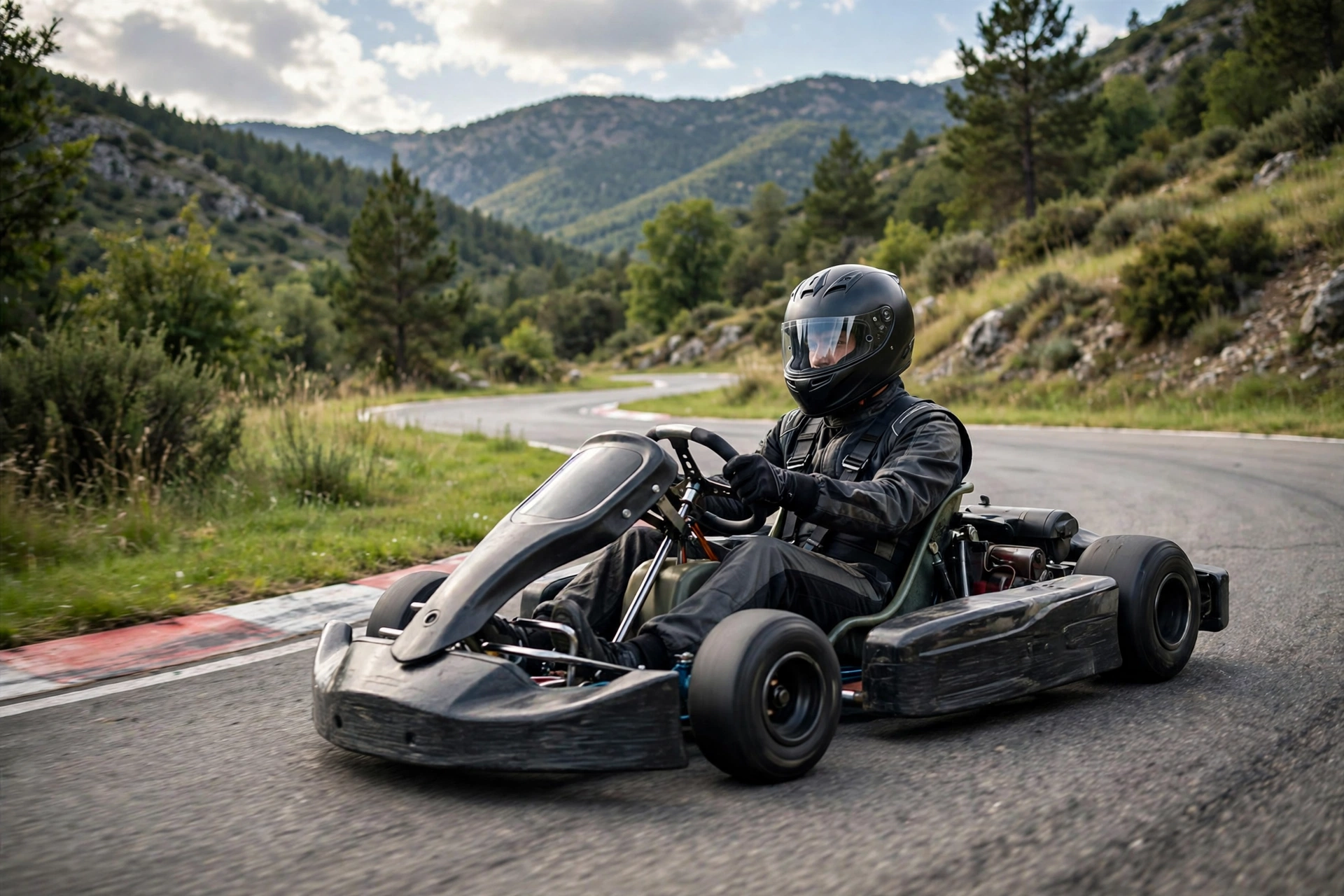
For sanctioned go-kart racing, you need a full-face helmet that meets a current racing standard — in general terms, a Snell karting/auto-racing rating or an FIA karting standard, as specified in your series rulebook. For casual rental karting, the track supplies basic full-face helmets that meet its own requirements. The rulebook, not the store shelf, decides what is legal — and racing certifications expire, so an old helmet can stop being legal even if it looks perfect.
Karting puts your head inches from the ground, other karts, and tire barriers, usually with no roll cage or belts in sprint karts. The helmet rules are strict for good reason. This guide explains the standards landscape, junior requirements, and why your street motorcycle helmet may — or may not — be accepted at the track.
What Standard Must a Racing Kart Helmet Meet?
Karting’s governing bodies and series publish approved helmet standards in their rulebooks, and in general terms they draw from two families:
- Snell ratings — Snell publishes karting-specific and auto-racing helmet standards, and many North American kart series require a current Snell-rated full-face helmet.
- FIA standards — international karting under FIA/CIK governance recognizes FIA helmet standards, which major international events require.
Three practical points matter more than the acronyms:
- Current means current. Standards update on multi-year cycles, and rulebooks typically accept only the latest one or two cycles. A helmet that was legal five seasons ago may be expired out of the rulebook today — tech inspectors check the certification label inside the helmet.
- Full-face is mandatory. Open-face helmets are not accepted for kart racing; the chin bar is essential because kart crashes are frequently face-forward.
- The series rulebook is the final word. National series, regional clubs, and indoor leagues each publish their accepted standards. Read the current one before you buy, or buy from a kart shop that stocks to your series’ rules.
What Do Junior Kart Racers Need?
Kid kart and junior classes add requirements on top of the helmet itself:
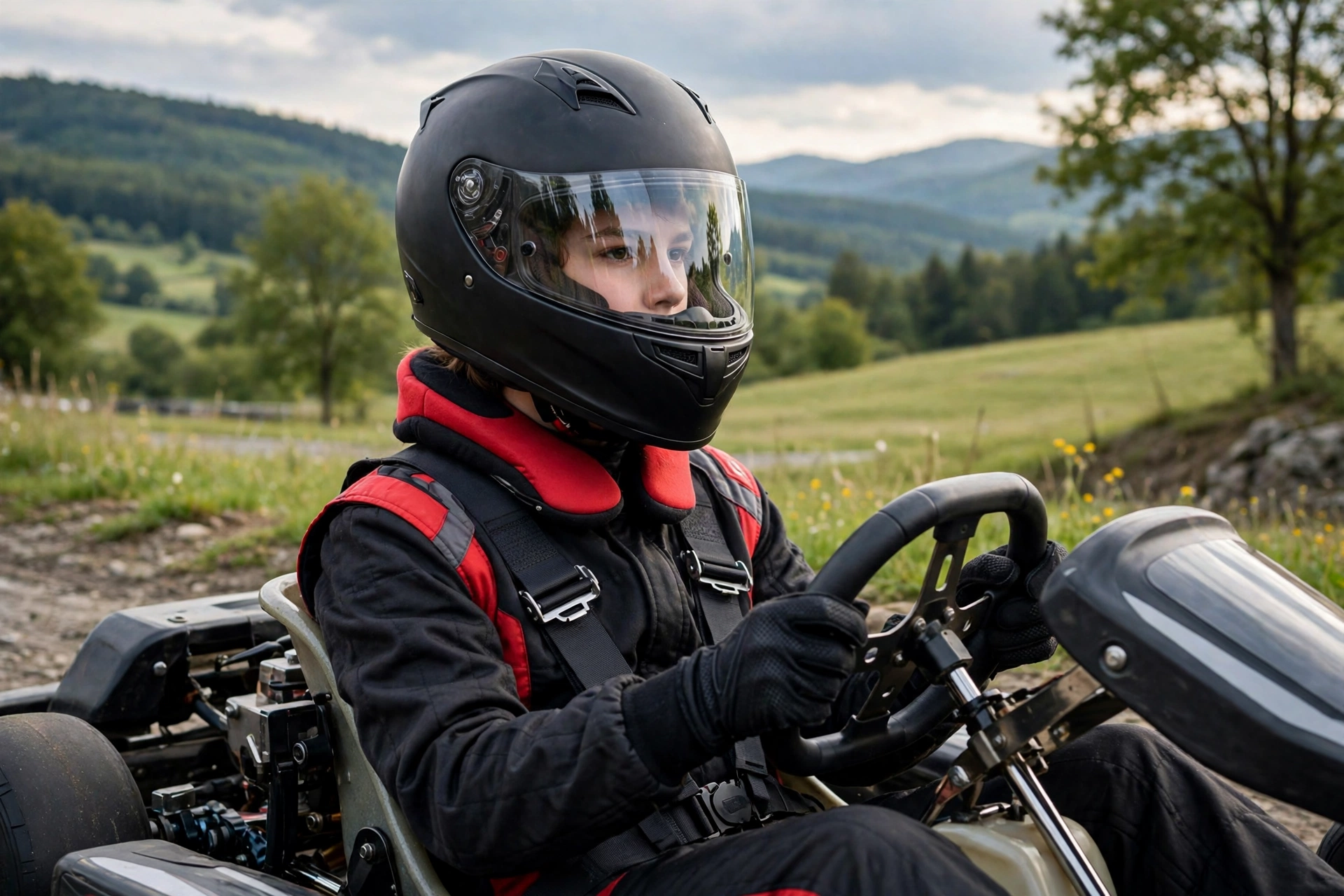
- Child-specific helmets: young drivers should wear helmets rated for karting in youth sizes — a smaller shell and lighter weight matter for developing necks.
- Neck support: junior drivers are commonly required to wear a neck collar or neck support device under series rules. The helmet and collar work as a system to limit head movement in impacts.
- Fit checks at tech: officials commonly check that a junior’s helmet is snug and correctly fastened before allowing them on track.
Parents should budget for growth: a junior helmet is outgrown before it is worn out, and a loose helmet fails both the rules and its purpose. Never size up “to grow into” — a kart helmet must fit correctly today.
What About Rental Karting?
Arrive-and-drive rental karting is a different world. Tracks supply helmets included in the session price, and those helmets are chosen by the track to satisfy its insurer and local rules — typically full-face helmets with basic road-style certification (DOT-style in general terms) rather than racing certifications.
For rental karting:
- You do not need to own anything — the track’s helmet is the required helmet.
- You may usually wear your own full-face helmet if it is in good condition, and many regulars do for fit and hygiene.
- Bring a balaclava or head sock if you use shared helmets often — tracks provide disposable liners, but your own is nicer.
- Indoor electric kart venues follow the same pattern: house helmet, house rules.
The jump from rental to owner-driver racing is where certification becomes your problem: the moment you enter a sanctioned series, the rulebook’s standard applies to the helmet on your head.
Can You Race Karts in a Motorcycle Helmet?
Sometimes — and this is where drivers waste money. A premium full-face street motorcycle helmet is excellent protection, but racing acceptance is about the certification label, not real-world quality. If your motorcycle helmet carries a current rating that your series rulebook lists, it may be accepted; many rulebooks specifically list karting/auto standards and do not include motorcycle-only certifications, in which case the helmet is illegal for racing no matter how good it is.
There are also practical differences: racing helmets are built around car/kart use — narrower eye ports optimized for forward vision, fire-retardant liners in auto-rated models, and compatibility with head-and-neck restraint posts in senior categories. Helmet safety thinking is converging across motorsport and cycling — technologies like MIPS address rotational forces in bike helmets, while kart standards focus on the impact and retention profiles of four-wheel racing — but the labels remain discipline-specific.
Bottom line: check the rulebook first, then shop. If you race regularly, a dedicated karting helmet that your tech inspector will pass without discussion is worth it.
Buying well matters as much as buying legally. Purchase from a karting or motorsport retailer that can verify the model, size, and certification date with you, and be skeptical of marketplace bargains: counterfeit and mislabeled racing helmets exist, and a fake label will not protect your head or satisfy an inspector. Try the helmet on before race day, confirm the certification sticker is present and current for your series, and keep the receipt — some series and insurers ask for proof of age and standard.
How Should a Kart Helmet Fit — and When Is It Done?
Fit follows the universal rules: measure your head, match the maker’s size chart, and try it on. A kart helmet should be snug all over with firm cheek-pad pressure on a full-face, no rocking or lifting, and no forehead hotspot after ten minutes of wear. The strap must fasten securely and stay put — inspectors tug it.
Retire a kart helmet when:
- It has been in any real crash — replace it even if the shell looks fine; internal foam damage is invisible.
- Its certification cycle ages out of your rulebook — a paperwork retirement, not a damage one.
- The liner compresses, the strap frays, or the fit loosens noticeably.
- For juniors, the moment it is outgrown.
Frequently Asked Questions
Q: Do I need a special helmet for go-kart racing, or will any full-face do?
A: Sanctioned racing requires a full-face helmet meeting a current standard named in the series rulebook (Snell karting/auto or FIA karting standards in general terms). Rental karting is different — the track supplies an acceptable helmet.
Q: Can I use my motorcycle helmet for kart racing?
A: Only if its certification is listed in your series rulebook. Many rulebooks accept only karting/auto racing standards, so check before you arrive — tech inspection checks the label inside the helmet.
Q: Do kids need anything besides a helmet for karting?
A: Junior drivers commonly must also wear a neck support/collar, and they need a properly fitting youth karting helmet — never an oversized adult helmet to grow into.

Olivia
Writer at Helmet Today, covering helmet reviews, fit and riding safety.