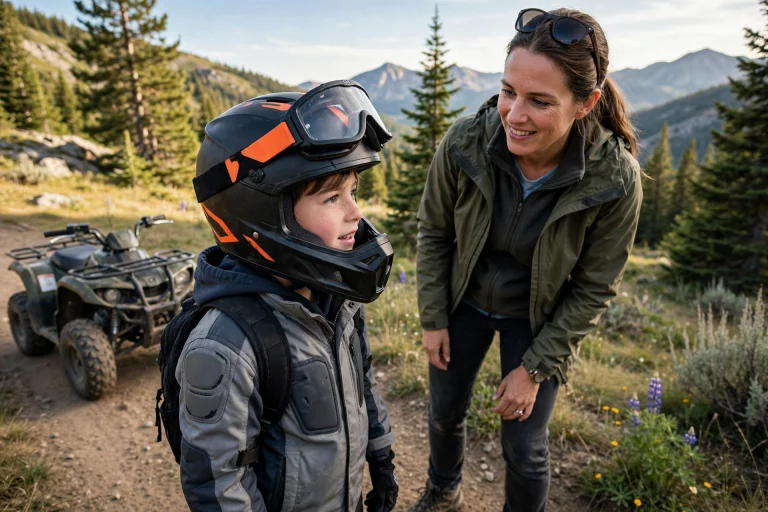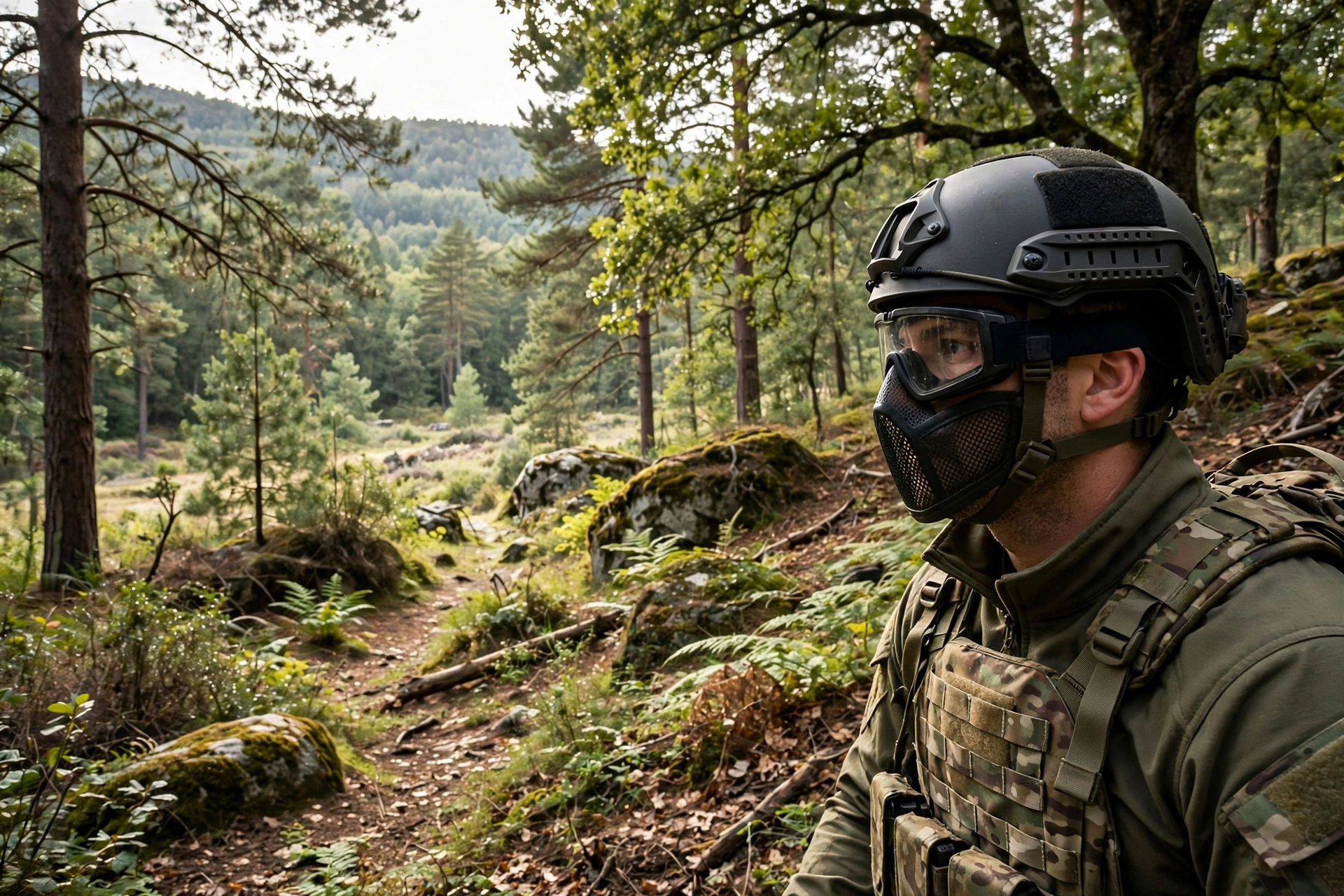
The difference is coverage and structure. A full-face airsoft mask is one integrated piece — rated eye protection plus lower-face protection in a single unit. A helmet setup is a modular system: a helmet for head coverage, separate full-seal goggles for your eyes, and a mesh lower mask for your teeth and cheeks. Both approaches revolve around the same non-negotiable core: properly rated, full-seal eye protection.
Which one suits you depends on your field’s rules, your budget, and how much you value modularity versus simplicity. This guide breaks down both systems, where each one shines, and the safety mistakes that get players sent home.
What Is the One Thing Every Airsoft Player Must Have?
Full-seal, impact-rated eye protection. Airsoft BBs are small, fast, and unforgiving, and eyes do not heal from direct hits. Acceptable eye protection means:
- Full seal: the goggle foam or frame seals completely against your face with no gaps a BB can slip through — especially underneath and at the temples.
- Proper impact rating: look for goggles rated to recognized ballistic/impact standards (in general terms, the high-impact ratings used for airsoft and military eye protection), not fashion eyewear or basic shop glasses.
- Secure retention: a strap that keeps the seal in place when you run, fall, and sweat.
Shooting glasses and sunglasses are not acceptable, even expensive ones: they do not seal, and a BB can enter from the side or below. Many fields check eye protection at chrono, and unrated eyewear means no play. Everything below the eyes — mask, helmet, or both — is about protecting teeth, skin, and skull, but the eyes come first and are never optional.
How Does a Full-Face Airsoft Mask Work?
A full-face mask combines the goggles and lower-face protection into one fitted piece — think of the paintball-style profile adapted for airsoft, or a mask with a steel-mesh lower section. Its advantages are real:
- Simplicity: one item to buy, fit, and put on. Nothing to mismatch or forget.
- Guaranteed coverage: eyes, nose, mouth, teeth, cheeks, and usually ears are all covered by design, with no gap between goggle bottom and lower mask.
- Beginner-friendly: it is the easiest way to walk onto any field fully compliant.
- Junior-friendly: many fields require full-face masks for minors, and an integrated mask is the straightforward way to meet that rule.
The trade-offs: a one-piece mask can feel warmer and can fog as a unit; cheek weld against a rifle stock is bulkier; and the fit is less adjustable — if the mask does not suit your face shape, the whole thing is wrong rather than one component. Mesh-lower versions breathe better and never fog at the mouth, but offer no lens over the lower face (which is fine — the eyes are what the lens protects).
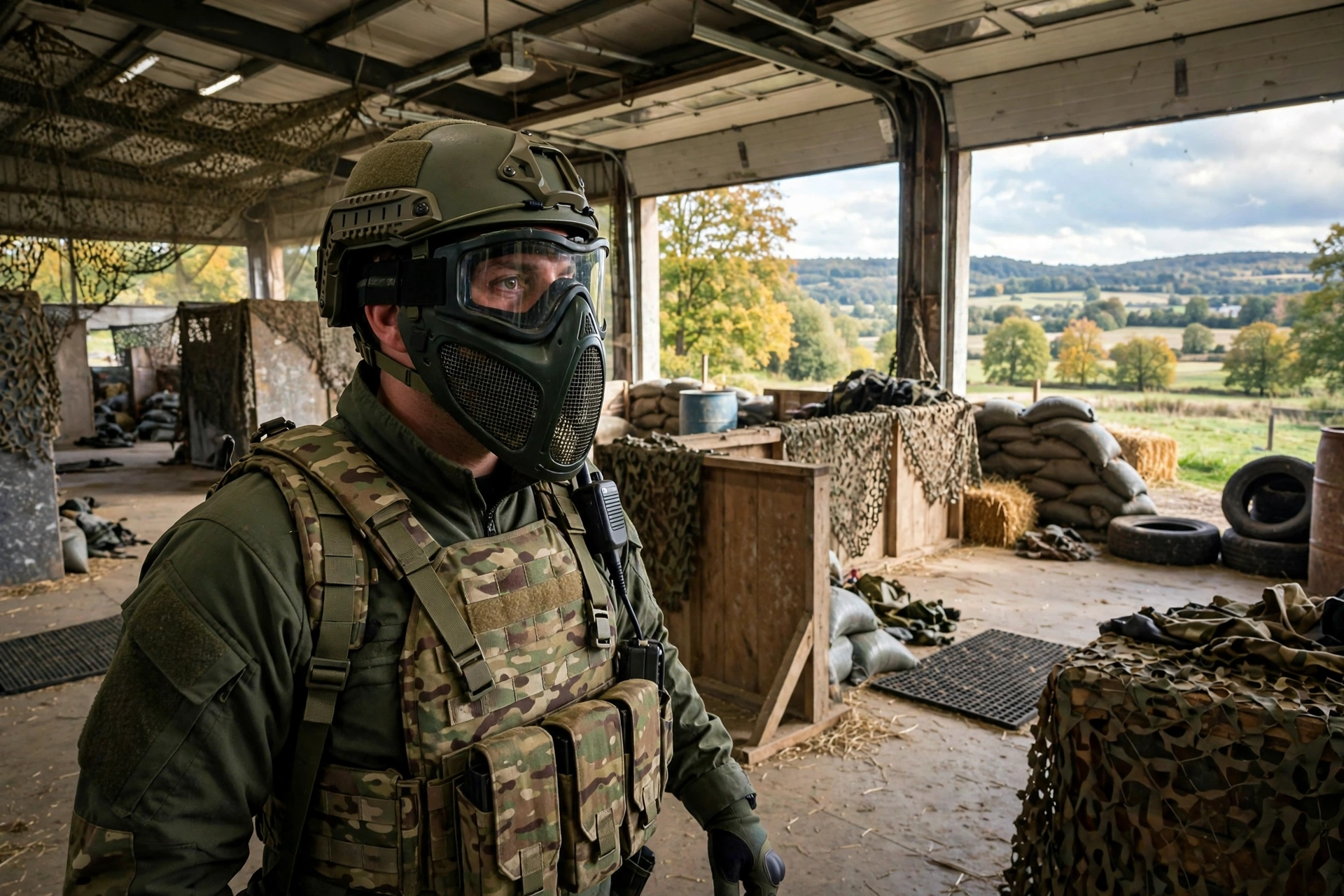
How Does a Helmet Setup Work?
The helmet build is three components worn together:
- The helmet — typically a lightweight bump-style or replica tactical helmet. It protects the skull from bumps, doorframes, branches, and falls, and provides a platform for cameras, lights, and night-vision mounts. It does not protect your eyes.
- Full-seal goggles worn under or over the helmet — this is the actual rated eye protection.
- A mesh lower mask protecting teeth, lips, and cheeks. Dental damage is the most common airsoft injury after eye injuries, and a mesh lower is cheap insurance.
The appeal is modularity and comfort over a long day: you can lift the goggles without removing the helmet, vent heat better, fit everything precisely to your head, and run a proper cheek weld with a slim mesh lower. The costs are money (three purchases instead of one), complexity, and the risk of gaps if the goggle-to-lower-mask interface is sloppy — check in a mirror that no skin channel leads to your eyes.
Modern helmet systems across sports have converged on the same priorities — fit, retention, and impact management, the same thinking behind technologies like MIPS in cycling lids — and airsoft bump helmets follow that pattern even though they are bump protection, not ballistic helmets.
Which One Should You Choose?
Decide by your situation:
- New player, first games: full-face mask. Cheap, compliant everywhere, zero setup fuss.
- Under 18: full-face mask — most fields mandate full-face coverage for minors regardless of preference.
- Long outdoor/milsim games: helmet setup. Better heat management, better stock fit, better bump protection over hours of play.
- Indoor/CQB: either works; close ranges make full, gap-free face protection the priority, so lean toward whichever system seals best on your face.
- Glasses wearer: both systems can work — look for goggles or masks with room for frames, or use prescription inserts made for rated eye protection.
Whichever you pick, fog is the universal enemy. Anti-fog wipes and coatings help; dual-pane lenses and small fan goggles are the premium fixes. If you cannot see, you will lift your protection — and that is when injuries happen. Budget for fog control as part of the system, not an afterthought.
If you are torn between the two, try both at a local shop or borrow at the field. Fit is personal: the full-face mask that seals perfectly on your friend may gap at your temples, and the helmet setup that feels balanced on one head shape may ride high on another. Ten minutes of trying gear on beats reading ten more comparisons — what matters is which system seals, stays put, and stays fog-free on your face for a full game.
What Mistakes Get Airsoft Players Hurt or Banned?
- Playing in shooting glasses or sunglasses instead of full-seal rated goggles.
- Lifting goggles on the field to wipe fog — step off to the safe zone, every time.
- Skipping the lower mask and losing a tooth to a close-range shot.
- Assuming a helmet alone is eye protection. It is not — the goggles underneath do that job.
- Mixing unrated mesh eye covers into a game whose field bans mesh eye protection (many do, since mesh can let fragments through).
Frequently Asked Questions
Q: Is a helmet required for airsoft?
A: No. Rated full-seal eye protection is the mandatory item. A helmet is optional head/bump coverage, and if you wear one you still need goggles and (strongly recommended) a lower-face mask with it.
Q: Are full-face masks better than helmet setups?
A: For beginners and minors, yes — simpler, fully compliant, and gap-free. Experienced players often prefer helmet setups for comfort, modularity, and better rifle fit over long games.
Q: Can I play airsoft in just shooting glasses?
A: No. Shooting glasses do not seal against the face and are not a substitute for full-seal impact-rated goggles. Fields that check — and most do — will not let you play in them.

Olivia
Writer at Helmet Today, covering helmet reviews, fit and riding safety.