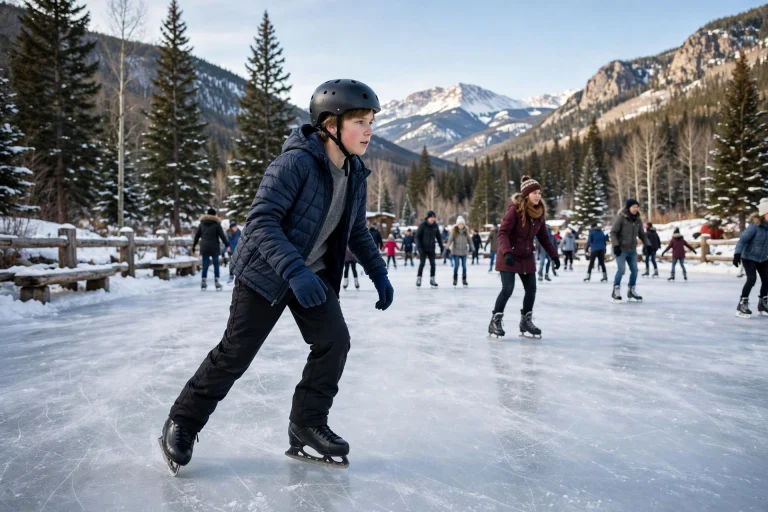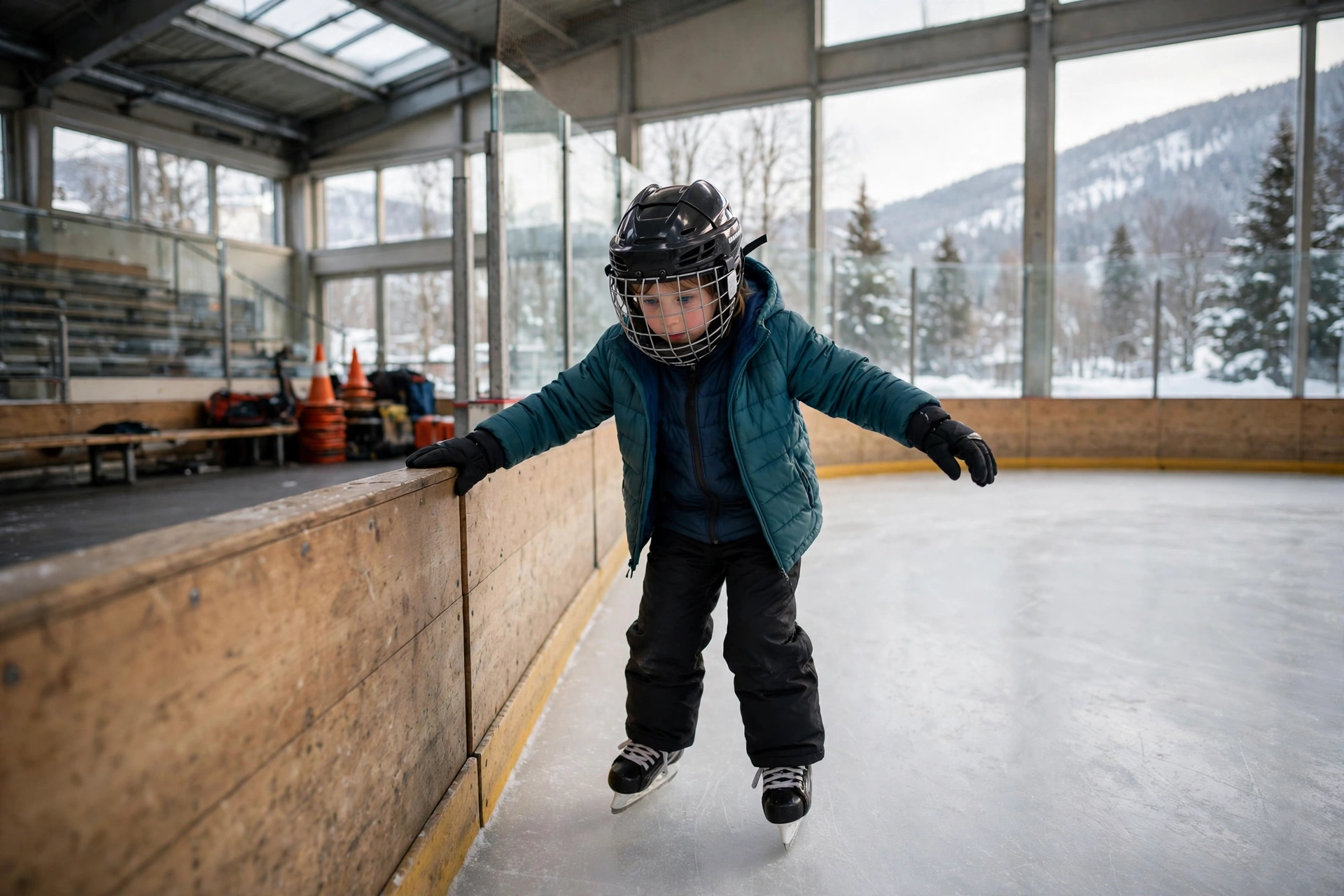
Short answer: No U.S. law requires children to wear a helmet for ice skating — but yes, your child should wear one anyway. Ice is one of the hardest surfaces a kid can fall on, beginners fall backward without warning, and head injuries are a real risk for young skaters. Many rinks, schools, and lesson programs now require helmets for children, and a proper hockey or skating helmet is the best choice.
Parents often hesitate because they skated bareheaded as kids, or because nobody else at the public session seems to be wearing one. That is changing fast: helmets for child skaters are increasingly the norm, especially for under-12s and anyone in lessons. Here is why the recommendation is so strong, and how to pick and fit the right helmet.
Is There a Law That Requires Helmets for Ice Skating?
In the United States, no state or federal law mandates helmets for recreational ice skating. Skating rules are set by whoever runs the ice: the rink, the school, the lesson program, or the hockey association. That is why requirements vary so much from one rink to the next.
In practice, many facilities have filled the gap themselves. Learn-to-skate programs commonly require helmets for young children — often for everyone under a set age, sometimes for all lesson participants regardless of age. Schools that run skating field trips frequently make helmets mandatory for students. If you are signing your child up for lessons, expect a helmet requirement and plan for it.
Canada’s public-health guidance is notably firmer: health authorities there have long recommended helmets for children and teens who skate, and many Canadian municipalities and rinks require them for young skaters. The direction of travel on both sides of the border is the same — toward helmets as standard equipment for kids on ice.
Why Is Ice Such a Risky Surface for Young Skaters?
Ice offers almost no friction and no give. When a beginner loses balance — and every beginner does, repeatedly — the fall is fast, and children tend to fall backward because their weight shifts onto their heels as they try to stay upright. A backward fall puts the back of the head on a direct line to a surface about as forgiving as a concrete sidewalk.
Children are also more vulnerable than adults in the same fall. Their heads are proportionally larger and heavier relative to their bodies, their neck muscles are still developing, and their balance reactions are slower. Add rented skates with unfamiliar blades, a crowded public session, and faster skaters weaving past, and collisions become part of the picture too — a child can be knocked down by someone else’s fall.
None of this means skating is unreasonably dangerous; it is a wonderful sport and great exercise. It simply means the most common bad outcome — a head striking hard ice — is exactly the outcome a helmet is designed to reduce.
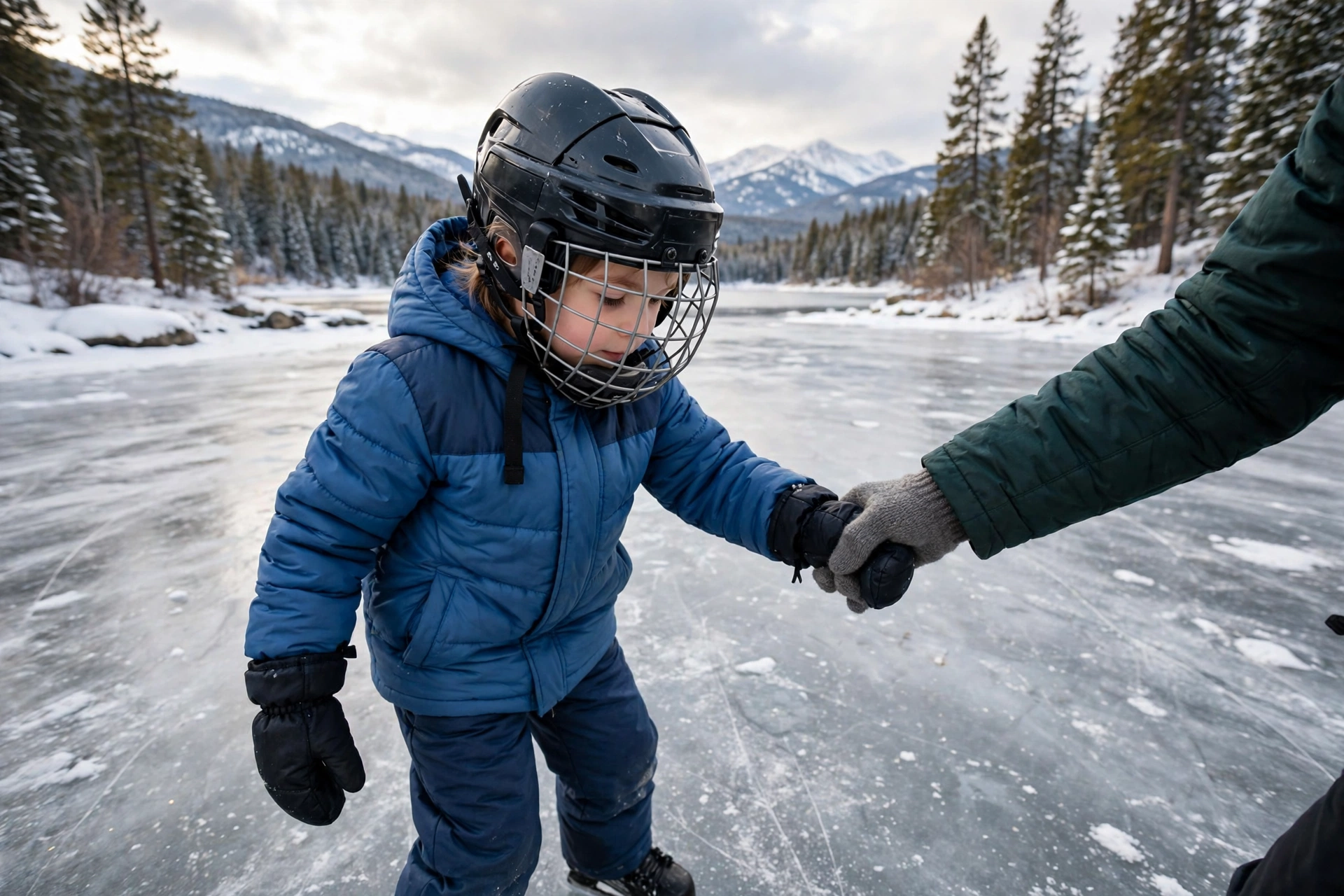
What Kind of Helmet Is Best for a Child Ice Skater?
The best choice is a hockey helmet or a purpose-made skating helmet. Hockey helmets are built for this exact environment: they cover the back and sides of the head well, use multi-impact foam designed for repeated falls on ice, and stay secure with a proper chin strap. A cage or visor is optional for recreational skating, but the basic helmet is ideal.
Whatever you choose, look for recognized certification on the label and a helmet designed for winter ice use rather than a summer-only design. A multi-impact liner matters here because rink falls are usually low-to-moderate energy but frequent — the opposite of the single big crash a bike helmet is built for. Some helmets also add rotational-impact systems; our guide to what MIPS is and how it works explains that technology if you want the details.
Comfort decides whether your child will actually wear it. A warm liner or a thin skating cap underneath (only if the fit stays snug), a style your child likes, and a helmet that does not pinch will get worn every session. Choose with your child involved, but never trade certification and fit for a favorite color.
How Should a Child’s Ice Skating Helmet Fit?
Fit follows the same rules as any helmet. Measure around your child’s head just above the eyebrows and match the number to the manufacturer’s size chart — do not buy a size up “to grow into,” because a loose helmet can shift or come off in a fall.
- The helmet should sit level, covering the forehead, about an inch above the eyebrows.
- It should feel snug all around with no rocking when your child shakes their head.
- The chin strap must be fastened and snug — one finger of space underneath, no more.
- Side straps should sit flat, forming a V below each ear.
Have your child wear the helmet for ten minutes at home first. Complaints about forehead pressure or ear pinching are easier to fix on the couch than at the rink with skates already on. Check the fit again every few months — kids grow, pads compress, and a helmet that fit in November may be loose by February.
When Can Older Kids and Teens Make Their Own Helmet Call?
There is no magic age, but the transition usually follows skill and setting rather than birthdays. A confident teen figure skater practicing controlled elements at a quiet session faces a different risk profile than a wobbly eight-year-old at a packed public skate. Many families relax the rule gradually for experienced teens in low-risk settings while keeping it firm for lessons, hockey, crowded sessions, and outdoor ice, where hidden cracks and bumps add risk.
Two things should never be negotiable, whatever the age: anyone playing hockey follows hockey’s helmet rules, full stop; and any skater returning after a head impact should be evaluated before skating again and should replace the helmet involved. For younger children, parents make the call — and the evidence-backed call is helmet on, every time they step on the ice.
Frequently Asked Questions
Q: At what age should a child start wearing a helmet for ice skating?
A: From the very first time they step on the ice. Toddlers and preschoolers in their first lessons are the most frequent fallers of all, and many learn-to-skate programs require helmets for young children regardless of experience.
Q: Is a hockey helmet required, or will another helmet do?
A: A hockey helmet is the best option because it is designed for repeated falls on ice and covers the back of the head well. A certified multi-impact skating or ski helmet can also work if it fits properly. A bike helmet is a backup — see our related guidance — but not the ideal tool.
Q: Do adults need helmets for ice skating too?
A: No law requires it, but adult beginners fall just as hard as kids do, and many adult learn-to-skate students choose hockey helmets for their first sessions. It is a sensible choice while your balance is still developing.

Olivia
Writer at Helmet Today, covering helmet reviews, fit and riding safety.