You need a mask — specifically, a full paintball mask system with goggles, face protection, and ear coverage that is certified for paintball. Every paintball field requires one, and no helmet of any kind substitutes for it. A helmet is only an optional extra that adds coverage to the top and back of your head on top of the mask.
New players mix these up constantly, because “something on your head” sounds like one purchase. It is not. This guide explains what a paintball mask actually is, what a helmet adds, which combinations fields allow, and the rental-versus-buying decision most first-time players face.
What Exactly Is a Paintball Mask?
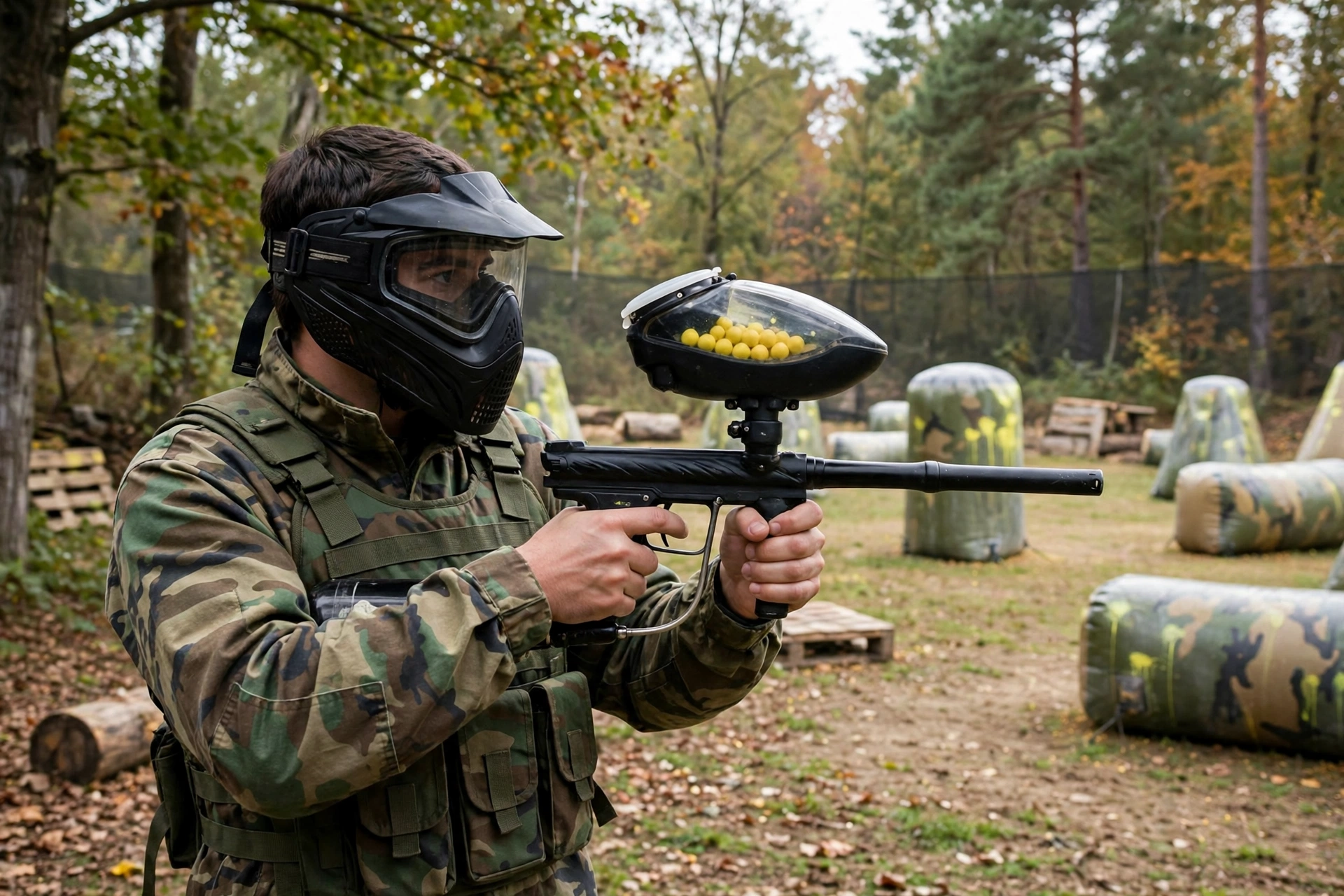
A paintball mask is an integrated protection system, not just goggles. A proper mask includes:
- Certified goggle lenses rated for paintball impacts, meeting the sport’s recognized safety standard (ASTM in general terms).
- Full face coverage protecting the cheeks, mouth, chin, and jaw from direct hits.
- Ear protection — paintballs to the ear are painful and can be dangerous, so real masks cover the ears.
- A secure strap system that keeps everything sealed against your face while you run, dive, and slide.
The certification matters. Paintball lenses are tested against repeated direct impacts at playing velocities. Ordinary safety glasses, ski goggles, airsoft mesh, and shop goggles are not built or tested for that, which is why fields inspect masks at check-in and will send you to the rental counter if yours does not qualify.
Thermal (double-pane) lenses are the single biggest quality-of-life upgrade, because they resist the fogging that plagues cheap single lenses on humid days.
What Does a Paintball Helmet Add — and What Can’t It Do?
A paintball helmet covers the top, sides, and back of the skull — the areas a standard mask leaves exposed. Players add one for a few reasons:
- Head hits from above and behind sting, and a helmet removes that pain almost entirely.
- Woodsball and scenario players crawling through brush get bumped and scraped on the head.
- It gives a mounting platform some players like for cameras or gear.
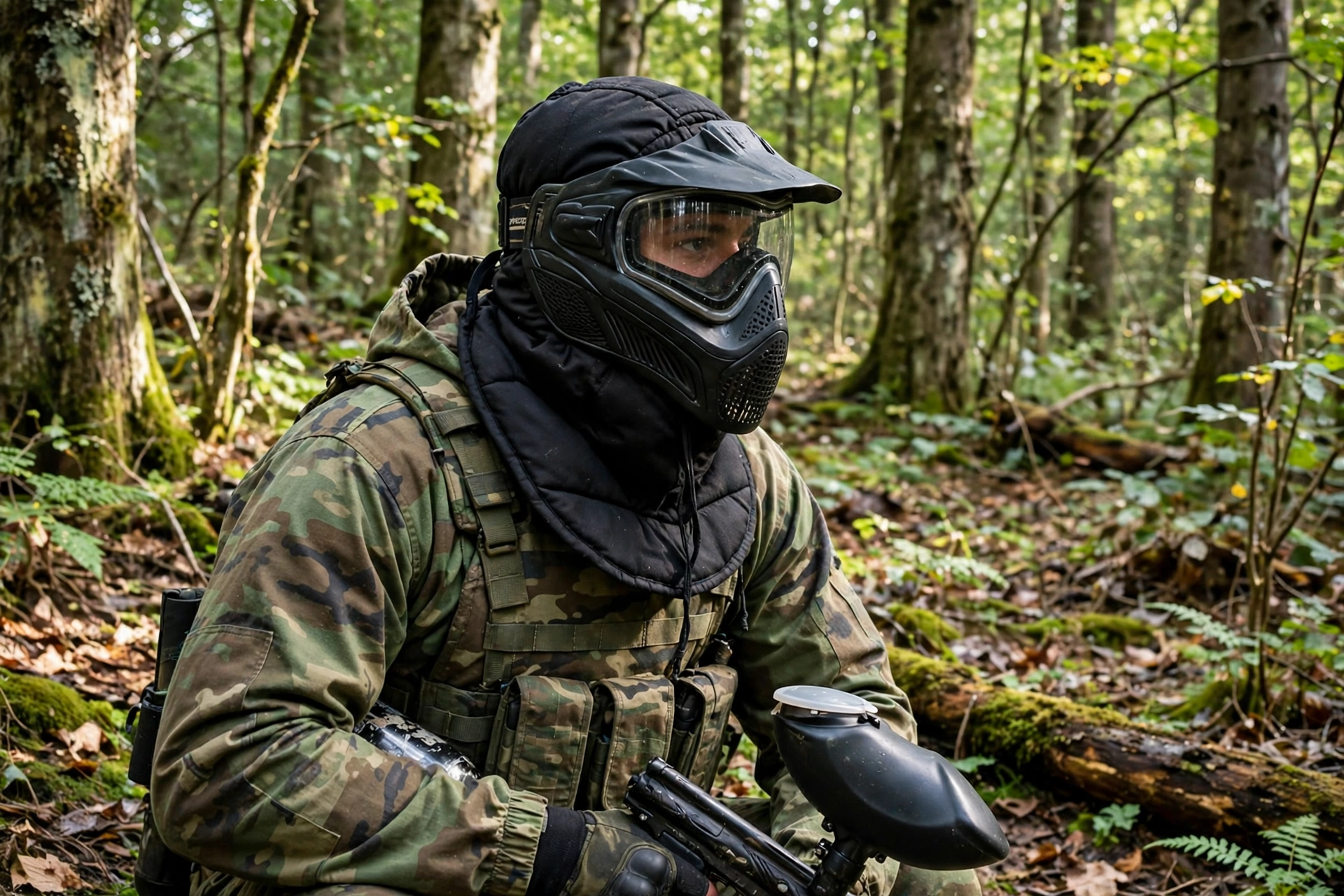
What a helmet cannot do is replace the mask. A helmet has no certified lens sealing your eyes. Even a full-coverage paintball helmet is designed to be worn with a mask underneath or integrated into a full-head mask system — some premium masks extend coverage over the whole head, which is the closest thing to a true one-piece solution, but it is still sold and certified as a mask system.
Two warnings that fields are strict about:
- Never use an airsoft helmet or mask for paintball. Airsoft eye protection and mesh are rated for much lighter projectiles and can fail against a paintball.
- Never use a motorcycle or bicycle helmet. The visor and foam are not certified for paintball impacts, the seal around the eyes is wrong, and fields will not allow it.
Which Combination Should You Wear?
For most players, the answer is simple: a good mask, and nothing else on your head. Work through it like this:
- Just starting out: mask only. Spend your budget on a comfortable mask with a thermal lens before anything else.
- Hate head hits: mask plus a paintball-specific helmet, or a full-coverage mask model that extends over the top and back of the head.
- Woodsball/scenario play: mask plus helmet or a padded head wrap is common, because branches and terrain add as many knocks as paintballs do.
- Speedball: almost everyone wears a mask only, sometimes with a soft headband or beanie for forehead padding — light and low-profile wins.
Whatever you add, the mask stays on and sealed. If a helmet pushes your mask out of position or breaks the seal at your temples, that combination is wrong — change the helmet, not the fit of the mask. Eye safety systems in other sports have gone through the same design evolution as cycling’s MIPS era in helmets: fit and correct use matter as much as the certification itself.
Should You Rent or Buy Your First Mask?
Rental gear makes sense for your very first day. Field rental masks are certified and inspected, and one outing tells you whether you enjoy the sport before you spend anything.
Buy your own mask as soon as you know you will play again, for three reasons:
- Vision: rental lenses are often scratched and single-pane, so they fog. Your own thermal lens is a night-and-day difference.
- Fit and comfort: a mask fitted to your face and adjusted once stays comfortable all day.
- Hygiene: your mask, your foam, your sweat. Enough said.
When buying, try masks on if you can. Check that the foam seals fully around your eyes with no gaps, that you can breathe and shout through the mouth area, and that the lens system is easy to swap — you will replace lenses over the mask’s life. Budget-wise, the mask is the last place to economize; a mid-range marker with a great mask is a better day than a premium marker behind a fogged rental.
How Do You Care for a Paintball Mask?
Lenses are the consumable heart of the system. Clean them with water and a microfiber cloth only — paper towels and harsh chemicals scratch and degrade the coating and the lens itself. Many makers warn against household glass cleaners on paintball lenses.
Replace a lens that has taken heavy direct hits, shows cracks, or has deep scratches in your line of sight. Store the mask in its bag so the lens is not crushed in your gear bag, and never leave it lens-down on a table. With basic care, the frame and foam last for seasons while you refresh lenses as needed.
Eventually the mask itself is done: foam that no longer seals, a frame cracked from a hard impact, or straps that have lost their elasticity all mean the system is no longer protecting you the way it was certified to. Masks are not lifetime purchases — but a well-kept mid-range mask will comfortably outlast several lenses and at least a couple of seasons of regular play before it needs replacing.
Frequently Asked Questions
Q: Can I play paintball with just a helmet and safety glasses?
A: No. Fields require a certified paintball mask system with full face and ear coverage. A helmet plus glasses leaves your face and ears unprotected and will not pass check-in.
Q: Is a helmet required for paintball?
A: No — the mask is the required item. A helmet is optional extra coverage for the top and back of the head, worn in addition to the mask.
Q: Can I use my airsoft or motorcycle helmet for paintball?
A: No. Neither is certified for paintball impacts, and fields will not allow them. Use a paintball-certified mask, and only paintball-specific head coverage over it.

Olivia
Writer at Helmet Today, covering helmet reviews, fit and riding safety.