Fit a youth ATV helmet by measuring your child’s head and choosing a youth-specific, DOT-approved model that sits snug all around without pain, does not rock when they shake their head, and fastens with about one finger of room under the chin strap. Replace it after any crash, the moment it is outgrown, or when its age and condition say so — even if it still looks fine.
Kids’ ATV helmets are where parents most often go wrong: a small adult helmet, a hand-me-down, or a size bought “to grow into” can all fail a child in a tip-over. This guide covers the fit half and the replacement half in detail.
How Do You Measure a Child for an ATV Helmet?
Start with a soft tape measure (or a string and a ruler). Wrap it around the head at the largest part — just above the eyebrows and ears, across the bump at the back of the head. Take the measurement two or three times and use the largest number.
Then match that number to the manufacturer’s own size chart for the specific model you are buying. Youth sizes are not standardized across brands, and a “youth medium” from one maker can equal a “youth large” from another. Never order by age alone — two eight-year-olds can be two helmet sizes apart.
If your child falls between sizes, most makers advise the smaller size if the helmet will be worn with its full padding in place, because pads break in slightly with use. But never force a fit that causes pain — between-sizes kids sometimes simply need a different model with a different shell shape.
Why Must It Be a Youth Model, Not a Small Adult Helmet?
Youth ATV helmets are engineered differently, not just scaled down:
- Weight: children’s neck muscles are still developing. A youth helmet is built lighter, and that matters on every bump and in every crash. An adult helmet — even a small — is heavier than a child’s neck should carry on an ATV.
- Shell size: a small adult shell on a small head puts thick pads between the shell and skull, which lets the head move inside the helmet before the pads engage. Youth shells are proportioned to youth heads.
- Certification: choose a helmet with the DOT approval label — youth ATV helmets sold for motorized use should carry the same DOT standard as adult off-road helmets. A bicycle helmet is not an acceptable substitute on a motorized ATV.
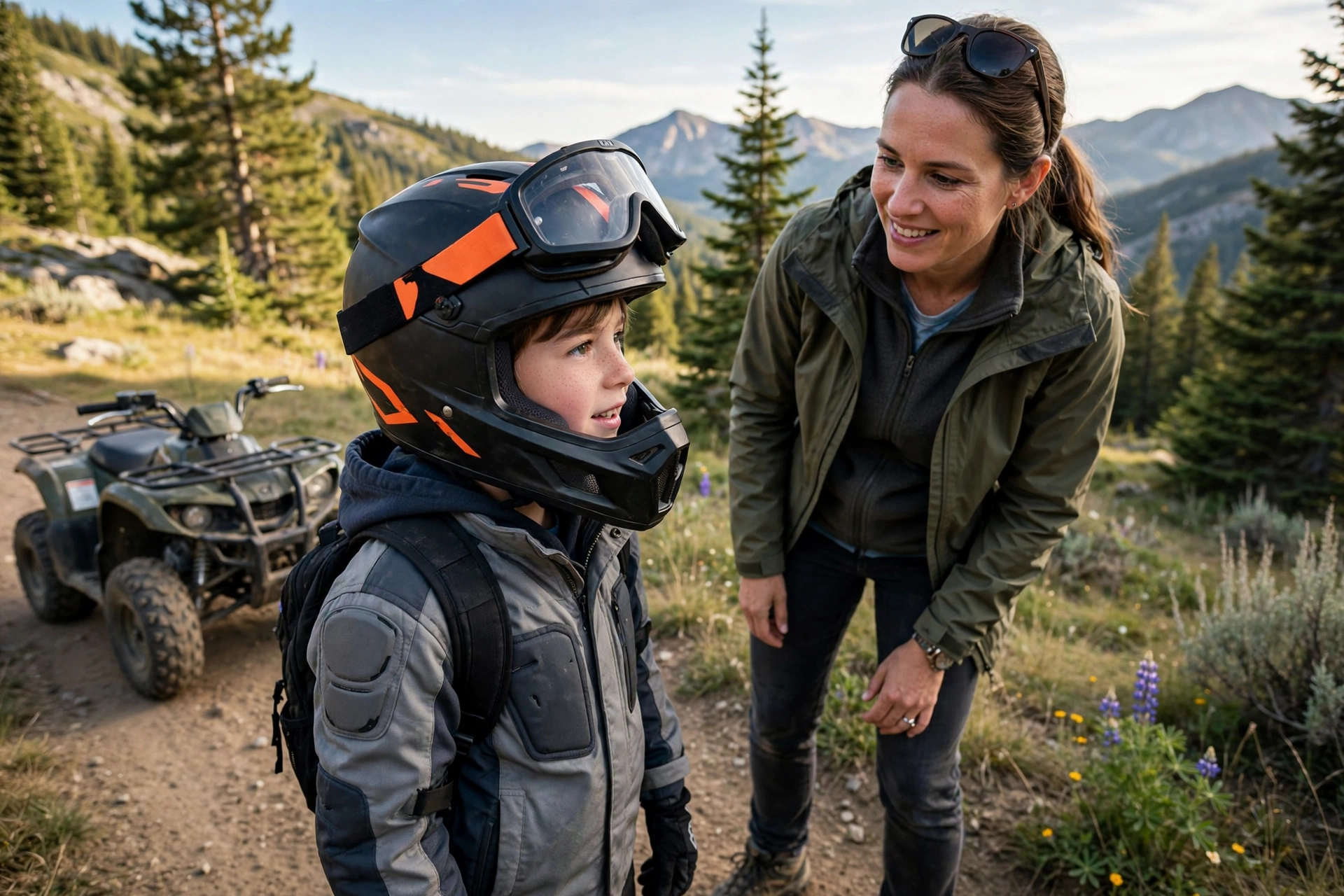
Also match the helmet to the riding: a motocross-style youth helmet with goggles handles dust and roost, and the extended chin bar gives face protection that open designs do not.
What Fit Checks Should You Run Before Riding?
Run these five checks with the helmet on and the strap fastened:
- Shake test: have your child shake their head side to side and nod. The helmet should move with the head, skin and all — not slide or rock independently.
- Roll-off check: from behind, try to roll the helmet forward off the head with the strap done up. It should not come off or expose the forehead.
- Pressure check: snug everywhere, painful nowhere. Cheek pads should press firmly; a forehead hotspot means the shape is wrong, not that it needs breaking in.
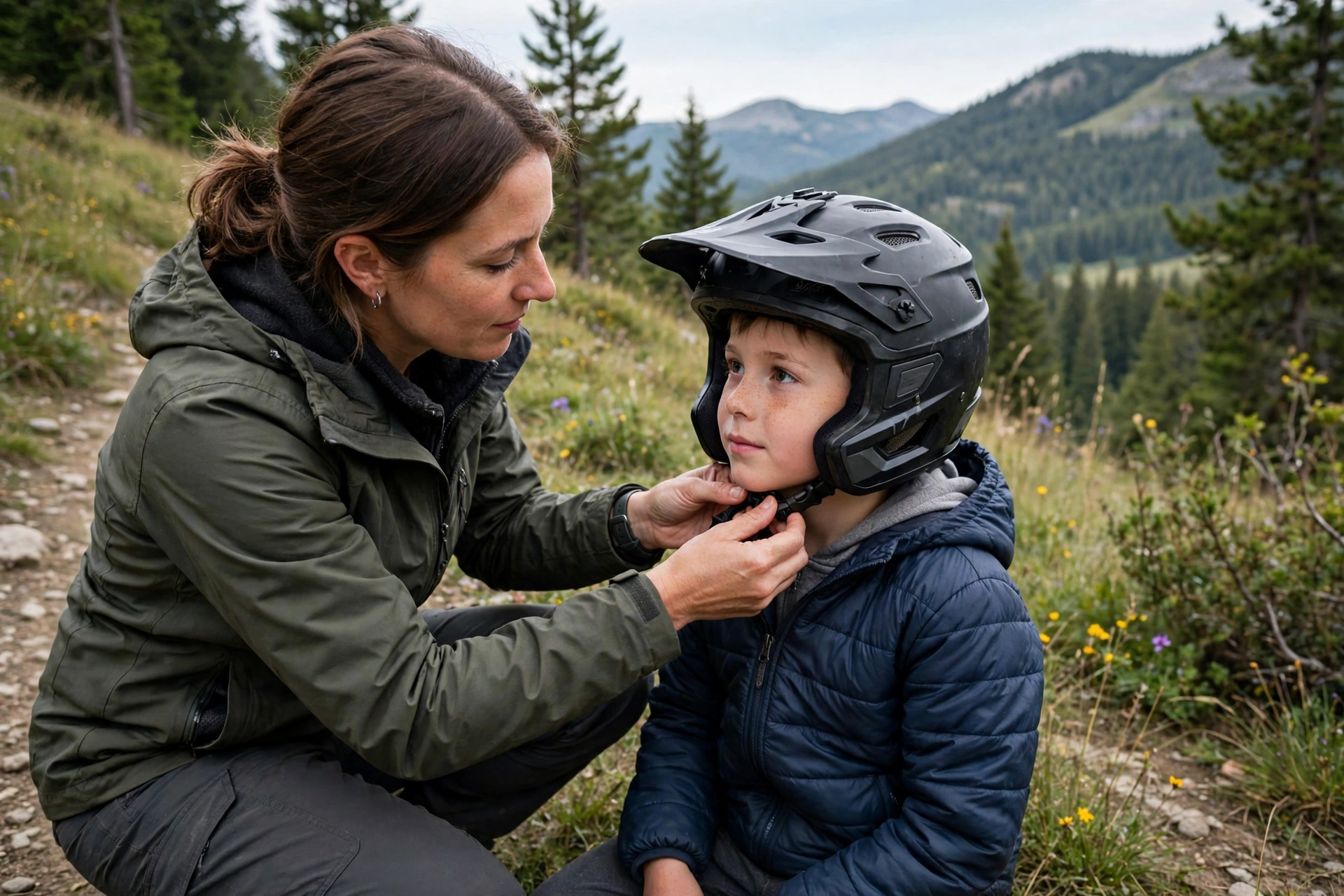
- Strap check: the chin strap should sit snug under the chin with about one finger’s width of room — tight enough to stay, loose enough to swallow and talk.
- Goggle check: goggles should seat inside the eye port and seal against the face with the strap holding them in place over the helmet.
One more youth-specific rule: choose the lightest certified helmet that fits correctly. Rotating safety systems such as MIPS appear in some premium youth off-road helmets, but weight, certification, and fit come first for kids — never trade those away for a feature list.
When Must a Youth ATV Helmet Be Replaced After a Crash?
Immediately after any crash — and “crash” includes tip-overs, falls from the machine, and the helmet striking the ground, a tree, or a rock with the child’s head in it. The impact foam inside a helmet works by crushing, and it crushes permanently. The damage is usually invisible from outside: the shell can look perfect while the liner has already spent its one impact.
There is no inspection that reliably clears a crashed helmet for a child. Given that youth helmets are among the least expensive safety gear in the sport, the rule is simple: one real impact, and it is retired — cut the straps so nobody else uses it, and replace it before the next ride.
The same logic applies to a helmet dropped hard onto concrete from height with damage to the shell — when in doubt, replace.
When Has a Child Outgrown Their Helmet — or Aged It Out?
Growth retires more youth helmets than crashes do. Watch for these signs:
- The helmet rides up and will not stay seated low on the forehead.
- Red marks or complaints of pain after short rides — the head has outgrown the pads.
- Fit pads or any dial adjustment are at their maximum and the helmet still rocks.
- It goes on too easily — a helmet that slips on without resistance is too big inside now.
Age matters too. Helmet foams and materials degrade with sweat, sun, and time; manufacturers in general terms suggest replacing helmets after a few years of use, and a child’s helmet that has served one kid for several seasons should not automatically serve the next. Measure heads at the start of every riding season — kids grow faster than riding calendars.
That leads to the hand-me-down rule: never accept a used youth helmet with an unknown history. You cannot know whether it has crashed, how it was stored, or how old the foam really is. A new, correctly fitted, DOT-approved youth helmet is the one purchase where saving money is never worth it.
Frequently Asked Questions
Q: Can my child wear a small adult ATV helmet instead of a youth model?
A: No. Youth helmets are lighter and proportioned for children’s heads and necks. A small adult helmet is heavier and fits poorly on a child’s head, even if the size chart seems close.
Q: How tight should a youth ATV helmet be?
A: Snug all around with firm cheek pressure, no rocking in the shake test, and about one finger of room under the fastened chin strap — tight enough that it cannot roll off, never so tight it causes pain.
Q: Does a youth ATV helmet need replacing if it still looks fine after a fall?
A: Yes. The energy-absorbing foam crushes permanently in a single impact and the damage is usually invisible. Replace after any crash, when outgrown, or as the helmet ages — and never use hand-me-downs of unknown history.

Olivia
Writer at Helmet Today, covering helmet reviews, fit and riding safety.