The best e-bike helmet for seniors is lightweight, easy to put on and fasten with one hand or a magnetic buckle, clearly visible in bright colors with reflective details, and fitted with extra coverage and a simple rear adjustment dial. Comfort matters as much as certification, because the helmet a senior actually enjoys wearing is the one that gets worn on every ride.
E-bikes have opened cycling back up to many older riders, flattening hills and extending range. The helmet should support that independence, not fight it with stiff straps, fiddly buckles, or neck-straining weight. This guide covers the features that genuinely help, and the fit issues that change with age.
Why Does Light Weight Matter So Much for Older Riders?
Neck and shoulder strength and flexibility often decrease with age, and a heavy helmet turns a pleasant ride into an aching one, especially when checking over a shoulder in traffic. A lightweight helmet reduces that strain and makes head checks easier and more likely — and looking properly before turning or merging is one of the most important safety behaviors on an e-bike.
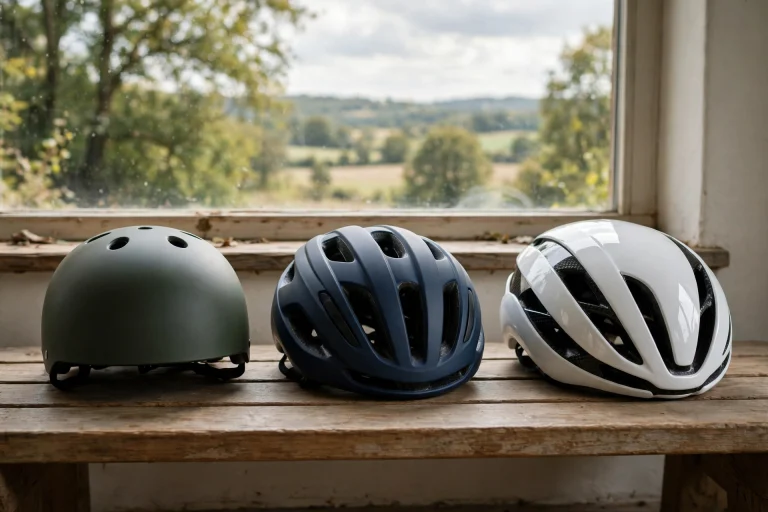
Weight is not only about the number on the box. Balance matters too: a helmet whose weight sits low and evenly feels lighter than a similar helmet carrying accessories high on the shell. When comparing models, try each one on, turn your head fully left and right, and look up and down as you would at junctions. If a helmet pulls, wobbles, or makes you reluctant to turn, keep looking, whatever the scale said.
Do not chase lightness with an uncertified novelty helmet. The right target is a properly certified helmet from a reputable brand in its lighter designs, ideally with extended coverage at the back of the head. Light because corners were cut is not protection at all.
What Buckle and Adjustment Features Help Seniors Most?
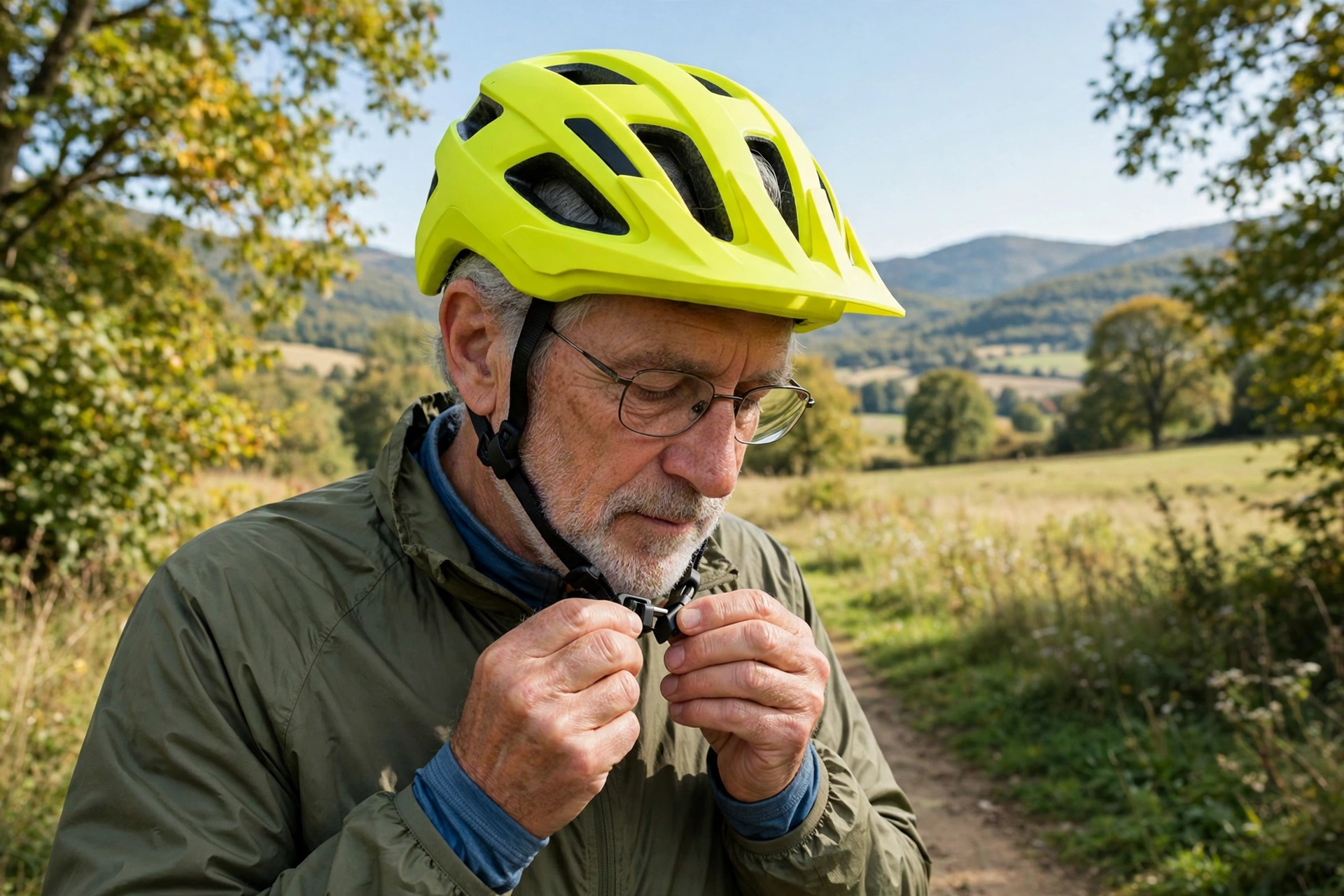
Hands change with age too. Arthritis, reduced grip strength, and less fingertip sensitivity can make a small, stiff pinch buckle genuinely difficult, and a rider who struggles to fasten a helmet may quietly stop wearing it. Magnetic buckles that guide themselves together and release with a simple slide are a real solution, as are larger buckles that can be worked with gloves or stiff fingers. Test the buckle in the shop with the same hand strength you will have at the roadside.
A rear dial adjuster is the second feature to insist on. It lets the rider fine-tune snugness with one hand, accommodates a thin liner or cap in cooler weather, and compensates as pads settle over the season. Straps should be soft, easy to slide through their adjusters, and ideally fitted with a chin pad so the strap does not irritate skin, which is often thinner and more sensitive in older riders.
Simplicity is the theme. The fewer steps between picking the helmet up and riding away — on, dial, click — the more reliably it will be used. When you set the helmet up, adjust the straps once, carefully, so the side straps form a V below each ear and the chin strap sits snug with about one or two fingers of room, and then leave those settings alone.
How Does Visibility Gear Help Older Riders Stay Safe?
Being seen early gives everyone more time, and that matters more when reactions and traffic speeds are mismatched. Choose a helmet in a bright, light color — white, yellow, or bright orange — rather than a dark matte finish that disappears against hedges and shadows. Reflective trim and reflective strap details add a second layer after dark, catching headlights when you turn your head.
Built-in or clip-on rear lights take visibility further, placing a light at head height where drivers look. If the helmet offers an integrated light, even better, because there is nothing extra to remember. These helmet measures support, rather than replace, proper lights fitted to the e-bike itself, which are a legal requirement for night riding in many places.
Vision in the other direction matters equally. A helmet should not block peripheral vision or press on glasses frames. Riders who wear glasses or hearing aids should try the helmet on with both in place, checking that straps and pads do not dislodge either. Some helmets include channels for glasses arms, a small feature that makes a large daily difference. Clear vision, comfortable glasses, and being conspicuous to others is the combination that prevents most incidents from ever developing — protection technology such as the systems in our explainer on what MIPS is and how it works is the backup for when prevention is not enough.
What Fit and Coverage Should Seniors Look For?
Fit follows the same rules at every age: measure your head circumference above the eyebrows, match the maker’s chart, and test that the helmet sits level and snug without rocking. Two age-related points deserve emphasis. First, hair is often thinner, so a helmet fitted over a fuller hairstyle years ago may now sit loose — measure fresh rather than assuming your old size. Second, skin bruises and scrapes more easily, so look for smooth, well-finished padding with no rough seams pressing on the scalp.
Coverage is worth prioritizing. Helmets that extend lower at the back and sides protect more of the head in the sideways and backward falls that are common when a rider loses balance at low speed, for example when stopping or starting a heavy e-bike. Some e-bike helmets are certified to higher-speed standards with exactly this deeper coverage, and they suit older riders well provided the weight stays reasonable.
Ventilation also affects whether the helmet gets worn. Older riders can be more sensitive to overheating, so choose honest airflow for summer and room for a thin warm liner in winter. If a helmet feels oppressive in the shop, it will feel worse on a July hill.
How Should Seniors Care for and Replace an E-Bike Helmet?
Store the helmet indoors, out of direct sunlight and away from heat, on a shelf rather than hanging by its straps. Clean the pads according to the maker’s instructions — many are removable and hand-washable — because clean pads fit and feel better. Check straps, buckle, and dial every few rides; a buckle that slips or cracks is a reason to stop using the helmet.
Replace the helmet after any fall in which it struck the ground, even if it looks undamaged, because the impact foam can be crushed invisibly. Also replace it when it no longer fits snugly, when straps or shell show damage, or when it reaches the maker’s recommended retirement age — in general terms, after several years of use.
Finally, make the helmet part of the bike routine: stored with the bike and put on before the bike is switched on. The best senior e-bike helmet is not the one with the longest feature list — it is the light, easy, visible one its owner puts on without thinking, every single ride.
Frequently Asked Questions
Q: Are magnetic buckles strong enough to be safe?
A: Yes, on certified helmets from reputable brands the magnetic buckle is part of the tested retention system. The magnet guides the parts together; the mechanical lock holds them. Always confirm the helmet itself is certified.
Q: Should seniors choose an e-bike specific helmet or a regular bike helmet?
A: Either can be right. E-bike models often add coverage and higher-speed certification, which suits many older riders, but fit, light weight, and an easy buckle matter more than the label. Choose the certified helmet you will wear comfortably every ride.
Q: Can a helmet be too light?
A: Only if lightness comes from skipping certification or coverage. A certified helmet from a reputable maker that feels light because of good design is ideal; an uncertified novelty helmet is not protection, however light it feels.

Olivia
Writer at Helmet Today, covering helmet reviews, fit and riding safety.