The best helmet for e-bike commuting in the city combines higher-speed certification, built-in visibility, and all-day comfort: look for NTA 8776 or CPSC certification with extended coverage, integrated lights or reflective details, a visor for sun and rain, and ventilation you can adjust in traffic.
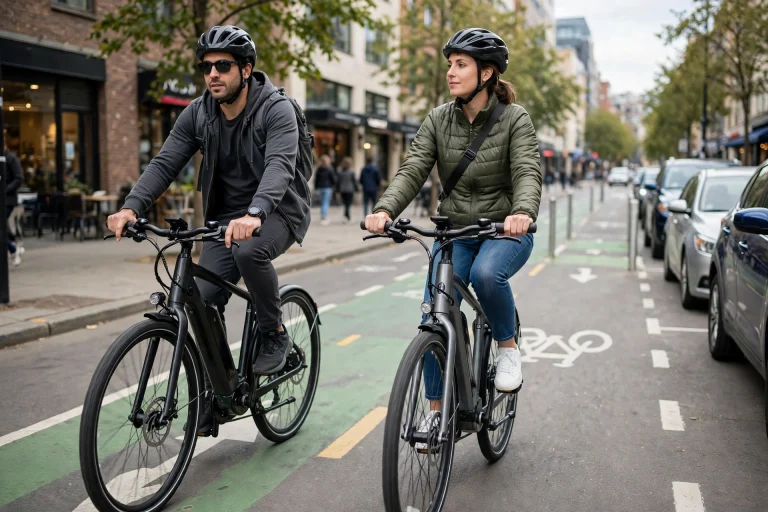
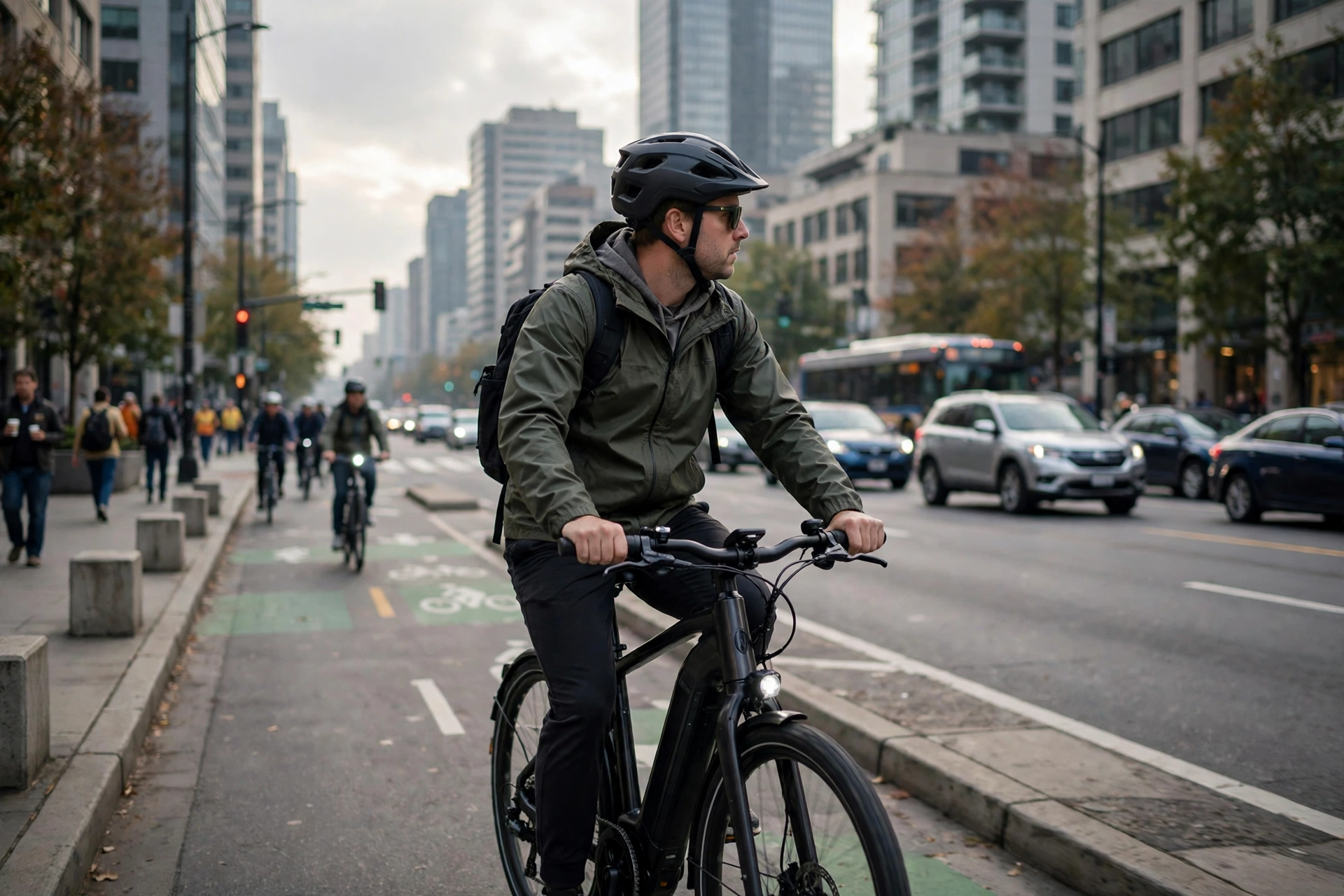
City commuting is its own discipline. You ride at 20 to 28 mph among cars, buses, and opening doors, in darkness half the year, in weather you did not choose. A helmet that is perfect for a Sunday path ride may fall short here. This guide covers the features that genuinely matter for urban e-bike commuters — and the marketing extras you can skip.
What Certification Should a City E-Bike Helmet Have?
Start with the label inside the helmet. CPSC certification is the legal baseline for bicycle helmets sold in the US, and any commuter helmet must have it. If your commute is on a Class 3 e-bike at up to 28 mph — common for longer urban commutes — step up to an NTA 8776-certified e-bike helmet, which in general terms is tested for higher-energy impacts and requires deeper coverage at the back and temples.
Beyond the base standard, look for a rotational impact liner. City crashes are rarely neat vertical drops; they involve glancing blows from vehicles, curbs, and pavement. Our explainer on what MIPS is and how it works describes how these liners reduce twisting forces, and they are now common in commuter-priced helmets.
Fit is part of certification in practice: a certified helmet worn loose protects far less. Choose a model in your exact measured size, and be suspicious of any helmet with no certification sticker at all.
Why Do Lights and Reflectivity Matter So Much?
Because in the city, being seen is half of safety. Drivers look for car-shaped objects at car heights, and a cyclist’s head is one of the most visible points on the road — putting light and reflectivity there makes you conspicuous from every direction, including above car hoods and through traffic.
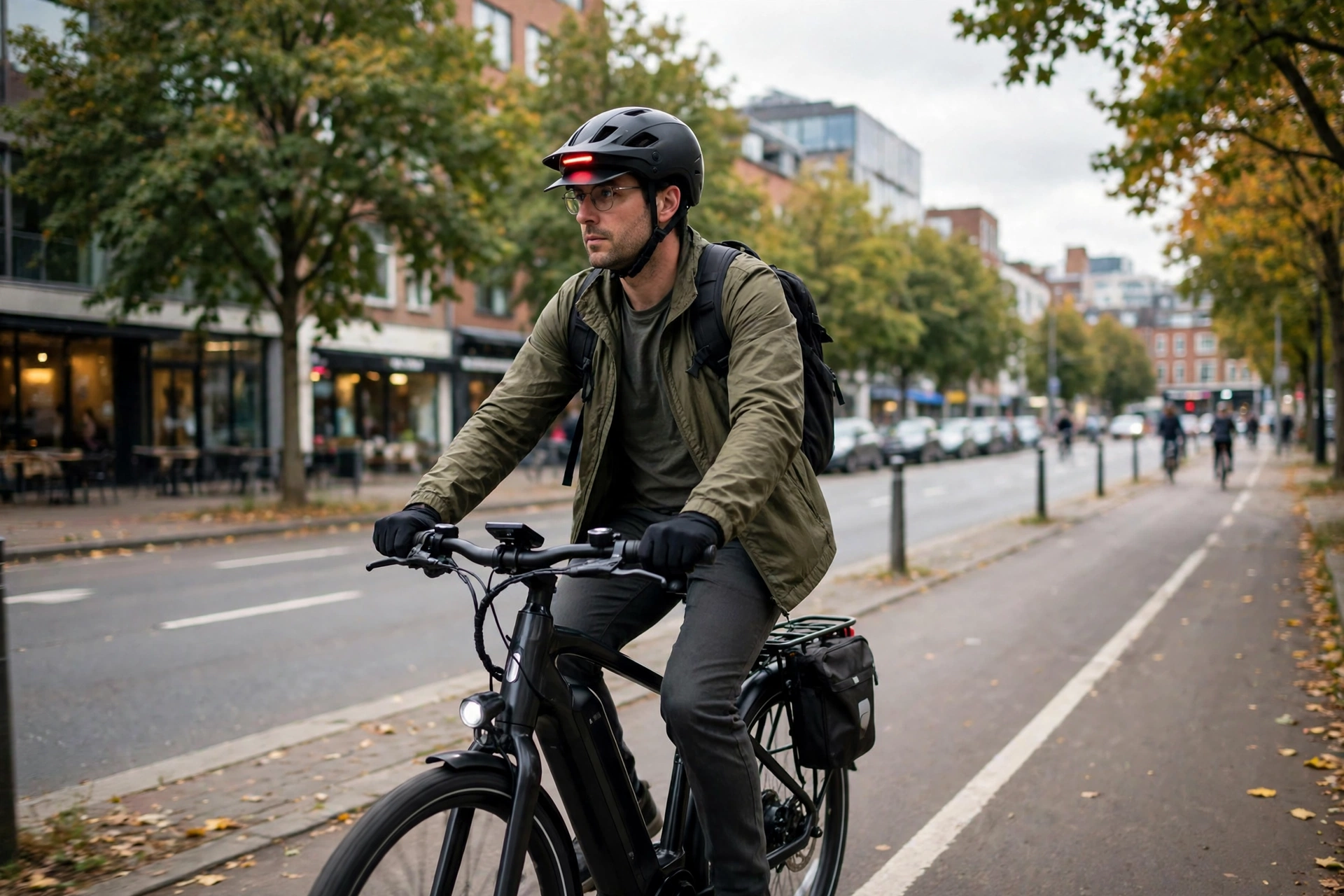
Many commuter helmets now include a built-in rear LED, sometimes with a brake-light or turn-signal function, plus reflective shell panels, straps, and piping. A helmet light never replaces proper bike lights — legally and practically you still need those — but as a second, high-mounted light it fills the gaps when your frame lights are blocked by a parked truck or a crowd.
If your current helmet has no light, an adhesive or strap-on helmet light is a cheap upgrade. Just keep the total added weight small and centered, and never drill or modify the shell, which would compromise its structure.
What Comfort Features Count on a Daily Commute?
A commuter helmet gets worn twice a day, in August heat and January cold, so comfort features decide whether it lives on your head or in a closet. Ventilation leads the list: city riding means slow crawls between lights where airflow dies, so look for generous vents with internal channeling, and adjustable or closable vents for winter.
A visor is the second commuter essential. A small integrated visor shades low sun, keeps rain off glasses, and reduces the sting of road grit — and unlike sunglasses, it is always with you. Some commuter models add a drop-down eye shield, which suits glasses wearers particularly well.
Then sweat the small stuff: a removable, washable liner (it will need washing), a dial-fit rear adjuster that works with gloves, a magnetic or simple buckle you can work one-handed, and room for a thin liner cap in winter without wrecking the fit. Weight matters too — a lighter helmet is kinder on your neck through a week of twice-daily rides.
How Should a Commuting Helmet Fit With Glasses and Hair?
Fit the helmet the way you will actually ride. Wear your glasses or sunglasses to the fitting: the arms should slide into the helmet’s retention area without being pressed into your temples, and several commuter helmets include eyewear channels or rear ports to park glasses when you stop.
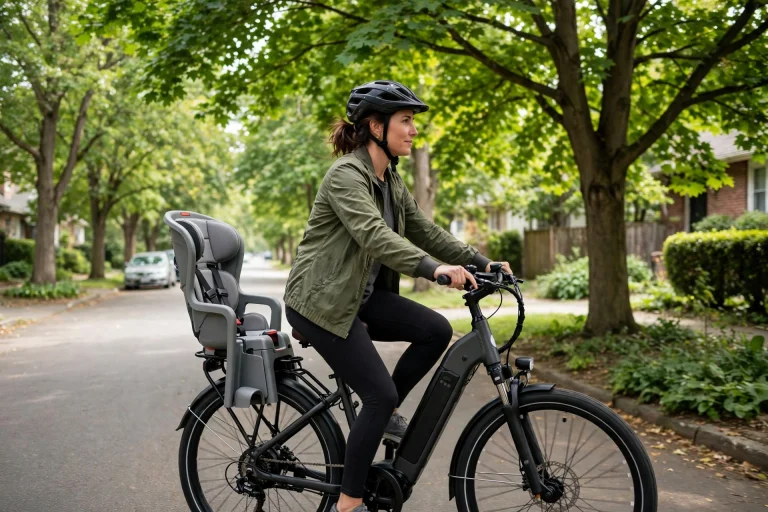
Hair counts as well. A high ponytail or bun under a helmet lifts it out of position; tie hair low at the nape so it exits under the rear edge, or choose a model with a ponytail-friendly rear cradle. The helmet should sit level, front edge about an inch above your eyebrows, snug all around with no rocking on the shake test.
Finally, test the whole system together: helmet, glasses, winter cap if you use one, and headphones policy aside, any earbuds or bone-conduction set you ride with. A five-minute shop test prevents a season of small daily annoyances that quietly push riders to leave the helmet at home.
What About Security, Storage, and Replacement?
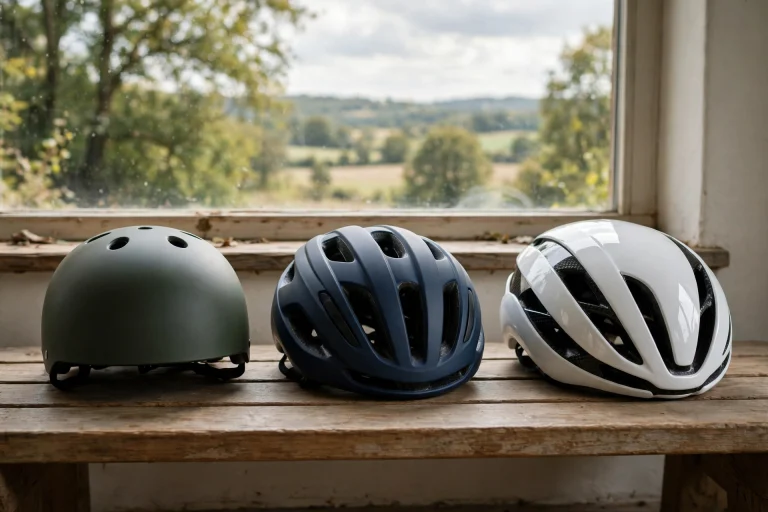
Commuters live with logistics other riders ignore. You will carry this helmet into offices, cafes, and trains, and lock it with the bike at least sometimes. A helmet with a strap loop or a lockable cable pass-through is a small but real convenience, and a compact, smooth shell fits bags and lockers better than an aero road shape.
Storage at home matters too: keep the helmet indoors, out of sun and heat, never hanging by its strap. Sun and a hot car age the foam even when the helmet looks fine.
Set a replacement rhythm. Replace after any crash, even a slow tip-over onto pavement, because the foam damage is often invisible. Otherwise, follow the manufacturer’s guidance — in general terms most suggest replacing a helmet every five years or so, sooner if straps fray, pads compress, or the fit loosens. Commuters who ride daily in all weather may find the honest interval shorter; treat the helmet as consumable safety gear, not a lifetime purchase.
Frequently Asked Questions
Q: Do I need a special helmet for commuting on a Class 3 e-bike?
A: It is strongly recommended. An NTA 8776-certified helmet is tested for the higher crash energies of 28 mph riding, and some states require helmets specifically for Class 3 riders. A standard CPSC helmet is the minimum, not the ideal.
Q: Is a built-in helmet light enough on its own?
A: No. A helmet light is an excellent second light that sits high and moves with your head, but you still need proper front and rear bike lights for legal compliance and low-angle visibility. Use both.
Q: How much should I spend on a commuting e-bike helmet?
A: Mid-range commuter helmets with strong certification, a rotational liner, and a rear light offer the best value for daily riders. Spend first on certification and fit, then on visibility features; skip paying extra for race aerodynamics you will never use in traffic.

Olivia
Writer at Helmet Today, covering helmet reviews, fit and riding safety.