Speed pedelecs are fast e-bikes that assist up to about 45 km/h (28 mph), and in general terms they require a stronger, certified helmet with more coverage than a normal bicycle helmet — in much of Europe a helmet meeting the Dutch NTA 8776 standard, worn as a legal condition of riding. Exact rules vary by country and by US state, so always check the law where you ride.
Confusion is common because a speed pedelec looks like an ordinary e-bike but is treated by regulators as something closer to a moped. This guide explains what it is, why its helmet requirements are stricter, and how to choose a compliant helmet.
What Exactly Is a Speed Pedelec?
A speed pedelec, sometimes called an S-EPAC or S-pedelec, is a pedal-assisted cycle whose motor continues helping the rider up to around 45 km/h, roughly double the assistance cutoff of a standard pedelec in Europe, which stops assisting at 25 km/h. The rider still pedals, but cruising speeds resemble urban scooter traffic rather than conventional cycling.
In the United States, the picture is different. The widely used three-class e-bike system covers Class 1 and 2 models assisting to 20 mph and Class 3 models assisting to 28 mph. Speed pedelecs as defined in Europe fall outside that three-class system in many states, which means they may be regulated as mopeds or motor vehicles, or not clearly addressed at all. That legal gap is exactly why US buyers must check their own state rules rather than assuming a speed pedelec is simply a faster bicycle.
The hardware reflects the speed: stronger brakes, sturdier frames, motorcycle-style lighting, and plate mounts where registration is required. The helmet requirement follows the same logic — crash energy rises sharply with speed, so protective gear steps up too.
Why Do Speed Pedelecs Require Stronger Helmets?
Impact energy grows with the square of speed, so a fall at 45 km/h carries far more energy than a fall at 25 km/h, and it is more likely to happen in faster traffic among cars and scooters. A standard bicycle helmet is tested for the speeds and fall patterns of ordinary cycling. Speed pedelec helmets are tested to tougher requirements, with higher impact performance and coverage that extends lower over the temples and the back of the head, areas that are vulnerable in higher-speed falls.
The best-known example, in general terms, is the Dutch NTA 8776 technical agreement, created specifically for speed pedelec helmets. Helmets certified to it are tested at higher impact speeds than regular bicycle helmets and must cover more of the head. In the Netherlands and a number of other European countries, an NTA 8776 helmet — or an approved motorcycle helmet in some jurisdictions — is the accepted way to meet the legal helmet obligation for speed pedelec riders.
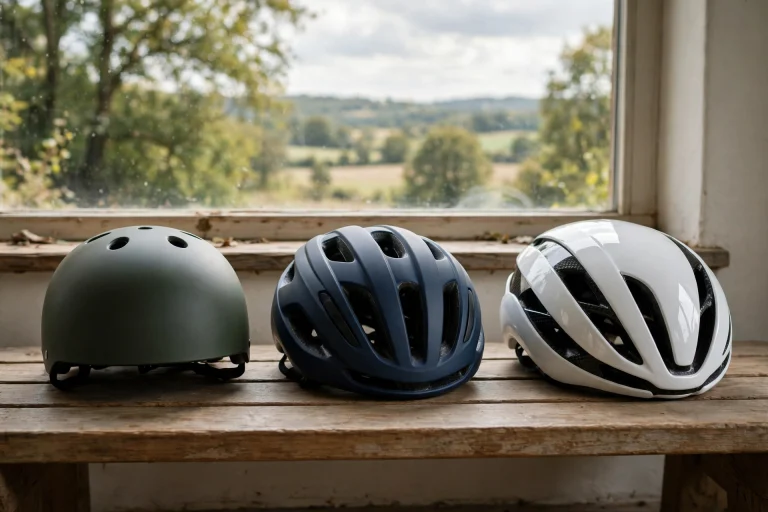
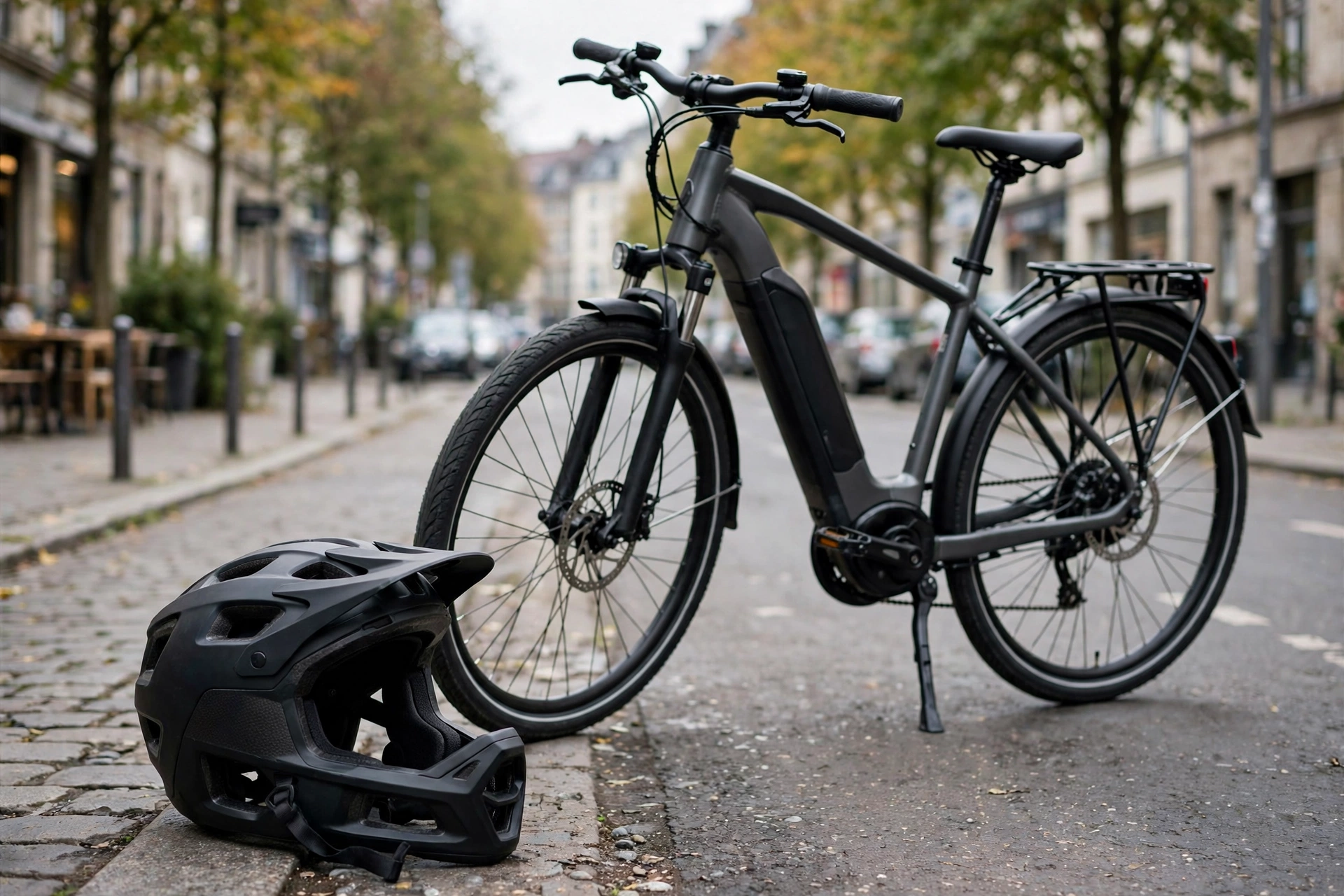
Extra coverage changes how these helmets look and feel: they sit deeper, often resemble lightweight scooter helmets, and frequently include visors or integrated eye protection. That is a design response to speed, wind, and debris, not a fashion choice. Rotational protection features may also be included, as explained in our overview of what MIPS is and how it works, but certification to the speed pedelec standard is the requirement that matters legally.
What Are the Helmet Rules in Europe, in General Terms?
Within the European framework, speed pedelecs are generally classified as mopeds (category L1e-B in general terms), and riders are generally required to wear a helmet. Member countries implement the details themselves, so the accepted helmet type, and related rules on registration, insurance, minimum age, and where you may ride, differ between, for example, the Netherlands, Belgium, Germany, and Switzerland. Switzerland has its own long-standing fast e-bike category with its own helmet expectations.
The practical takeaway for European riders is consistent: a normal bicycle helmet is generally not sufficient for a speed pedelec. You need a helmet certified for speed pedelec use — NTA 8776 is the widely recognized mark — or, where the local rules allow, a motorcycle helmet meeting the applicable motorcycle standard. Buying the bike from a local dealer is an advantage here, because the dealer should supply or specify the compliant helmet type for that country.
Rules also change, and cities add their own restrictions. Treat any general guide, including this one, as background, and verify the current position with your local transport authority before relying on it.
What Are the Helmet Rules in the United States, in General Terms?
In the US there is no single national speed pedelec category. Class 3 e-bikes, which assist to 28 mph, are the closest mainstream equivalent, and many states require helmets for Class 3 riders — California is a well-known example, requiring helmets for all Class 3 riders regardless of age — while other states set age-based rules or leave it to local law. Those Class 3 rules do not automatically settle the status of a true 45 km/h speed pedelec, which in many states falls outside the e-bike classes entirely.
If a speed pedelec is treated as a moped under your state law, that vehicle class’s helmet rule applies to you, and the accepted helmet may need to meet the state’s motorcycle helmet standard rather than a bicycle standard. If your state has not clearly classified the vehicle, resolve that uncertainty with your state DMV or a local dealer before riding in traffic.
Regardless of the legal minimum, the safety logic travels: at 28 mph and above, choose the strongest certified helmet appropriate to the vehicle, with deep coverage. The law is a floor, not a target.
How Do You Choose a Compliant Speed Pedelec Helmet?
First, identify the certification your jurisdiction accepts, in general terms NTA 8776 for speed pedelecs in much of Europe, and look for that label inside the helmet. Buy from a reputable seller, because the certification mark is the whole point of the purchase; a helmet that merely looks like a speed pedelec helmet without the label does not meet the requirement.
Second, fit it like any helmet, only more carefully, because you will wear it at higher speeds for longer periods. Measure your head, match the maker’s chart, and check that the deeper coverage sits level without pressing on your ears or pushing the helmet forward when you look up. Straps should form a V below each ear with a snug chin strap, and the helmet should not rock on the shake test. If the model includes a visor, confirm it clears any glasses you wear and that a clear lens is available for dark riding.
Finally, factor in comfort at speed: ventilation without excessive wind noise, and a weight you can wear for your full commute. Replace the helmet after any crash impact, because a helmet that has already absorbed a fall is no longer the certified protection you bought.
Frequently Asked Questions
Q: Can I wear a normal bicycle helmet on a speed pedelec?
A: In general terms, no where speed pedelec rules apply — a stronger certified helmet, such as an NTA 8776 model in much of Europe, is required. Check your local rules, because details vary by country and state.
Q: Is a Class 3 e-bike the same as a speed pedelec?
A: Not exactly. Class 3 assists to 28 mph within the US class system, while European speed pedelecs assist to about 45 km/h and are generally treated as mopeds. In many US states a true speed pedelec falls outside the three classes.
Q: Can I use a motorcycle helmet instead?
A: In some jurisdictions a certified motorcycle helmet is accepted for speed pedelec riding, but acceptance varies and motorcycle helmets are heavier and warmer for pedaling. Confirm with your local rules before relying on one.

Olivia
Writer at Helmet Today, covering helmet reviews, fit and riding safety.