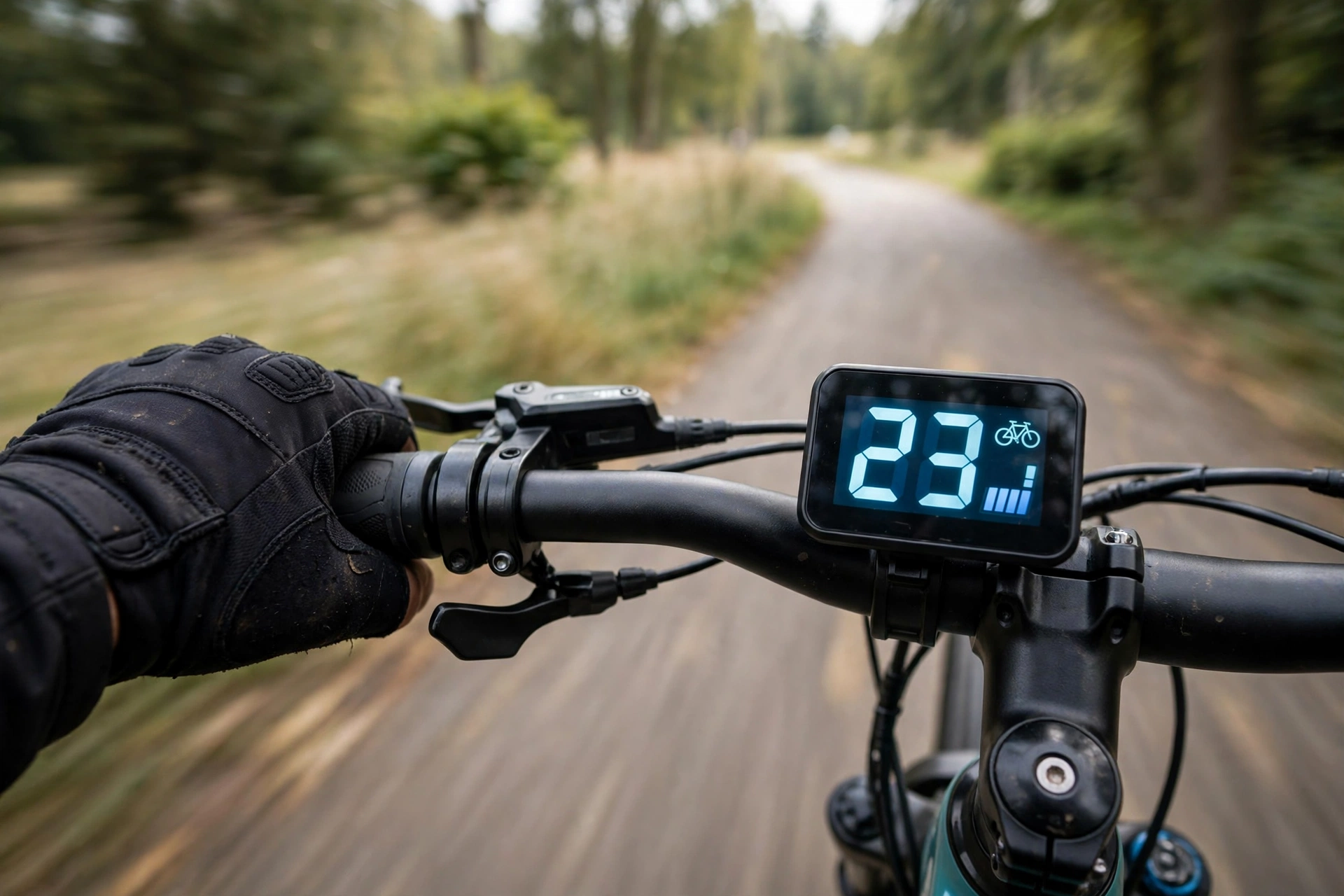
Most e-bikes top out at 20 mph with motor assistance for Class 1 and Class 2 models, and 28 mph for Class 3. That may not sound like a huge difference, but crash energy grows fast with speed — and it is exactly why your helmet choice should be based on how fast your e-bike actually goes.
Riders often shop for a helmet the way they did for a pedal bike, then ride at speeds they would never reach unassisted. This guide explains the class system in plain terms, what speeds riders really travel at, and how to match your helmet to the number on your speedometer.
How Fast Do Class 1, 2, and 3 E-Bikes Go?
The three-class system used across the US sorts e-bikes by how the motor helps and where the assistance stops. Class 1 bikes assist only while you pedal, and the help cuts out at 20 mph. Class 2 bikes add a throttle, so the motor can move you without pedaling, also up to 20 mph. Class 3 bikes pedal-assist up to 28 mph, and most have no throttle or only a limited one.
These are assisted top speeds, in general terms. Gravity does not care about classes: any e-bike can roll faster downhill, and a strong rider can pedal past the cutoff under their own power — the motor simply stops helping. Weather, rider weight, and terrain also change real-world cruising speeds.
Bikes sold outside this system exist too. High-powered models with motors well above 750 watts, or throttle speeds above 20 mph without pedaling, may not legally count as e-bikes at all. They can be classed as mopeds or off-road vehicles, with licensing, registration, and motorcycle helmet rules attached. If your bike does 35 mph on throttle alone, this article’s helmet advice is the floor, not the ceiling.
Why Does a Few Extra MPH Matter So Much?
Because kinetic energy rises with the square of speed. Double your speed and you carry four times the energy into a crash. Going from 20 mph to 28 mph — the Class 2 to Class 3 jump — increases your crash energy by roughly 96 percent, almost double, even though the speed only rose by 40 percent.
Speed also shrinks your margin for error. At 28 mph you cover about 41 feet every second, versus about 29 feet at 20 mph. Drivers misjudge e-bike speed constantly because the bike looks like a bicycle, and closing speeds at intersections are where the worst collisions happen.
Your helmet’s foam can only absorb so much energy in the space it has. Bicycle helmet certification was built around typical pedal-bike crash speeds, which is why faster e-bikes pushed engineers toward stronger standards. Speed is not a detail in helmet choice; it is the main variable.
What Do Real Riders’ Speeds Look Like Day to Day?
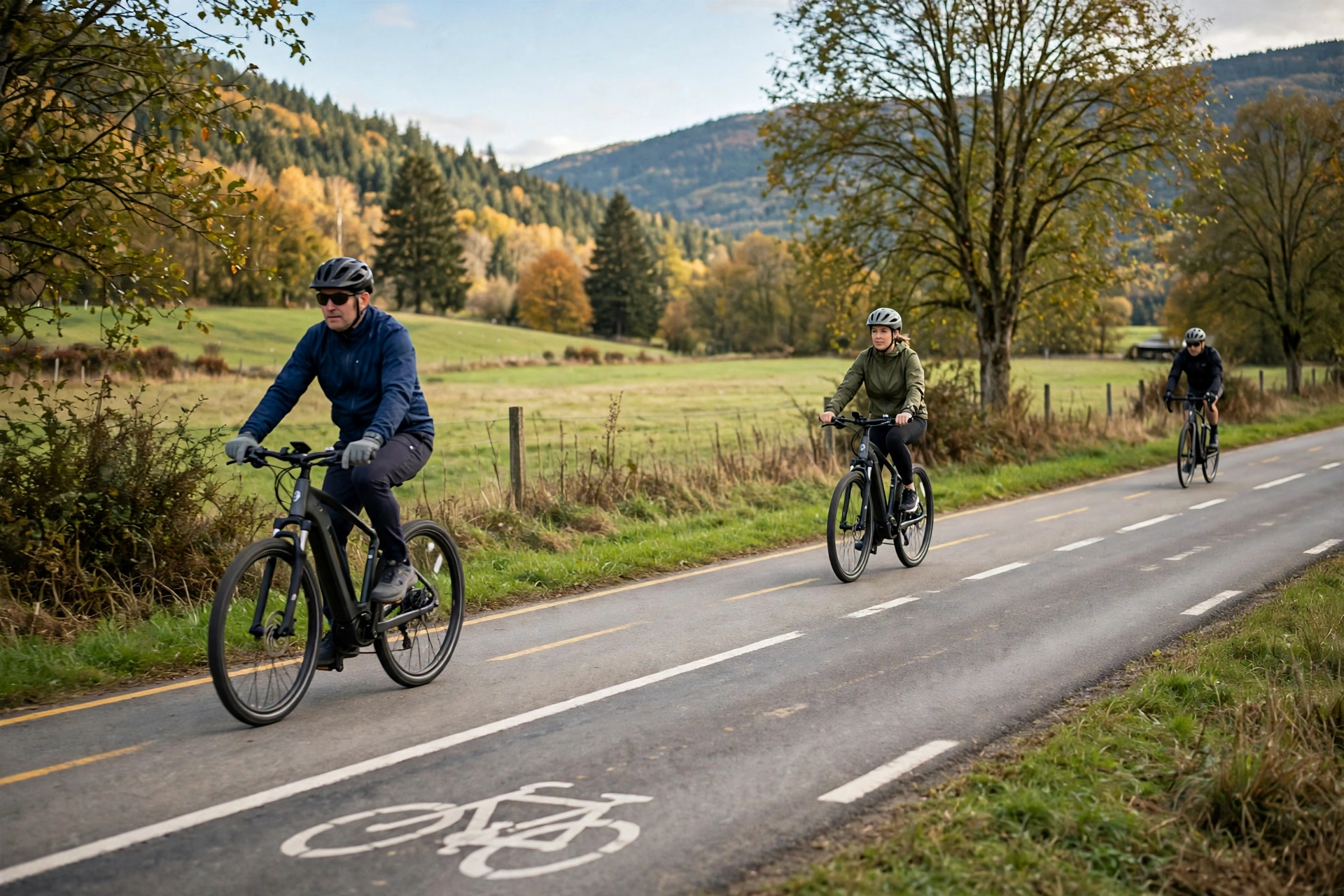
Most Class 1 and 2 riders cruise between 12 and 18 mph on paths and city streets — a bit quicker than casual pedal cycling, especially uphill and into headwinds, where the motor quietly erases the slow sections that used to keep average speeds down. That consistency matters: on a pedal bike you might touch 18 mph briefly on a flat; on an e-bike you may sit there for an entire commute.
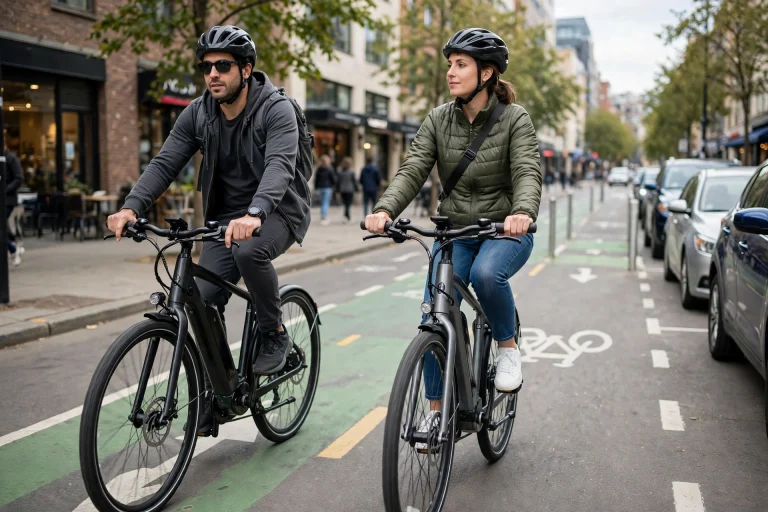
Class 3 riders commute at 22 to 28 mph on open roads, mixing with traffic flowing at city speeds. Stops come faster, following distances shrink, and a pothole or turning car arrives with much less warning time than at bike-path pace.
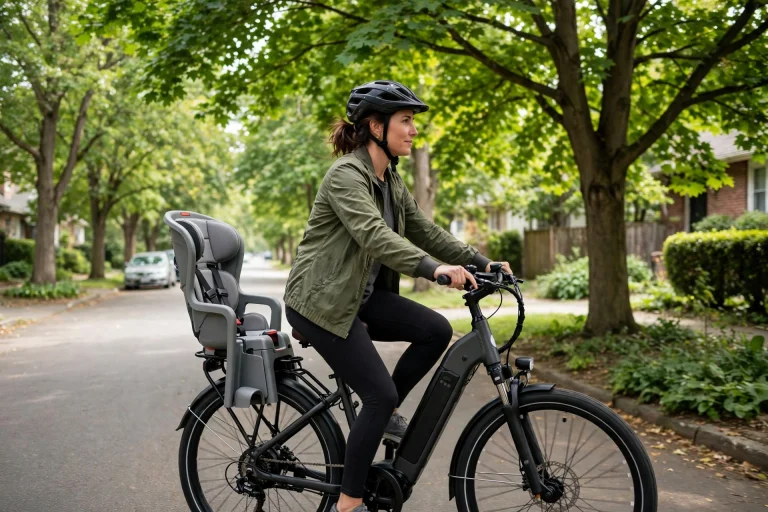
Cargo and family e-bikes add another factor: weight. A loaded cargo bike at 18 mph carries far more total energy than a solo rider at the same speed, and it stops and swerves more slowly. Passengers — often children — deserve helmets chosen for that reality too.
How Should Speed Change Your Helmet Choice?
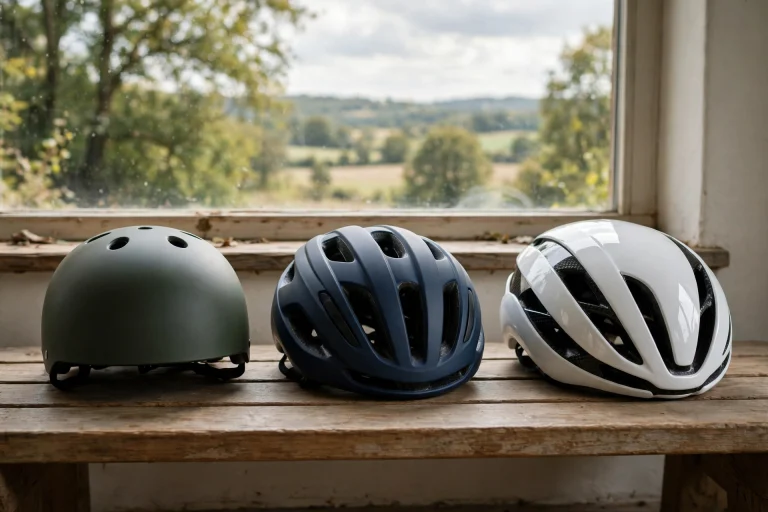
Work up the ladder with your speed. For Class 1 and 2 riding at or below 20 mph, a quality CPSC-certified bike helmet is the baseline, ideally with deeper rear coverage and a rotational liner. For Class 3 riding at up to 28 mph, look for an e-bike helmet certified to NTA 8776, the standard written for faster e-bikes, which in general terms tests higher-energy impacts and demands more coverage.
Rotational protection matters more as speed rises, because faster crashes are rarely straight-down impacts. Our explainer on what MIPS is and how it works walks through how a low-friction liner lets the helmet shift slightly to reduce twisting forces on the brain. At Class 3 speeds it is a feature worth paying for.
Riders on the fastest machines, or in fast traffic, should also consider a lightweight full-face helmet for chin protection, and must replace any helmet after a crash — foam that has absorbed one impact cannot be trusted for the next, however fine it looks.
Does the Law Treat Faster E-Bikes Differently?
Often, yes. Many states set their clearest e-bike rules at Class 3: in general terms, common provisions include a helmet requirement for Class 3 riders of all ages, a minimum age for operating one, and limits on using Class 3 bikes on shared paths and trails. Class 1 and 2 bikes are more often treated exactly like bicycles, with helmet rules that mirror the state’s bicycle law.
Local rules layer on top: cities, campuses, and trail systems can restrict classes or require helmets on their paths. And once a machine exceeds the e-bike definitions by power or speed, moped or motorcycle law can apply instead, including DOT helmet requirements.
The safe approach is boring but effective: know your bike’s class, check your state and local rules for that class, and then choose protection for your actual speed rather than the legal minimum.
Frequently Asked Questions
Q: Can an e-bike go faster than 28 mph?
A: Only downhill, by pedaling hard past the motor cutoff, or if it is a high-powered model outside the three-class system. Class 1 and 2 assistance stops at 20 mph and Class 3 at 28 mph; anything with much more motor-only speed is usually regulated as a moped or motorcycle.
Q: Do I need a special helmet for a Class 3 e-bike?
A: It is strongly recommended. An NTA 8776-certified e-bike helmet is tested for higher-energy impacts than a standard bicycle helmet, which matches the near-doubling of crash energy between 20 and 28 mph. Some states also legally require helmets for Class 3 riders.
Q: Is 20 mph really that different from riding a regular bike?
A: The top speed is similar to a fit cyclist’s, but e-bike riders hold that speed far more often — uphill, into wind, and for whole commutes — and the bike is heavier. More time at speed means more exposure, which is why coverage and fit matter more on an e-bike.

Olivia
Writer at Helmet Today, covering helmet reviews, fit and riding safety.