Yes — a foldable helmet can work well for e-bike commuters, provided it carries the same safety certification as a regular helmet and fits your head snugly. A certified folding helmet collapses flatter so it slips into a backpack or tote, then locks open into a normal protective shape for the ride. If it does not carry CPSC certification in the US or EN 1078 in Europe, it is not a real protective helmet, no matter how clever the folding mechanism looks.
Storage is the daily friction point of bike commuting. A standard helmet is bulky, awkward on a train or in an office, and easy to leave behind. Folding designs were built to remove that excuse. Here is how they work, what to check before buying, and where their limits are.
How Does a Foldable Helmet Actually Fold?
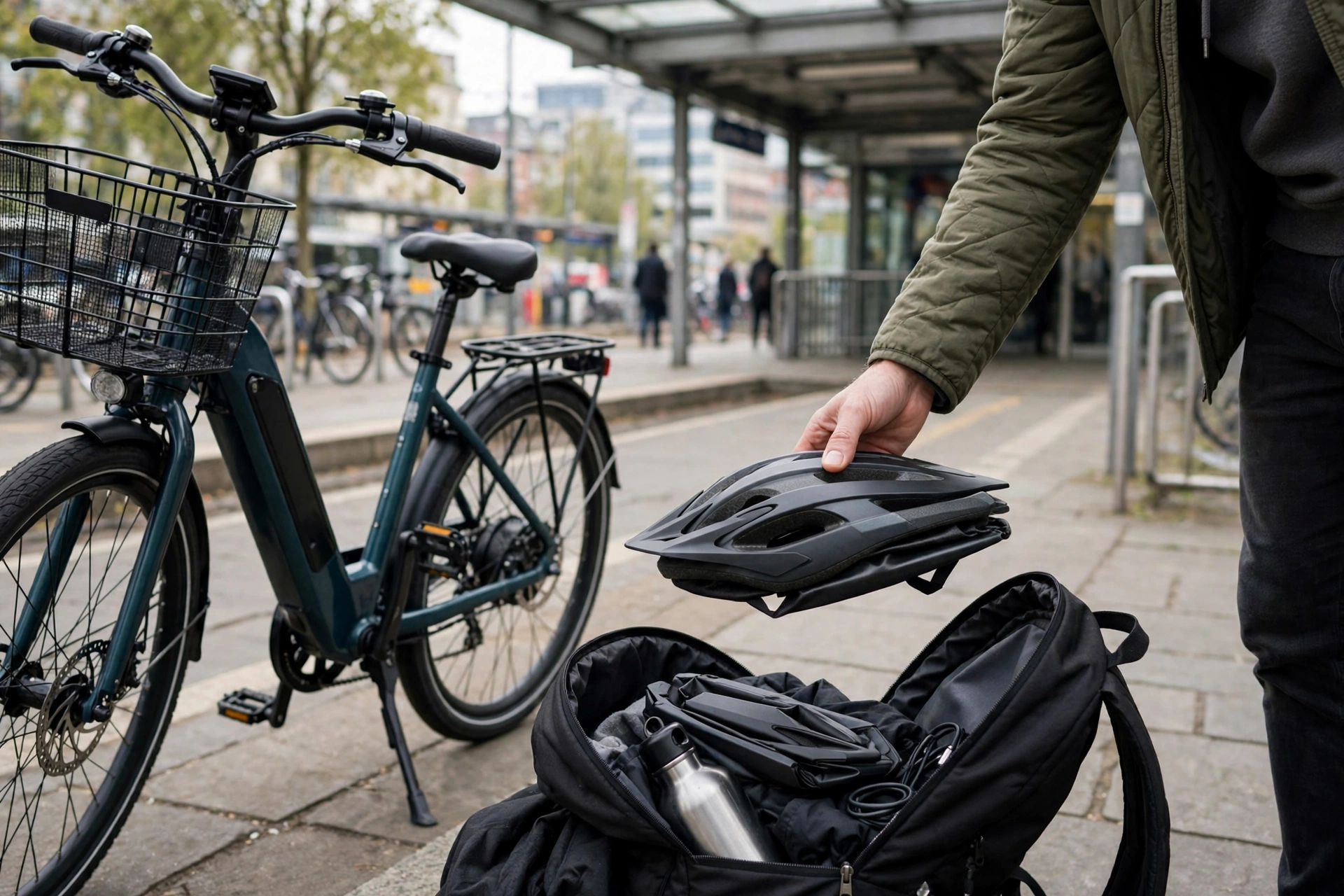
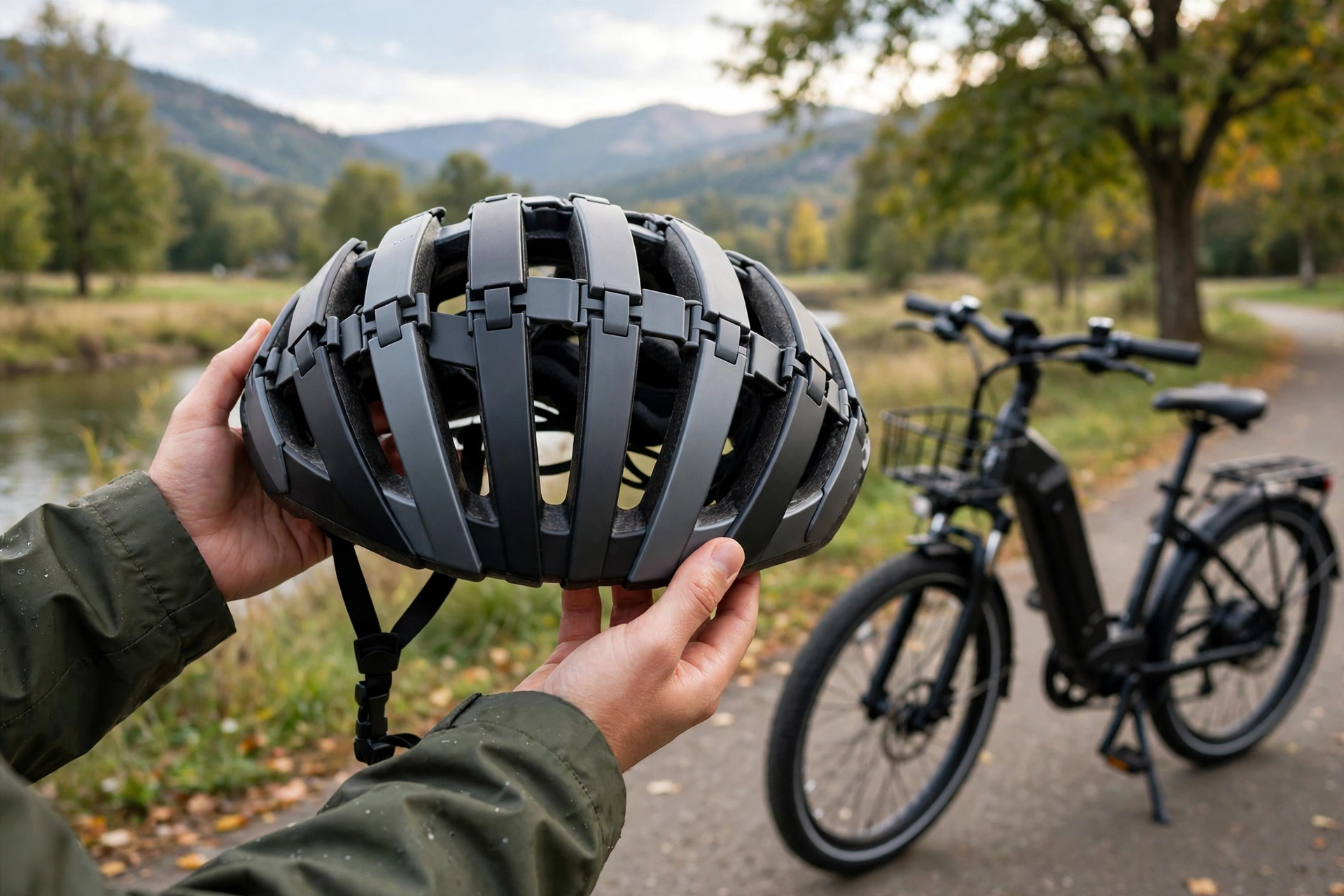
Most foldable helmets use one of two approaches. Some have hinged or sliding shell segments that collapse inward, shrinking the helmet’s width or volume. Others use flexible panels that flatten the profile so the helmet slides into a bag like a book. In general terms, folding designs reduce packed size by roughly a third to a half compared with a rigid helmet — enough to matter in a commuter backpack.
The mechanism matters because it is also the structure. When opened, the segments must lock positively into place, with no wobble or partial engagement. Before every ride, give the helmet a firm check: open it fully, confirm every hinge or panel has clicked into its riding position, and try to flex it gently. If anything feels loose, gritty, or reluctant to lock, that is a warning sign, not a quirk.
Folding helmets still contain the same basic protective idea as any helmet: a hard outer shell spreading impact force and an energy-absorbing foam liner underneath. The engineering challenge is keeping that protection continuous across the moving joints, which is exactly why certification testing matters so much for this category.
What Certification Must a Foldable Helmet Have?
This is the single most important buying check, and it is simple: a foldable helmet must carry CPSC certification (US) or EN 1078 certification (EU) to be a real protective helmet. Those labels mean the exact model — in its folding form — has passed the same impact tests as a rigid helmet sold for cycling.
- In the US: look for the CPSC label inside the helmet. Bicycle helmets sold in the US are required to meet this standard.
- In Europe: look for EN 1078 compliance and the CE mark.
- Be wary of folding “head protection” products with no certification label, vague safety language, or novelty positioning. Uncertified folding hats and soft caps are not helmets.
One more consideration for e-bike riders: e-bikes travel faster than conventional bikes on average, and some regions recognize a stricter Dutch standard, NTA 8776, for speed pedelec helmets. A standard CPSC or EN 1078 folding helmet is a legitimate bicycle helmet, but if you ride a fast Class 3 e-bike in traffic, weigh whether you want the extra coverage and higher impact rating of an e-bike-rated model — most of which, for now, do not fold.
How Should a Foldable Helmet Fit?
Exactly like a regular helmet — the folding mechanism changes storage, not fit rules. Measure around your head just above your eyebrows and ears, match the measurement to the maker’s size chart, and judge the fit with the helmet fully opened and locked.
- It should sit low and level, about an inch above your eyebrows.
- It should feel snug all around with no rocking when you shake or nod your head.
- The side straps should form a V below each ear, and the chin strap should allow about one finger of space underneath.
- There should be no pressure hotspot at the hinge points or panel edges — wear it for ten minutes before deciding.
Try the helmet with your hair styled as you ride, and operate the fold a few times in the shop. The fit should be identical after each unfolding. If opening and closing seems to change how it sits, the mechanism or the sizing is wrong for you. Rotational protection is worth asking about too: some modern helmets add systems such as MIPS to reduce rotational forces in angled impacts, and availability varies in folding models.
What Are the Downsides of Folding Helmets?
Honesty helps here. Folding helmets usually cost more than a basic rigid helmet, because the mechanism adds engineering and parts. They tend to offer less ventilation than a sporty road helmet, since the shell panels need structure to fold and lock. Weight is often comparable, but the best rigid helmets still win on airflow and price.
Durability needs attention as well. Hinges and sliding joints collect grit, especially on wet winter commutes, and a mechanism that no longer locks cleanly is a reason to retire the helmet. Follow the maker’s cleaning guidance, keep joints free of dirt, and inspect the moving parts as part of your regular helmet check. Like any helmet, a folding model must be replaced after a crash impact, even if it still folds and unfolds smoothly.
Finally, the range is narrower. Fewer brands make certified folding helmets, sizes and colors are limited, and e-bike-specific or MIPS-equipped folding options are still uncommon. If fit is difficult for your head shape, a conventional helmet may simply fit you better.
Who Is a Foldable Helmet Best For?
The ideal owner is a multimodal commuter: rides an e-bike to the station, takes a train, walks through an office, and needs the helmet to disappear into a bag in between. For that rider, the fold removes the biggest daily annoyance and makes wearing a helmet every trip far more likely — and a certified helmet you actually carry beats a premium helmet left at home.
It also suits riders with limited storage at home, people who use bike-share-style e-bikes with their own helmet, and anyone whose commute mixes riding with errands where carrying a bulky helmet is a genuine barrier. If your ride is a single long, fast trip from door to door and your helmet can live on your desk, a rigid helmet probably serves you better for less money. Match the tool to the commute, check the certification label first, and the folding concept works exactly as promised.
Frequently Asked Questions
Q: Is a foldable helmet as safe as a regular helmet?
A: A foldable helmet that carries CPSC (US) or EN 1078 (EU) certification has passed the same impact tests as a regular certified helmet, so yes. The certification label is the key check — never buy a folding helmet without one.
Q: Can I wear a foldable helmet on a fast e-bike?
A: A certified folding helmet is a legitimate bicycle helmet, but most do not carry the stricter e-bike or speed pedelec ratings available on some rigid models. For fast Class 3 riding in traffic, compare coverage and ratings before deciding.
Q: How long does a foldable helmet last?
A: Follow the maker’s guidance and inspect the hinges and locking points regularly. Replace it after any crash impact, if the mechanism no longer locks firmly, or when the liner and straps show age and wear.

Olivia
Writer at Helmet Today, covering helmet reviews, fit and riding safety.