A lightweight e-bike helmet is the right choice for long rides because every extra gram sits on your neck for hours, and e-bike days are often longer than pedal-bike days. Look for the lightest certified helmet that still fits snugly, ventilates well, and matches your bike’s speed class.
On a 30-minute commute, helmet weight barely registers. On a three-hour touring ride, it becomes the thing you notice most — a dull ache between the shoulders, a stiff neck at the next stop, a headache that builds behind your eyes. This guide explains why weight matters more on an e-bike, how light is light enough, and what not to sacrifice in the name of saving grams.
Why Does Helmet Weight Matter More on Long E-Bike Rides?
Your neck muscles hold your head — plus the helmet — upright against gravity, wind, and every bump in the road. Add a heavy helmet and that workload rises for the entire ride, not just the first mile. E-bike riders feel it sooner because the motor encourages longer distances: riders who once did a 10-mile loop now do 30 or 40 miles without thinking twice.
Wind adds to the load. At Class 3 speeds up to 28 mph in general terms, air pressure pushes on the shell constantly, and a larger, heavier shell catches more of it. Buffeting from trucks and crosswinds makes your neck work in small corrections hundreds of times an hour.
Fatigue is also a safety issue, not just a comfort one. A tired rider checks over their shoulder less often, reacts more slowly, and is tempted to loosen the strap or lift the helmet for relief. A helmet light enough to forget about is a helmet that stays on, correctly fitted, for the whole ride.
How Light Should a Long-Ride E-Bike Helmet Be?
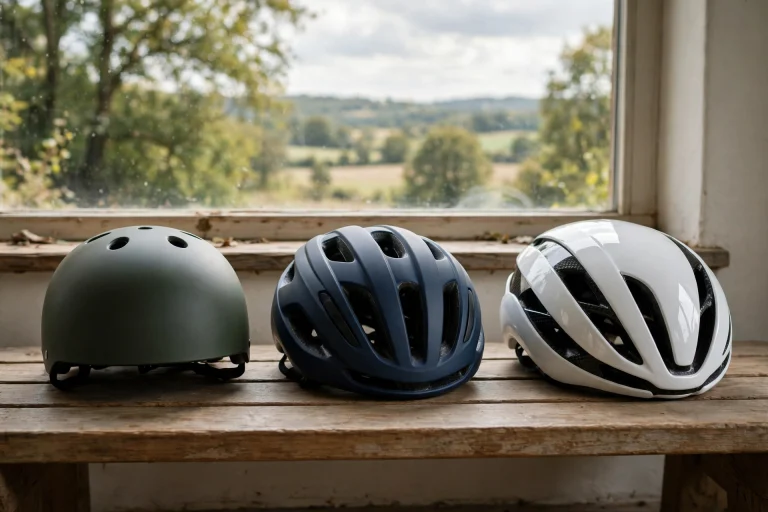
In general terms, e-bike helmets span a wide range — featherweight road-style models at one end, and deep-coverage or full-face designs at the other that can weigh noticeably more. You do not need the absolute lightest helmet on the shelf. You need the lightest one that still gives you the coverage and certification your speed calls for.
As a practical approach, compare helmets within the same style. Among half-shell commuter and touring helmets with similar coverage, choose the lighter shell if fit is equal. If you ride a Class 3 bike or fast traffic routes, an NTA 8776-certified model is worth a small weight increase, because that standard in general terms tests higher-energy impacts and requires more coverage.
Also weigh the helmet with everything you will actually wear: a visor, a light mount, or a winter liner all add up. Try the complete setup on in the shop and wear it for ten minutes. Weight that feels trivial in your hand can feel very different on your neck after ten minutes of looking around.
What Design Choices Keep a Helmet Light Without Weakening It?
Manufacturers save weight in smart and not-so-smart ways. In-mold construction, where the outer shell is bonded directly to the foam, is both light and strong, and it is the standard approach on quality helmets. Thinner but well-shaped shells, efficient vent channels, and light retention dials all trim grams without touching protection.
Be cautious about helmets that save weight by cutting coverage. A very short shell that sits high on the head leaves the back and temples more exposed, which matters at e-bike speeds. Protection you can see — depth at the rear, solid temple coverage — should stay even when weight comes down.
Rotational protection does not have to add much weight either. Low-friction liners designed for angled impacts, the kind explained in our guide to how MIPS works in a helmet, are thin and light, so a long-ride helmet can include one without a real weight penalty. When you compare two similar helmets, the one with a rotational liner is usually the better long-term buy.

How Does Fit Affect Neck Fatigue on Long Rides?
A light helmet that fits badly can tire your neck faster than a heavier helmet that fits perfectly. If the helmet rocks or shifts, your neck makes constant micro-corrections to stabilize it. If it is too tight at the forehead, pressure builds into a headache that riders often blame on weight.
Check the basics before every long ride. The helmet should sit level, about an inch above your eyebrows, snug all around with no single painful spot. Shake your head: the helmet should move with your skin, not slide over it. The chin strap should be snug with about one to two fingers of room underneath, and the side straps should form a V just below each ear.
Shell size matters too. Many ranges cover several sizes with one shell and different pad thicknesses. A smaller shell with the right pads is lighter and sits closer than a big shell padded down. If you are between sizes, ask how many shell sizes the model uses — it is one of the most useful questions a small-headed or weight-conscious rider can ask.
What Else Should Long-Distance Riders Look For?
Ventilation is the partner of low weight. On a long summer ride, a light helmet with poor airflow still feels oppressive, because heat builds under any shell. Look for vents connected by internal channels that move air across the scalp at moderate speeds, plus a moisture-wicking liner you can remove and wash.
A small visor or brim helps on tour: it cuts glare and keeps light rain off sunglasses without the weight of a full peak. Sunglasses channels in the padding — grooves that accept glasses arms without pressure — are another small feature that pays off over hours.
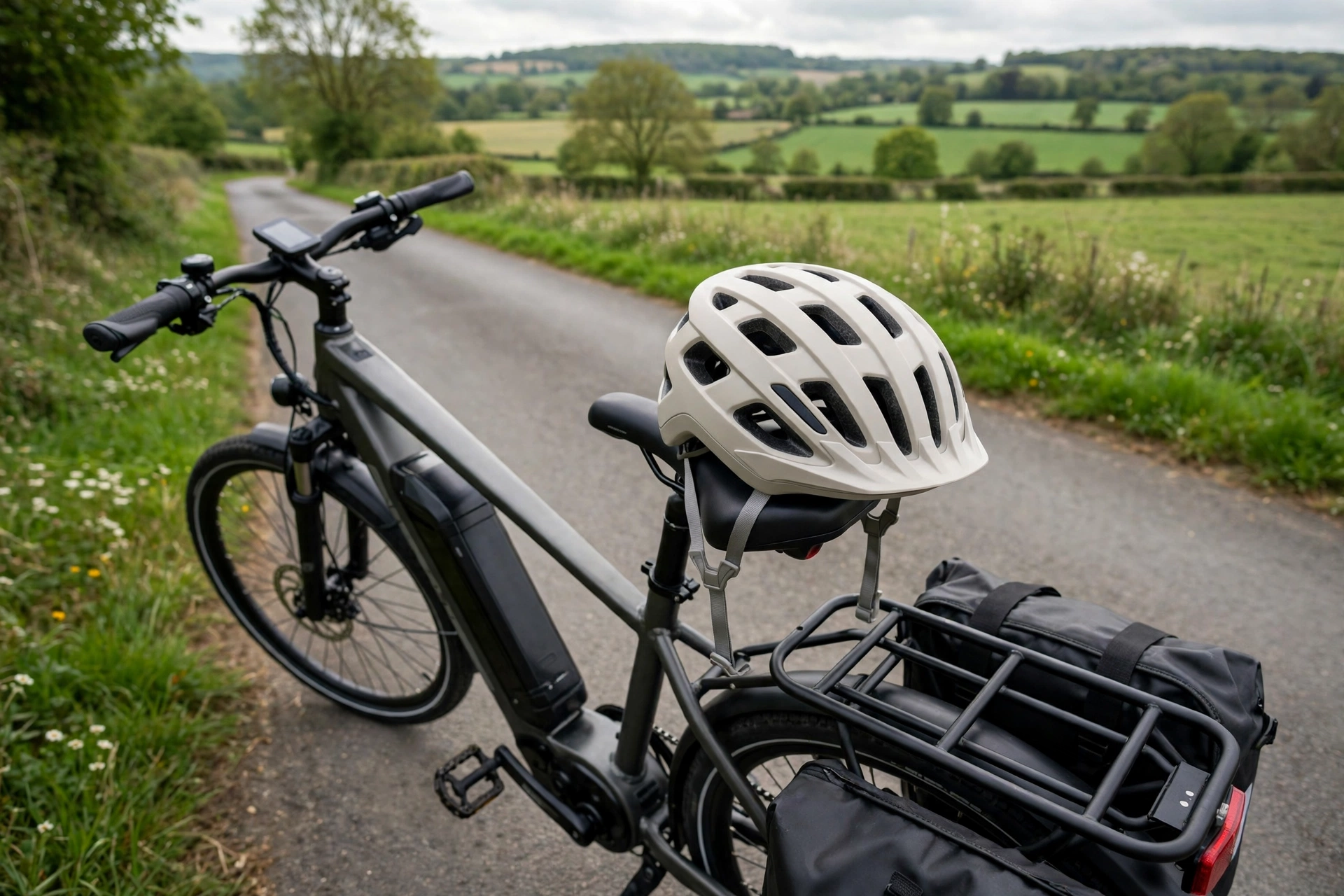
Finally, think about the end of the ride. A helmet you carry into a cafe, lock to the bike, or hang off a pannier should have a shell that tolerates everyday knocks, and pads you can refresh when they compress. Replace the helmet after any crash, and in general terms every few years as foams and straps age, even if it still looks clean.
Frequently Asked Questions
Q: Is the lightest helmet always the best for touring?
A: No. The best long-ride helmet is the lightest one that still fits correctly and carries the certification and coverage your speed needs. A slightly heavier NTA 8776 helmet is a better choice for fast Class 3 touring than an ultralight low-coverage shell.
Q: Can a heavy helmet really cause neck pain?
A: Yes, especially over several hours. Weight, wind pressure, a loose fit, and an upright or tucked posture combine to tire the neck muscles. Fix fit first, then consider a lighter helmet if the ache persists.
Q: How do I stop a lightweight helmet feeling loose at speed?
A: Use the retention dial for a snug, even fit, adjust the side straps into a V below your ears, and keep the chin strap snug. If it still rocks, the shell shape or size is wrong for your head — pads alone cannot fix that.

Olivia
Writer at Helmet Today, covering helmet reviews, fit and riding safety.