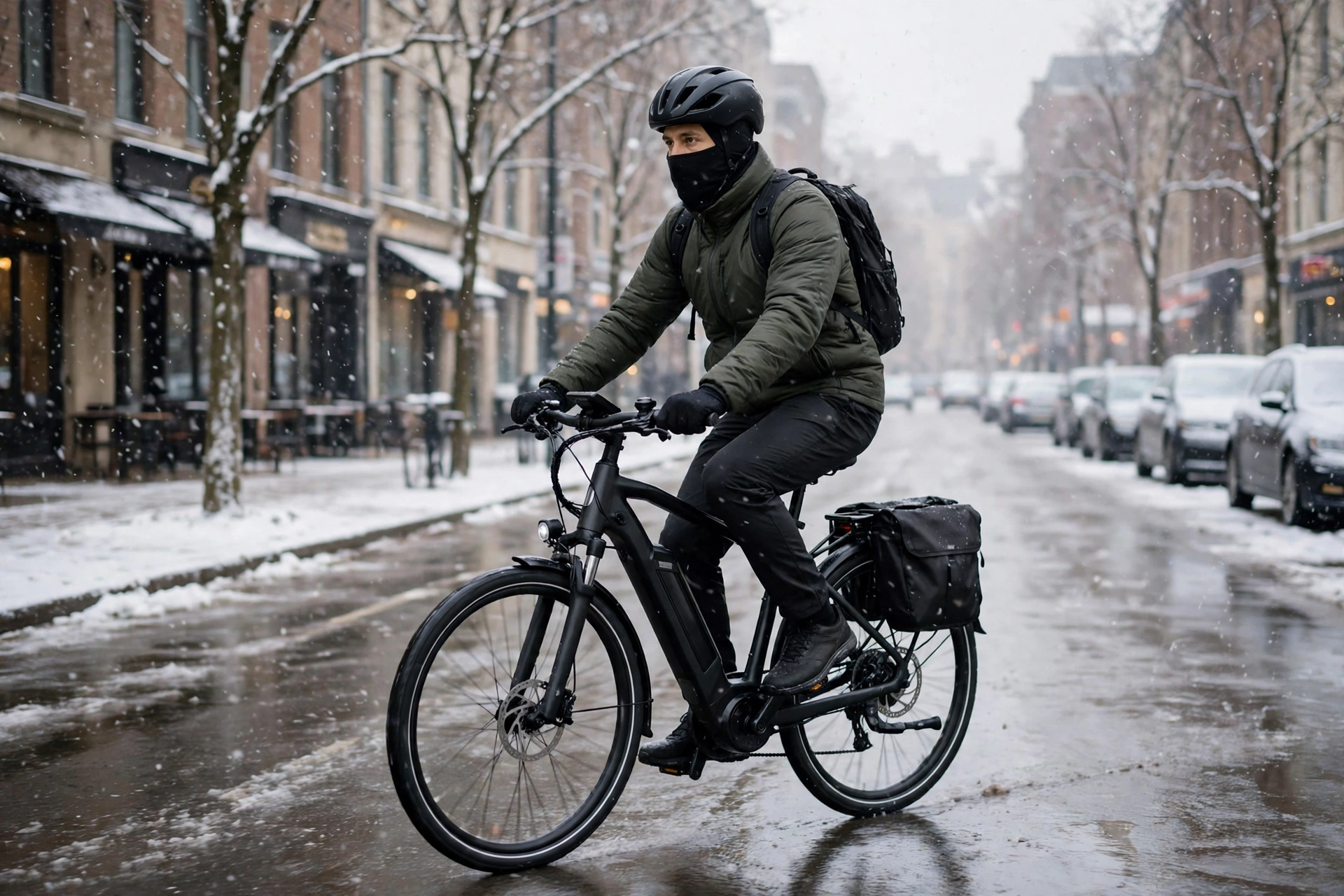
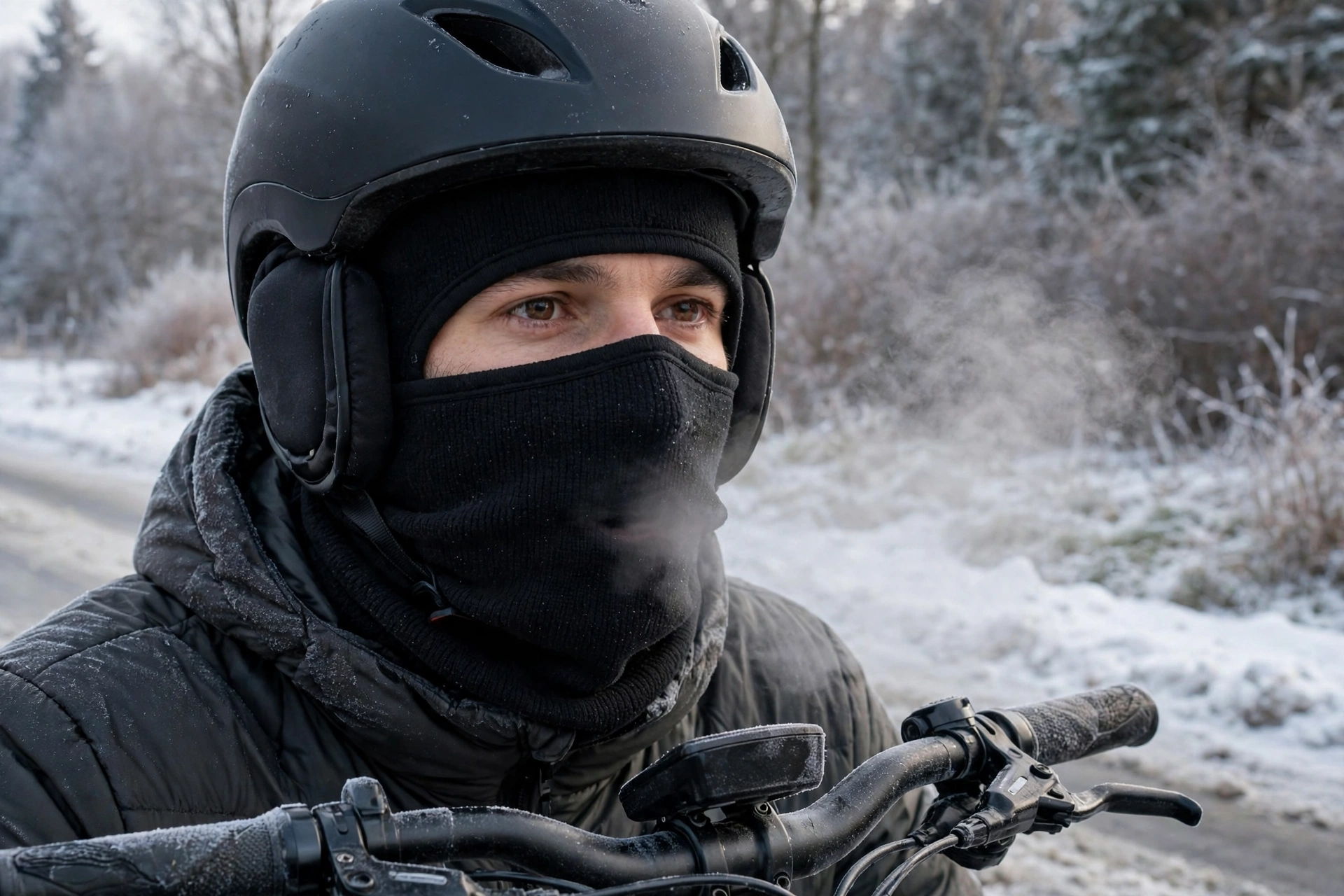
For winter e-bike riding, the best setup is a well-fitting helmet with closable vents and good ear coverage, worn over a thin balaclava or liner — not a bulky hat stuffed underneath. That combination keeps your head warm, your vision clear, and the helmet sitting exactly where it protects you. The helmet itself rarely needs to be a special winter model; how you set it up matters more.
Cold changes everything about a commute: wind chill at e-bike speeds, fogging visors and glasses, numb ears, and low, flat light. This guide covers warmth, fit with winter layers, fog control, and visibility, so winter riding stays comfortable instead of miserable.
What Makes a Helmet Work in Winter?
In general terms, a winter-friendly helmet has three traits. First, vents that genuinely close — open vents that blast freezing air across your scalp are the biggest source of cold on a winter ride. Second, a shape with decent coverage around the ears and the back of the head, where heat escapes and wind bites. Third, compatibility with the layers and eye protection you actually use, whether that is a visor, glasses, or ski-style goggles.
Some riders choose a ski or snowboard helmet for deep-winter commuting because they are built warm, with ear pads and goggle retention. That can work, but check the label: a winter-sports helmet is certified for winter sports, and a bicycle helmet is certified for cycling. If you go that route, understand which standard your helmet meets and choose deliberately rather than by accident.
Ventilation still matters in winter, surprisingly. A completely sealed helmet on a climbing effort makes you sweat, and sweat becomes cold the moment you stop pedaling hard. Adjustable vents you can crack on hills and close on descents are the practical sweet spot.
How Do You Layer Under a Helmet Without Ruining the Fit?
The rule is thin and smooth. A balaclava or a thin skullcap-style liner adds a lot of warmth for almost no bulk, wicks sweat, and covers your ears and neck. It should sit flat with no seams or knots under the helmet’s padding.
- Use a thin balaclava or liner cap made for helmets — it covers ears, cheeks, and neck in one piece.
- Never wear a thick knit hat underneath. It lifts the helmet, reduces coverage, and lets it shift in a fall.
- Fit the helmet over your actual winter setup. If the balaclava makes the helmet painfully tight, the helmet was marginal; do not loosen straps to compensate.
- Style hair low and flat, as in summer — a bunched ponytail lifts the helmet just as much in January.
Ear coverage deserves its own mention. Many helmets accept winter ear pads or a winter liner kit from the same brand, which is the cleanest solution. Otherwise, the balaclava’s ear coverage does the job, as long as the helmet still sits level and snug over it.
How Do You Stop Fogging in Cold Weather?
Fog is the winter rider’s visibility problem: warm, moist breath and a cold visor or glasses are a recipe for condensation. Manage it in layers:
- Anti-fog inserts: if your helmet has a visor, a double-layer anti-fog insert is the most reliable fix.
- Airflow: cracking a vent or the visor’s first position moves air across the inside surface and clears mist at stops, where fogging is worst.
- Breath direction: a balaclava with a breathable mouth panel, or a breath guard, keeps exhaled air from rising straight into your eyewear.
- Glasses wearers: anti-fog treatments help modestly; keeping glasses warm before the ride and avoiding overdressing (less sweat, less moisture) helps more.
Goggles are the heavy-duty answer for the coldest, windiest commutes — they seal against your face and shrug off wind chill entirely. If you pair goggles with a helmet, check that the strap sits securely and the frame fits within the helmet’s eye port without pushing the helmet up.
What About Visibility and Daylight in Winter?
Winter commuting often means riding at dawn, dusk, or in the dark both ways, under flat grey light that hides riders. Treat visibility as part of the helmet decision: bright or light-colored helmets are easier for drivers to pick out, and reflective details on the shell and straps catch headlights from the side — the angle helmets are most often seen from at junctions.
Helmet-mounted lights add a high, eye-level point of light that moves with your head, which is genuinely conspicuous in traffic. Keep your main lights on the bike as the law and good practice require, and treat the helmet light as a supplement. If your helmet has an integrated visor, a clear or lightly tinted lens suits winter light; save dark tints for summer. Rotational protection and other safety systems do not change with the season — our explainer on how MIPS works covers one feature worth having in any month.
How Do You Care for a Helmet Through Winter?
Winter is hard on gear. Road salt, grit, and damp storage degrade straps, pads, and mechanisms faster than summer use. Rinse or wipe salt off the shell and straps regularly, and wash the liner according to the maker’s instructions — a removable winter liner makes this easy.
Always air-dry the helmet at room temperature after wet rides, never on a radiator or with a hairdryer, since heat can damage the impact liner and glues. Store it dry and indoors; a helmet left damp in a cold garage all week will smell like it by spring. Check strap webbing and buckles monthly — salt-stiffened straps are a sign the helmet needs a proper clean, and frayed straps are a reason to replace parts or the helmet itself. Look after it, and the same helmet handles winter after winter.
Frequently Asked Questions
Q: Do I need a special winter e-bike helmet?
A: Usually not. A regular certified helmet with closable vents, worn over a thin balaclava, handles most winter commuting. Purpose-made winter liner kits and ear pads from your helmet’s brand are the best upgrade if your ears get cold.
Q: Can I wear a ski helmet for winter e-bike commuting?
A: Some riders do, for the warmth and goggle fit, but ski helmets are certified to a winter-sports standard rather than a bicycle standard. Check the label and choose knowingly — the certifications are designed for different activities.
Q: How do I keep my ears warm without a loose helmet fit?
A: Use helmet-specific ear pads or a thin balaclava that covers your ears under the helmet, and confirm the helmet still sits level and snug. Never pad the helmet out with a thick hat — that lifts it and weakens its protection.

Olivia
Writer at Helmet Today, covering helmet reviews, fit and riding safety.