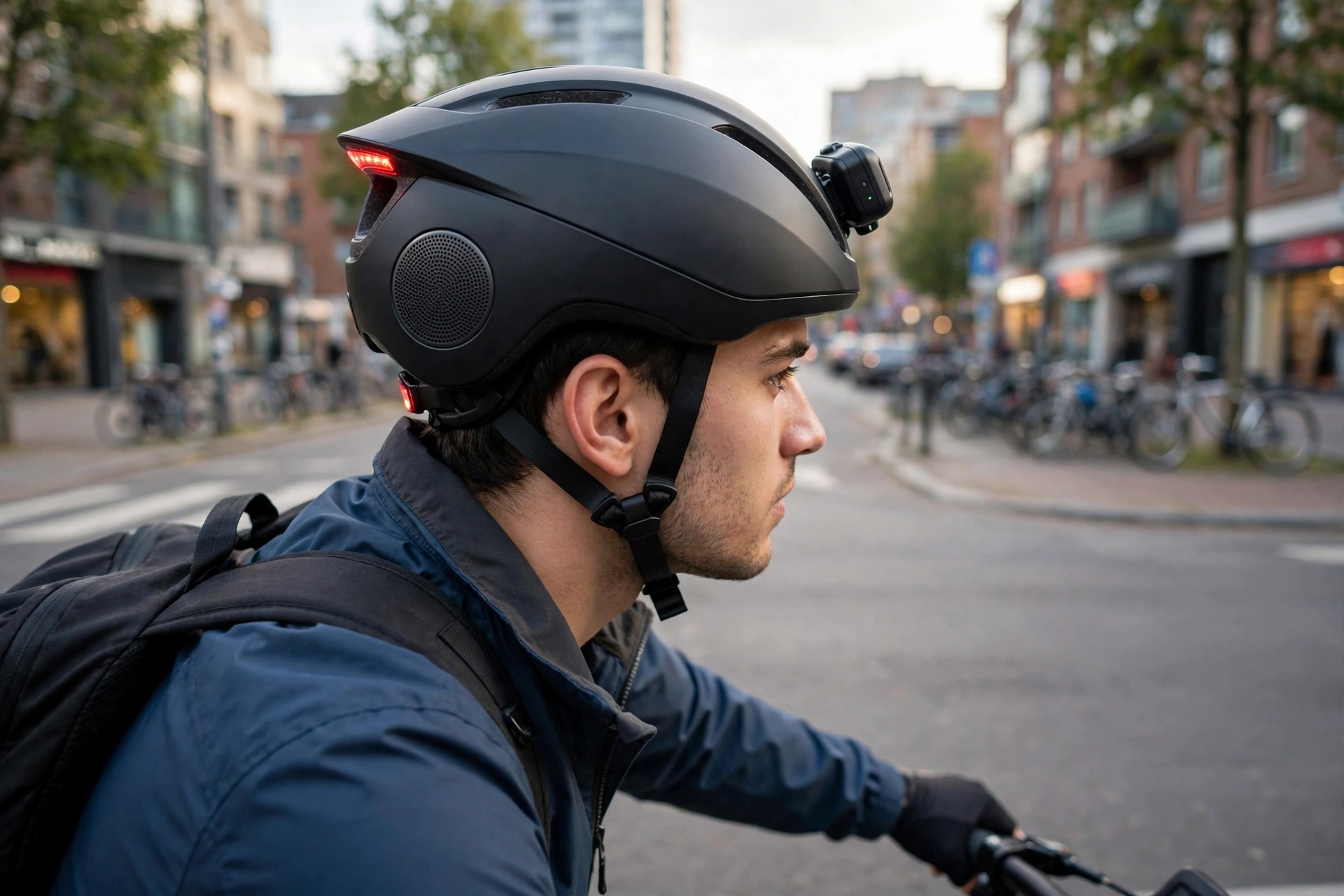
Smart helmet features add electronics — crash alerts that message a contact if you fall, built-in speakers and microphones, lights and turn signals, and app-connected ride tracking — on top of a normal certified helmet. The protection still comes from the shell and foam, and any smart helmet you buy must carry the same CPSC or EN 1078 certification as a plain one. The electronics are convenience and backup safety layers, never a substitute for the helmet itself.
The category has matured from novelty to genuinely useful commuter gear, but the features vary a lot in quality. Here is what each one actually does, what it costs you in battery and weight, and how to choose.
How Do Crash Alerts and Fall Detection Work?
Crash alert systems use motion sensors — accelerometers and sometimes gyroscopes — built into the helmet to detect the signature of a fall or impact. When the helmet senses a crash, it starts a countdown on your phone app. If you do not cancel it within the set window, the app sends an alert with your location to your chosen emergency contacts.
That design has real strengths and real limits. The strength: if you are knocked out or too hurt to use your phone on a quiet road, someone still learns where you are. The limits: the system depends on your phone being charged, connected, and within Bluetooth range; sensors can occasionally be fooled by a dropped helmet, which is why the cancel countdown exists; and an alert to a friend is not the same as a call to emergency services. Treat crash detection as a valuable backup layer, especially for solo riders — not as a guarantee.
Setup matters as much as the hardware. Install the app, register your contacts, test the alert once so you know what your contacts will receive, and keep the helmet’s firmware updated. A crash system that was never configured is just extra weight.
What Do Built-In Speakers and Microphones Actually Do?
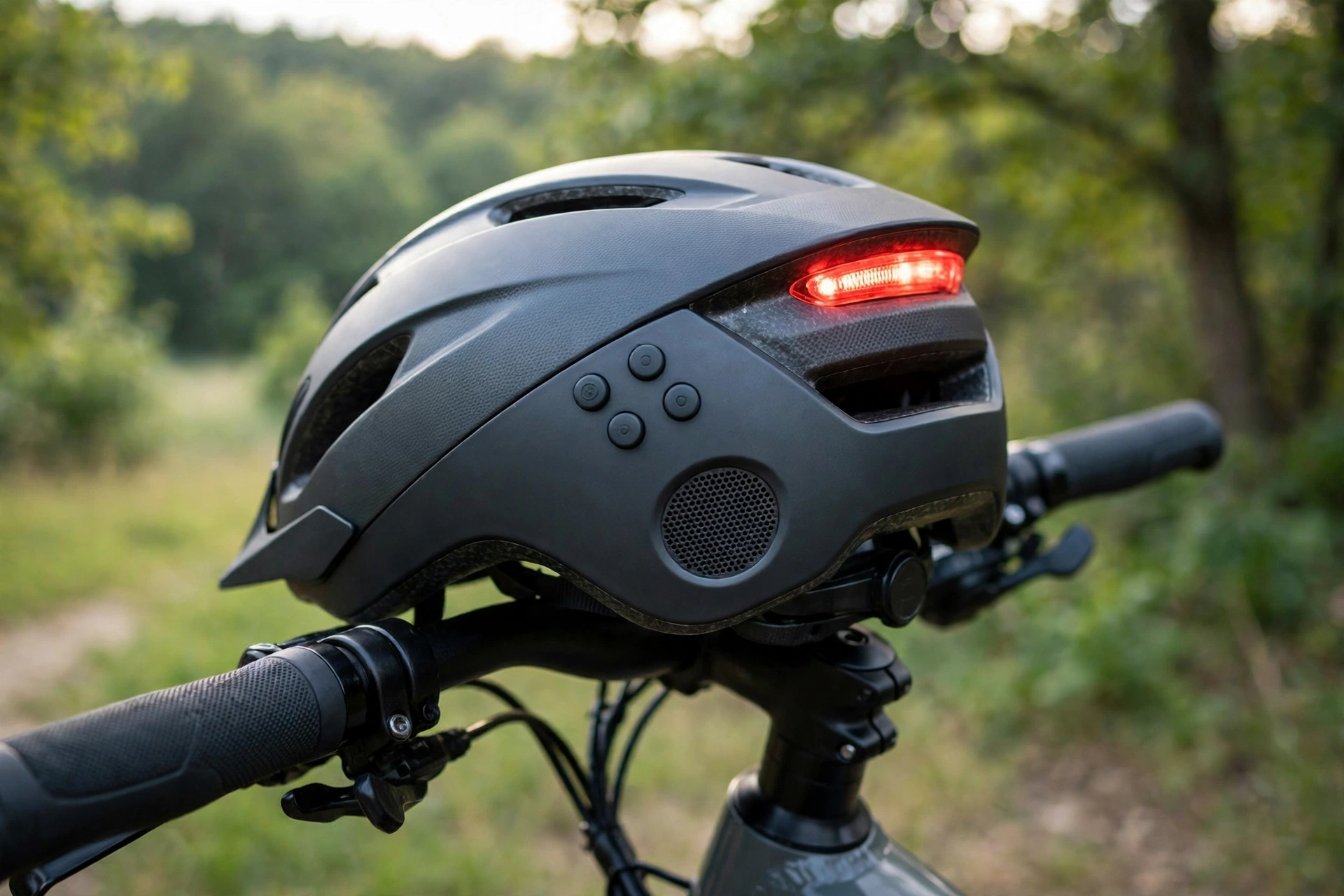
Audio is the most popular smart feature. Helmet speakers — often bone-conduction or open-ear designs, or small drivers in the ear area — pair with your phone for music, podcasts, navigation prompts, and calls, while a built-in microphone (often with wind-noise reduction) handles phone calls and voice assistants. Group intercom features on some models let riding companions talk to each other.
- Open-ear designs leave your ears uncovered so traffic sounds still reach you — the safer pattern for road riding.
- Volume discipline matters: if you cannot hear a car approaching or a bell behind you, it is too loud, whatever the design.
- Check local rules: headphone and earbud laws for cyclists vary by place; helmet-integrated open-ear audio is treated differently in some areas, so verify what applies where you ride.
Sound quality will not match good earbuds, and that is partly by design — situational awareness comes first. Judge audio features by call clarity and navigation audibility at riding speed, not by music fidelity standing in a shop.
Are Helmet Lights and Turn Signals Worth It?
Integrated lights put illumination at the highest point of the rider, where it is easiest for drivers to see, and a helmet light turns with your head — useful for being noticed at junctions. Many smart helmets add brake-light functions that brighten when sensors detect slowing, and turn signals operated from a small handlebar remote or by head gestures, depending on the model.
Two cautions keep this in proportion. First, helmet lights supplement your bike lights; in most places the legal requirement is for lights on the bicycle itself, so never let a smart helmet replace them. Second, signals only help if drivers understand them — a helmet turn signal is less familiar to motorists than an arm signal, so many riders use both. Where integrated lights shine brightest, literally, is rear visibility: a bright, elevated rear light with a brake function is conspicuous in exactly the following-traffic scenario that matters most to commuters.
What About Battery Life, Weight and Apps?
Electronics bring logistics. In general terms, smart helmet batteries last from several hours of continuous light-and-audio use to considerably longer on standby, and makers quote figures that assume particular settings — your real life will vary with light brightness and speaker volume. The practical questions are simpler: does it charge by USB like your other gear, how long does a full charge take, and what still works when the battery dies? The correct answer to that last one is “everything protective” — the helmet must remain a fully certified helmet with a flat battery, and reputable models are exactly that.
Weight is the other trade. Sensors, speakers, and batteries add heft compared with a basic helmet, and you feel extra weight most on long rides. Check the stated weight in your size, and remember fit still rules: a smart helmet that rocks on your head is worse than a dumb helmet that fits perfectly. App quality counts too — pairing reliability, alert settings, and ride logs live there. And the underlying passive safety tech keeps evolving alongside the electronics; our explainer on MIPS and rotational protection covers a feature some smart helmets also include.
How Do You Choose the Right Smart Helmet?
Start from the helmet, not the gadgets. Confirm certification, then fit — size, shape, strap comfort — exactly as you would for any helmet. Only then rank the features by your riding: solo rural riders get the most from crash alerts; urban commuters benefit most from lights and signals; riders who navigate by phone prompts will love integrated audio.
Finally, think about lifespan. A helmet is replaced after a crash and ages out over years of use, and electronics age on their own clock — batteries lose capacity and apps need ongoing support. Buy from a maker likely to keep its app alive, register the product, and keep the charging cable somewhere you will actually find it. Chosen that way, a smart helmet is a genuinely better tool for connected commuting. Chosen gadget-first, it is an expensive way to own a mediocre helmet.
Frequently Asked Questions
Q: Is a smart helmet safer than a regular helmet?
A: Its impact protection is the same — it must pass the same certification tests. Features like crash alerts and lights add backup safety and visibility, but they do not increase how much force the helmet absorbs in a crash.
Q: Does crash detection call emergency services?
A: Typically it alerts your chosen contacts through the app, with your location, after a countdown you can cancel. It usually does not contact emergency services directly, and it needs your phone charged, connected, and nearby to work.
Q: What happens when a smart helmet’s battery runs out?
A: The electronics stop, but the helmet itself remains a normal certified helmet. Lights, audio, and alerts need charge; the protective shell and liner do not. Recharge it as part of your routine, like your bike lights.

Olivia
Writer at Helmet Today, covering helmet reviews, fit and riding safety.