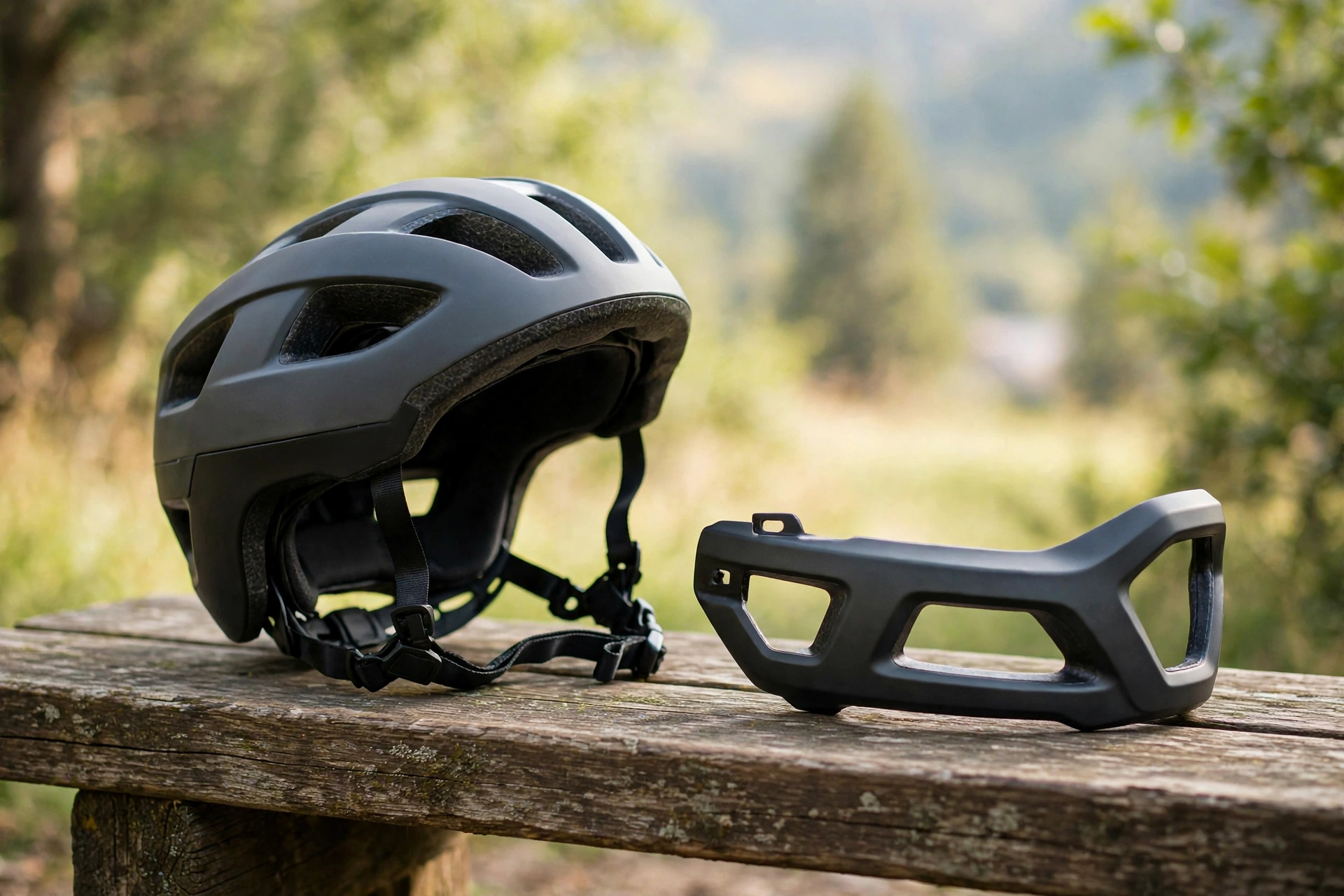
A removable chin bar helmet — usually called a convertible helmet — does exactly what the name promises: the chin bar unclips or unlatches, turning a full-face helmet into an open-face helmet in seconds. For e-bike riders who commute during the week and ride trails or faster descents on weekends, it can replace two helmets with one. The catch is that protection depends on buying a model that is properly certified with the chin bar attached, and on actually wearing the bar when the riding gets fast or rough.
Convertible helmets started in mountain biking, where riders wanted an airy open helmet for the climb and full-face protection for the descent. E-bike riders have adopted the idea because an e-bike covers a wider range of speeds and surfaces in a single ride than almost any other kind of bike.
What Is a Removable Chin Bar Helmet and How Does It Work?
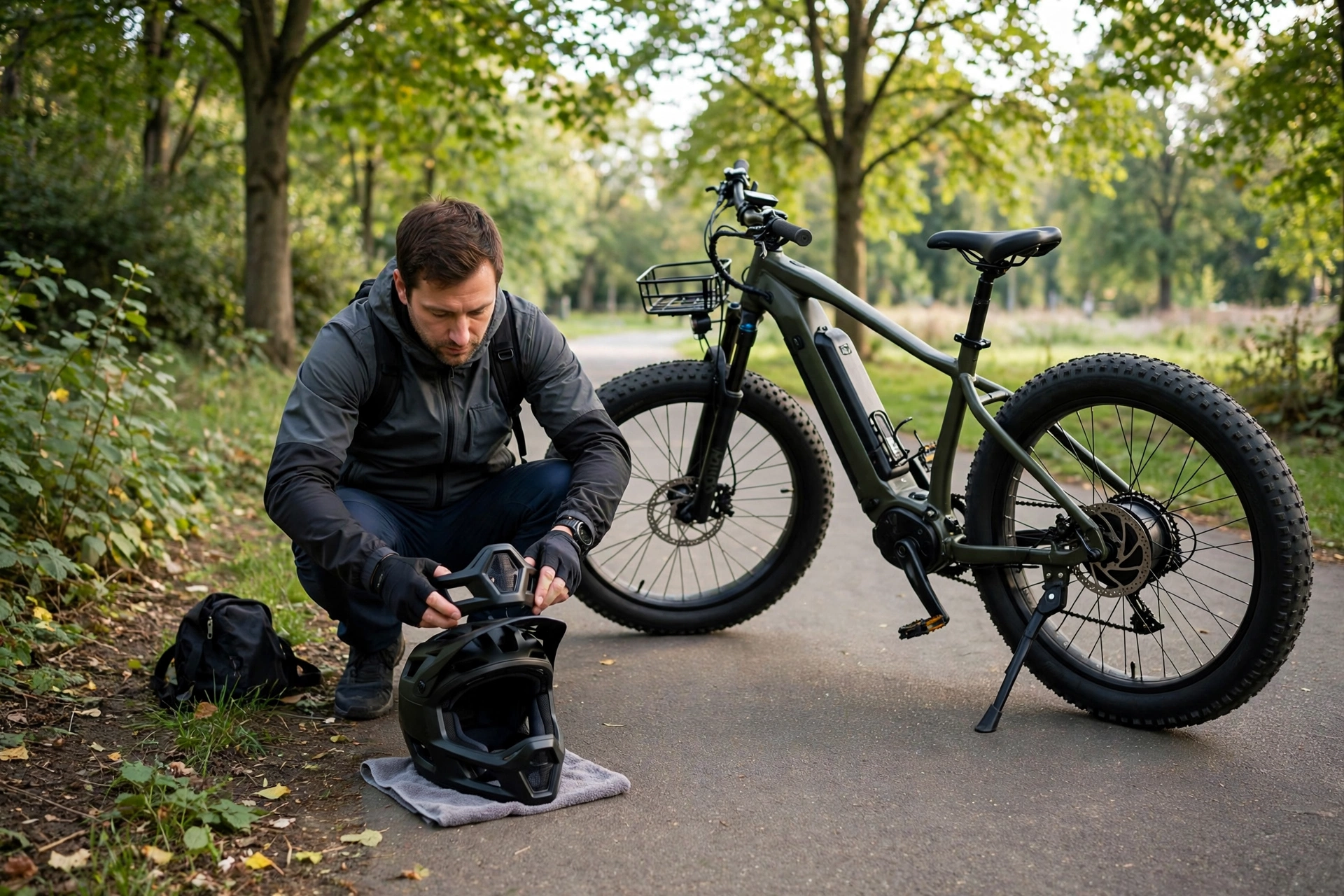
A convertible helmet is built in two parts: a main helmet shell that looks much like a regular trail or commuter helmet, and a chin bar that locks onto it around the sides of the face. Most designs use metal or reinforced plastic latches near the ears or cheeks. You line the bar up, press or clip it home, and the helmet becomes a full-face.
With the bar removed, the helmet is lighter, cooler, and easier to talk, drink, and look around in — which is why commuters like the format for stop-and-go city riding. With the bar fitted, your chin, jaw, and teeth gain a meaningful layer of protection against the kind of face-first impact that open-face helmets simply cannot cover.
Because the motor takes the sting out of climbs, many e-bike riders keep the chin bar attached more of the time than mountain bikers do. The bar can live in a backpack or pannier on the gentle part of a ride and go on for the fast, technical, or traffic-heavy part.
Is a Removable Chin Bar Helmet as Safe as a Fixed Full-Face Helmet?
It can be close, but only if you choose carefully. Every bike helmet sold for road and trail use in the US must meet the CPSC bicycle helmet standard in general terms, and that applies to convertibles too. The important extra question is whether the helmet has also been tested to a downhill or full-face standard with the chin bar fitted — some convertible models carry certification for downhill mountain bike use, which involves more demanding impact and chin bar testing, while others are only certified as ordinary open-face helmets that happen to have an accessory bar.
That distinction matters. A certified full-face configuration spreads impact through a structure designed and tested as one unit. An uncertified add-on bar may protect against scrapes and minor knocks but should not be trusted in a hard face-first crash. Check the manufacturer’s stated standards, and be wary of no-name convertibles that make full-face claims without listing any certification.
Fit and internal features matter just as much in a convertible. Many quality models include a rotational-impact liner, and if you want to understand what that layer does in an angled fall, our guide to what MIPS is and how it works explains it. Whatever the features, the chin bar only protects you when it is attached correctly — both latches fully engaged, every time.
When Should You Ride With the Chin Bar On or Off?
A practical rule is to match the bar to the fastest and roughest part of your ride, not the average part. Fit the chin bar for descents, rocky or rooty trails, jumps and bike parks, fast road sections, and riding in heavy traffic where a collision is more likely to throw you forward.
Riding with the bar off is reasonable for slow, relaxed riding: flat bike paths, gentle neighborhood streets, and hot climbing at walking-plus speeds where heat is the bigger problem. The open configuration breathes far better, and on an e-bike you can always stop and clip the bar on before a descent.
What you should avoid is the in-between habit — leaving the bar off “just for this one fast bit” because stopping feels like a nuisance. If you know a descent or a busy arterial is coming, put the bar on before you get there. Treat it like a seatbelt: those seconds are the point of owning the helmet.
What Should You Check Before Buying a Convertible Helmet?
Start with certification, as covered above: confirm the helmet is certified as a full-face with the bar attached, not just as an open helmet. Next, fit — the helmet should sit level and snug in both configurations, with the straps forming a V below your ears and roughly a finger or two of room under the chin strap. Try it with the glasses or goggles you ride in, because chin bars and eyewear can clash.
Then work the mechanism in the shop. The latches should engage with a positive, obvious action you can manage with gloves on, and there should be no play or rattle once fitted. Ask whether replacement chin bars and latch parts are available; a bar is a wear item, and a helmet whose bar cannot be replaced loses its main advantage the first time a latch wears out.
Finally, weigh the honest trade-offs. A convertible is usually a little heavier and more expensive than a comparable open-face helmet, and a little less rigid than a dedicated full-face. For a rider who genuinely does both kinds of riding, that compromise is the value. For someone who only ever rides one way, a single-purpose helmet may serve better.
How Do You Look After the Chin Bar and Latches?
Keep the attachment points clean. Trail grit and road dust in a latch can stop it closing fully, so brush or rinse the mechanism regularly and let it dry before storing. Inspect the bar and latch tabs for cracks, whitening plastic, or looseness, especially after any knock — and if the helmet takes a real impact, replace it, since helmet foam is designed to absorb one serious hit.
Store the chin bar somewhere it will not be crushed or stepped on, and carry it in a padded bag or a protected part of your pack rather than letting it rattle against tools and bottles. A quick pre-ride routine — clip the bar on, tug it firmly in a few directions, confirm both sides are locked — takes seconds and should become as automatic as checking your tire pressure.
Frequently Asked Questions
Q: Can I just buy a chin bar for my existing open-face helmet?
A: Generally no. Chin bars are model-specific, and a helmet is only certified in the configuration it was tested in. Adding an untested bar to a helmet it was not designed for gives an unknown level of protection, so buy a convertible helmet as a complete, certified system.
Q: How long does it take to attach the chin bar?
A: With a little practice, in general terms well under a minute. Most systems line up on guides and latch on both sides. Practice at home until you can do it by feel, and always tug-test both sides before riding.
Q: Is a convertible helmet a good choice for a daily e-bike commute?
A: It can be, especially if your commute mixes busy roads with relaxed paths. Ride open and cool on the quiet stretches, and clip the bar on for fast or traffic-heavy sections. Just make sure the model is certified with the bar fitted and that you will actually stop to attach it when conditions call for it.

Olivia
Writer at Helmet Today, covering helmet reviews, fit and riding safety.