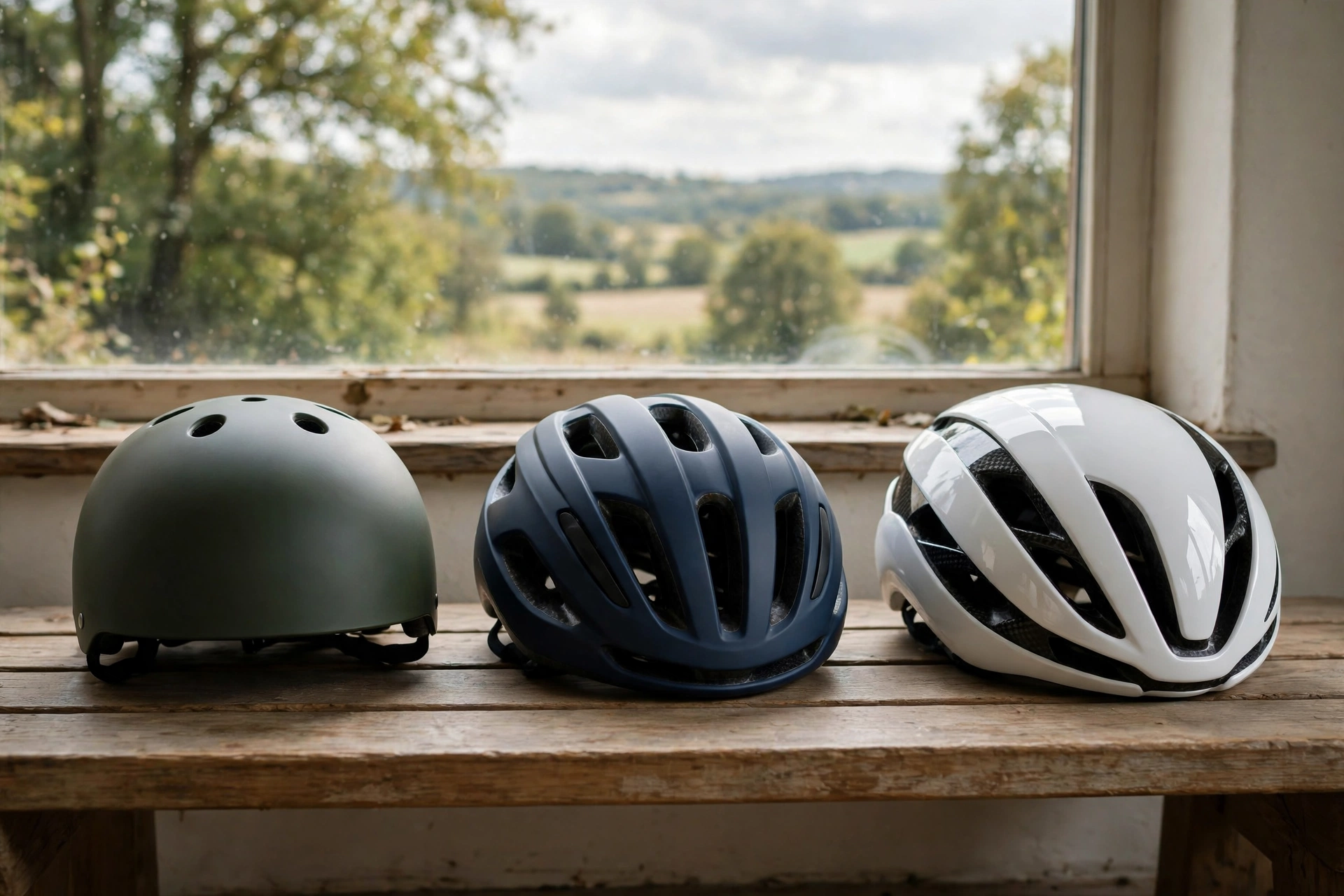
Every e-bike helmet on the shelf, from the cheapest to the most expensive, has to pass the same basic safety certification to be sold — so what extra money buys is comfort, convenience, and features, in general terms not a different level of baseline protection. In typical market terms, e-bike helmets fall into three broad ranges: under about $50, roughly $50–$100, and over $100. Knowing what each tier actually adds helps you spend on the things that matter for your riding and skip the rest.
These bands are general descriptions of the market, not prices for any specific model, and individual helmets move around them with sales and seasons. Use the tiers to understand features, then shop for the best-fitting helmet in the band that matches how you ride.
What Do You Get in a Budget E-Bike Helmet?
The entry tier, typically under about $50, gives you the essentials done legally: a certified shell and foam liner, basic comfort padding, a simple strap system, and a handful of vents. Fit adjustment is often crude — a few pad thicknesses or a basic elastic or dial system — and sizes may come in broad ranges rather than many shell sizes.
None of that makes a budget helmet a bad helmet. If it carries the proper certification for bicycle helmets and it fits your head properly, it does the fundamental job. Budget models tend to be heavier, hotter, and less refined, and the pads and straps may wear out sooner, but for an occasional rider on a slower Class 1 or Class 2 e-bike, that can be a perfectly sensible trade.
The main risk at this tier is not the helmet — it is fit. With fewer sizes and simpler adjustment, more riders end up in a helmet that is almost right. An almost-right budget helmet protects worse in practice than its certification suggests, so take the time to get the fit genuinely snug and level.
What Does the Mid-Range Add?
The middle band, roughly $50–$100 in general terms, is where most regular commuters land, and it is easy to see why. Fit systems improve a lot: proper rear dial adjusters, more shell sizes, better-shaped padding, and straps that stay where you set them. Ventilation improves too, with real internal channeling instead of token holes, which matters on a daily summer commute.
This is also the tier where rotational-impact liners commonly appear. If you have seen the term and wondered whether it is worth paying for, our explainer on how MIPS helmet technology works walks through what these liners are designed to do in angled impacts. Integrated rechargeable rear lights, reflective detailing, and small visors also show up here — features that suit riders who commute in traffic and fading light.
In short, the mid-range mainly buys a helmet you will enjoy wearing every day: lighter on your head, cooler, easier to adjust with gloves, and better equipped for being seen. That daily-wear factor is a safety feature in itself, because a helmet only works when it is on your head.
What Do Premium E-Bike Helmets Add?
Above roughly $100, in general terms, you are paying for refinement and specialization. Premium commuter helmets may be certified to the Dutch NTA 8776 standard, which was written for faster e-bikes and involves more demanding impact testing and greater coverage than the standard bicycle test. For riders on faster Class 3 machines cruising at up to 28 mph, that extra certification is the single most meaningful upgrade at any price.
Beyond certification, the premium tier adds polish: lighter shells, better-finished liners and straps, magnetic buckles, integrated front and rear lights with smart brake-light functions on some models, drop-down eye shields, and in a few cases crash-detection or communication features. Materials and build quality also tend to be a step up, which can mean the helmet stays comfortable and intact for longer.
What premium money does not buy is invincibility. A top-tier helmet still needs replacing after a crash, still ages, and still fails you if the fit is wrong. Think of the premium tier as buying the best version of the daily experience plus, in the NTA-certified cases, protection matched to higher speeds.
Does Paying More Make a Helmet Safer?
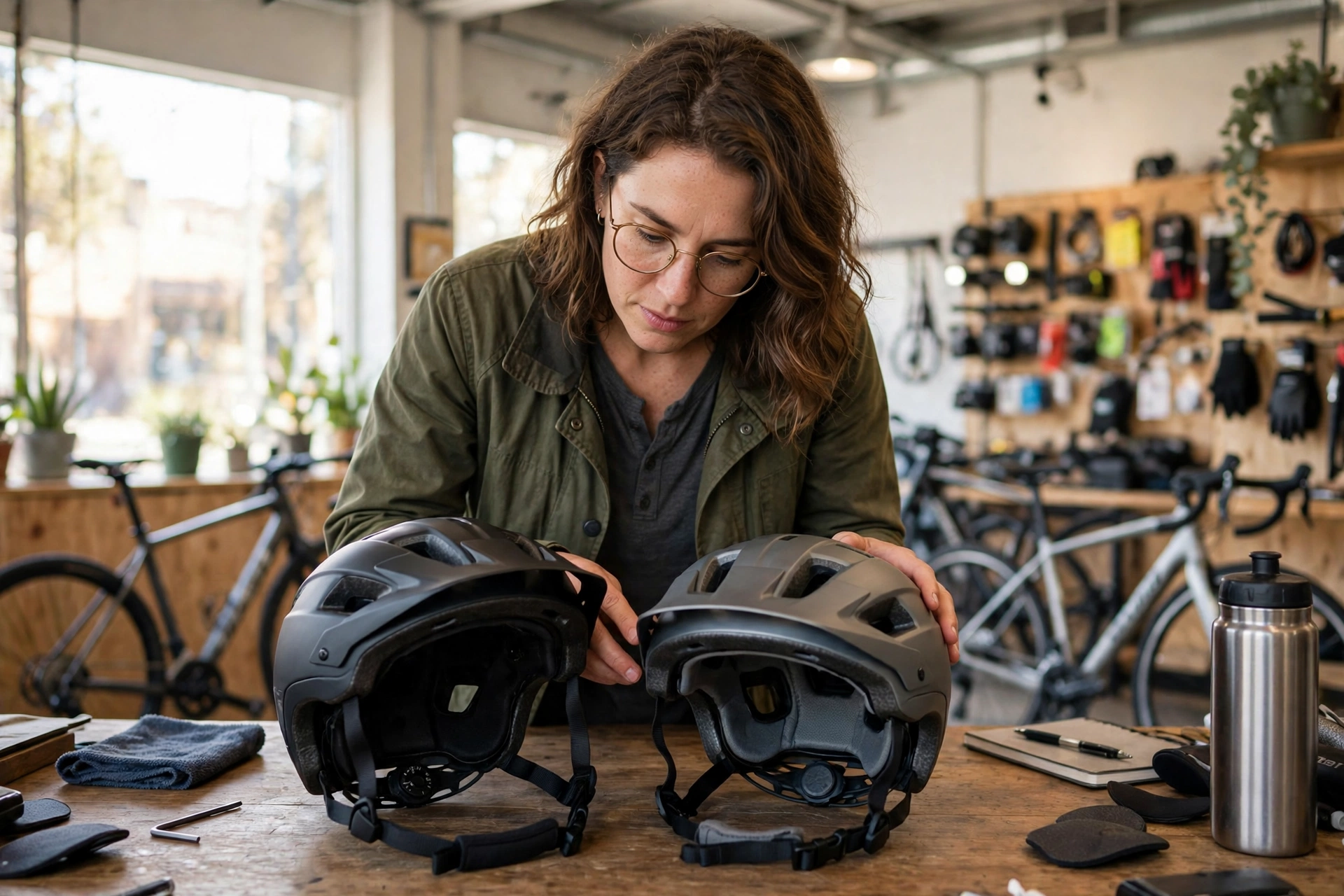
Within the same certification, not automatically. Certification is pass-or-fail against a set standard, and brands do not publish how far above the line each model lands, so there is no honest way to say a $150 helmet is “twice as safe” as a $60 one. Anyone who claims a precise safety ranking by price is guessing.
Where money can genuinely add protection is at the boundaries: a helmet certified to a tougher standard for faster e-bikes, coverage that extends lower over the back and sides of the head, and features like rotational liners that address impact types the basic test does not measure. Good fit, bought with the wider size ranges of the mid and premium tiers, is also real protection.
The most defensible view is this: a well-fitting certified budget helmet is a safe helmet, and higher tiers add comfort, convenience, and in specific cases extra tested protection for faster riding. Spend where your riding actually demands it.
How Should You Decide What to Spend?
Match the tier to your speed and exposure. Slow, short, low-traffic riding on a Class 1 or 2 e-bike is well served by a well-fitting budget or mid-range helmet. A daily commute in traffic, in all weathers and seasons, justifies the mid-range easily — the comfort and visibility features get used twice a day. Regular riding at Class 3 speeds makes a strong case for a premium helmet with higher-speed certification.
Also budget honestly for replacement. Helmets are consumables: they should be replaced after any significant impact and in general terms every few years as materials age and pads compress. A rider who buys mid-range and replaces on schedule is better protected than one who buys premium once and stretches it for a decade.
And whatever tier you choose, try before you buy if you can. Head shapes differ, brands size differently, and the best helmet in any price band is the one that fits your particular head snugly, sits level, and feels like something you will happily wear on every single ride.
Frequently Asked Questions
Q: Is a budget e-bike helmet actually safe?
A: Yes, provided it carries the proper bicycle helmet certification and fits you correctly. Certification is the safety floor for every tier. The weaknesses of budget helmets are comfort, fit range, ventilation, and durability — not legality or basic impact protection.
Q: What is the single best upgrade to pay for?
A: For most riders, a proper fit system and a wider choice of sizes, because fit decides how well any helmet works. For faster Class 3 riders, higher-speed certification such as NTA 8776 is the upgrade that matters most.
Q: Should I buy the most expensive helmet I can afford?
A: Not necessarily. Buy the tier that matches your speed, mileage, and conditions, and keep money in reserve for timely replacement. A mid-range helmet replaced on schedule protects you better than an aging premium helmet kept years past its best.

Olivia
Writer at Helmet Today, covering helmet reviews, fit and riding safety.