Most teenagers wear either a youth extra-large or an adult small e-bike helmet, because teen heads are usually close to adult size. The only reliable way to choose is to measure the head in centimeters and match that number to the size chart of the exact helmet you are buying — never buy by age alone.
Teenagers sit in an awkward gap in helmet sizing. Many have outgrown kids’ helmets but find some adult models loose or bulky, and e-bikes add speed that makes a sloppy fit more risky than it would be on a regular bike. This guide explains how teen sizing works, how to measure correctly, and how to decide between the top youth size and the smallest adult size.
What Helmet Size Do Most Teenagers Wear?
In general terms, most riders aged roughly 13 to 17 have head circumferences that fall in the low-to-mid 50s in centimeters, which is where the largest youth sizes and the smallest adult sizes overlap. A smaller 13-year-old may still fit a youth large, while a tall 16-year-old may measure straight into an adult medium. Body height and shoe size tell you nothing useful here — head size varies independently.
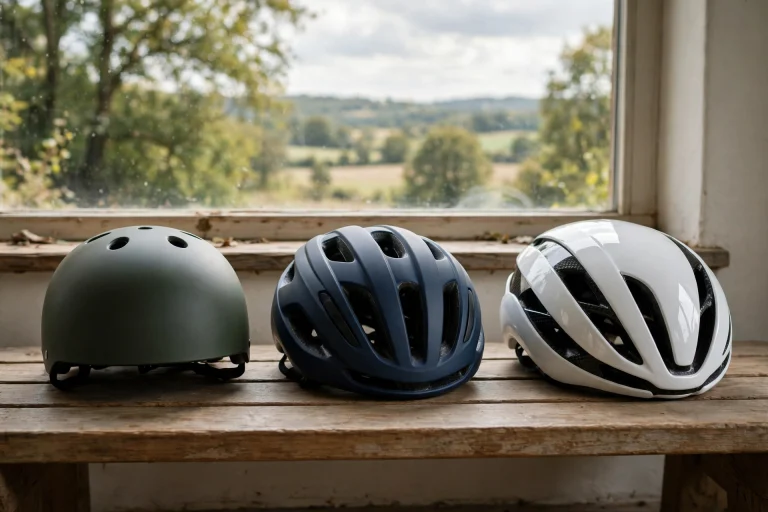
That overlap is actually good news. It means most teenagers can choose from both ranges, so the decision should be based on measured size, fit, and the kind of riding they do, not on which section of the shop the helmet came from. If a teen’s measurement lands inside both a youth and an adult range, try both helmets on and pick the one that fits better and suits the bike.
How Do You Measure a Teenager’s Head for an E-Bike Helmet?
Use a soft tailor’s tape measure and wrap it around the widest part of the head, about an inch above the eyebrows and ears, keeping it level all the way around. It should sit snug and flat without digging in. Read the result in centimeters, because most helmet charts are built around centimeters even in the United States.
Measure two or three times and use the largest consistent reading. Let the teen wear their hair the way they will ride — a thick ponytail worn low, braids, or a winter liner can change the effective size. If you do not have a soft tape, wrap a piece of string around the head, mark where it meets, and measure the string against a ruler.
Write the number down before shopping. A single centimeter can move a rider into the next size, and knowing the exact measurement makes it easy to compare charts between brands instead of guessing from S, M, and L labels.
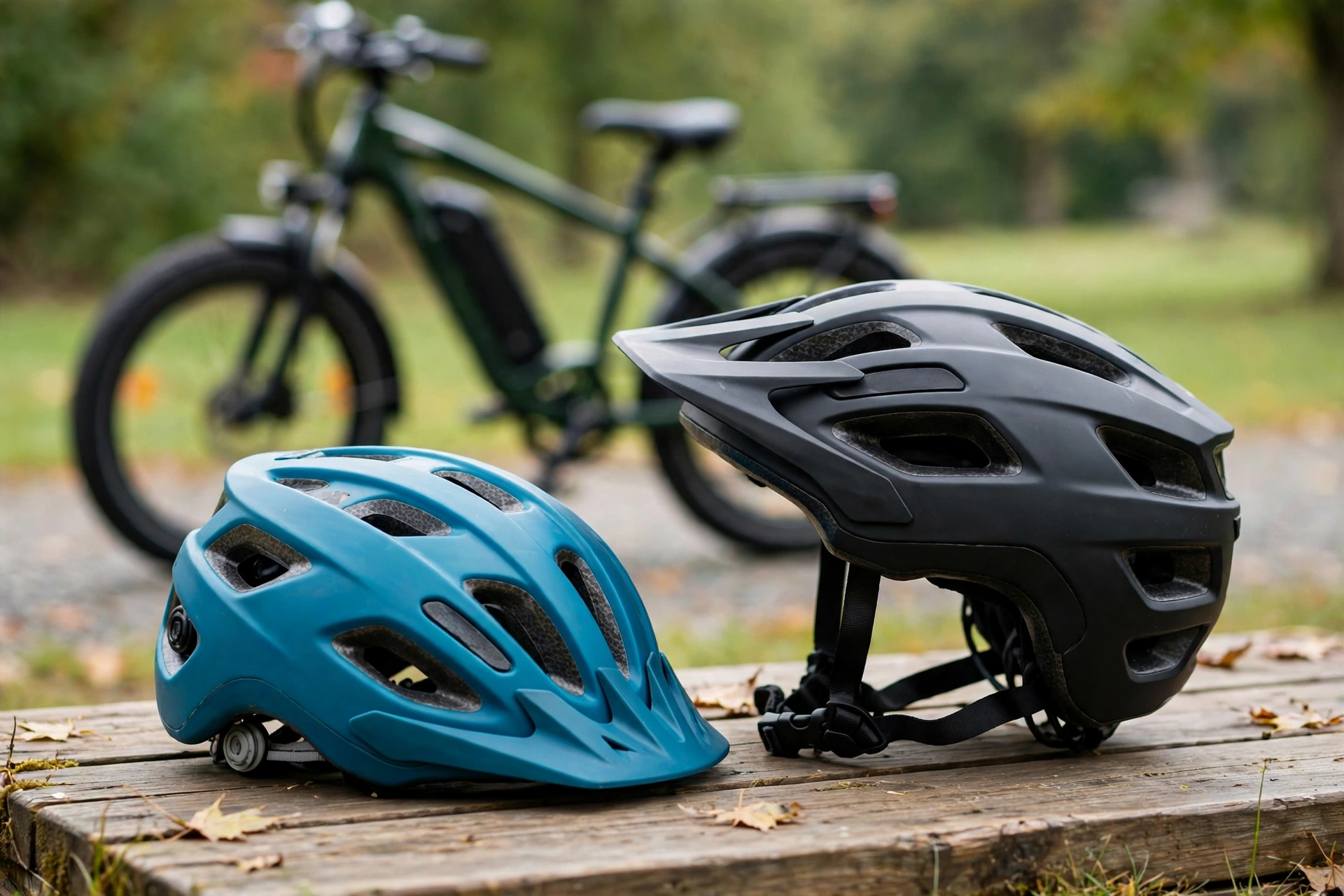
Youth Size or Adult Size — Which Should a Teen Choose?
Start with the chart, not the label. If the measurement falls squarely in a youth range and the helmet is certified for bicycle use, a youth model is a perfectly good choice and often costs less. If the measurement is at the very top of the youth range, an adult small will usually give growing room and a better selection of e-bike-specific features.
Adult ranges tend to offer more of what faster e-bike riding calls for: deeper coverage at the back and sides, models certified to higher-speed e-bike standards, and options like integrated lights and visors. For a teen riding a Class 3 e-bike at up to 28 mph in traffic, an adult e-bike helmet in the right size is often the smarter pick. For a teen cruising a Class 1 bike on neighborhood paths, a well-fitting youth helmet is fine.
Never size up “to grow into” in a way that leaves the helmet loose today. A helmet that rocks or slides cannot do its job, and a teenager who will wear the helmet daily is better served by the size that fits now.
Why Does Fit Matter More on an E-Bike?
E-bikes hold higher speeds for longer — uphill, into headwinds, and across whole commutes — so a teen spends more time at speeds where a crash carries serious energy. A helmet only manages that energy if it stays in the correct position on the head. One that has rotated or lifted at the moment of impact protects the wrong area or comes off entirely.
Fit is also what makes the helmet’s safety technology work as designed. Rotational liners are a good example: our explainer on what MIPS is and how it works describes how these systems reduce twisting forces in angled falls, but a liner can only do that job if the helmet itself is snug and stable. Correct size comes first; features come second.
What Fit Checks Should a Teen Run Before Riding?
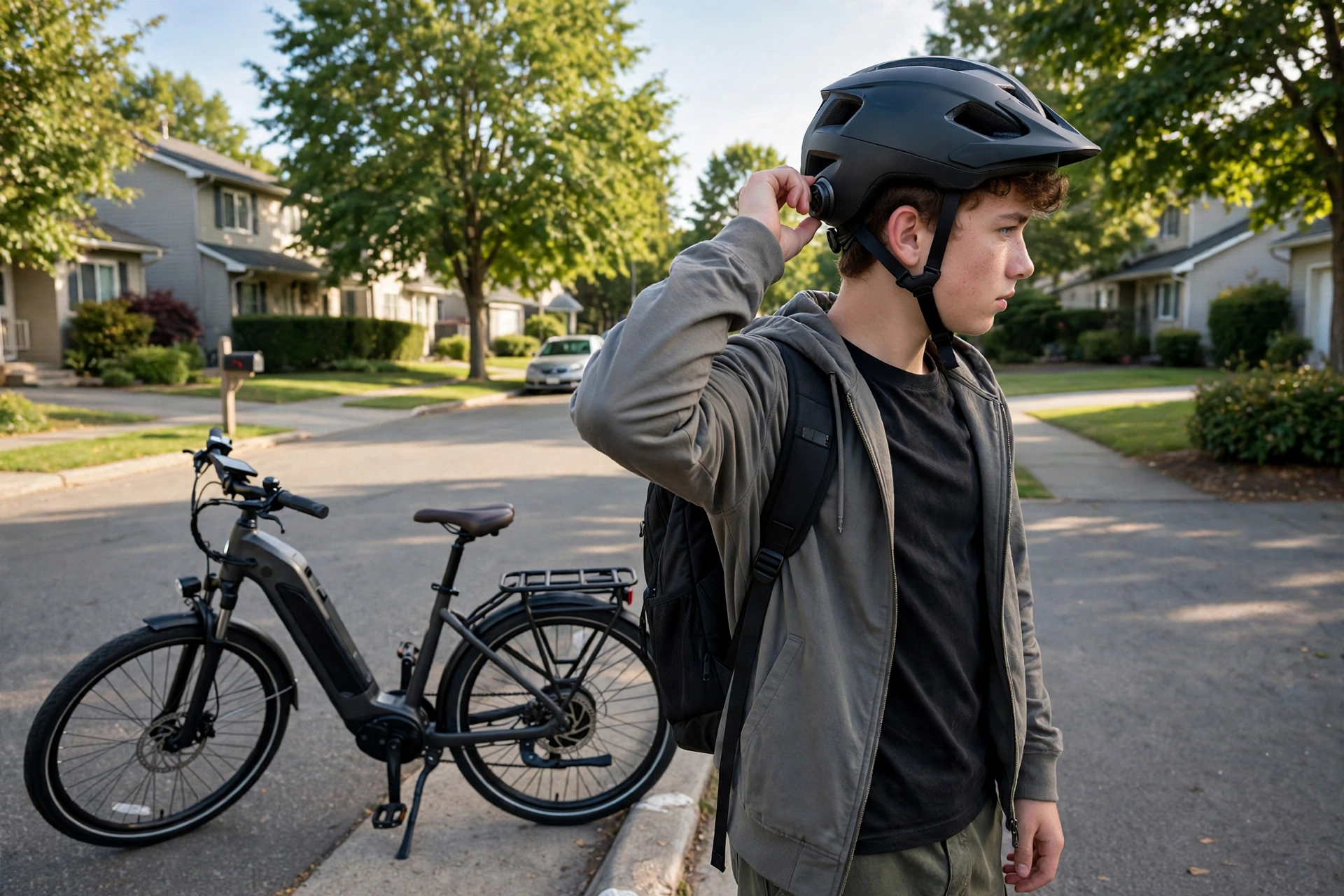
Put the helmet on level, front edge about one to two finger-widths above the eyebrows. It should feel snug and even all around, with no single pressure point. Wear it for at least ten minutes — a hot spot that appears at minute ten will be miserable at minute forty of a ride to school.
Then run the movement tests. Shake the head side to side and nod: the helmet should move with the head, not slide over it. Try rolling it forward and backward with both hands; it should resist. Set the side straps to form a V just below each ear, fasten the chin strap so one or two fingers fit underneath, and tighten the rear dial last. Finally, have the teen look over each shoulder as if checking traffic — the helmet should stay level through every head check.
Frequently Asked Questions
Q: Can a teenager just wear a parent’s helmet?
A: Only if it genuinely fits the teen’s measured head size and passes the shake and roll tests. Sharing a helmet that is even slightly loose is not safe, and each rider is better off with their own correctly sized helmet.
Q: How often should a teen’s helmet size be rechecked?
A: Check the fit every season and re-measure at least once a year while they are still growing. If the helmet starts to feel tight, leaves deep red marks, or the pads have fully compressed, it is time to measure again and possibly move up.
Q: Do teenagers legally need a helmet on an e-bike?
A: In many states, yes — in general terms, numerous states require helmets for younger riders, and several require them for all riders on faster Class 3 e-bikes. Rules vary by state and locality, so check the law where you ride.

Olivia
Writer at Helmet Today, covering helmet reviews, fit and riding safety.