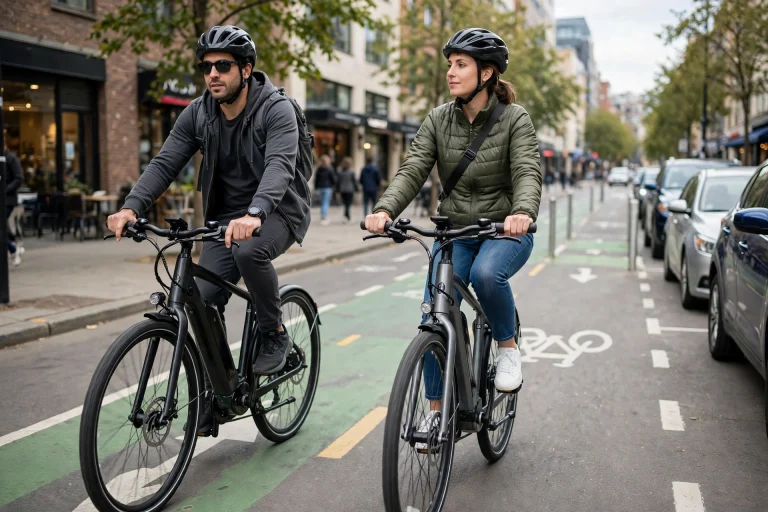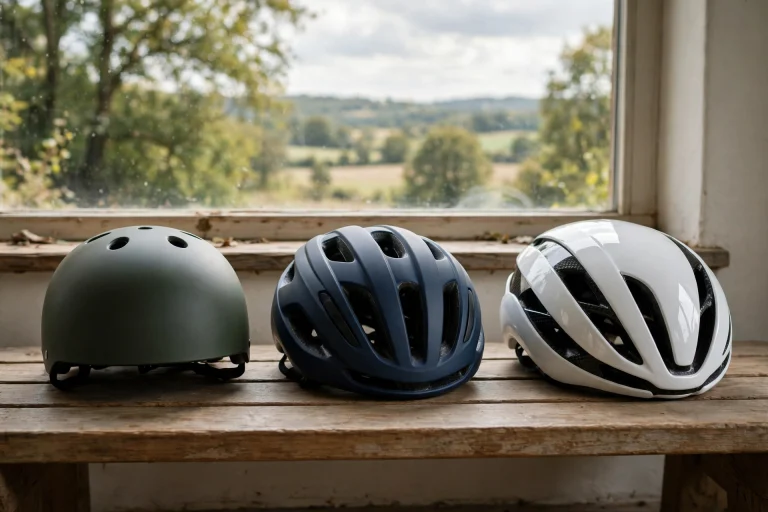
You do not need a special category of helmet to ride an e-bike with a child seat — what you need is a properly certified, well-fitting helmet you will genuinely wear on every trip, chosen with an eye on comfort, visibility, and hearing. Your child needs the same thinking too: their own correctly sized, certified kids’ helmet, fitted snugly before every ride. Riding with a child seat changes your speed, balance, and priorities far more than your helmet spec sheet.
Family e-biking is one of the best uses of the technology — school runs, park trips, and errands without a car. Here is how to think about helmets, balance, checks, and the rules — and remember that child passenger rules genuinely vary by state and locality, so treat local rules as the final word.
Do You Need a Different Helmet When You Ride With a Child Seat?
Not a different category, but a few priorities shift. You will ride slower and more upright, scan around more, and talk to a small passenger behind you, so a helmet that preserves your hearing and peripheral vision and stays comfortable at low speeds — where there is less cooling airflow — is worth more than an aero shape. Deep full-face helmets are usually unnecessary and can muffle the sounds you most want to hear, including your child’s voice and approaching traffic.
Visibility becomes a bigger deal than solo riding. You are a longer, heavier, slower-accelerating vehicle now, and drivers need to read you early. A bright helmet color, reflective details, and ideally an integrated rear light all help you register in traffic — and they model exactly the visibility habits you want your child to grow up with.
Above all, your helmet only works if it is on. Family rides involve a dozen small tasks, and the parent’s helmet is the easiest thing to skip “just this once” on a short trip. Choose one that goes on in seconds, fits over a ponytail or cap, and lives next to the bike so wearing it is the default.
What Helmet Should Your Child Wear in a Child Seat?
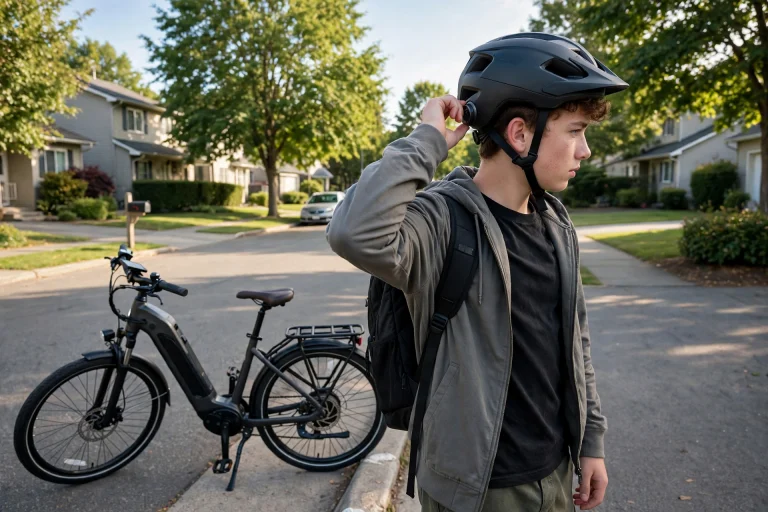
Your child should wear their own helmet — a certified kids’ bicycle helmet, sized to their head now, not one bought to grow into. A helmet that is too big can shift forward over the eyes or slip off in a fall. Fit it level, snug all around, with the chin strap adjusted so only a finger or two fits beneath it, and check the fit again regularly, because children outgrow helmets faster than they wear them out.
Kids’ helmets come in designs intended to sit well even when a child’s head rests back against a child seat, and many now include the same rotational-impact liner technology found in adult helmets — our guide to what MIPS is and how it works explains that technology if you want the background before you shop. Whatever the features, certification and fit are the non-negotiables.
As for age: in general terms, many pediatric and child-seat manufacturer guidelines suggest a child should be able to sit up steadily and support their head while wearing a helmet — often around their first birthday — before riding in a bike seat, but guidance and seat makers’ minimums differ, so follow the seat manufacturer’s stated minimums and your pediatrician’s advice rather than any single number.
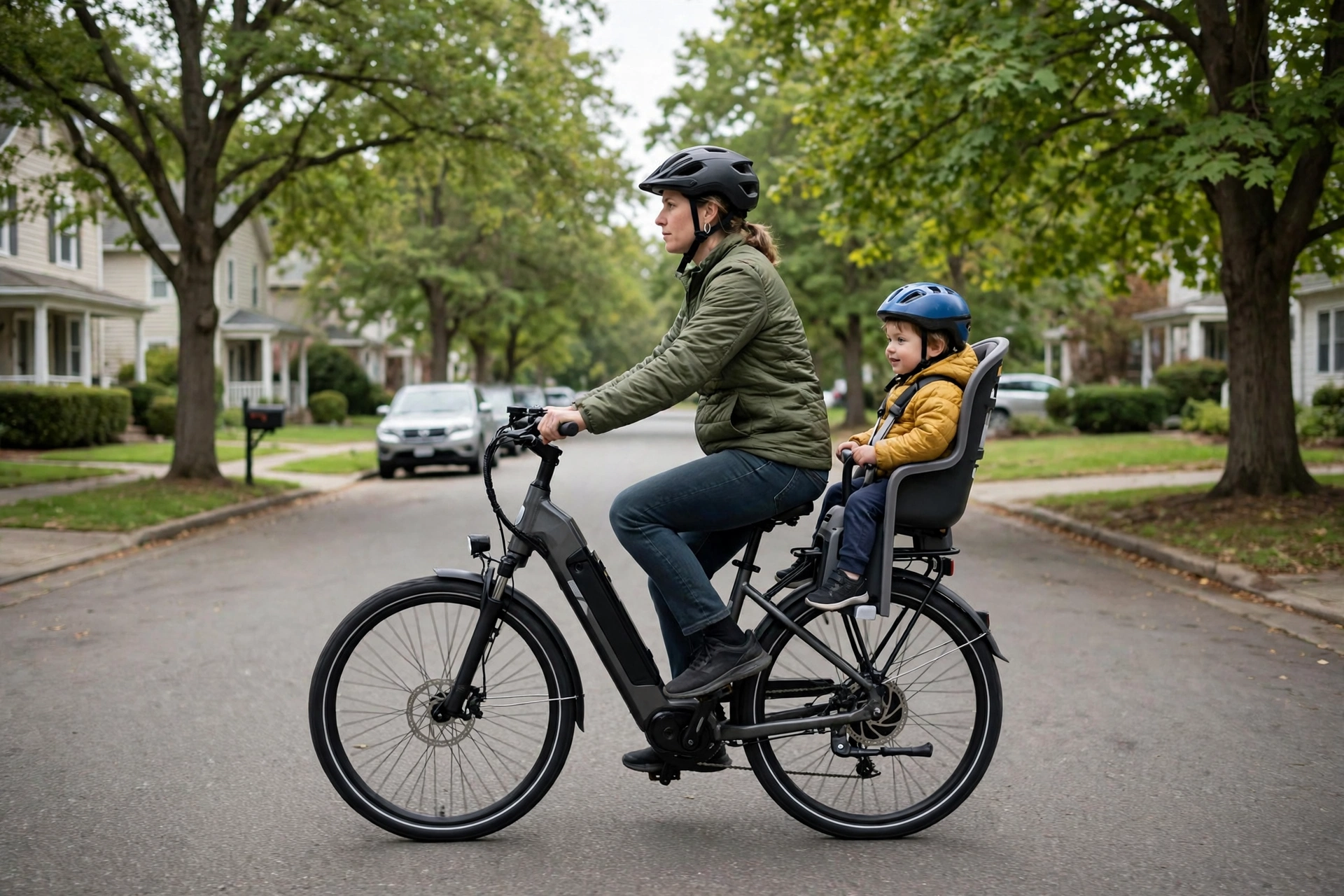
How Does a Child Seat Change Your Balance and Riding?
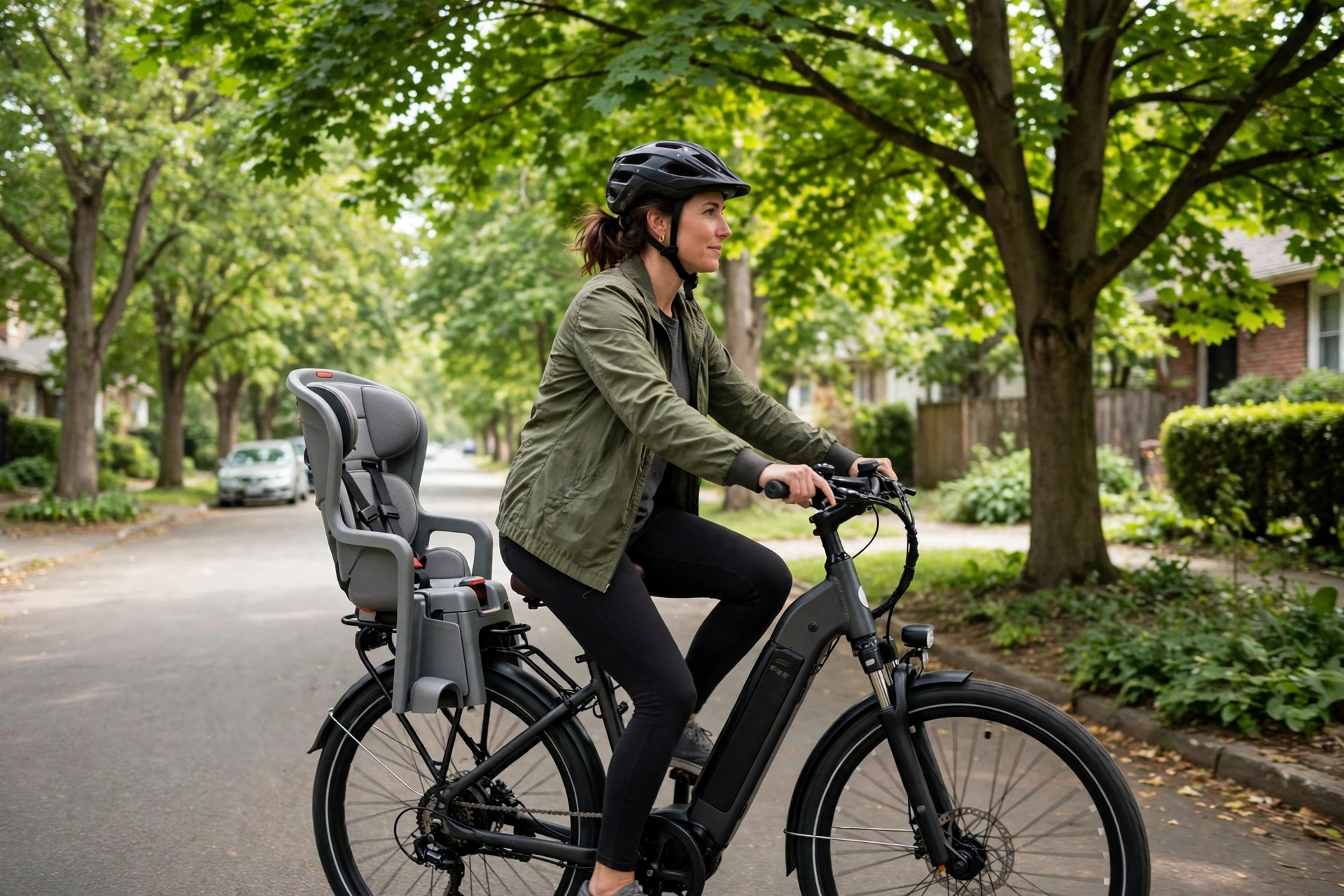
A rear child seat puts significant weight high and behind you, which makes the bike top-heavy and slower to respond. Mounting and dismounting become the riskiest moments of the whole ride: a loaded bike can tip while you swing a leg over, so load the child last, unload them first, and use a sturdy double kickstand or brace the bike firmly against something solid.
On the move, braking distances grow and the front wheel can feel light on hills, especially with the strong, immediate pull of an e-bike motor. Set off gently, use a lower assist level in tight spaces, and give yourself more room everywhere. Practice the route — and the mounting routine — without your child first, ideally with a similar weight in the seat, until the handling feels boring.
Your helmet plays a quiet part here: balance corrections come from quick head and eye movements, and your scan pattern changes with a passenger aboard. A light, stable, well-fitted helmet that does not shift when you glance back over your shoulder is a genuine handling aid, not just crash gear.
What Should You Check Before Every Ride With a Child Seat?
Run a short, fixed routine. Both helmets on and adjusted — yours and your child’s — with straps fastened properly, not dangling. Child seat mount tight and clicked or bolted as designed, harness snug over your child’s shoulders, and feet secured in the footrests so they cannot reach the wheel or spokes.
Then the bike: battery seated and charged, brakes firm, tires sound, and nothing loose near the rear wheel. Agree on the basics with your passenger — hands inside, feet still — in whatever form works for their age, and choose the route with the calmest traffic rather than the fastest one.
Finally, plan for the stop as much as the ride. Decide where you will lean or stand the bike before you arrive, because the end of the ride is where tired legs and a top-heavy bike cause most of the tip-overs.
What Do the Rules Say About Child Passengers on E-Bikes?
Rules for carrying children on bicycles and e-bikes vary by state and sometimes by city, and this is an area where you should check your local requirements rather than rely on a general guide. In general terms, many states require helmets for child bicycle passengers, some set minimum ages for passengers, and some address child seats, trailers, or e-bike classes specifically. Others say little beyond requiring that a passenger be carried in a proper seat.
E-bike class can matter too: a child seat belongs on unhurried riding, and higher-speed Class 3 use raises both practical and, in some places, legal questions for passengers. When in doubt, ride the calmer bike and the calmer route, and confirm the current rules with your state or city’s transportation or parks authority.
What does not vary is the underlying logic every rulebook shares: a child passenger cannot protect themselves and depends entirely on the adult’s equipment and judgment. Certified helmets on both of you, a properly mounted seat, and conservative routes satisfy both the letter of most rules and the spirit of all of them.
Frequently Asked Questions
Q: Does my child legally have to wear a helmet in a bike child seat?
A: In many states, yes — child helmet requirements extend to passengers in child seats and trailers. But the details vary by state and sometimes by city, so check your local rules. Either way, a well-fitted certified helmet is the right call regardless of what the law requires.
Q: Can my child wear my spare adult helmet if it looks snug?
A: No. A child’s helmet must be sized for a child’s head. An adult helmet, even one that seems snug, is shaped and weighted wrong and can shift or come off in a fall. Buy a certified kids’ helmet and replace it as they grow.
Q: Should I wear a full-face helmet when carrying my child?
A: You can, but most parents find a standard well-fitting commuter helmet the better tool: it preserves hearing and awareness, stays cooler at family-riding speeds, and lets you talk to your child. The priority is a certified helmet that fits and that you will wear on every trip.

Olivia
Writer at Helmet Today, covering helmet reviews, fit and riding safety.