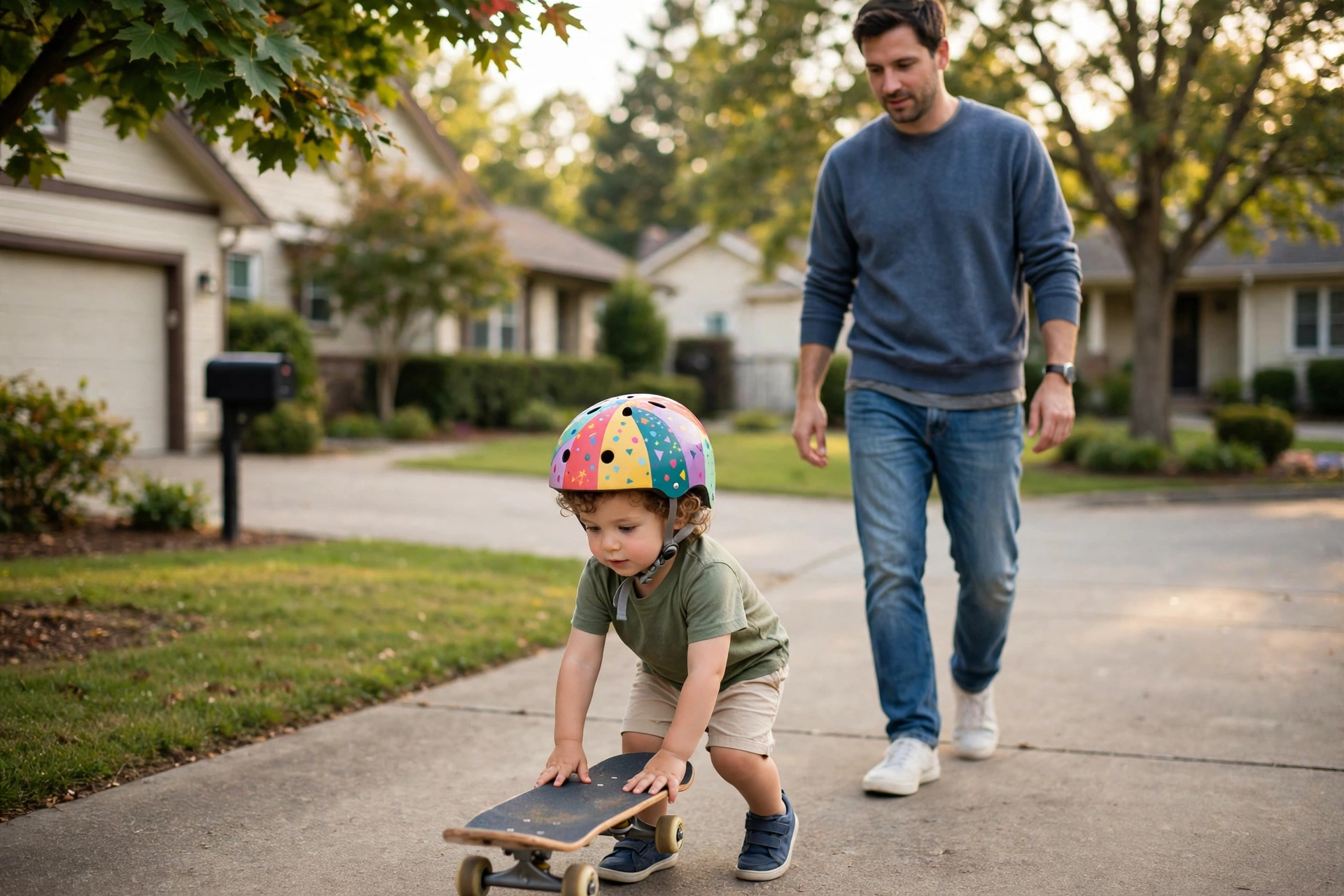
For a toddler on a skateboard, choose a helmet that is certified for skating, covers the back of the head, and fits snugly on your child’s measured head size — not their age. In general terms, the best pick is a dual-certified skate-style helmet, one that carries both the CPSC bicycle certification and ASTM F1492 skateboard certification, in the smallest size that fits your toddler’s actual head circumference.
Toddlers do not fall like older kids. They topple slowly, often backwards, at walking speed, usually on a driveway or at the park with an adult an arm’s length away. That is why a toddler skateboard helmet is not just a tiny bike helmet. This guide covers how skate helmets differ, which labels to look for, how to measure and fit a small head, how to keep it on, and when to replace it.
What Makes a Toddler Skateboard Helmet Different From a Bike Helmet?
Shape is the first difference. A skate helmet is rounder and drops lower at the back and sides than a typical bike helmet, covering the back of the head — the occiput — where a toddler is most likely to strike the ground when a balance attempt ends backwards. Bike helmets, built for forward motion, trade some of that back coverage for ventilation.
The impact design differs too. A bike helmet is built around one major impact: its foam absorbs a single hard fall and is then spent. Skating falls are lower and more frequent, so skate-certified helmets use a construction designed in general terms to handle repeated smaller impacts — a better match for a toddler who may tip over three times in one afternoon.
Toddler skate helmets also tend to have smooth, mostly unvented shells and simple padding rather than vents and dials. They can feel warm, but sessions are short, and the smooth shell has a practical benefit: no sharp vent edges to catch on the ground during a slow-motion topple.
Which Certifications Should a Toddler Skate Helmet Have?
Look inside the helmet for the labels, not at the box art. Any helmet sold as a bicycle helmet in the US must meet the CPSC bicycle helmet standard, and that includes toddler sizes. Separately, ASTM F1492 is the standard written for skateboarding and trick roller skating helmets, and it tests for the multiple lower-energy impacts skating involves. A helmet that carries both labels is dual-certified and is the most versatile choice for a toddler who splits time between a balance bike and a skateboard.
Be cautious with novelty helmets — cute animal shapes sometimes carry no certification at all. No CPSC or ASTM label inside means it is a toy, not protective gear, whatever the packaging suggests. Also note that in general terms, certified helmets are made for children aged one and older; babies under one should not ride on bikes or boards in a helmet, because their necks are not ready for the weight — check with your pediatrician if unsure.
Beyond the baseline certifications, some toddler helmets add extras such as pinch-guard buckles and rotational-impact liners; our explainer on MIPS and how modern helmet liners manage rotational forces is worth a read on that extra layer. Certification and fit come first; extras are a bonus on top.
How Do You Measure and Fit a Helmet on a Toddler?
Measure before you shop. Wrap a soft tape measure around your child’s head at the widest point, roughly an inch above the eyebrows and ears, keep it level, and note the measurement in centimeters. Toddler heads grow fast and vary a lot at the same age, so an age-based size bought without measuring is a guess. If you do not have a soft tape, use a string and measure it against a ruler.
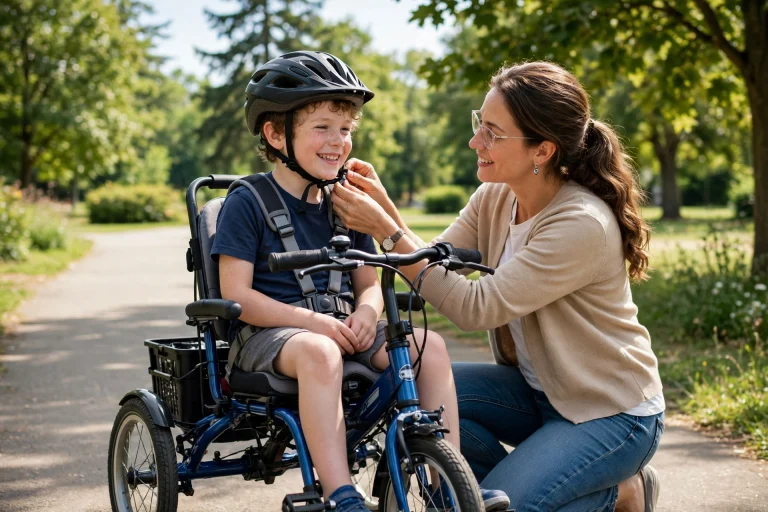
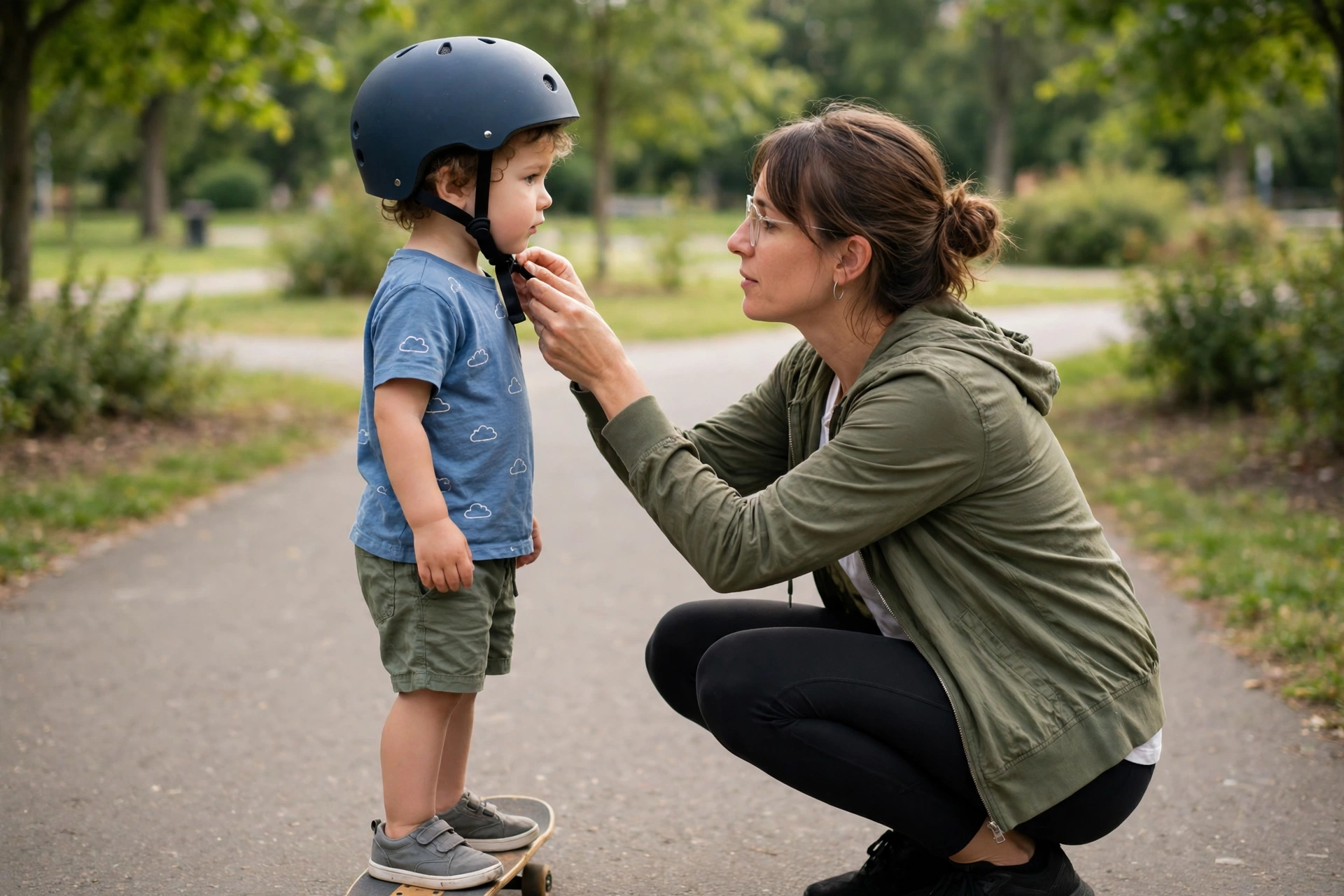
On the head, the helmet should sit level — not tipped back like a bonnet — with its front edge about two finger-widths above the eyebrows. The side straps should form a V just below each ear, and the chin strap should be snug enough that only one or two fingers fit underneath. Do the shake test: ask your toddler to shake their head with the strap fastened — the helmet should move with the head, not wobble.
Most toddler helmets adjust with sets of foam pads in different thicknesses rather than a rear dial. Use the thicker pads while your child is at the small end of the size range and swap to thinner ones as they grow. If the helmet rocks whatever pads you use, it is the wrong size or shape — try another size or brand rather than adding padding of your own.
How Do You Get a Toddler to Actually Wear It?
The best helmet in the world fails if it lives in the garage. Let your toddler help choose the color or design — ownership makes a surprising difference even at age two. Practice indoors first: short, playful sessions wearing the helmet around the house build familiarity.
Make one simple rule and hold it kindly but firmly: the board only moves when the helmet is on. If the helmet comes off, the skateboard gets parked for a minute. Toddlers learn cause and effect quickly, and most protests fade within a few outings. Wearing a helmet yourself on anything with wheels is the strongest lesson of all — toddlers copy what they see far more than what they are told.
Choose a helmet with a pinch-guard buckle, because one painful skin pinch can create a helmet battle that lasts for months. Keep early sessions short, end on a success, and praise the wearing, not just the skating. In general terms, a toddler who associates the helmet with fun outings will start asking for it.
When Should You Replace a Toddler’s Helmet?
Replace the helmet after any impact harder than a gentle tip onto grass — if the board went out from under them onto concrete and the helmet struck the ground, retire it even if it looks perfect. Crushable and multi-impact foams can be damaged in ways that are not visible from outside. When in doubt, replace it — it is cheap insurance.
Outgrowth is the other common reason. Check the fit every few months: if the helmet sits noticeably higher, the straps will not adjust any further, or red marks appear on the forehead after short wear, your child has outgrown it. Also replace a helmet when straps fray, the buckle stops holding, pads disintegrate, or it reaches the manufacturer’s suggested age limit, in general terms after several years.
Hand-me-downs deserve extra caution. A helmet from an older sibling is fine only if you know its full history — no crashes, in-date, and a genuine fit on the younger child. If any of that is uncertain, a new certified helmet is the safer call.
Frequently Asked Questions
Q: Can my toddler just wear a regular bike helmet for skateboarding?
A: A bike helmet is far better than nothing, and any CPSC-certified helmet gives real protection in a single fall. But for regular skateboarding, a dual-certified helmet with ASTM F1492 is the better match, because it adds back-of-head coverage and is designed for repeated smaller impacts.
Q: What size helmet does a two-year-old need?
A: Measure rather than guessing from age. In general terms, many toddlers fall into the smallest toddler sizes, roughly around 46 to 50 cm of head circumference, but heads vary widely at this age. Buy the size whose range contains your child’s actual measurement.
Q: Does my toddler need a helmet for a scooter or balance bike too?
A: Yes — the same head, the same hard ground. Falls from scooters and balance bikes are among the most common toddler tumbles, and making the helmet part of every wheeled activity removes the daily negotiation about which rides “count.”

Olivia
Writer at Helmet Today, covering helmet reviews, fit and riding safety.