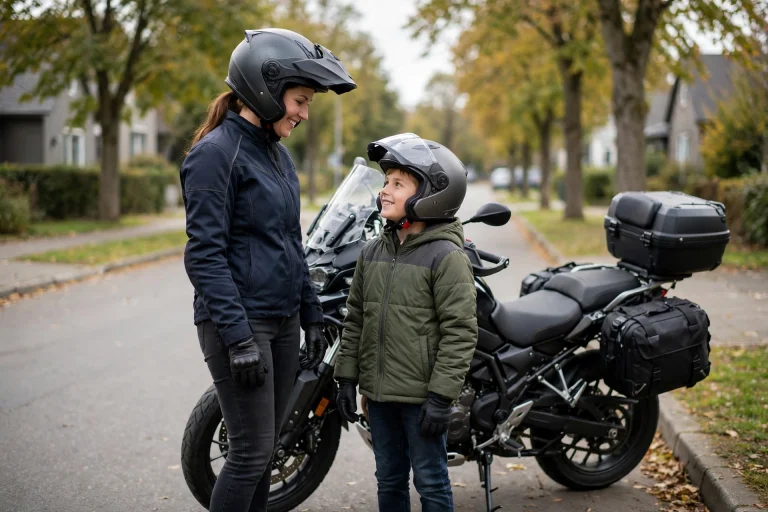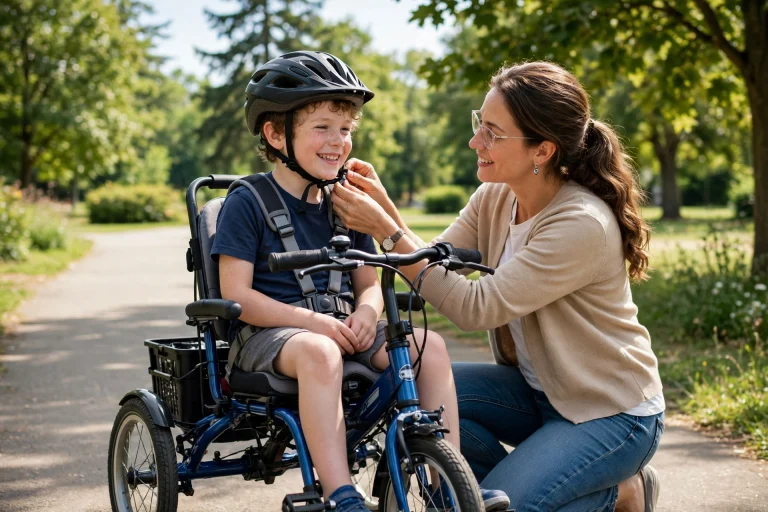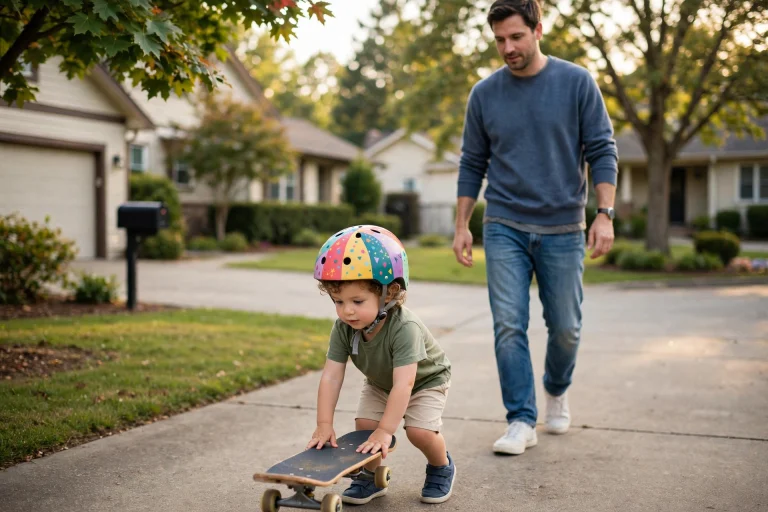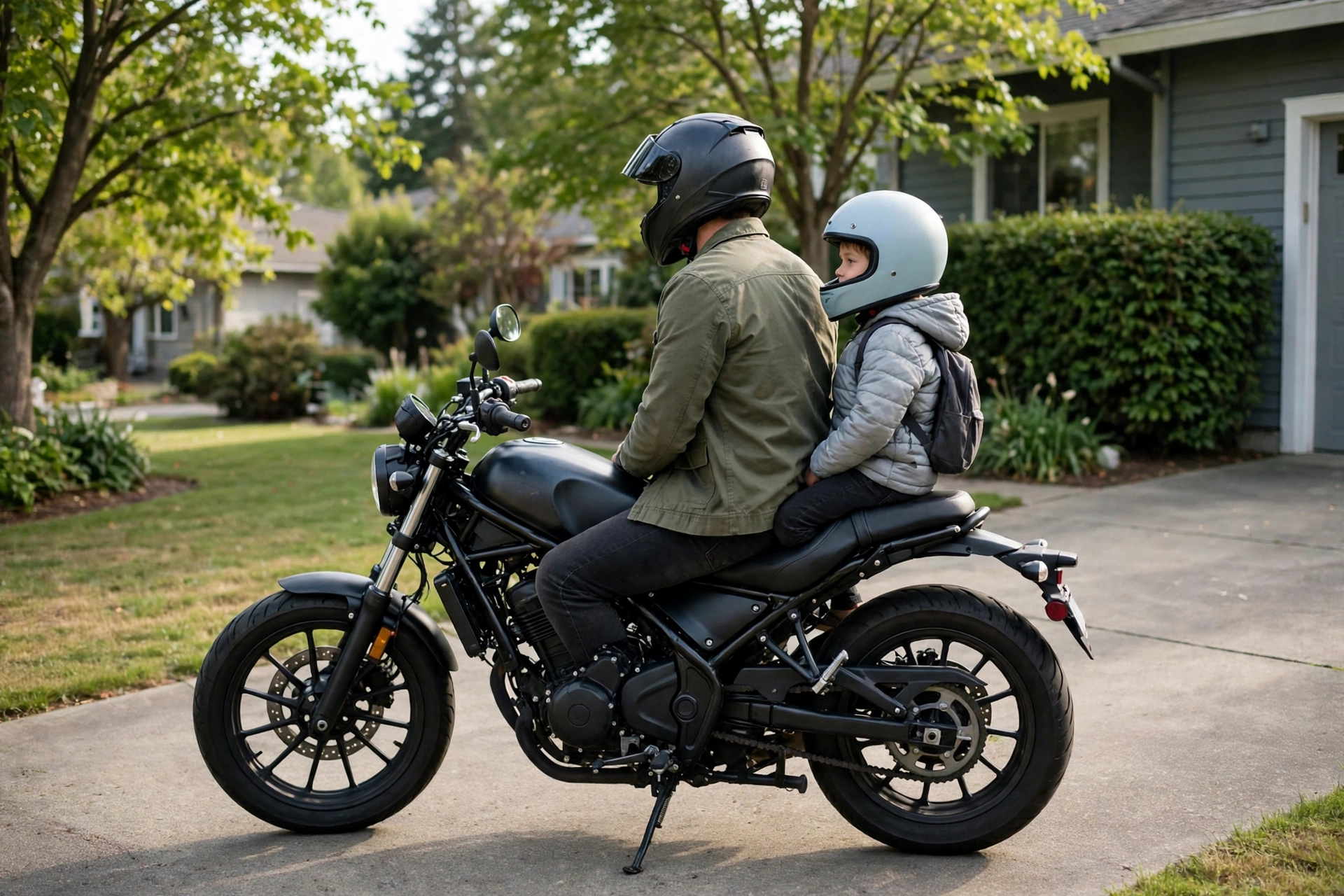
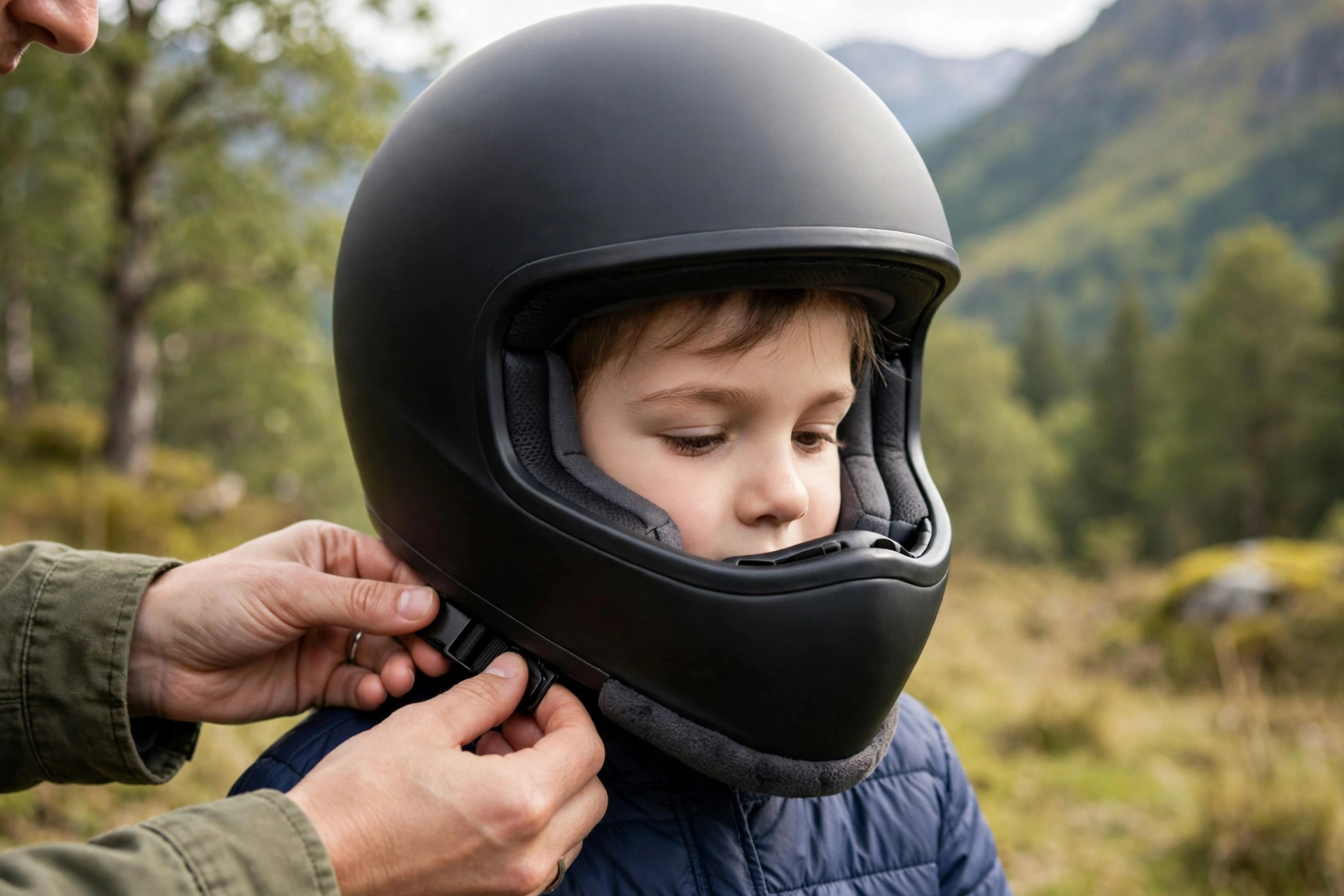
A child motorcycle passenger helmet fits correctly when it is a real, certified motorcycle helmet in the child’s true size — snug all the way around without pain, sitting level, not rocking when shaken, and light enough that the child’s neck is not strained by its weight. Never buy a child an oversized helmet “to grow into,” and never substitute a bicycle helmet: a passenger helmet must be made and certified for motorcycle use.
Fitting a child’s passenger helmet is different from fitting an adult’s. Children’s heads grow, their necks are still developing, and a helmet that is slightly wrong for an adult can be dangerously wrong for a small passenger. This guide covers choosing the right type and size, the weight question, the fit checks to run, and the mistakes parents most often make.
What Type of Helmet Should a Child Passenger Wear?
Start with certification. A child passenger needs a motorcycle helmet that meets the standard required where you ride — in the US, that means a DOT-certified helmet; in Europe, an ECE-certified one. Check for the certification label on the helmet itself, and buy from a reputable seller, since novelty helmets without certification are not protective equipment.
Full-face helmets are generally the sensible choice for a young passenger. They protect the chin and face as well as the skull, and they shield a child’s eyes and ears from wind, noise, and road debris far better than open styles. A child on the back of a motorcycle cannot easily tell you their eyes are watering or a stone just hit their cheek, so built-in coverage does that job for them.
Look for a youth-specific model rather than a small adult helmet when possible. Youth helmets are designed around children’s head shapes and are often lighter for their size, with smaller shells that suit a child’s proportions better. Whatever you choose, the helmet must be the right activity standard — a bicycle or ski helmet, however well it fits, is not built for motorcycle speeds and impacts.
How Do You Measure and Choose the Right Size?
Measure your child’s head with a soft tape around the largest part, just above the eyebrows and ears, and note the circumference in centimeters. Then match that number to the specific brand’s size chart — sizes are not consistent between brands, and a “youth medium” from one maker can differ from another’s.
Try the helmet on with your child seated and patient. It should go on firmly, feel snug and evenly padded around the whole head, and sit level with the brow edge low on the forehead. Cheek pads on a full-face helmet should press gently against the cheeks. There should be no single painful pressure point, especially on the forehead, and no loose gap you can slide fingers into at the sides.
Resist the grow-into-it temptation. A helmet that is too big can shift or even lift in a crash, and its extra bulk wobbles on a small neck, which distracts and tires the child. Children do outgrow helmets, and replacing a helmet that has become too small is simply part of the cost of riding with a child passenger.
Why Does Helmet Weight Matter So Much for Children?
A child’s neck muscles are still developing, and a heavy helmet is a real strain on a long ride. Weight that an adult shrugs off can leave a child with a sore neck, a headache, and a head that nods and bounces over bumps — all signs the helmet is working against them.
In general terms, lighter youth helmets are preferable as long as they carry proper certification. When you shop, compare the stated weights of youth models in the right size, pick the helmet up, and let your child wear it in the shop for several minutes. If they keep tugging at it, tilting their head, or complaining of pressure within a short try-on, keep looking.
Balance matters along with total weight. A helmet that feels front- or back-heavy will pull a small head around; a well-balanced one mostly disappears once it is on. Avoid adding heavy accessories — cameras, bulky add-ons, or decorations — to a child’s helmet, which add weight and can change how the helmet behaves.
What Fit Checks Should You Run Before Riding?
Run the same checks every time until they become routine. With the chin strap fastened and snug:
- Shake test: Ask your child to shake their head side to side and nod. The helmet should move with the head, not slide or rock independently.
- Roll-off check: Gently try to roll the helmet forward and backward with your hands. It should resist and stay in place rather than tipping over the forehead or back of the head.
- Strap check: The chin strap should sit snugly under the chin — roughly one finger of room — and the helmet should not lift when you tug upward lightly.
- Vision and comfort check: Your child should see clearly in all directions, breathe easily, and be able to tell you if anything pinches.
Teach your child to speak up about discomfort, and stop and adjust if they do. Also recheck fit every few months: growth spurts happen quietly, and pads compress with use, so a helmet that was snug in spring may be loose by autumn.
What Are the Most Common Fit Mistakes Parents Make?
The biggest mistake is buying big for growing room, covered above. A close second is using the wrong type of helmet — handing a child a bicycle helmet, an adult’s spare, or an uncertified novelty helmet because it happens to be in the garage. A passenger’s helmet must be a certified motorcycle helmet that fits that child now.
Hand-me-downs are another trap. A used helmet may have hidden crash damage, compressed foam from years of use, or simply an unknown history. In general terms, helmets should be replaced after any crash impact, and most makers suggest retiring a helmet after several years as materials age. A helmet of unknown age and history is a poor place to save money.
Finally, skipping the strap is a mistake even for short rides — an unfastened helmet can come off exactly when it is needed. Make the routine non-negotiable: helmet on, strap snug, checks done, then ride. If your child also rides bicycles, the fit habits transfer well, and our guide to how MIPS works is a useful next read on modern helmet protection ideas.
Frequently Asked Questions
Q: Can my child wear a small adult helmet instead of a youth helmet?
A: Only if it genuinely fits — measured against the brand’s chart, snug everywhere, and not too heavy for your child’s neck. Youth models usually suit children better because of their smaller shells and lighter weight, so start there.
Q: How often will we need to replace a child’s passenger helmet?
A: Whenever your child outgrows it, after any crash or drop that damages it, or when it reaches the maker’s recommended retirement age. Check the fit every few months, because children’s heads grow faster than helmets wear out.
Q: Should a child passenger wear a full-face or open-face helmet?
A: A full-face helmet is generally the better choice for a child passenger: it adds chin and face protection and shields against wind, noise, and debris. Whichever style you choose, it must be certified for motorcycle use and fit properly.

Olivia
Writer at Helmet Today, covering helmet reviews, fit and riding safety.