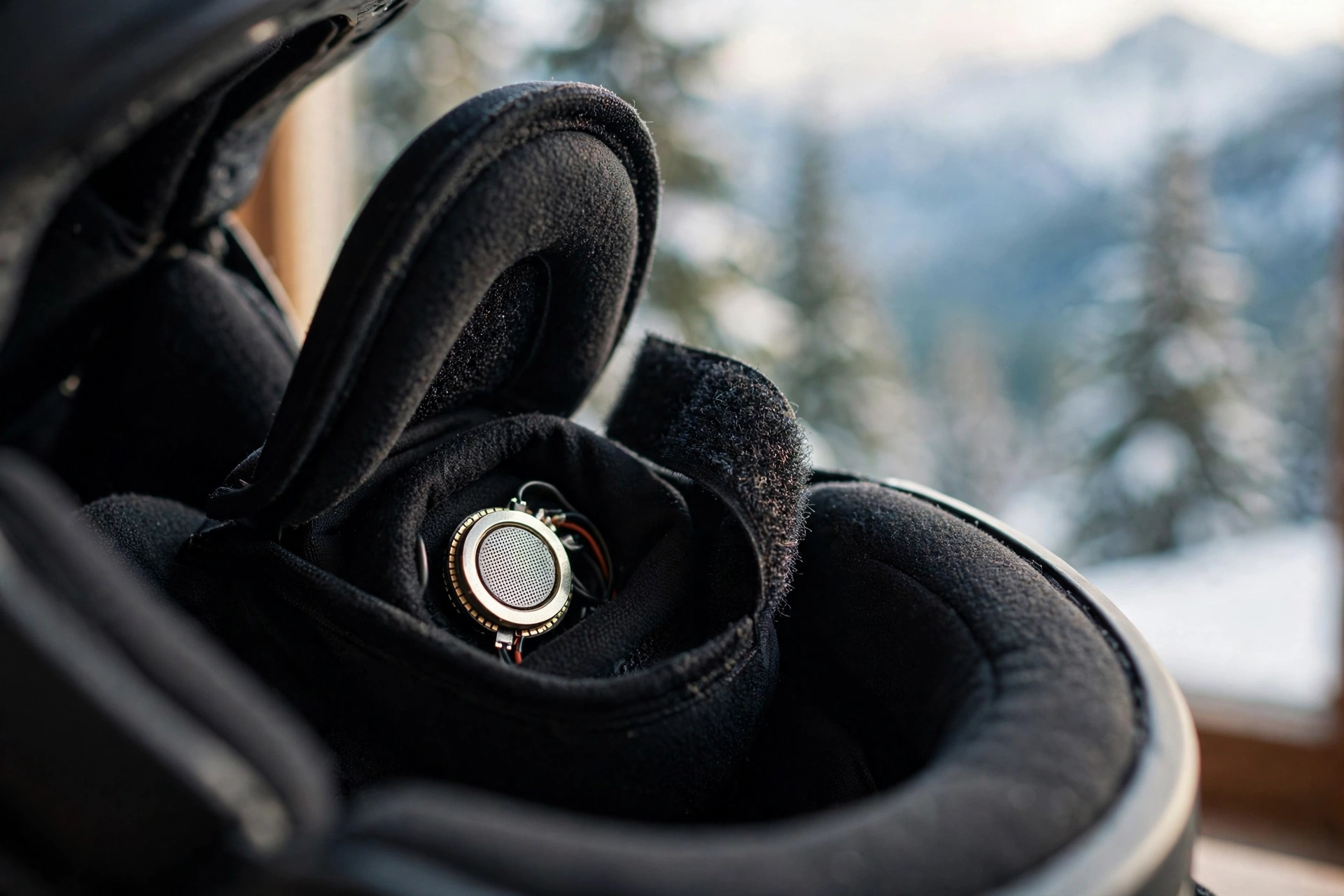
Ski helmet audio systems work by slipping small speaker pucks — often called drop-in chips — into pockets inside the helmet’s ear pads. They connect to your phone by Bluetooth or a short cable, so you can hear music, take calls, and get turn-by-turn audio prompts without earbuds pressing into your ears. The speakers sit outside your ear canal, which makes them far more comfortable under a helmet than ordinary headphones.
If you have ever tried to ski with earbuds wedged under a helmet, you already know the problem: pressure points, tangled wires, and one bud popping out on the first run. Audio-ready helmets solve that by building the listening gear into the padding you are already wearing. This guide explains how the systems work, how you control them with gloves on, and how to stay aware of other skiers while you listen.
How Do Drop-In Audio Chips Actually Work?
Most ski helmet audio systems use two flat, round speakers — one for each ear — connected by a thin wire or a small bridge. Each speaker slides into a zippered or Velcro pocket built into the helmet’s ear pads. Because the pads are the part of the helmet designed to sit over your ears anyway, the speakers end up exactly where they need to be with almost no added bulk.
Once installed, the speakers draw a small amount of power from a rechargeable battery pack, either built into one of the chips or housed in a small module on the connecting cable. Sound quality will not rival a good pair of home headphones — the speakers sit on the outside of your ears, not sealed inside them — but for podcasts, playlists, and calls on the lift, most riders find it more than enough.
Helmets sold as “audio compatible” or “audio ready” simply have the ear pad pockets ready to accept a system; the speakers themselves are usually bought separately, either from the helmet brand or from a third-party maker. That modular approach means you can move one audio kit between helmets, or upgrade the sound without replacing the helmet.
How Do You Pair and Control Them on the Mountain?
Pairing works like any other Bluetooth accessory: you put the audio unit into pairing mode, select it in your phone’s Bluetooth settings, and the two remember each other for future days. Most riders do this once at home and then simply power the unit on at the resort, where it reconnects automatically.
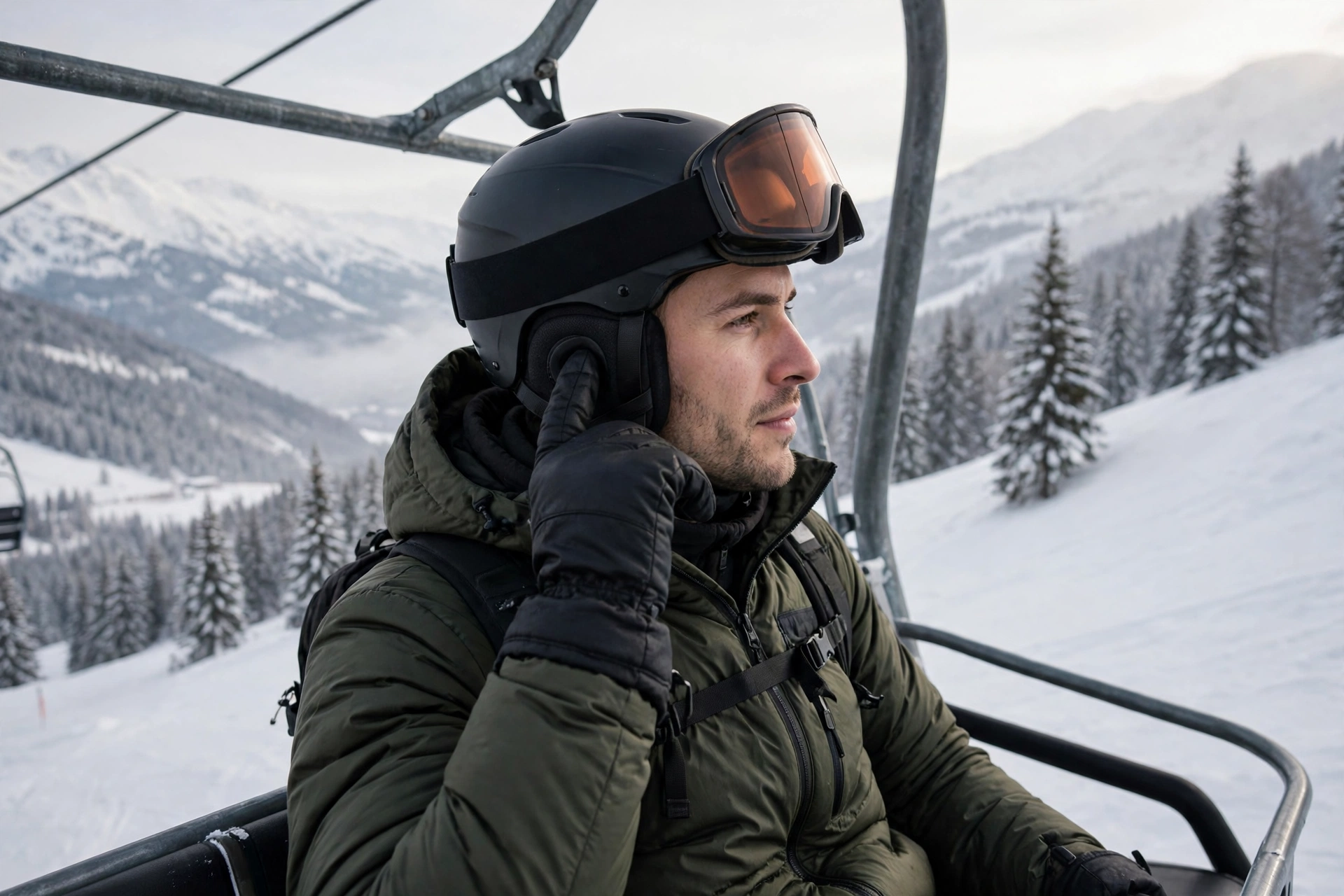
Controls are designed for gloved hands. Many systems use one large button on the outside of an ear pad or on the cable module: a single press pauses or plays, a double press skips a track, and a longer press answers a call or summons your phone’s voice assistant. A few newer systems add walkie-talkie style features that let you talk to friends in your group through a companion app, which is handy when the group splits up.
Battery life varies by model and by how cold it is — cold weather drains batteries faster, so a unit rated for a long day may give you less on a bitter January morning. In general terms, most systems comfortably cover a full day of intermittent listening if you charge them the night before.
Can You Still Hear What Is Happening Around You?
Yes — if you keep the volume sensible, and this is the single most important safety point with helmet audio. Because drop-in speakers sit outside your ear canal rather than sealing it, ambient sound still gets through: the scrape of a board behind you, a shouted warning, lift machinery, and the patroller’s whistle. That open-ear design is a deliberate advantage over isolating earbuds.
The responsibility is still yours. Keep the volume low enough that you can hold a normal conversation with the person next to you on the chairlift without raising your voice; if you cannot hear your own edges on hard snow, the music is too loud. Many experienced riders turn audio off entirely in crowded beginner areas, terrain parks, and busy cat tracks where traffic comes from several directions at once.
Some resorts and some ski schools ask guests not to wear headphones at all during lessons, and a few areas discourage them in slow zones. Rules differ by mountain, in general terms, so check the resort’s policy if you are unsure.
What Should You Look for When Buying a Helmet Audio System?
Start with fit. Check that your helmet actually has audio-ready ear pad pockets, and confirm the speaker diameter fits those pockets before you order — most are a standard size, but compact helmets occasionally use smaller pads. If you are buying a helmet and audio together, it is worth trying the speakers in the pads to make sure nothing presses on your ears once the helmet is on.
Next, look at the controls and battery setup. A big, simple button beats a row of tiny ones when you are wearing mittens. USB charging is more convenient than replaceable batteries for most people, and a battery that lives in the ear pad pocket keeps cables to a minimum. Sound-oriented extras like a built-in microphone matter if you plan to take calls or use voice commands on the lift.
Finally, remember that audio is an accessory, not a safety feature. Choose the helmet first for certification, fit, and impact technology — our guide to MIPS and how rotational protection works explains one widely used safety system — and then add the sound system that fits it.
How Do You Care for Helmet Speakers Through the Season?
Treat the chips gently. Remove them before washing the ear pads, never let them sit in a wet helmet bag, and let everything dry fully after a snowy day — moisture is hard on both the speakers and the pads they live in. Wind the connecting cable loosely rather than crimping it, because the thin wires inside are usually the first thing to fail.
Charge the battery before storing the helmet for the summer, and top it up once or twice in the off-season; lithium batteries last longer when they are not left completely flat for months. Store the helmet somewhere cool and dry, speakers and all, rather than in a hot garage or car trunk.
If one side goes quiet mid-season, check the cable seating in both pockets before assuming the speaker has died — a half-plugged connector is the most common cause. Keeping a spare cable or using the manufacturer’s app to run a quick sound check at home saves a silent day on the mountain.
Frequently Asked Questions
Q: Do ski helmet speakers work with any helmet?
A: Only with helmets that have audio-ready ear pads with speaker pockets. Many ski and snowboard helmets include them, but some low-profile or racing models do not, so check before buying the audio kit.
Q: Is it safe to listen to music while skiing?
A: It can be, if you keep the volume low enough to hear other skiers, warnings, and your own edges, and pause the audio in crowded or slow areas. Drop-in speakers leave your ears unsealed, which helps, but awareness is ultimately up to you.
Q: Can I use ski helmet audio for phone calls?
A: Yes. Most systems include a microphone and let you answer calls or use voice commands with the ear pad button. Wind noise can make you hard to hear at speed, so calls work best on the lift or when stopped.

Olivia
Writer at Helmet Today, covering helmet reviews, fit and riding safety.