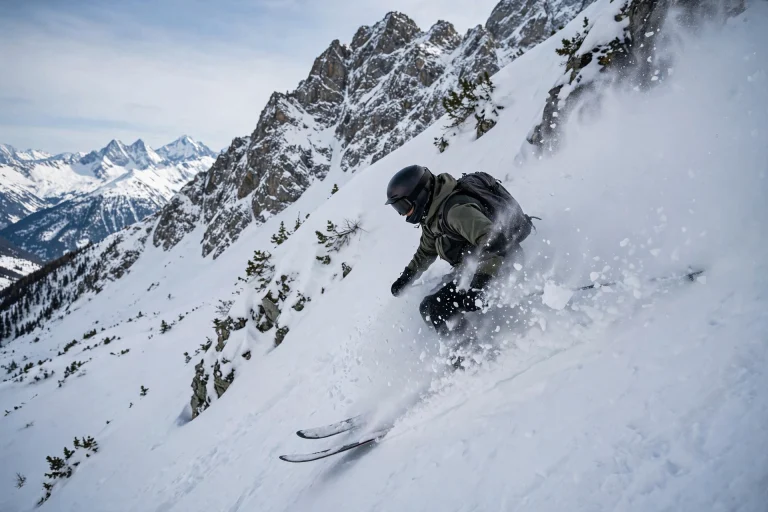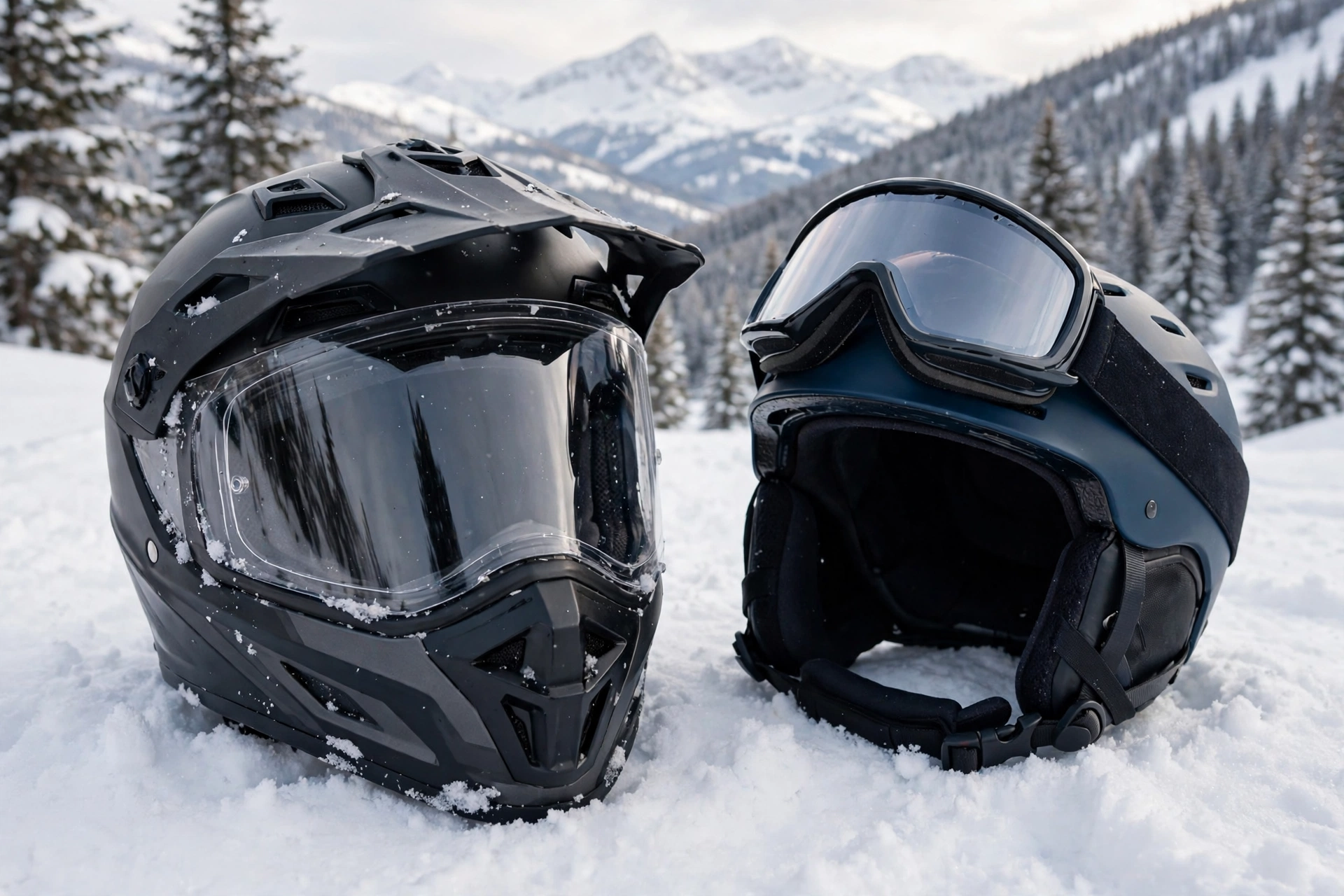
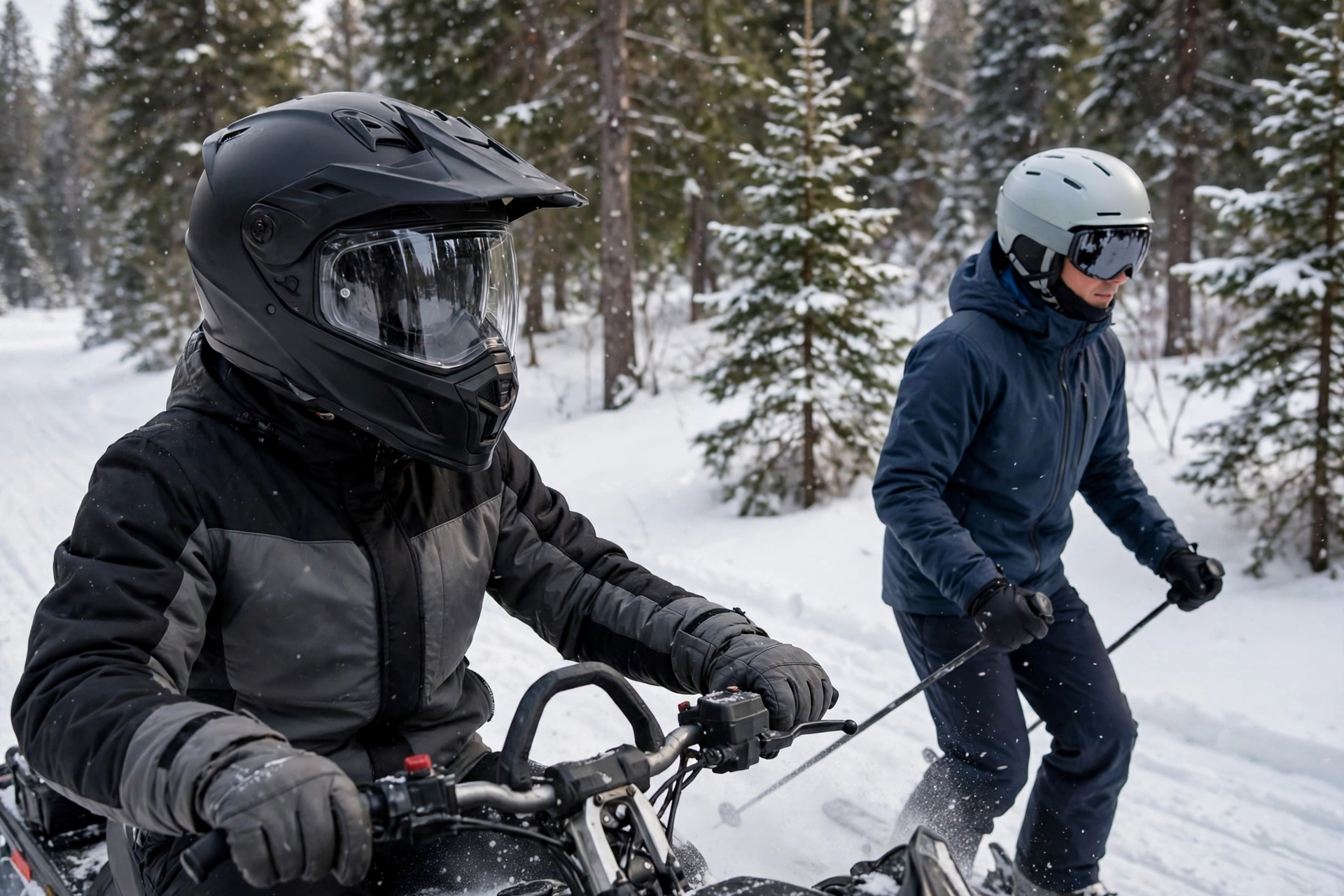
The core difference is speed and certification: a snowmobile helmet is a motorcycle-type helmet that generally must meet the US DOT standard (FMVSS 218) or Snell certification, with a full face shield and chin bar, because snowmobiles travel at road speeds; a ski helmet is a lighter, open-face helmet certified to snow sports standards like ASTM F2040 or CE EN 1077, built for the slower speeds and different falls of skiing. They are not interchangeable.
Both helmets come out on snowy days and both keep your head warm, which is exactly why people confuse them. But a snowmobile can cruise at highway speeds on a trail, while a skier’s fastest falls happen at a fraction of that energy. This guide explains how the standards, face protection, and everyday design differ, and why using the wrong one leaves you under-protected in both directions.
What Certification Does Each Helmet Need?
Snowmobile helmets fall under motorcycle helmet rules in general terms. In the US, a helmet sold for motorized road and trail use must meet the Department of Transportation standard, FMVSS 218, marked by the DOT sticker on the back. Some riders choose helmets that also carry Snell Memorial Foundation certification, a voluntary standard with its own testing. Either way, the test regime assumes motorcycle-class crash speeds and energy.
Ski helmets answer to a different set of rules entirely: ASTM F2040 in the US or CE EN 1077 in Europe. These standards test impact absorption, coverage, and retention at the speeds typical of skiing and snowboarding falls, at cold temperatures.
The gap matters. A ski helmet has simply never been tested for a 50 mph trail crash, and a snowmobile helmet’s certification says nothing about the repeated lower-speed tumbles and tree-well bumps of the slopes. Laws vary by state and province for both activities, so check your local rules — but the certification printed inside the helmet is the first thing to get right.
Why Do Snowmobile Helmets Have Full Face Shields?
Wind chill is brutal at snowmobile speeds. At 40 or 50 mph in sub-zero air, exposed skin can be frostbitten quickly, and a full face shield — usually on a full-face or modular helmet with a solid chin bar — seals the whole face against the wind. Many snowmobile shields are double-pane or electrically heated to fight fogging and icing, and breath boxes deflect exhaled air away from the shield.
A ski helmet leaves the face open by design. Skiers wear goggles, and the combination breathes far better during the physical effort of skiing. But a goggle setup at snowmobile cruising speeds leaks cold air around every edge, and no ski helmet offers the chin and jaw protection of a chin bar in a high-speed crash.
The chin bar is structural, not just a windbreak. In the frontal impacts that motorcycle-type standards assume, the bar absorbs energy that an open-face ski helmet passes straight to the rider’s face and jaw.
How Do Weight, Warmth, and Venting Compare?
A snowmobile helmet is substantially heavier — a full shell, chin bar, shield mechanism, and thicker liner add up, and at trail speeds the wind holds much of that weight for you. On the slopes, that same helmet would strain your neck on every turn and mogul, which is why ski helmets are built as light as their standard allows.
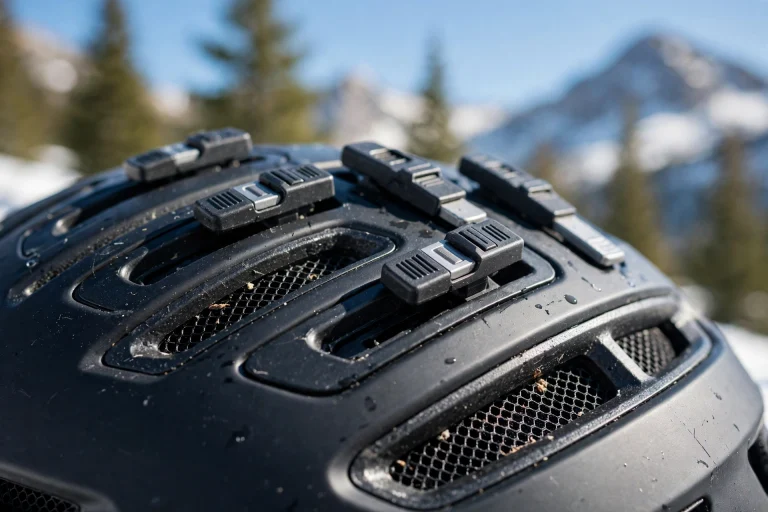
Both helmets insulate, but differently. The snowmobile helmet seals almost completely, with closable vents used mainly to manage fogging. The ski helmet has adjustable vents meant to dump heat, because skiing is stop-and-go exercise: hard effort on the way down, still air on the lift.
Hearing is part of the design too. Ski helmets commonly include audio-ready ear pads and keep ambient sound fairly open, since hearing other skiers matters. Snowmobile helmets are quieter by necessity at speed, and riders rely more on mirrors and looking over the shoulder.
Can a Ski Helmet Ever Be Used on a Snowmobile?
For riding as a slow passenger around a yard, people do it — but it is genuinely under-protected, and this guide’s answer is no for real trail riding. The ski helmet is not DOT certified, which means it may not satisfy the helmet law where you ride, and more importantly it has no chin bar, no face shield against wind chill, and no testing at snowmobile crash energies.
The reverse swap is legal almost everywhere but miserable in practice: a snowmobile helmet on skis is heavy, hot, poorly vented for exertion, and its shield fogs without snowmobile airflow. You will also look through a shield designed for sitting upright at speed, not goggles designed for changing light on snow.
If you do both sports regularly, the honest solution is two helmets, each certified for its job. Modern features cross over — rotational liners, for instance, appear in both, as our explainer on what MIPS is and how it works describes — but certification and face protection do not.
How Do You Choose the Right Helmet for Each Sport?
For snowmobiling, look for the DOT sticker (or DOT plus Snell), a shield that seals fully, and a breath management system if you ride in deep cold. Fit should be snug all around with firm cheek pads, and try it with your balaclava and jacket collar, since the sealed chin curtain has to work with your gear stack.
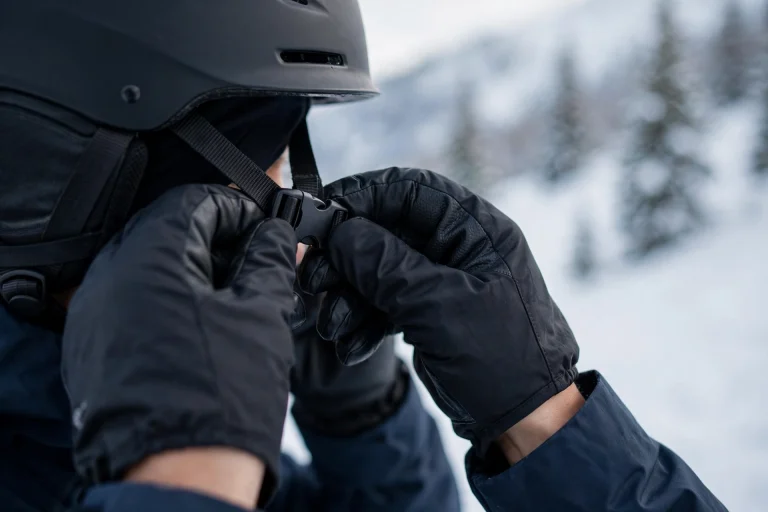
For skiing, confirm the ASTM F2040 or EN 1077 label, then fit it with your goggles to check for forehead gaps, and make sure the vents operate with gloves on. It should sit level, cover the forehead, and stay put on a head shake with the strap fastened.
In both cases, replace the helmet after a real crash and every few years as foam ages — and never assume a helmet bought for one machine covers the other sport just because both happen on snow.
Frequently Asked Questions
Q: Is a DOT sticker required on a snowmobile helmet?
A: In general terms, helmets for motorized use in the US must meet the DOT standard (FMVSS 218), and many states and provinces require a certified helmet for snowmobiling. Local laws vary, so check your area — but a DOT or Snell-certified motorcycle-type helmet is the correct baseline.
Q: Can I wear goggles with a snowmobile helmet instead of the shield?
A: Yes — many trail and mountain riders use a motocross-style snowmobile helmet with snow goggles instead of a shield, which breathes better during hard riding. The helmet itself still needs motorcycle-type certification; it is the shield-versus-goggle choice that is flexible.
Q: Is a snowmobile helmet warmer than a ski helmet?
A: At speed, yes, because it seals the whole face behind a shield and chin curtain. Standing still or working hard, the ski helmet is more comfortable because it vents. Warmth depends on airflow — the snowmobile helmet is built for wind, the ski helmet for exercise.

Olivia
Writer at Helmet Today, covering helmet reviews, fit and riding safety.