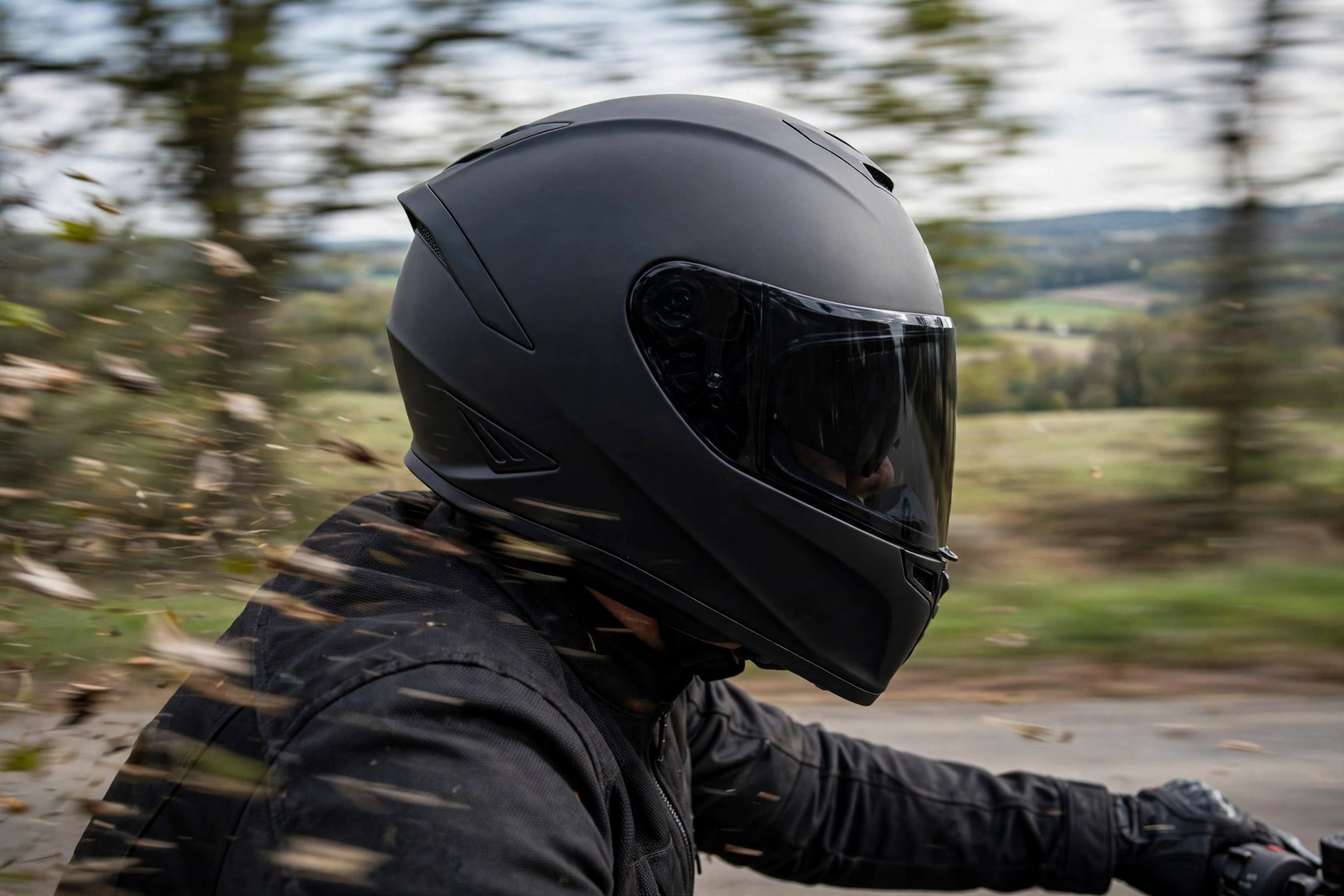
The quietest type of motorcycle helmet is a well-fitting full-face helmet with a tight visor seal, a padded neck roll, and a smooth shell shape — in general terms, quality full-face designs are quieter than flip-up helmets, and both are far quieter than open-face or half helmets. But the type is only the starting point: your bike, your windscreen, and how the helmet fits you change the noise as much as the helmet itself.
Wind noise is not a minor annoyance. Hours of it cause fatigue, make concentration harder, and can damage hearing over years of riding — which is why smart riders treat a quiet helmet and earplugs as safety equipment, not comforts. This guide explains where the noise comes from and how to choose the quietest setup for your riding.
Where Does Helmet Wind Noise Come From?
Almost all of it is turbulence, not the engine. Air rushing past the helmet breaks into chaotic eddies around every edge and opening: the bottom edge of the shell, the visor seal, the vents, and the gap between the chin bar and your neck. That turbulence, right next to your ears, is the roar you hear at highway speed.
Two facts follow. First, smooth shapes and tight seals matter more than thick padding — a helmet can feel plush and still be loud if air is leaking and swirling at its base. Second, the airflow arriving at the helmet matters enormously: clean air off a good windscreen, or no screen at all, is usually quieter than the buffeting blast that spills off the top of a badly matched screen straight into the helmet.
This is also why published noise comparisons should be read cautiously. Test results depend on the bike, the screen, the rider’s height and jacket, and even the microphone position. A helmet that is quietest on one setup may be mid-pack on another.
Which Helmet Types Are Quietest, Ranked?
In general terms, the ranking by type is consistent:
- Full-face helmets are the quietest type. The fixed chin bar, sealed eye port, and enclosed bottom edge give turbulence the fewest places to form, and premium models add neck rolls and chin curtains that seal the underside.
- Flip-up (modular) helmets come next. The hinge and the seam around the moving chin bar create extra edges and potential leaks, so most run slightly louder than a comparable full-face — though good ones come close.
- Open-face and three-quarter helmets are much louder. Your ears sit in open, turbulent air, and there is no chin bar to smooth the flow under the helmet.
- Half helmets are the loudest of all, offering essentially no noise protection. At sustained highway speeds they are an earplug-mandatory choice.
Within a type, model-to-model differences are large. A well-sealed mid-range full-face can be quieter than a poorly sealed premium one on your particular bike — which is why the fit and seal checks below matter more than any league table.

What Design Details Make a Helmet Quieter?
Look for these specifics when you compare full-face helmets:
- A padded neck roll and chin curtain that close the gap under the chin bar — the single biggest entry point for turbulent air.
- A visor that seals evenly against its gasket all the way around, with a mechanism that pulls it tight rather than just resting it closed.
- A smooth shell with flush vents and minimal protrusions; big external sliders and sharp edges whistle and boom.
- A snug fit at the cheeks and around the ears, with ear pockets that do not leave your ears in an open cavity.
- An aero-tuned shape — many premium helmets are wind-tunnel developed to shed air cleanly at the back of the shell.
Internal technology does not change the noise picture. Rotational systems, such as the ones explained in our article on what MIPS is and how it works, sit inside the liner and neither add nor remove wind noise. Judge noise by seals, shape, and fit.
How Much Do Fit and Your Bike Matter?
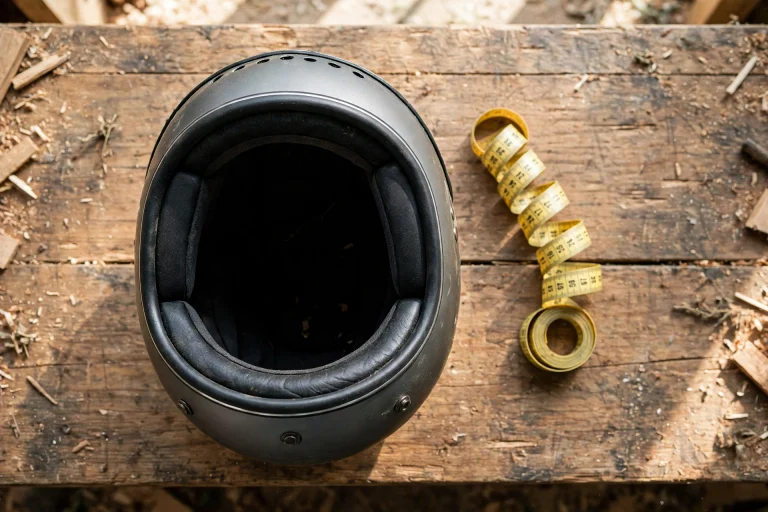
Enormously. A helmet that is a size too big lets air rush up under the shell and past your ears, and no design feature can compensate. Correct fit for noise is the same as correct fit for safety: snug and even all around, no rocking, cheeks firmly supported. A neck gaiter or high jacket collar that closes the gap between jacket and helmet also helps more than riders expect.
Your motorcycle matters just as much. If your windscreen dumps turbulent air exactly at helmet height, try adjusting its angle or height, or test a short ride with it removed if the design allows. Many riders discover their “loud helmet” was a windscreen problem all along.
Position counts too: sitting slightly lower or higher can move your helmet out of the worst turbulence. Experiment on a familiar road at a steady speed before spending money on a new helmet to solve a noise problem.
Should You Still Wear Earplugs in a Quiet Helmet?
Yes — on any ride at sustained speed, in any helmet. Even the quietest full-face helmet leaves wind noise at levels that, over hours, can harm hearing. The helmet reduces the noise; earplugs bring it down to a genuinely safe range for long exposure.
Use proper motorcycle or musicians’ earplugs rather than solid foam if awareness matters to you: filtered plugs cut wind roar while letting traffic sounds, sirens, and intercom audio through more clearly. Many riders find they arrive less tired with plugs in, because the brain is no longer processing hours of noise.
Think of it as a system: the quietest helmet type you can wear, fitted correctly, on a bike whose airflow you have tuned, plus earplugs for anything beyond short hops. Each layer is cheap compared with your hearing.
Frequently Asked Questions
Q: Are flip-up helmets much louder than full-face helmets?
A: Slightly, in general terms. The hinge and chin-bar seam give turbulence extra places to form, so most flip-ups run a little louder than a similar full-face. A well-sealed quality flip-up is still far quieter than any open-face helmet.
Q: Can I make my current helmet quieter?
A: Often, yes. Check the fit is snug, add the chin curtain if your model offers one, make sure the visor seals evenly, and close the gap at your neck with a gaiter or collar. Also test your windscreen position — buffeting air from the bike is a common hidden cause.
Q: Do I still need earplugs with the quietest helmet?
A: Yes, for sustained riding at speed. Even the best full-face helmet leaves enough wind noise to risk hearing damage over long exposure. Filtered motorcycle earplugs reduce the roar while keeping traffic sounds audible.

Olivia
Writer at Helmet Today, covering helmet reviews, fit and riding safety.