Choose a full-face helmet for the simplest, lightest, and in general terms strongest design; choose a flip-up (modular) helmet if your riding day involves constant stops — fuel, tolls, conversations, glasses, a drink — where lifting the chin bar beats taking the helmet off. Both must carry the same certification, and for most riders the decision is lifestyle, not safety panic: buy the one that matches how you actually ride.
This is one of the most common helmet decisions, and one of the most argued. The honest differences are narrower than the arguments suggest, but they are real: weight, noise, convenience, price, and how each design behaves in the real world. Here is how to weigh them.
What Is the Actual Difference Between the Two?
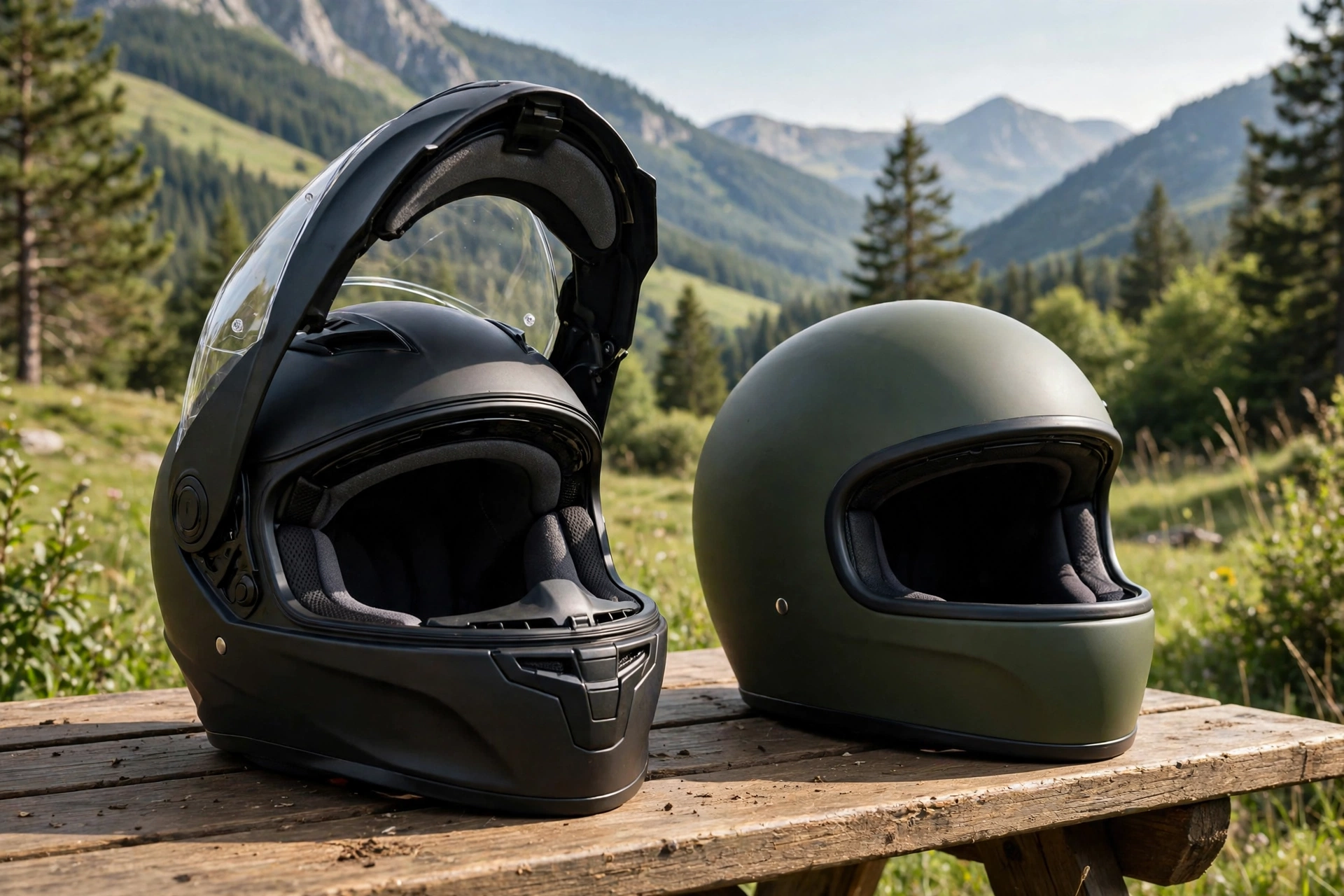
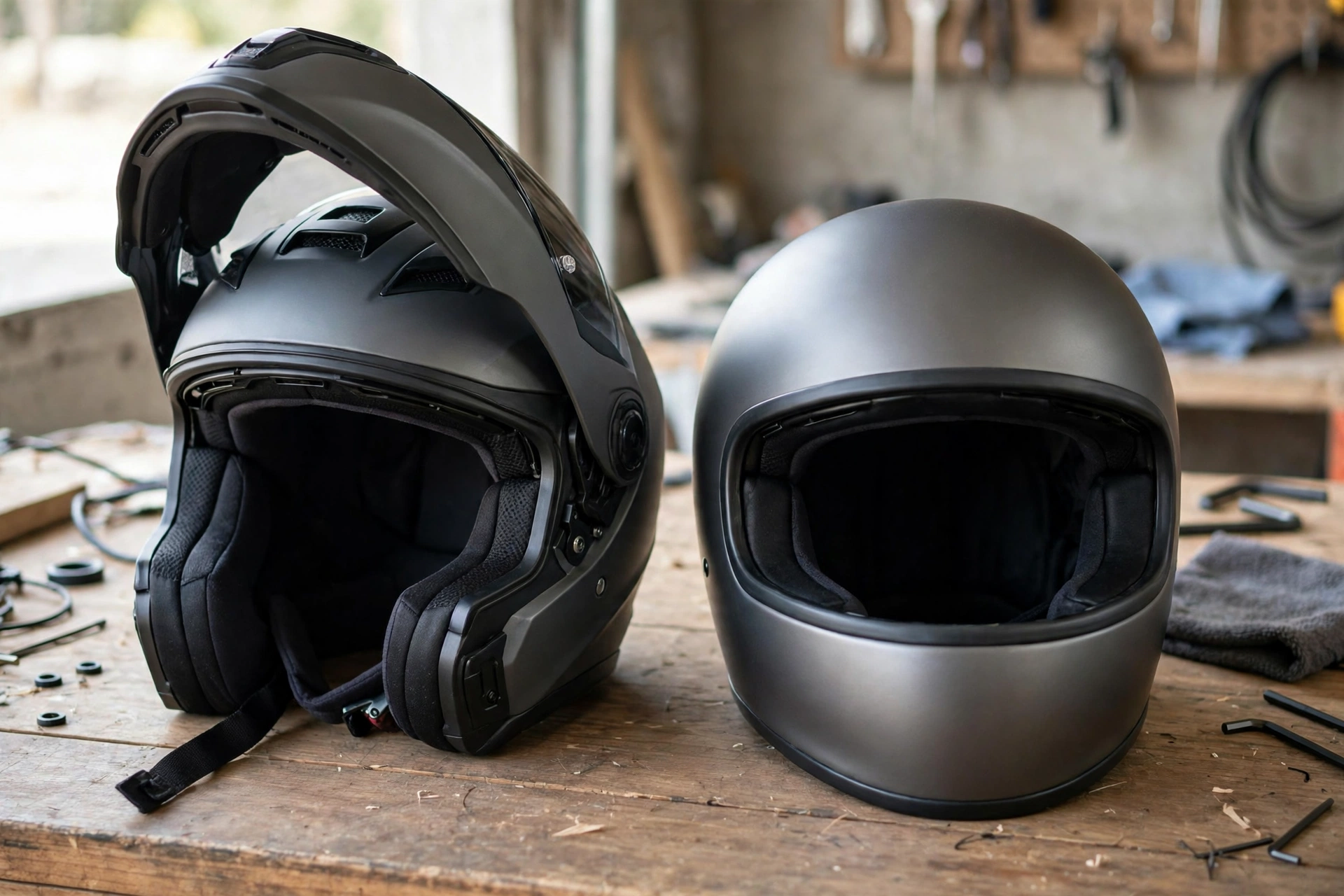
A full-face helmet is a one-piece shell with a fixed chin bar and a visor you raise or lower. A flip-up helmet — also called a modular or system helmet — has a hinged chin bar that rotates up over the front of the shell, turning the helmet into an open-face style for low-speed moments and stops, then clicks back down for the road.
Everything else follows from that hinge. The flip-up needs a mechanism, a locking system, and a shell shaped to carry both, which adds weight and complexity. The full-face spends the same design effort on stiffness, sealing, and ventilation instead.
Many flip-ups also bundle convenience features more often: drop-down sun visors are extremely common on modulars, and the open front makes them naturally friendly to glasses wearers, who can put the helmet on with the bar raised and slide their frames straight in.
Is a Flip-Up as Safe as a Full-Face?
Both types must pass the same certification tests to be sold legally — DOT in the US and ECE in Europe — and in general terms the current European standard tests flip-up helmets with attention to the chin bar staying closed. A certified flip-up from a reputable maker is a legitimate protective helmet, not a compromise product.
The structural difference is real but should be kept in proportion. A one-piece chin bar has no latch that can fail, and full-face helmets dominate racing for that reason. A flip-up’s chin bar depends on its locking mechanism, so the buying rules are stricter: choose reputable brands, make sure the bar locks with a positive, audible click on both sides, and never ride with the bar raised unless the specific helmet is certified for use in the open position — many are certified only closed.
Fit and condition matter more than the category. A well-fitting certified flip-up with a healthy latch protects better than a loose, worn full-face. And internal tech is available on both: rotational systems such as those covered in our guide to what MIPS is and how it works appear in premium models of each type.
Which Is Better for Daily Riding and Touring?
For commuters and tourers, the flip-up’s convenience is genuinely addictive. You can talk to a toll attendant, a border officer, or a petrol-station cashier without removing the helmet; drink water at a stop; get fresh air in crawling traffic; and be recognized as a human rather than a visor. Riders who wear glasses often find the routine so much easier that it settles the question on its own.
For sportier riding and long highway days, the full-face fights back: it is quieter in general terms, because there is no hinge seam for turbulence to catch, and it tends to ventilate and seal a little better. Riders doing hours at speed usually value those two things over stop-time convenience.
Neither is wrong for either job — plenty of tourers ride full-face and plenty of commuters ride modulars. Count your stops and your highway hours, and the answer usually picks itself.
What About Weight, Noise and Price?
Flip-ups are heavier in general terms, because hinges, locks, and reinforced pivot areas add mass that a one-piece shell does not need. On short rides you will never notice; on an all-day tour, extra weight works your neck, so try a flip-up on for a full ten minutes and move your head around as you would at junctions.
Noise follows the same pattern: most flip-ups run slightly louder than a comparable full-face, because the seam around the chin bar gives turbulent air extra edges. A quality modular with a good neck roll comes close, but the fixed helmet keeps the edge.
Price usually favors the full-face too — at the same quality level, the mechanism costs money, so an equivalent flip-up typically sits a tier higher, or makes small compromises elsewhere to hold the same price. Set your budget by quality tier, not by headline price, and compare like with like.
How Do You Decide Which One to Buy?
Choose the flip-up if you stop often, talk, drink, or pay tolls on your rides; if you wear glasses and struggle with full-face helmets; or if you ride mostly at moderate speeds in town and on country roads. Commit to the discipline it asks: reputable brand, latch checked every ride, bar down and locked whenever you are moving at speed unless your model is certified to ride open.
Choose the full-face if your riding is mostly highway, sport, or long-distance; if lowest weight and noise matter most; or if you simply prefer the simplest possible protective structure. It is also the easier recommendation for a first helmet, because there is nothing to remember.
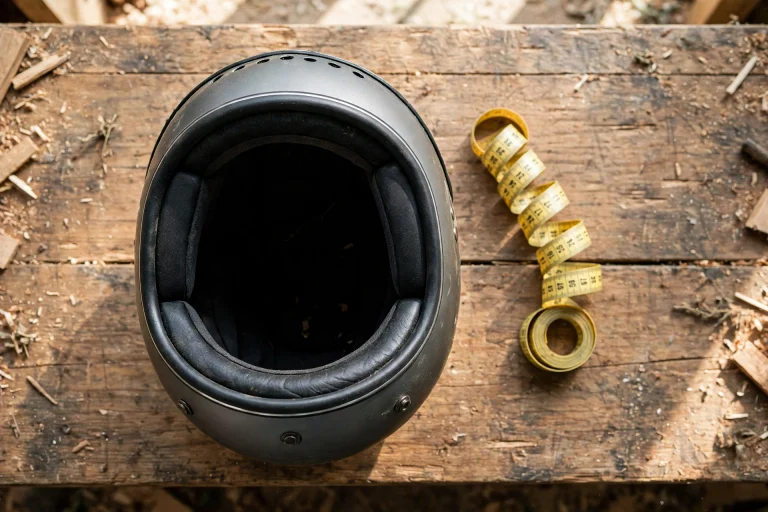
Whichever you pick, the routine is identical: measure your head, match the maker’s chart, confirm certification, wear it in the shop for ten to fifteen minutes, and check the straps form a V below your ears with a snug chin strap. The best helmet is the certified one that fits — opened by a hinge or not.
Frequently Asked Questions
Q: Can you ride with a flip-up helmet in the open position?
A: Only if that specific model is certified for use with the chin bar raised — some are, many are not. Check the helmet’s documentation. Riding open on a helmet certified only in the closed position means riding without its tested level of protection.
Q: Are flip-up helmets good for beginners?
A: They can be, especially for glasses wearers and urban riders who stop a lot. But a basic full-face is simpler, lighter, and cheaper at the same quality, so it remains the easiest first-helmet recommendation for most new riders.
Q: Which lasts longer, a flip-up or a full-face?
A: Both age out on the same schedule from sweat, UV, and wear, and both are replaced after any crash. A flip-up has a mechanism to inspect as well — if the latch loosens, fails to click positively, or is damaged, retire the helmet.

Olivia
Writer at Helmet Today, covering helmet reviews, fit and riding safety.