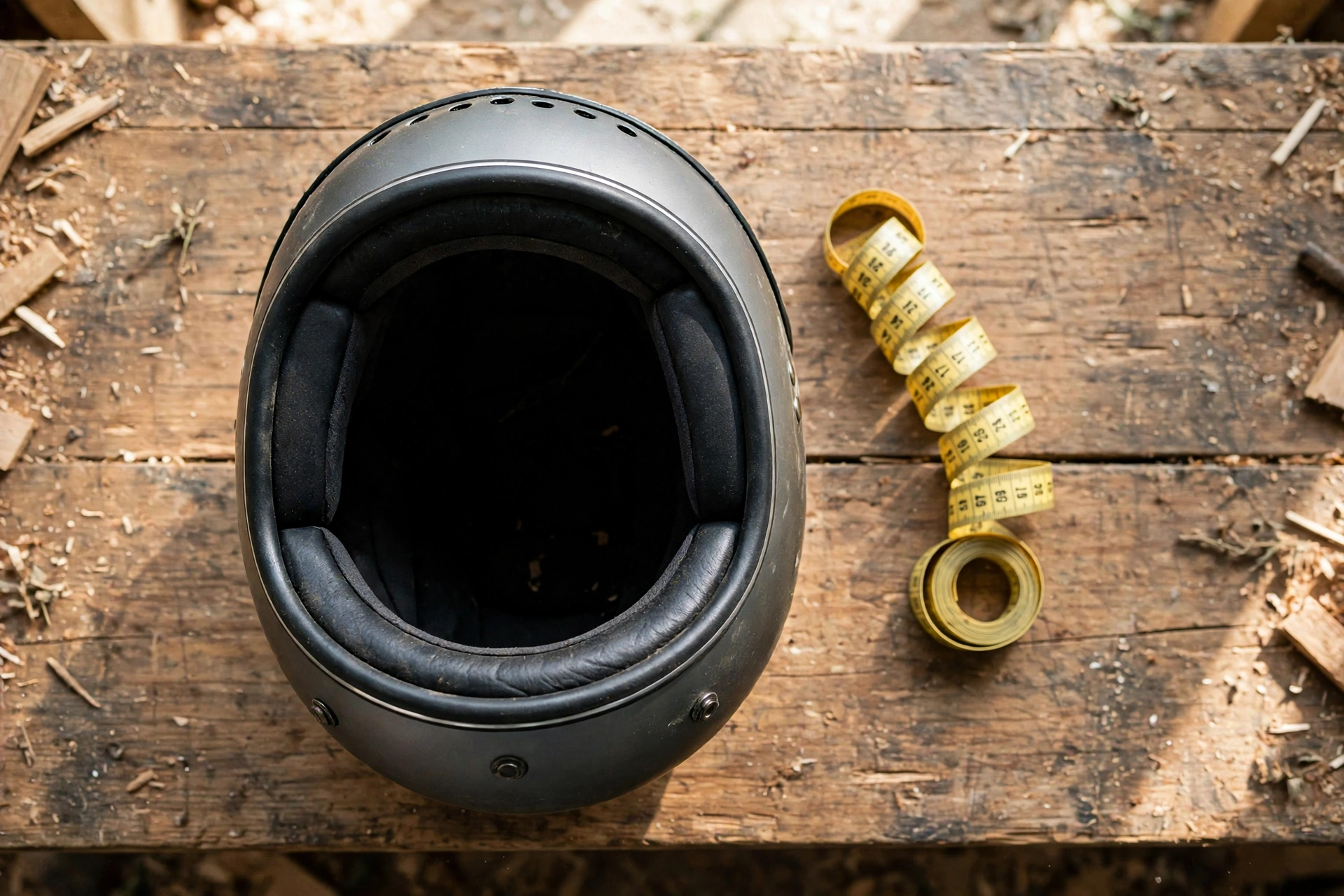
An intermediate oval helmet shape is slightly longer front-to-back than it is wide, with gently rounded sides — and in general terms it is the most common internal helmet shape on the market, because it matches the most common head shape. If a helmet pinches your forehead or squeezes your temples within minutes, you are probably wearing the wrong shape, not the wrong size — and understanding the intermediate oval is the key to fixing it.
Size charts get all the attention, but shape is what decides whether a helmet you measured correctly still gives you a headache. This guide explains how the intermediate oval fits, how it differs from round and long oval shapes, the symptoms of a mismatch, and how to tell which shape you actually have.
What Does Intermediate Oval Actually Mean?
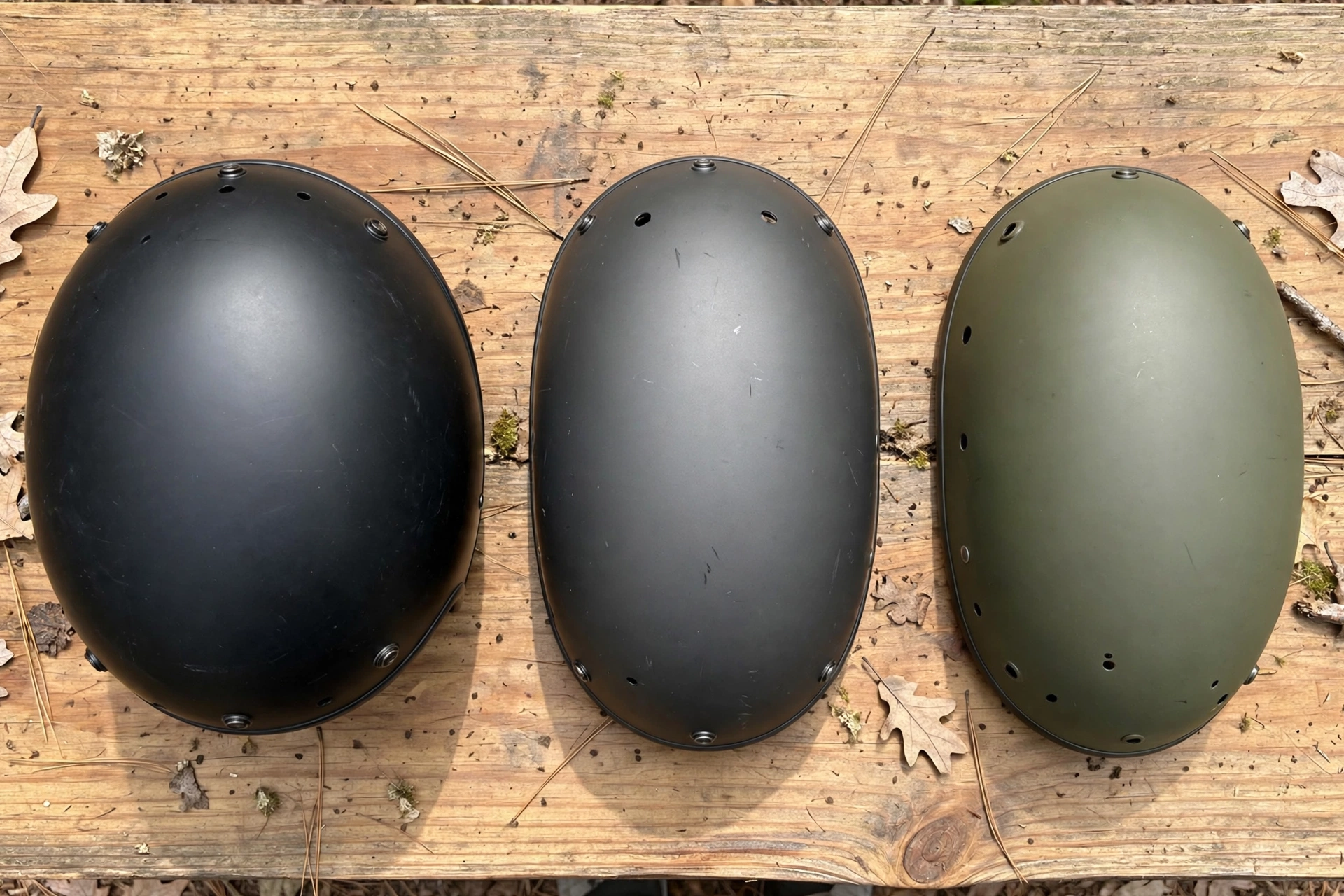
Picture your head from above. No head is a perfect circle; every skull is somewhat oval. Helmet makers describe their internal shapes along a spectrum: round oval (nearly as wide as it is long), intermediate oval (moderately longer than wide), and long oval (noticeably longer than wide, with a narrower profile).
The intermediate oval sits in the middle of that spectrum. It has a moderately curved forehead area, sides that are rounded rather than flat, and enough length front-to-back for most people without the narrow, elongated feel of a true long oval. Think of it as the default shape of the helmet industry — the mold most likely to be pulled off the shelf first.
Importantly, there is no universal standard for these labels. One brand’s intermediate oval may lean slightly round, and another’s may lean slightly long. The label is a starting point for your try-on, not a guarantee.
Why Is Intermediate Oval the Most Common Shape?
Because, in general terms, most heads in the largest helmet markets cluster around the middle of the shape spectrum — neither distinctly round nor distinctly elongated. Manufacturers naturally build the bulk of their ranges around the shape that fits the most customers, so intermediate oval models dominate shop shelves and size availability.
That prevalence creates a useful side effect: if you are an intermediate oval, you have the widest choice of models, colors, and price points, and replacement liners and pads are easiest to find. It also means that when a rider cannot get comfortable in several helmets in a row, shape mismatch — being a round or long oval squeezed into the default — is a very common culprit.
Regional tendencies exist too. Head shape averages differ between populations, and some brands historically tune their shapes for their home markets. That is another reason the same rider can be a textbook fit in one brand and a poor fit in another of the identical labeled size.
How Is Intermediate Oval Different From Round and Long Oval?
A round oval helmet is wider relative to its length, with a more curved, circular feel. It suits heads that are broader at the sides. A round-head rider in an intermediate oval often feels pressure at the temples while the forehead feels strangely loose, because the shell is too narrow across and too long front-to-back for their skull.
A long oval helmet is narrower and longer, with a flatter side profile and more room in the forehead-to-back dimension. It suits heads that are long and slim. A long-oval rider in an intermediate oval typically gets the classic symptom: a hard hotspot in the center of the forehead, sometimes with a gap at the sides.
The intermediate oval splits the difference: enough side width for most riders without temple crush, enough length for most riders without the forehead hotspot. If neither extreme description sounds like you — no temple squeeze, no forehead drill point in correctly sized helmets — you are most likely an intermediate oval, and the mainstream ranges were quite literally built around you.
What Are the Symptoms of a Shape Mismatch?
Shape problems announce themselves in specific places, which is how you distinguish them from size problems:
- Forehead hotspot: A burning pressure point in the center of the forehead suggests your head is longer than the shell — try a long oval.
- Temple squeeze: Pressure at both temples, sometimes with jaw ache, suggests your head is wider than the shell — try a round oval.
- Crown pressure: A painful spot on top of the head can indicate a shape or a sizing issue, and calls for trying both another shape and another size.
- Loose sides, tight front-to-back (or the reverse): A helmet that grips on one axis and floats on the other is the wrong shape no matter what the size chart says — changing size only trades one problem for another.
The golden rule: snug and even is right; any single sharp pressure point is wrong. Liners relax a little with use, but the EPS shell shape does not reshape itself to your skull, and neither should you try to reshape it — never modify or compress the protective foam to “customize” a fit. Modern safety features, including the liners described in our explainer on how MIPS works in modern helmets, assume the helmet sits as the manufacturer designed it.
How Can You Tell Which Head Shape You Have?
The simplest test is a mirror and a friend. Look at your head from directly above — or have someone photograph it from above — and judge the outline: nearly circular suggests round, dramatically longer than wide suggests long oval, and in between suggests intermediate oval.
The shop test is more reliable. Try a known intermediate oval model in your measured size. If the pressure feels even all around for ten minutes, your shape and that shell agree. If you get a forehead hotspot in several brands’ mainstream models, you are likely a long oval; if temples are always the complaint, you are likely round.
Once you learn your shape, write it down with the brands that fit you. Shape loyalty is real — makers tend to keep their shape philosophy across a range — so your next purchase gets dramatically easier, and online ordering becomes far less of a gamble.
Frequently Asked Questions
Q: Is intermediate oval the best helmet shape?
A: It is not better or worse than other shapes — it is simply the most common, because it matches the most common head shape. The best shape is whichever one matches your head with even pressure and no hotspots.
Q: Can I fix a shape mismatch by changing helmet size?
A: No. Going up a size makes the helmet loose in the dimension that already fitted while only slightly easing the tight dimension, and a loose helmet is unsafe. Change the model or brand to one built on a shape closer to yours.
Q: Do all brands use the same intermediate oval shape?
A: No. There is no industry standard for shape labels, so one brand’s intermediate oval may lean rounder or longer than another’s. Treat the label as a guide and always confirm with a ten-minute try-on.

Olivia
Writer at Helmet Today, covering helmet reviews, fit and riding safety.