The safest way to remove sticker residue from a helmet is warm water, a drop of mild soap, a soft cloth, and patience. Soak the sticky patch to soften the adhesive, then roll or lift it off with your fingers or a plastic scraper. Never reach for strong solvents or adhesive removers: many of them can attack helmet shell finishes, and anything that seeps inside can damage the EPS foam liner that actually protects your head.
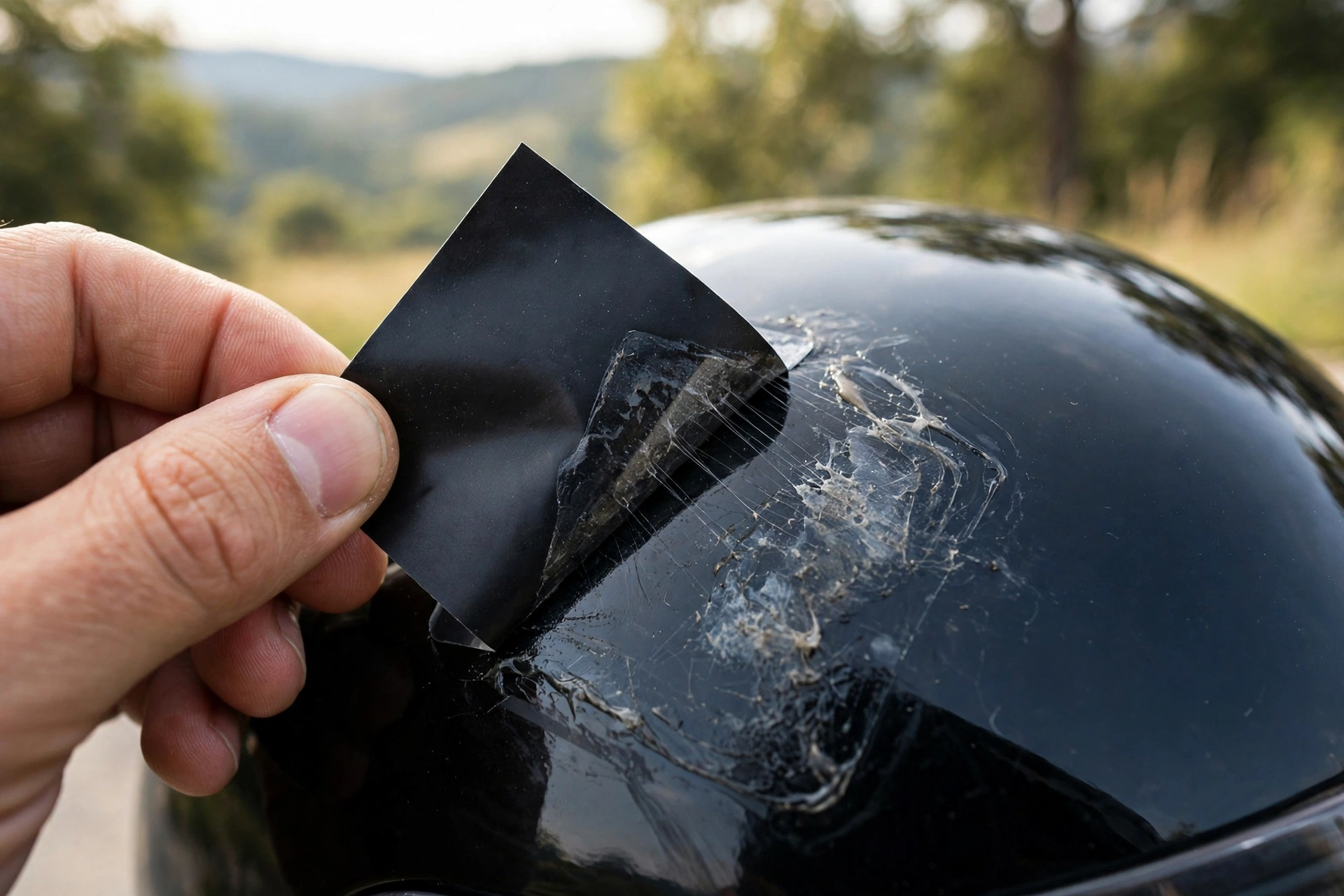
Stickers come off helmets for lots of reasons — a sold bike, a faded decal, a design you have outgrown. The sticker itself usually peels away easily; the gritty shadow it leaves behind is the annoying part, and it tempts people into using whatever chemical is under the sink. This guide walks through the gentle method that works and what to do when residue is genuinely stubborn.
What Is the Safest Way to Remove Sticker Residue From a Helmet?
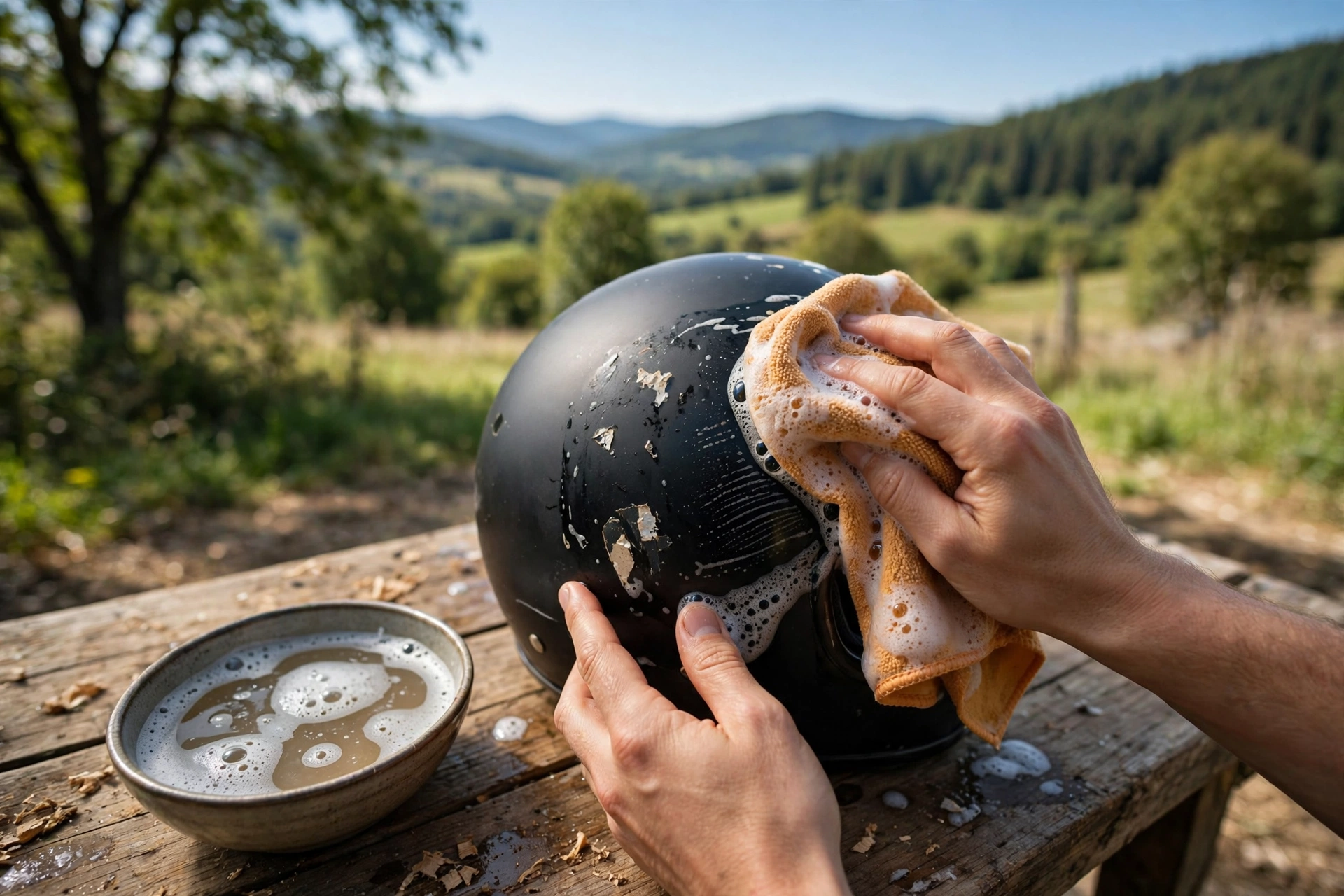
Start with the mildest approach and only escalate if you have to. Fill a bowl with warm — not hot — water and a small drop of mild dish soap or helmet-safe cleaner. Soak a soft microfiber cloth, wring it out, and lay it over the residue for five to ten minutes. Warmth and moisture soften most common sticker adhesives, which are designed to release with heat and water rather than force.
Once the residue has softened, rub gently in small circles with the cloth. Much of it will ball up and roll off. For the rest, use your fingernail or a plastic scraper — the kind sold for kitchen or craft use — held at a shallow angle. Plastic is the limit: never use a metal razor blade or a scouring pad on a helmet shell. Metal can gouge paint and clear coat in a single slip, and abrasive pads will permanently dull a glossy finish.
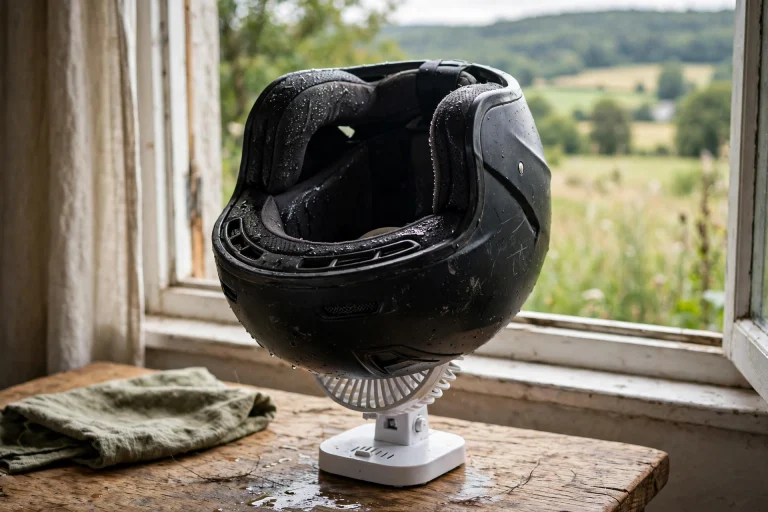
Work in short sessions rather than scrubbing harder: re-soak the cloth, lay it back on the patch, and repeat. Most fresh residue clears within two or three cycles. Rinse the area with a cloth dampened in clean water afterward, then dry the shell with a second soft cloth.
Which Cleaners Should You Never Use on a Helmet Shell?
This is the part that matters most for safety. Many popular adhesive removers, degreasers, and household solvents can soften, cloud, or craze polycarbonate and painted helmet shells. Products based on strong solvents, acetone nail-polish remover, paint thinner, and aggressive citrus degreasers all carry real risk on a helmet, even if they work fine on a car bumper or a kitchen counter.
The bigger danger is what you cannot see. Liquid that runs into vents, seams, or the edge of the liner can reach the EPS foam inside the helmet. EPS is the energy-absorbing material that crushes in a crash to protect your head, and it is notoriously sensitive to solvents — it can soften or degrade without any obvious change on the outside. A helmet that looks clean but has solvent-damaged foam is worse than a helmet with a sticky patch on it.
So the rule is simple: if a product is not sold as safe for helmets or delicate plastics, keep it off the helmet entirely. Keep any liquid on the outer shell only, use small amounts on a cloth rather than spraying the helmet, and never let cleaner pool around the trim, vents, or liner edges. When in doubt, more soak time with warm soapy water is always the safer trade.
How Do You Deal With Stubborn, Old Residue?
Residue that has baked on through a summer or two of riding is harder, but the method does not change — only the timing does. Extend the soak. Lay the warm, damp cloth over the patch and leave it for fifteen to twenty minutes, re-warming it once or twice. Old adhesive gives up slowly, and patience genuinely is the active ingredient here.
You can also try a little warmth from a hair dryer held well back, on its lowest setting, moving constantly for a few seconds at a time. The goal is to warm the adhesive, not heat the helmet — stop if the shell feels hot to the touch. Many riders find this step unnecessary once the soak has done its work.
If a faint shadow or outline remains after the stickiness is gone, that is usually a difference in the finish itself: the area under the sticker was shielded from sun and road grime while the rest of the shell aged. A gentle wash and, on glossy shells, a helmet-safe polish can even out the appearance. An outline is cosmetic, not a safety problem, and it tends to fade into the finish over time.
Does Removing Stickers or Residue Affect Helmet Safety?
Done the gentle way, no. Warm water, mild soap, a soft cloth, and a plastic scraper do not change the structure of the shell or the foam beneath it. What affects safety is the shortcut: harsh chemicals, metal blades, and abrasive scrubbing. If you have already used a strong solvent on a helmet and it ran inside or soaked the liner edge, be honest with yourself about it — in general terms, manufacturers advise retiring a helmet whose EPS has been exposed to solvents, because the damage cannot be inspected reliably.
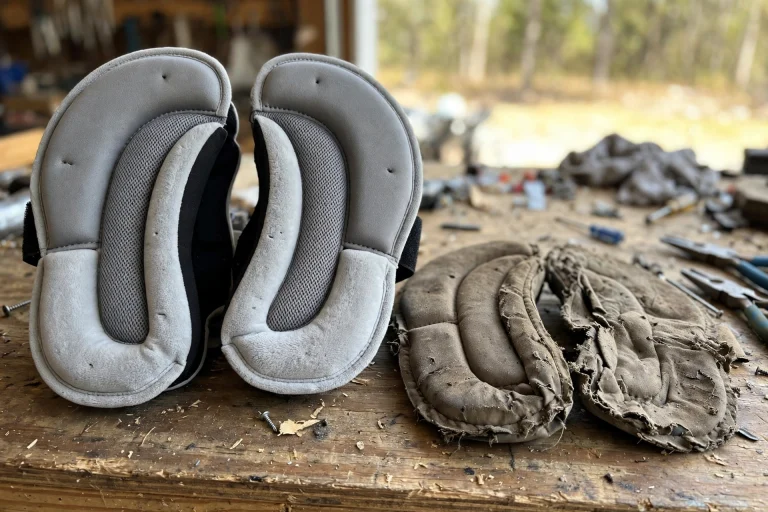
While the helmet is in your hands, it is a good moment for a broader check. Look inside at the liner and comfort pads, confirm the straps and buckle work smoothly, and check for any cracks or dents you may not have noticed. If your helmet uses a rotational-impact liner, understanding how MIPS works helps you recognize what you are looking at and why keeping chemicals away from that inner structure matters so much.
One related caution: a shell covered in decals is harder to inspect for the small cracks that tell you a helmet has had a knock. A sticker or two is fine; a full wrap makes inspection and later removal much harder.
How Can You Prevent Sticker Residue Next Time?
Prevention is mostly about choosing where and what you stick. Low-tack, removable vinyl decals release far more cleanly than permanent paper stickers, and a smooth area of shell is a better spot than across a seam or vent, where adhesive creeps into gaps and is much harder to lift out.
Remove stickers sooner rather than later. Adhesive that has been through months of heat, sun, and rain bonds harder and breaks down into stubborn crumbly residue, while a fresh sticker often peels off in one piece. Warming the sticker gently with a hair dryer on low first helps it come away whole instead of tearing and leaving half its glue behind.
Finally, peel slowly and at a low angle, pulling the sticker back over itself rather than straight up. That technique alone prevents most residue. And if a little is left, you already know the drill: warm water, mild soap, soft cloth, plastic scraper if needed — and no solvents anywhere near the helmet.
Frequently Asked Questions
Q: Can I use a commercial adhesive remover on my helmet?
A: It is not recommended. Many adhesive removers contain solvents that can cloud or weaken helmet shells, and if they reach the EPS foam inside, they can degrade the very material that protects you. Warm soapy water and patience achieve the same result without the risk.
Q: Is it safe to use a hair dryer to soften sticker glue on a helmet?
A: Yes, if you are careful: lowest heat setting, held well back, moving constantly, and only for a few seconds at a time. The adhesive only needs to be warm, not hot. If the shell feels hot to your hand, stop — prolonged heat can harm finishes and foam.
Q: The residue is gone but I can still see the sticker’s outline. Is the helmet damaged?
A: Almost certainly not. The covered area was protected from sun and grime while the rest of the shell aged slightly, so a faint outline is normal and purely cosmetic. A wash and helmet-safe polish usually soften the contrast over time.

Olivia
Writer at Helmet Today, covering helmet reviews, fit and riding safety.