The honest answer is: do not store helmets in a hot garage if you can possibly avoid it. In general terms, summer heat and sun exposure age a helmet’s EPS foam, soften its adhesives and make straps and plastics brittle — quietly shortening the helmet’s useful life even though it looks fine on the shelf. A cool, dry spot indoors (a closet shelf or a hallway hook) is almost always a better home. If the garage is truly your only option, the tips below will reduce the damage.
Here is what heat actually does to a helmet, why a car is even worse than a garage, and how to set up storage that protects the gear you trust your head to.
What Does Heat Actually Do to a Helmet?
A helmet’s impact protection comes from its EPS (expanded polystyrene) foam liner, and EPS is a plastic. Sustained high temperatures, and especially repeated hot-cold cycling, age plastics over time: the foam can slowly degrade, glues that bond the liner to the shell and hold comfort pads in place soften, and plastic parts such as buckles, dials and visor pivots become brittle. UV light speeds all of this up — it is the same aging you see when garden plastic goes chalky and cracks.
The damage is invisible in its early stages. A helmet does not melt in a garage; it simply retires a little earlier than it should. Straps are often the first visible casualty: sun and heat make webbing stiff, faded and weaker, and the retention system is exactly the part you cannot afford to have fail.
Garages add extra insults beyond heat. Fumes from fuel, paints and solvents stored nearby are not friends of foam or plastics, and a shelf above a workbench risks the helmet being knocked down or crushed — an impact history you may never know about.
Why Is a Hot Car Even Worse?
A parked car’s interior in summer sun can become far hotter than the surrounding air, much faster, and it stays that way for hours. Leaving a helmet on the rear shelf or seat exposes it to the most extreme heat and direct UV it will ever meet — worse than all but the worst garages.
Treat the car as transport, not storage. Take the helmet with you when you park, or at minimum keep it in the trunk, in its bag, out of the sun, and bring it indoors when you get home. Riders who commute should think of the helmet like a phone or a pet: it does not live in the vehicle.
The same applies to a bike helmet left hanging on handlebars in full sun day after day outside a workplace. It is a small daily dose, but it adds up across a summer.

Where Should You Store Helmets Instead?
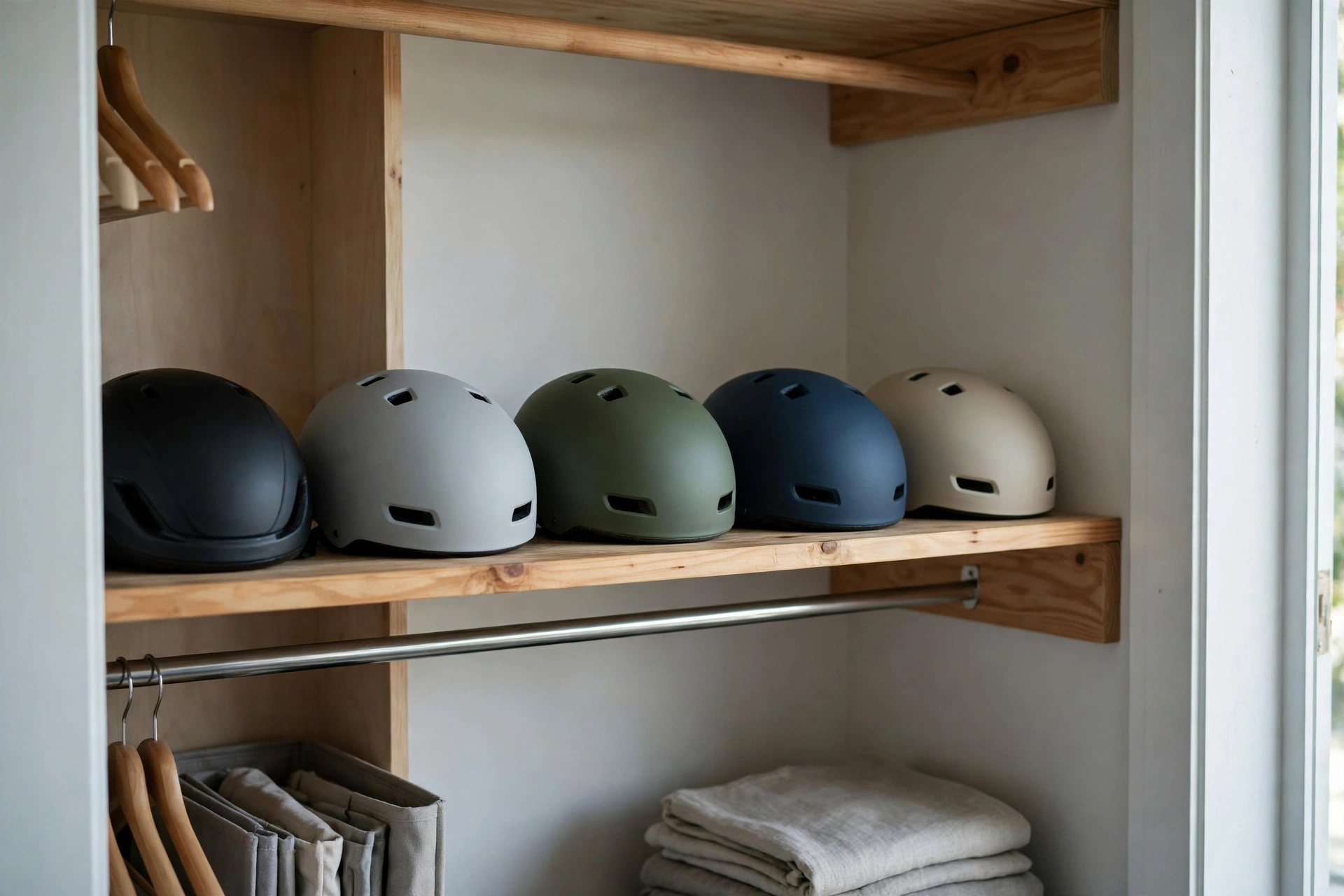
Pick the spot you would pick for anything you want to keep in good condition for years: indoors, room temperature, dry, out of direct sunlight, and somewhere it will not be knocked to the floor. A shelf in a closet, a hook by the door, or a dedicated bin in a hallway all qualify. Store the helmet in the breathable bag it came with if you have one — the bag keeps dust off and prevents strap buckles from scratching the shell, while still letting moisture escape.
Set the helmet down on its crown or hang it by a proper mount; do not hang it by its chin strap for months, which stretches the webbing, and do not stack heavy gear on top of it. If you store several family helmets, a simple shelf or a row of wide hooks keeps each one uncompressed and easy to grab — the same logic that governs how fit systems like a rotational-protection liner stay in good shape applies here: helmets age best when they are not being squashed, baked or soaked between rides.
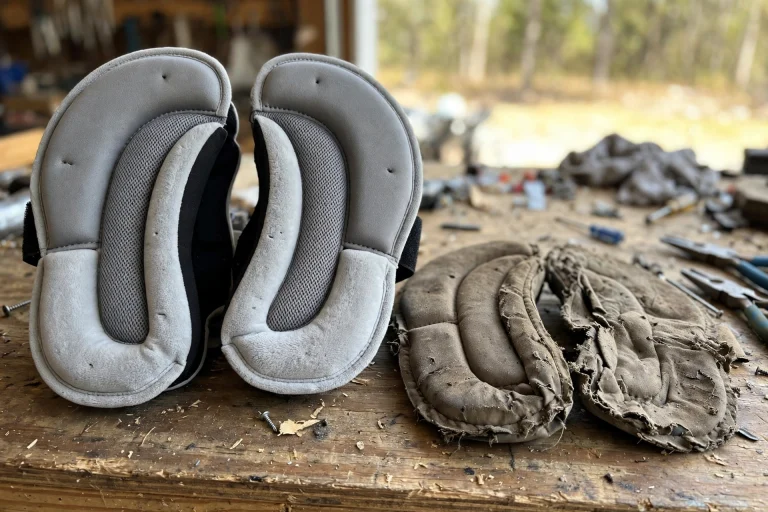
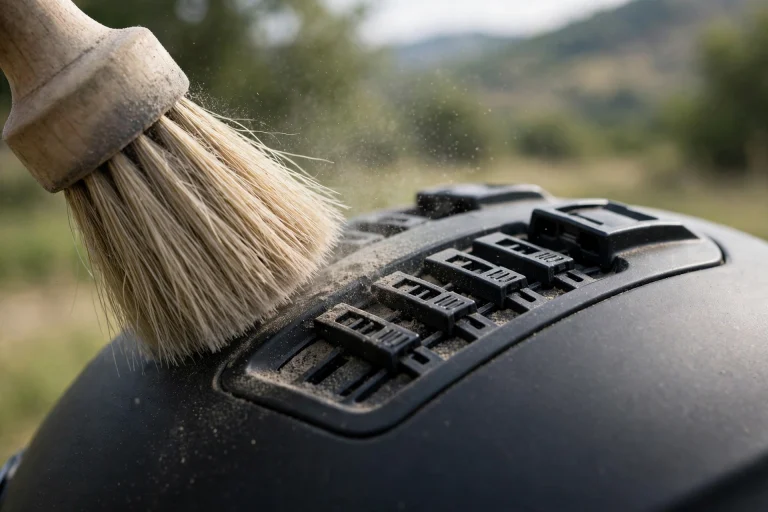
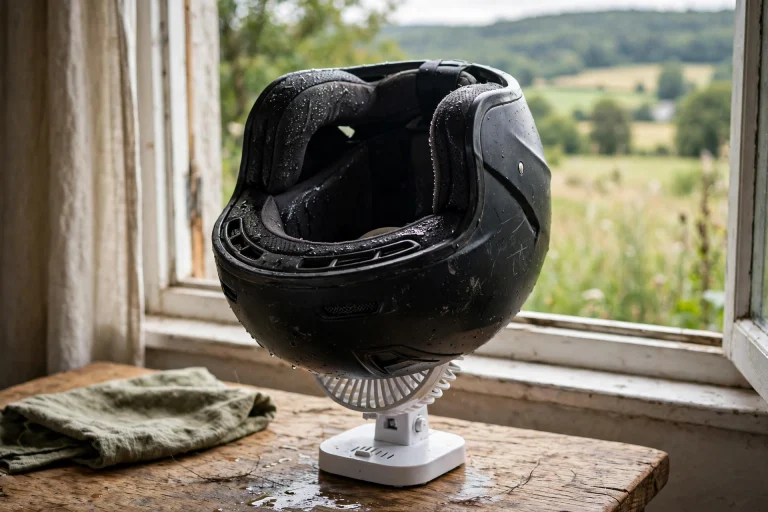
Before storing a helmet for a season, clean it first. Sweat salt left in pads and straps all winter does its own quiet damage, and a clean helmet going into storage smells far better coming out.
If the Garage Is Your Only Option, How Do You Limit the Harm?
Sometimes it genuinely is — small apartments and shared houses leave few choices. If so, store smart: choose the coolest interior wall of the garage, away from windows, the water heater and any south-facing metal door that radiates heat. Keep the helmet up high in its bag, inside a closed bin or cabinet if you have one, which buffers temperature swings and keeps fumes and dust off.
Keep it away from stored gasoline, paint thinners and solvents, and never on a shelf where tools or bikes could fall on it. Rotate your thinking about lifespan, too: a helmet that lives in a hot garage should be inspected more often and, in general terms, replaced sooner than one stored indoors — treat the maker’s suggested service life as an upper limit, not a target.
Finally, check it before every ride, not just at the start of the season. Brittle straps, a chalky or faded shell, pads that have come unglued, or foam that looks cracked or crumbly are all retire-it signals wherever the helmet was stored.
How Do You Check a Stored Helmet Before Riding Again?
After any long storage — a winter, a summer in the garage, a year in a closet — run a two-minute inspection before the helmet goes back on a head. Look over the shell for fading, chalkiness or cracks. Squeeze the foam gently where you can see it at the edges; it should feel firm and uniform, not crumbly or soft in patches. Flex the straps and check the stitching and buckle: webbing should be supple, not stiff or frayed, and the buckle should click positively.
Then do the fit test: on your head, level, dial or straps adjusted, the helmet should sit snug with no rocking. Storage can compress pads, and a fit that was right two seasons ago may not be now. Replace pads if the maker sells them and the helmet is otherwise sound.
If anything fails the check, or the helmet is simply old and has lived hot, replace it. Helmets are consumables with a finite life — storage conditions decide whether you get all of it.
Frequently Asked Questions
Q: Is it OK to store a helmet in the garage during winter?
A: Cold is far less harmful than heat, and an unheated garage in winter is usually acceptable if the helmet is dry, in its bag and safe from knocks and chemicals. Heat and UV are the main aging factors to avoid.
Q: How hot is too hot for helmet storage?
A: There is no single safe number that applies to every helmet, but a good rule is simple: if the space gets hotter than a comfortable room for hours at a time — a sun-baked garage or a parked car — it is too hot for long-term storage. When in doubt, store it where you live.
Q: Does storing a helmet in heat void its protection?
A: It will not fail overnight, but in general terms sustained heat and UV age the foam, adhesives and straps and shorten the helmet’s working life. Inspect heat-stored helmets more often and replace them sooner.

Olivia
Writer at Helmet Today, covering helmet reviews, fit and riding safety.