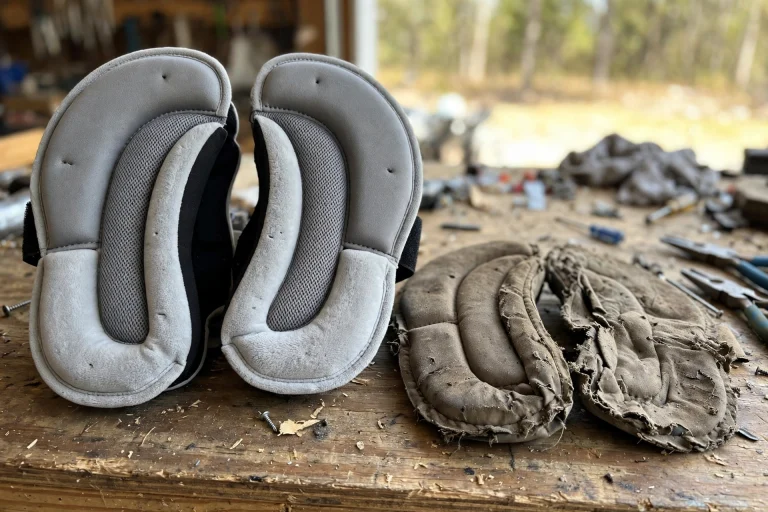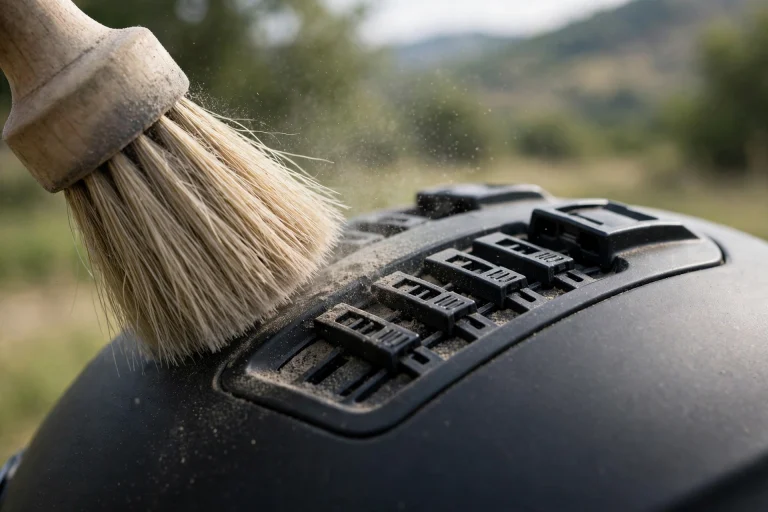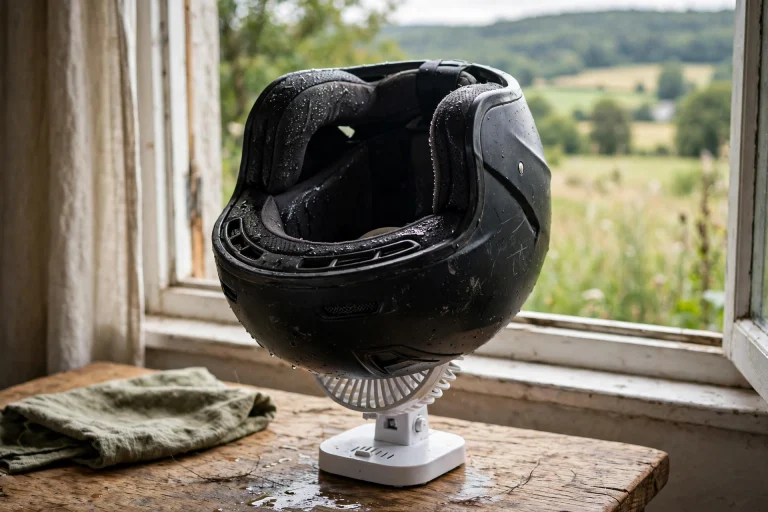
To maintain a leather helmet strap, clean it gently with a damp cloth and mild soap, let it dry naturally away from heat, and apply a light leather conditioner only occasionally. The strap is part of your helmet’s retention system, so care is not just cosmetic: leather that dries out, cracks, or stretches cannot be trusted to hold the helmet in place. If the leather is cracked through or badly dried out, the strap — or the helmet — needs replacing, not more conditioner.
Leather straps appear most often on vintage-style, open-face, and classic touring helmets, where they suit the look and feel of the design. Leather is a natural material, and unlike nylon webbing it responds to sweat, rain, sun, and neglect by stiffening and cracking over time. With a few minutes of simple care now and then, a leather strap can stay supple and strong for years. Here is how to clean it, condition it, and recognize when care is no longer enough.
Why Does a Leather Helmet Strap Need Regular Care?
A chin strap has one job: keep the helmet on your head during a crash, when forces try to tear it off. On a leather-strapped helmet, that job depends entirely on the condition of the leather and its stitching. Sweat is the main enemy in daily use. It soaks into the leather with every ride, and as it dries it leaves salts behind that draw out moisture and make the fibers stiff and brittle.
Sun and heat accelerate the process: a helmet left on a bike in summer sun dries its strap out far faster than one kept in a cool, shaded place. Rain is not harmless either — leather that dries too fast can crack, and leather kept damp can mildew. In general terms, leather that is cleaned, dried slowly, and lightly conditioned stays flexible far longer than leather ignored until it feels like cardboard.
The good news is that strap care takes almost no time — mostly just drying the helmet properly after rides and wiping the strap down occasionally.
How Do You Clean a Leather Chin Strap Safely?
Start with the mildest method. Wipe the strap down with a cloth dampened with plain water to remove surface sweat, dust, and road grime. For a deeper clean, use a tiny amount of mild soap — saddle soap is made for exactly this purpose, and a drop of gentle hand soap in water also works. Work the lather in lightly with the cloth, following the grain of the leather, and avoid soaking the strap through. Leather does not need to be drenched; excess water is part of the problem you are trying to avoid.
Wipe the soap away with a second cloth dampened in clean water, then pat the strap dry with a soft towel. After that, the most important step is the one people skip: let the strap air-dry at room temperature, away from direct sun, radiators, and heat vents. Never use a hair dryer or leave the helmet on a hot surface to speed things up. Fast drying is what makes leather crack.
While you clean, inspect as you go: run the strap through your fingers and check the buckle holes, stitching, and the areas around rivets or D-rings, where stress concentrates. Surface dirt is fine to clean; fraying stitches and cracks that open when you flex the leather are not cleaning problems — they are replacement problems, covered below.
How Should You Condition Leather Without Weakening It?
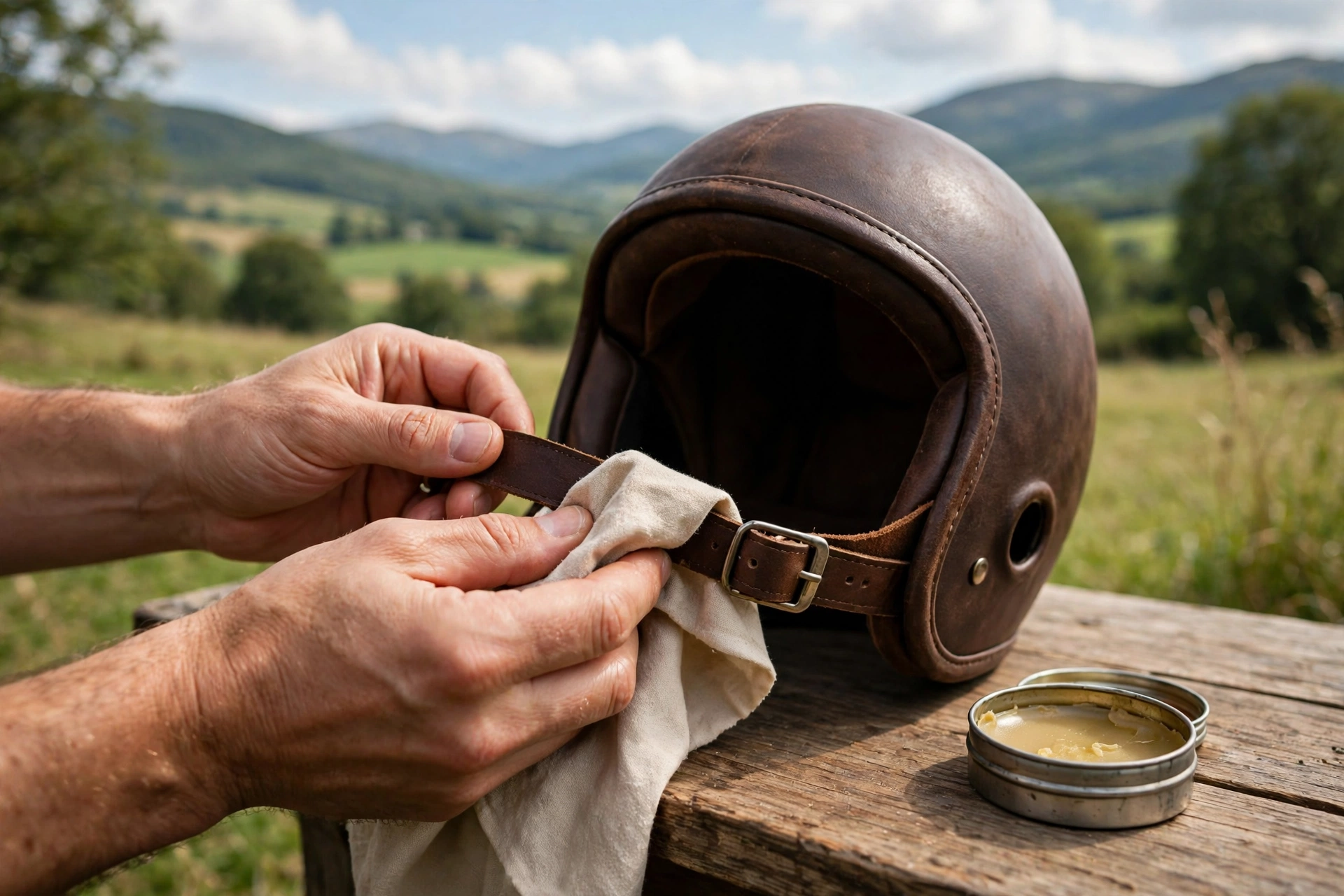
Conditioning replaces some of the natural oils that sweat, water, and sun strip out of leather. The key word is light. Apply a small amount of leather conditioner or balm to a soft cloth — not directly onto the strap — and work it in thinly. Let it absorb for fifteen to thirty minutes, then buff off every trace of excess. The strap should feel supple, never greasy.
Over-conditioning is a real mistake. Soaking leather in oil can over-soften and stretch it, and a strap that stretches changes how snugly the helmet fits. As a rough guide, conditioning a few times a year is plenty for a regularly used helmet, and a strap that still feels flexible probably does not need it yet. After conditioning, always re-check the fit: fasten the strap, confirm the helmet still sits snugly with about two fingers of room under the strap at most, and make sure the buckle or D-rings still hold firmly without slipping.
Avoid household substitutes. Cooking oils, petroleum jelly, and silicone sprays are not leather care — they can go rancid, attract dirt, or make the strap slippery against the buckle. Keep it simple: a cloth, mild soap, and a proper conditioner.
What Are the Signs a Leather Strap Needs Replacing?
Care extends a strap’s life; it does not make it immortal. Replace the strap — or, if the strap is not designed to be removable, retire the helmet — when you see any of the following: cracks that run across the strap or open up when you bend it, especially around the buckle holes; stitching that is frayed, broken, or pulling through the leather; holes that have stretched into ovals so the buckle tongue no longer holds firmly; or leather so dry and stiff that it no longer flexes comfortably.
Also check the metal hardware. Rust, corrosion, or a bent D-ring or buckle weakens the retention system just as surely as damaged leather. Light surface rust that cleans off is one thing; pitted, flaking metal is another, and it suggests the helmet has lived in damp conditions that have aged the rest of it too.
If your helmet’s strap is replaceable, use only the manufacturer’s own replacement part, fitted exactly as the original was. A strap is a tested component of the helmet’s retention system, not a generic accessory. And while you are inspecting the helmet’s working parts, remember the inside matters as much as the strap — knowing what MIPS is and how it works helps you understand the liner technology that, together with a sound strap, makes the helmet do its job in a crash.
How Do You Store a Helmet With a Leather Strap?
Storage is where most leather damage quietly happens. Store the helmet in a cool, dry, shaded place with some air movement — a shelf in a closet or a helmet bag in a room, rather than a damp garage, a hot car, or a sealed plastic box. After a sweaty or wet ride, let the helmet dry fully at room temperature before putting it away, with the strap unfastened and laid flat rather than twisted or folded sharply.
Keep the strap away from anything that can stain or cut it, and avoid hanging the helmet by its strap, which stretches the leather at one point. If the helmet will sit unused for months, give the strap a light clean and condition first, and check it again before the first ride back.
Build the routine into a habit and it takes minutes: dry the helmet after rides, wipe the strap when it looks salty or dusty, condition lightly a few times a year, and inspect the holes, stitching, and hardware each time. Do that, and a leather strap stays comfortable on every ride and strong on the one ride that matters.
Frequently Asked Questions
Q: How often should I condition a leather helmet strap?
A: A few times a year is enough for most riders, or whenever the leather starts to feel dry and stiff. Always apply conditioner thinly and buff off the excess — over-oiled leather can stretch and let the strap fit too loosely.
Q: Can I use saddle soap on a helmet strap?
A: Yes. Saddle soap is a mild cleaner made for leather tack and is well suited to a leather chin strap. Use a small amount on a damp cloth, wipe the residue away with a clean damp cloth, and let the strap dry naturally away from heat.
Q: My leather strap has a small crack. Can I keep using it?
A: No. The strap is part of the helmet’s retention system, and a crack — especially near a buckle hole — is a failure point under crash loads. Replace the strap with the manufacturer’s part if it is replaceable; if it is not, it is time to retire the helmet.

Olivia
Writer at Helmet Today, covering helmet reviews, fit and riding safety.