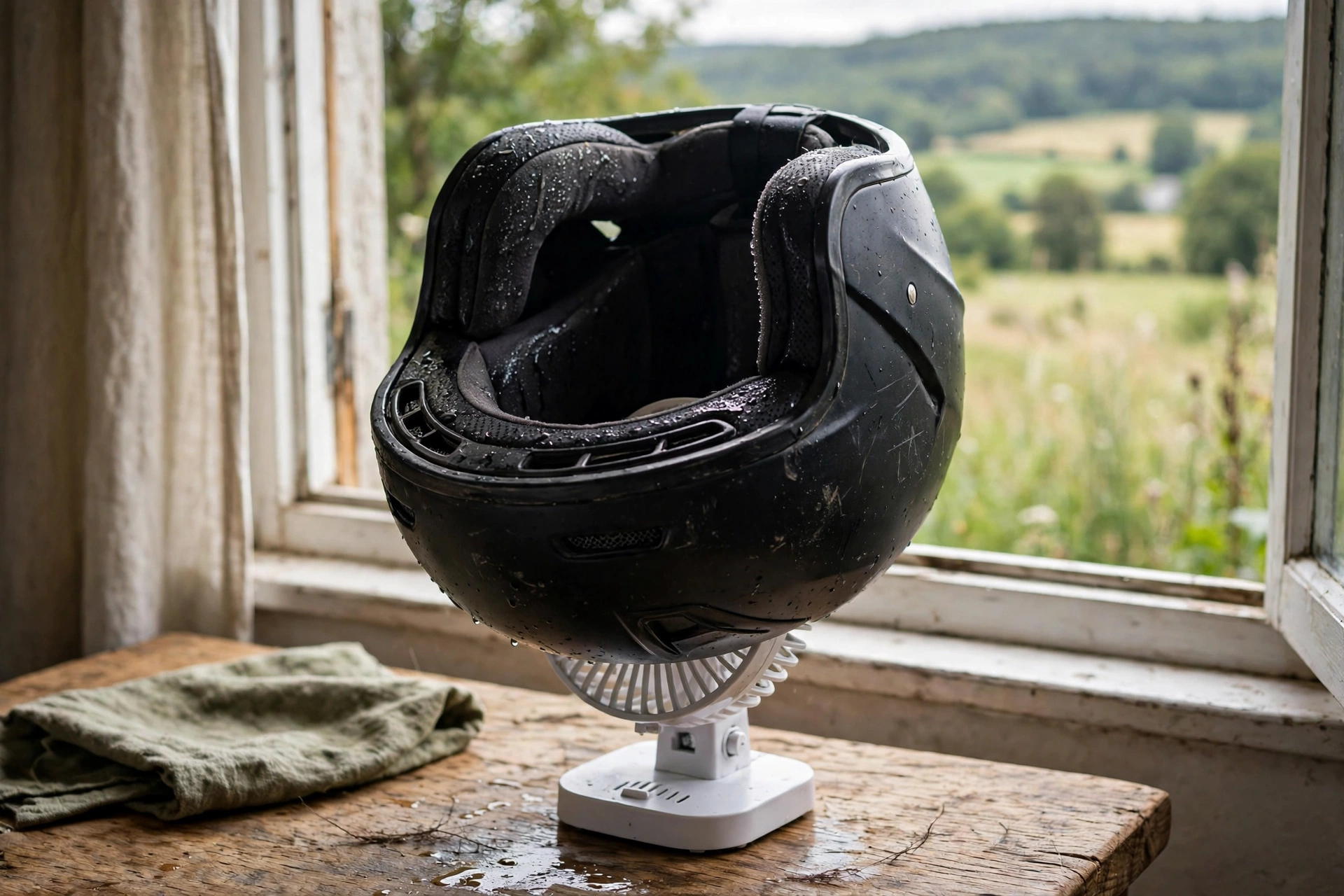
The fastest way to air out a sweaty helmet between rides is to remove the pads if they come out, open all the vents, and set the helmet upside down in moving air — ideally on a small fan or helmet dryer — until everything is completely dry. Drying fully is what matters: a helmet put away damp will smell within days and its pads will break down far faster. Never use high heat, which can damage the EPS foam and adhesives inside.
If you commute daily or ride in hot weather, your helmet absorbs a surprising amount of sweat on every trip. Left in a closed bag or a still corner, that moisture sits in the pads and liner, feeds odor-causing bacteria, and slowly rots the foam padding from the inside. The fix is a simple routine that takes two minutes when you get home. This guide covers the quickest drying methods, what actually prevents odor, and the shortcuts that do more harm than good.
What Is the Fastest Way to Air Out a Sweaty Helmet?
Airflow plus time is the whole formula. As soon as you get in, take the helmet out of any bag or case — a closed bag is the worst place for a damp helmet. Open every vent, unfasten the strap, and set the helmet upside down, resting on its crown, so moist air can escape and fresh air can circulate around the liner.
Moving air cuts drying time dramatically. A small desk fan aimed into the helmet, or a purpose-made helmet dryer that blows gentle, unheated or lightly warmed air, can dry a liner in a few hours instead of overnight. If you ride twice a day, this is the single most worthwhile accessory you can buy for helmet care. Position matters more than power: gentle air flowing through the helmet beats a strong blast at the shell.
Whatever method you use, the test is simple — the pads should feel completely dry, with no dampness when you press them firmly, before the helmet goes back into storage. A helmet that never fully dries is a helmet that will start to smell.
Should You Remove the Pads to Dry Them?
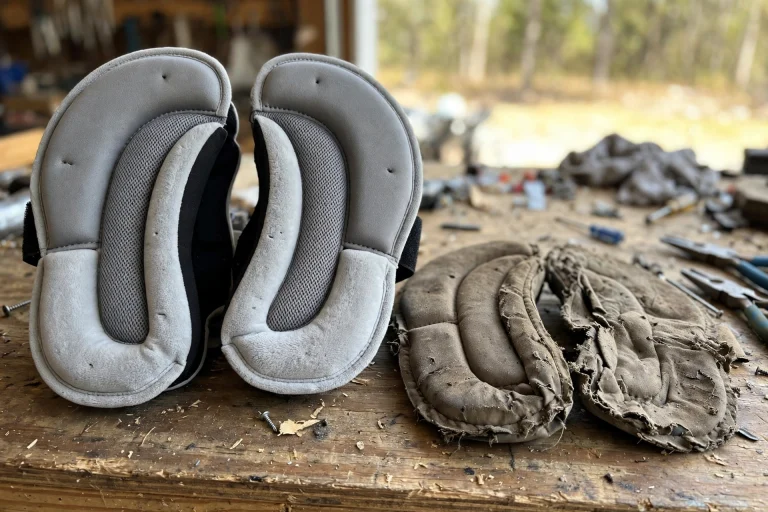
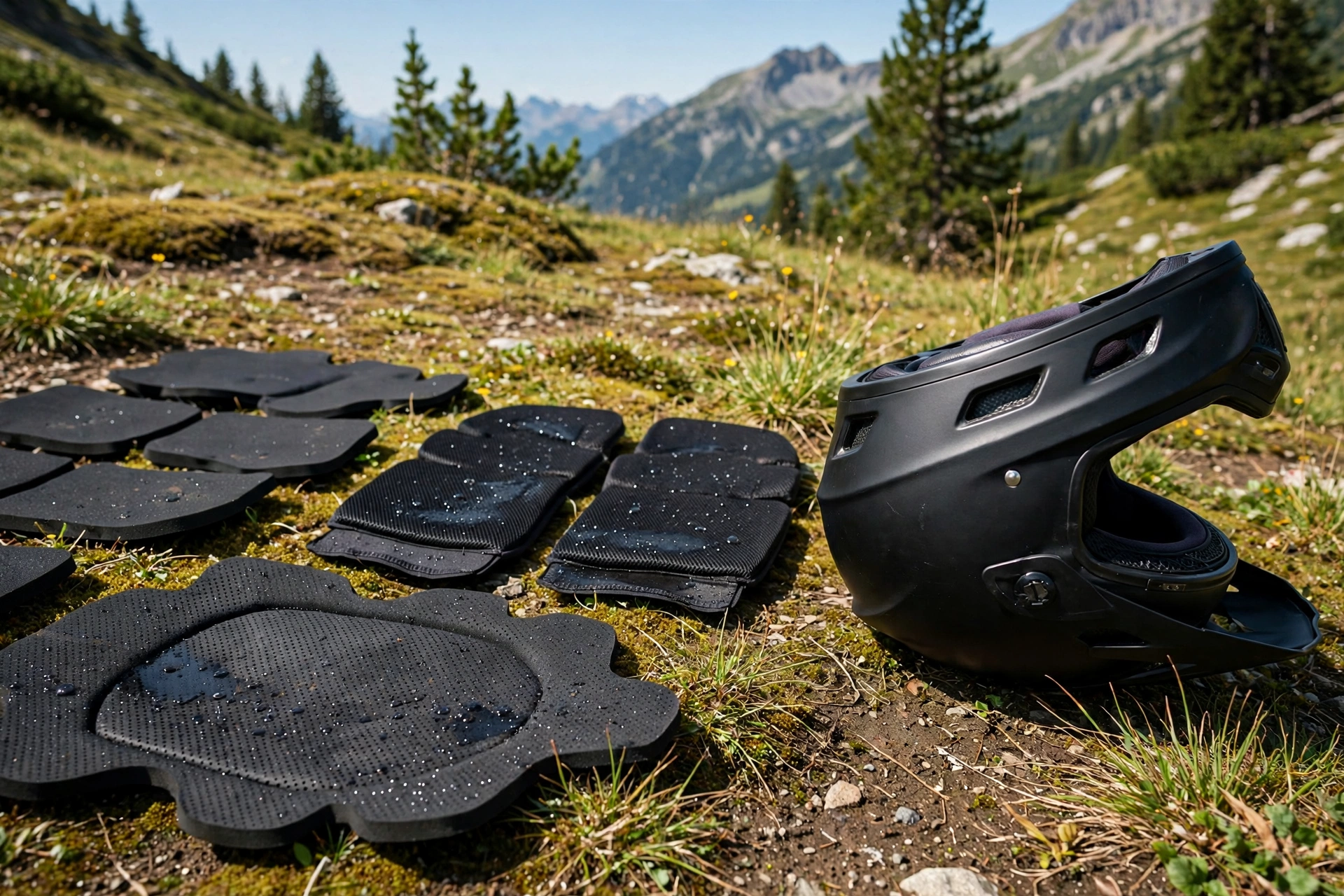
If your pads and cheek pads come out — most modern helmets are designed so they do — removing them speeds drying a lot. The pads hold most of the sweat, and out of the helmet they dry in open air on both sides instead of pressed against the foam liner. Pop them out, lay them flat or hang them by a corner, and wipe the inside of the helmet with a dry cloth to lift surface moisture from the liner.
This is also your chance for a quick inspection. Check the pads for thinning, crumbling edges, or a permanent sour smell even when dry — those are signs the pads are near the end of their life. If your helmet has a rotational liner under the pads, this is the layer explained in our guide to MIPS; it should stay in place and simply be wiped, never soaked or removed unless the manufacturer says otherwise.
If your pads do not remove, the upside-down-and-fan method still works; it just takes longer. Press a dry towel against the liner to draw out moisture first, then let the fan finish the job. Either way, never put pads back into a helmet that is still damp inside.
Do Helmet Dryers and Fans Actually Help?
Yes — in general terms, they are the most effective tool for riders who use a helmet every day. A helmet dryer is simply a small fan, sometimes with a timer and a low-heat or UV feature, shaped to push air through the inside of the helmet. It does not do anything magic; it just guarantees the airflow that a helmet sitting in a hallway often does not get, and it does it on a schedule while you do something else.
An ordinary small fan works nearly as well: aim it into the upturned helmet or across the removed pads for a few hours. The main thing to avoid is heat — high temperatures can soften adhesives and age EPS foam, so heated dryers belong on their lowest setting, if used at all, and a hair dryer on hot is never a good idea.
Riders with two helmets have the easiest solution of all — rotate them, so each gets a full day to dry between uses. If a second helmet is not an option, a second set of pads rotated the same way gets you most of the benefit.
How Do You Stop Odor From Building Up in the First Place?
Odor is a moisture problem with a time problem added. Bacteria thrive in pads that stay damp for hours, so the single most effective habit is also the simplest: dry the helmet promptly and completely after every sweaty ride. A helmet dried within a few hours of each ride can go a whole season without smelling; one left damp in a bag overnight will start within a week or two.
Washing matters too. Removable pads should be hand-washed regularly — roughly every few weeks for a daily rider in summer — in lukewarm water with a little mild soap, rinsed well, and dried completely before going back in. Wearing a thin skull cap or helmet liner under the helmet also helps, because the cap absorbs much of the sweat and is far easier to wash than the helmet itself; many commuters keep two or three and rotate them like socks.
Skip the masking products. Scented sprays cover odor for a day without removing the bacteria causing it, and some contain chemicals you do not want against your skin or seeping toward the foam. If a smell survives a proper pad wash and full dry, the pads are telling you they are finished.
What Drying Mistakes Can Damage a Helmet?
Heat is mistake number one. Radiators, heat vents, hair dryers on hot, ovens, and the top of a hot engine or car dashboard can all expose the helmet to temperatures that age EPS foam and weaken the glues holding the helmet together — damage you cannot see from outside. Room-temperature moving air is slower but completely safe, and with a fan it is not even much slower.
Sunlight is the quieter version of the same mistake: hours of direct sun fade the shell and dry out straps over time. A shady, breezy spot is fine. And never dry or store a helmet in a sealed bag or airtight box while it is damp — that is a small, warm greenhouse for mildew.
Finally, do not force the process with a tumble dryer, and do not put the whole helmet in a washing machine. Pads that are machine-washable should be washed gently in a mesh bag at most, and the helmet itself should never be submerged and left soaking. Treat drying as part of the ride: two minutes to set the helmet up in moving air when you arrive, and it will be dry, fresh, and ready the next time you reach for it.
Frequently Asked Questions
Q: How long does a sweaty helmet take to dry?
A: In still air at room temperature, a soaked liner can take overnight or longer. With the pads removed and a small fan or helmet dryer moving air through it, most helmets dry fully within a few hours. The pads should feel completely dry when pressed before you store the helmet.
Q: Can I dry my helmet with a hair dryer?
A: Only on a cool setting, and a simple fan is a better choice. Hot air can soften adhesives and age the EPS foam that protects your head. Gentle moving air at room temperature dries a helmet safely and nearly as fast.
Q: Will airing out alone remove a bad smell from my helmet?
A: Drying stops odor from getting worse, but an established smell usually means bacteria in the pads, which needs washing. Hand-wash removable pads with mild soap, dry them fully, and use drying after every ride to stop the smell coming back.

Olivia
Writer at Helmet Today, covering helmet reviews, fit and riding safety.