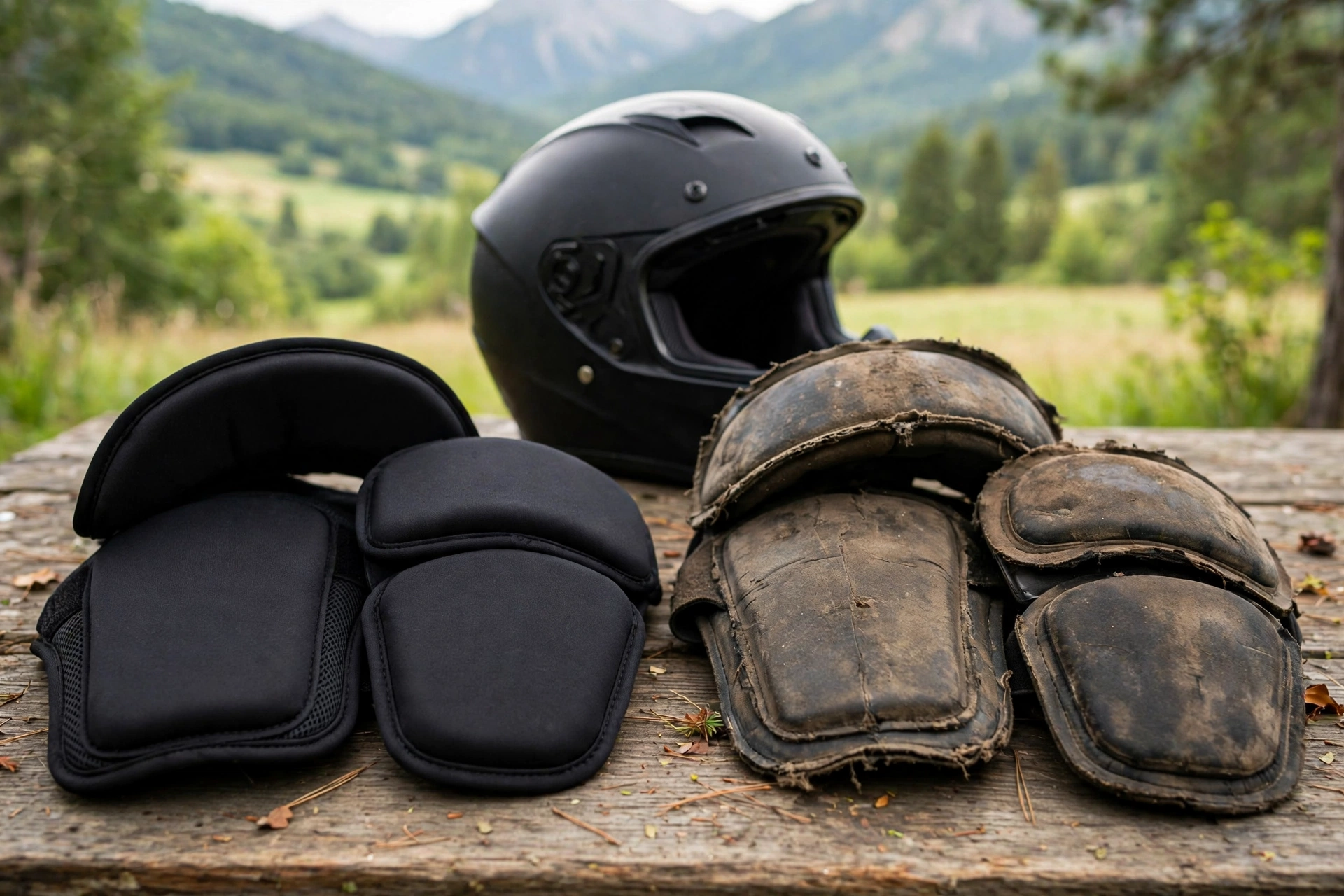
To keep helmet pads from wearing out fast, dry them fully after every ride, wash them gently and regularly, and rotate a second set if you ride daily. Pads die early from three things: being left damp, being washed harshly, and being crushed in storage. They are also what sets your helmet’s fit, so worn pads mean a loose, noisy, less protective helmet. Treat pads as a consumable you manage — not a part you ignore until the helmet feels wrong.
Comfort pads and cheek pads are thin foam wrapped in fabric, and they work hard. They absorb sweat, hold the helmet steady, and cushion your head. Over a season or two they compress, thin out, and develop a permanent smell if they are neglected, until one day the helmet that fitted perfectly rocks on your head. Most of that wear is preventable. Here is what actually wears pads out, and the simple habits that double their useful life.
Why Do Helmet Pads Wear Out So Fast?
Sweat is the main agent. Every ride loads the pads with moisture and salts, and if that moisture sits in the foam for hours, it feeds bacteria and slowly breaks down both the fabric cover and the foam beneath it. This is why a daily commuter’s pads can be finished in a season while a weekend rider’s last for years: it is not just hours of use, it is hours of sitting damp between uses.
Compression is the second cause, and some of it is unavoidable — foam gradually packs down under the constant pressure of your head, which is why a helmet slowly feels looser with age. But storage habits speed it up. A helmet kept with the strap pulled tight, stuffed into a full bag, or left with something heavy resting inside it spends its whole life being squeezed, not just the hours on your head.
The third cause is washing done badly. Hot water, strong detergents, machine agitation, and tumble-dryer heat all attack the foam and the stitching that hold the pad together. Ironically, pads washed too harshly wear out faster than pads washed gently but often. The middle path is the goal: clean frequently, gently, and dried properly every time.
How Often Should You Wash Helmet Pads?
For a rider in regular use, a wash every few weeks in summer and every month or two in cooler weather is a sensible rhythm — and sooner whenever the pads smell sour even when dry. Daily commuters in hot weather may need to wash weekly. The wash itself is simple: remove the pads, soak them briefly in lukewarm water with a little mild soap, and press the soapy water through them gently with your hands rather than twisting or wringing them.
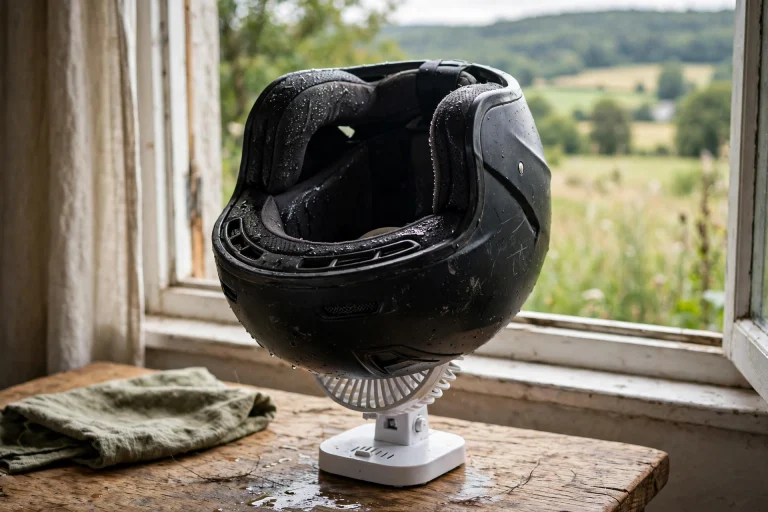
Rinse until the water runs clear — soap left in foam makes it stiff and attracts dirt — then press the pads in a dry towel and lay them flat in moving air until completely dry. Never tumble dry pads and never refit them damp; a pad sealed into a helmet while still moist will smell again within days.
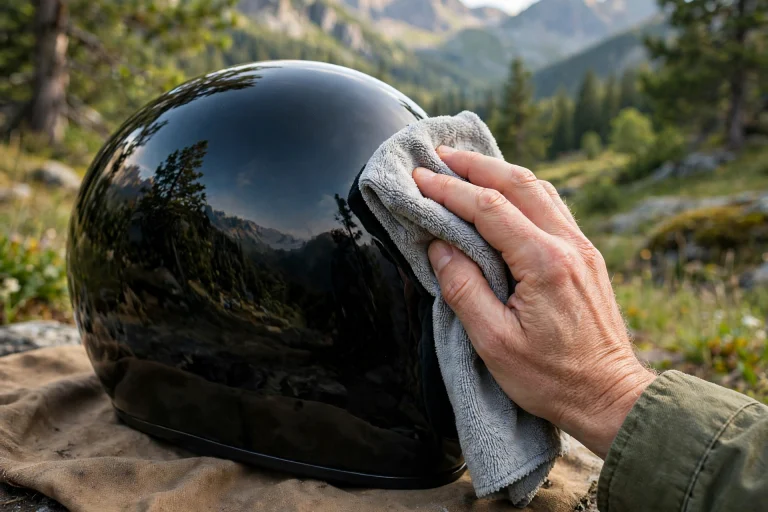
While the pads are out, wipe the inside of the helmet with a cloth dampened with clean water and let it dry too. It is also a natural moment to look at what sits beneath the pads — on many helmets that is a rotational liner, and understanding MIPS helps you handle that layer correctly: it is wiped, not washed, and never pulled out unless the manufacturer designs it to be.
Does Rotating Two Pad Sets Really Help?
Yes — rotation is the most effective single trick for anyone who rides most days. If you swap between two sets, each set gets a full day or more to dry out completely and to recover between rides, instead of being worn again while still faintly damp from yesterday. Pads that dry fully between uses last noticeably longer and smell far less, because it is the perpetual dampness, more than the sweat itself, that degrades them.
Rotation also makes washing painless. With a spare set fitted, the washed set can take its time drying — a full day if it needs it — rather than being rushed back into the helmet half-dry because you need to ride. Buy the spare set while your helmet model is current, because pads are model- and often size-specific, and manufacturers eventually stop making them for older helmets.
The same logic applies at a smaller scale: a washable skull cap worn under the helmet absorbs much of the sweat before it ever reaches the pads, and a cap washed after every ride can extend pad life on its own, for very little money.
How Should You Store Pads and Helmets Between Rides?
Store the helmet somewhere cool, dry, and ventilated, resting naturally — not hanging by its strap, not squeezed into a packed bag, and not left in a hot car or a damp garage corner. If you use a helmet bag, leave it unzipped or choose a breathable one, and only bag the helmet once it is fully dry. A dry helmet in a ventilated spot needs nothing more; a damp helmet sealed away is quietly aging its pads the whole time.
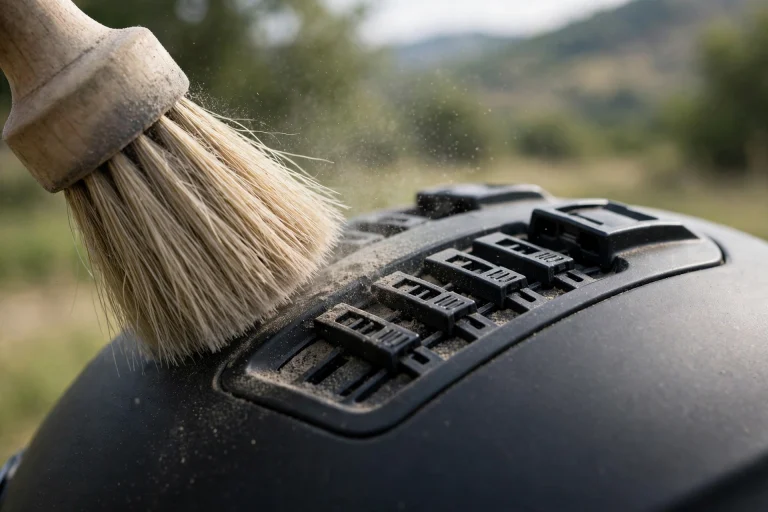
Just set the helmet down with the strap unfastened so air can circulate inside. Keep it away from fuel, solvents, and cleaning chemicals, whose fumes and splashes can attack foam and fabrics alike, and out of prolonged direct sunlight, which dries and fades the pad covers.
If the helmet will sit unused for a long stretch, wash and dry the pads first. Long storage in a damp place can produce mildew that no amount of airing will fix, and mildewed pads should be replaced, not endured.
When Should You Replace Pads Instead of Washing Them?
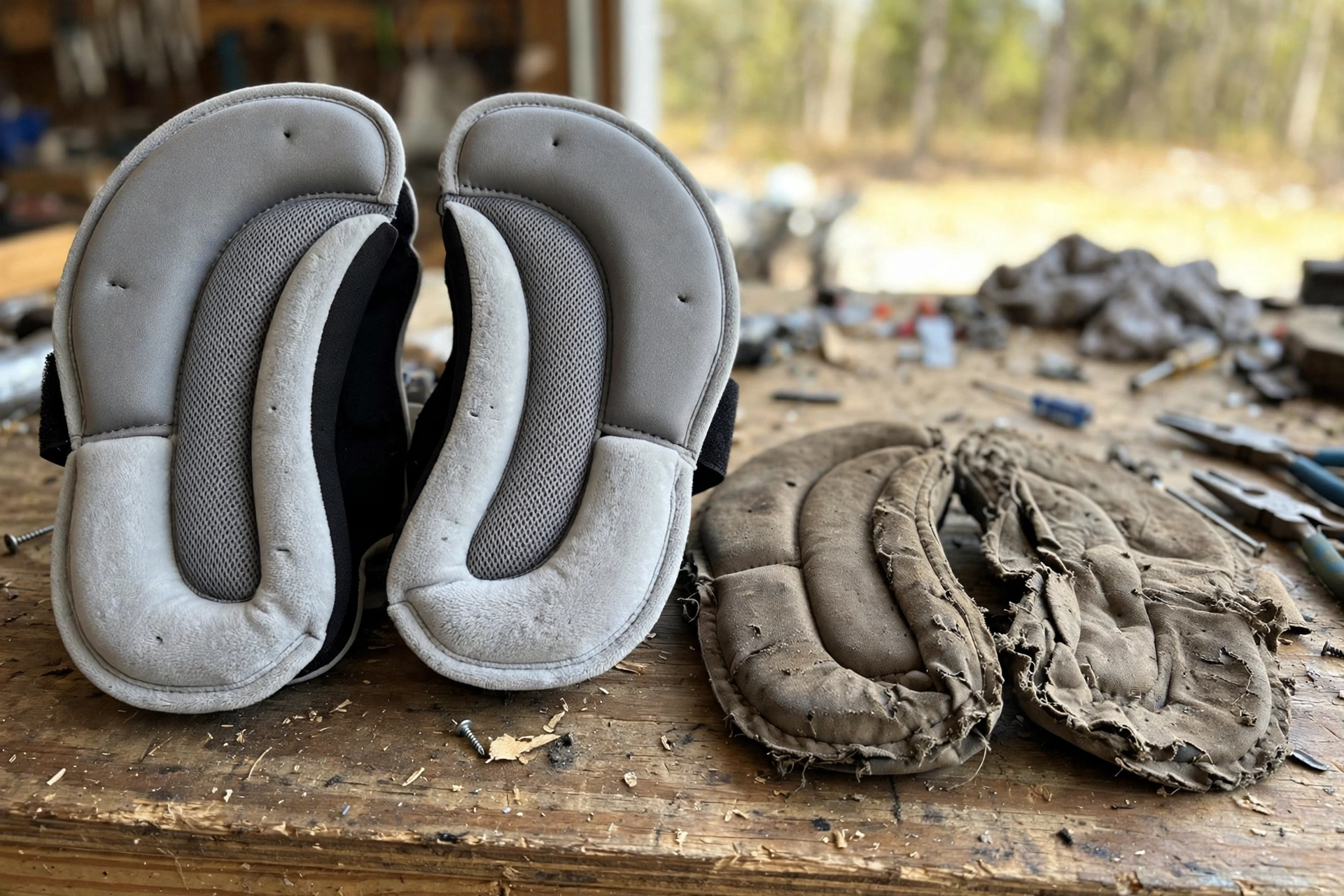
Washing restores cleanliness; it cannot restore thickness. Replace the pads when any of these show up: the helmet rocks or feels loose and new pads are the obvious missing thickness; the foam feels permanently flattened, crumbly, or cracked when you squeeze it; the fabric cover is torn, worn through, or separating from the foam; or a sour smell survives a proper wash and full dry — a reliable sign the foam itself is colonized and finished.
Always replace with the manufacturer’s pads for your exact model and size. Cheek pads in particular are part of the fit system — on many motorcycle helmets, different cheek pad thicknesses are how the fit is fine-tuned — and generic or wrong-model pads can make a helmet looser than the worn ones you took out. If pads for your helmet are no longer available and the fit has gone loose, that is the helmet telling you its service life is over.
One boundary is worth stating plainly: pads are comfort and fit components, and replacing them is normal maintenance — but they are not the protective structure. If the helmet has taken a crash impact, no new set of pads makes it safe again, and a helmet with damaged EPS foam must be retired regardless of how fresh its pads are. Manage the pads well and they will keep the helmet fitting like new; just never let good pads convince you an old, crashed, or foam-damaged helmet has a second life.
Frequently Asked Questions
Q: Can I machine wash my helmet pads?
A: Hand washing is safest: lukewarm water, mild soap, gentle pressing, no wringing. Some manufacturers allow machine washing in a mesh bag on a gentle cycle, so check their guidance — but never tumble dry pads, as heat breaks down the foam.
Q: How long should helmet pads last?
A: It varies widely with use. In general terms, a daily rider’s pads may need replacing within a season or two, while an occasional rider’s set can last several years. Fit is the test: when the helmet feels loose and the pads look thin or compressed, they are done.
Q: My helmet feels loose. Will thicker pads fix it?
A: If the looseness comes from worn, compressed pads, yes — fresh pads in the correct size restore the original fit, and some brands offer thicker cheek pads for fine-tuning. If the helmet was the wrong size to begin with, or the looseness comes from damage, new pads are not the answer.

Olivia
Writer at Helmet Today, covering helmet reviews, fit and riding safety.