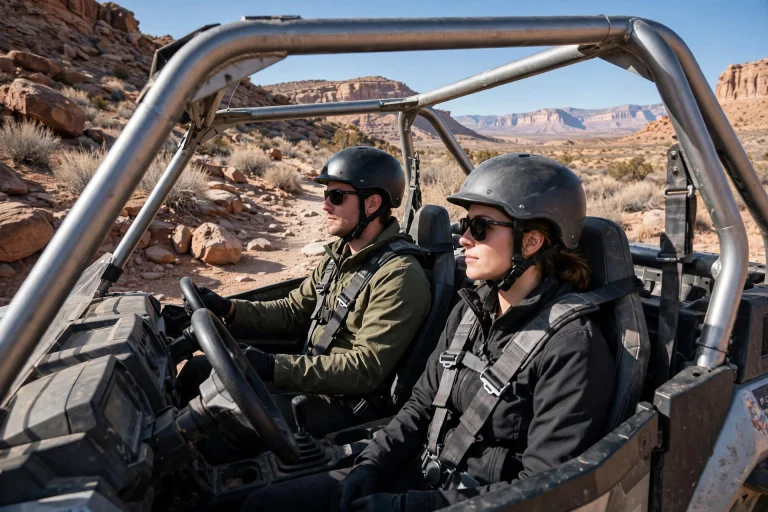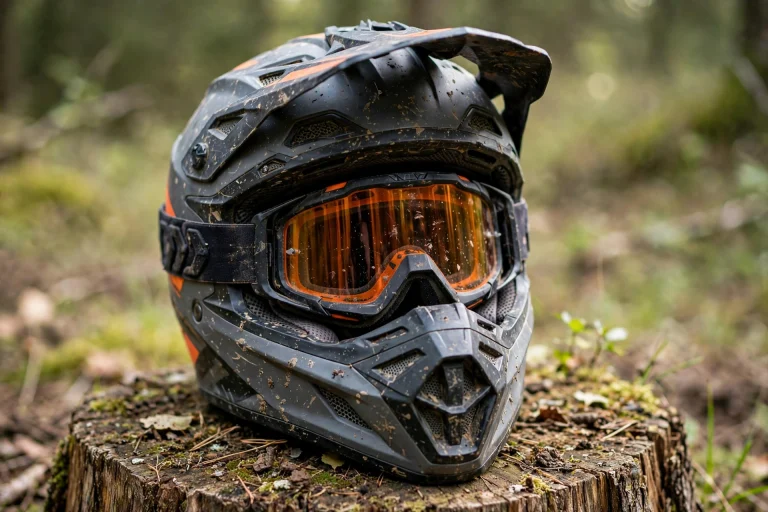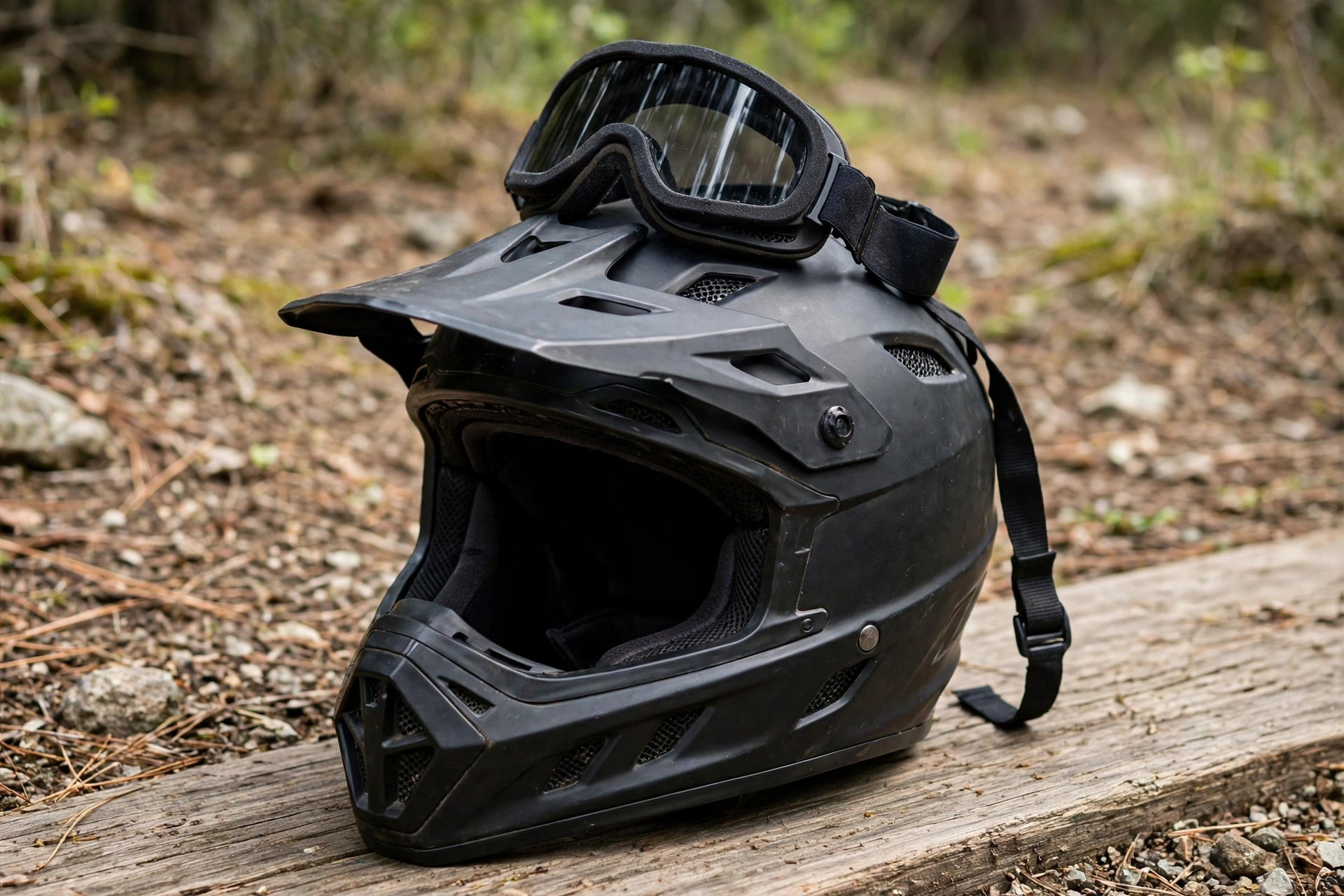
Yes — with a typical off-road style ATV helmet, you need goggles. That style of helmet has a large open eyeport and no built-in eye protection, so your eyes are exposed to dust, mud, branches and roost unless you wear goggles. Goggles are not an accessory with this helmet design; they are the missing half of it. Only ATV helmets with a built-in face shield or a flip-down visor cover your eyes on their own.
It is one of the most common beginner surprises: the helmet arrives, and there is nothing in front of your eyes. Here is why the design works that way, when goggles matter most, and how to choose a pair that actually fits your helmet.
Why Do ATV Helmets Have No Built-In Shield?
The off-road helmet shape comes from motocross, where riders work hard at low-to-mid speeds in dirty air. A fixed face shield in those conditions fogs from exertion, gets coated in mud, and restricts airflow — so the design uses a wide-open eyeport instead, and leaves eye protection to goggles that seal against your face and can be swapped, cleaned, or fitted with tear-offs in seconds.
Goggles also protect better in the specific way off-road riding demands. A sealed goggle keeps fine dust out in a way an open shield never can, and the foam seal and strap hold it in place through vibration, branches, and the odd tumble.
The trade-off is that the helmet alone is incomplete. Riding an open-eyeport helmet without goggles leaves your eyes to deal with whatever the trail throws at them.
When Are Goggles Essential With an ATV Helmet?
Practically always, once you are moving. Dust is the everyday reason: even riding alone, your own front tires and the trail surface put grit in the air, and riding in a group adds the roost — mud, stones and debris thrown back by the machine ahead — which can genuinely injure an unprotected eye.
Vegetation is the second reason. Trail riding puts branches, brush, and tall grass at face height, and a twig to the eye at even modest speed is a serious injury. Cold wind is the third: tearing eyes blur your vision on fast open sections, which is a safety problem in itself.
The slow exceptions are things like idling around a yard or loading the machine — but as a habit, goggles go on with the helmet, every ride, the same way the strap gets fastened.
Can You Wear Sunglasses or Safety Glasses Instead?
They are better than bare eyes, and that is about all that can be said for them. Sunglasses have no seal, so dust pours in around the lenses, they are not held firmly in place off-road, and ordinary fashion sunglasses are not built as impact protection for debris at speed.
Workshop-style safety glasses are closer — they are made to shrug off impacts — but they still lack a seal and a strap, so dust and grit reach your eyes and they can be knocked askew or off by brush and vibration exactly when you need them.
Goggles solve all three problems at once: sealed foam against your face, a wide impact-resistant lens, and a strap around the helmet that keeps them in place. For anything beyond the gentlest puttering, they are the right tool.
How Should Goggles Fit With an ATV Helmet?
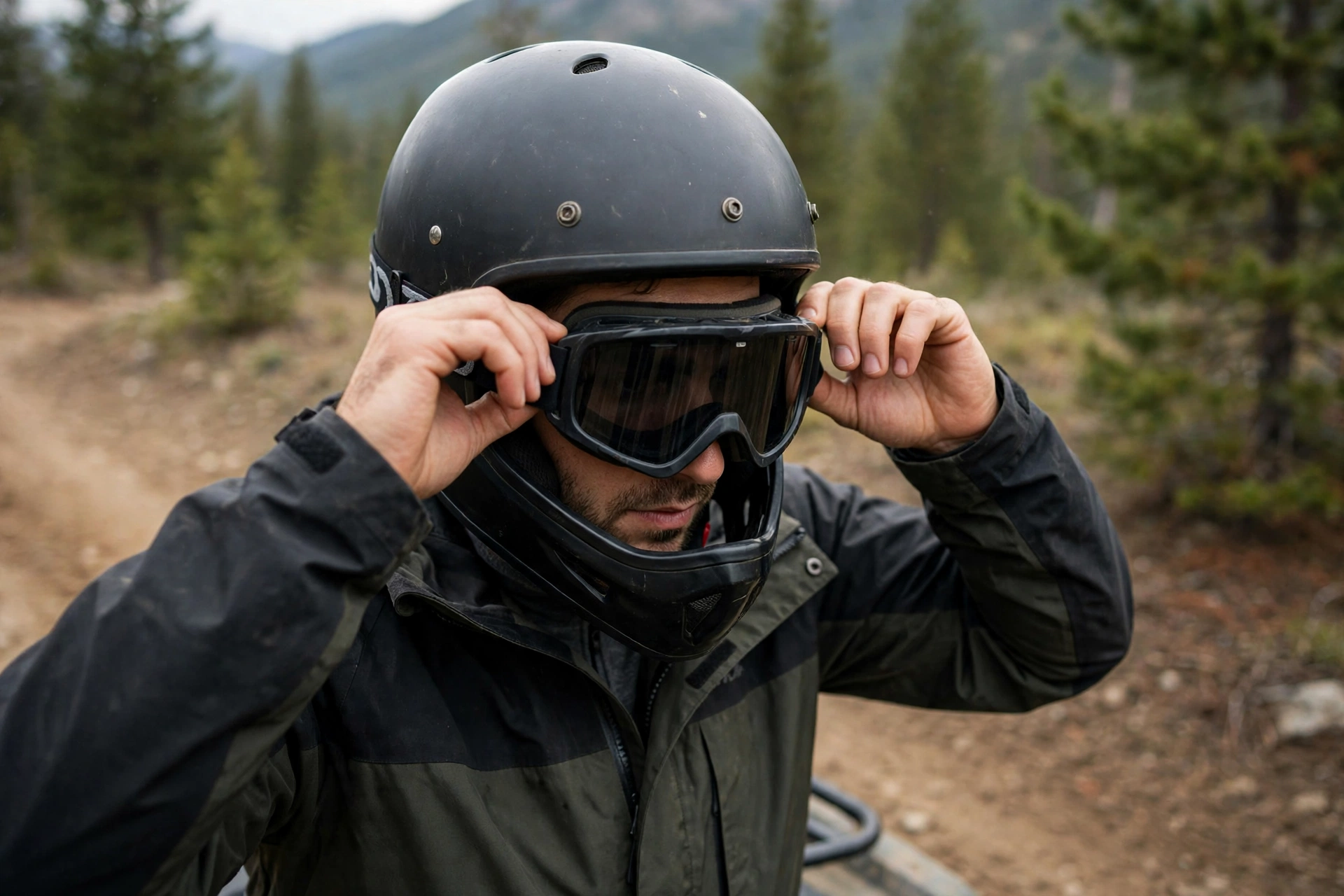
The goggle frame should sit inside the helmet’s eyeport with the foam sealing evenly against your face, and no gaps at the edges where dust can stream in. The strap goes around the outside of the helmet, sitting in the shell’s natural groove, adjusted so the goggles are held firmly without squeezing.
Fit varies between brands, which is why trying goggles with your own helmet matters. A frame too wide for the eyeport will pinch and lift the seal; too small, and you get gaps at the corners. Many helmet makers size their eyeports around common goggle shapes, but the check worth doing is physical: helmet on, goggles on, shake your head — everything should stay sealed and put.
For dusty conditions, look for dense foam and good vent foam that filters rather than invites the dust; for mud, a lens set up for tear-offs or a roll-off system keeps your view clear through the ride. Some riders also add a breath guard or nose piece to stop the goggles fogging from hot breath on cold days.
Lens choice deserves a thought as well. A clear lens is the safe default and the only sensible choice in woods, shade, or fading light. Tinted and mirrored lenses help in bright, open country but can leave you half-blind under tree cover, and photochromic lenses that adjust to the light exist for riders who cross both in one ride. Many riders simply carry a spare clear lens — goggle lenses swap in seconds and cost little, which is another advantage goggles hold over a built-in shield.
What If Your ATV Helmet Has a Face Shield Instead?
Some helmets used for ATV riding — dual-sport and crossover designs — add a flip-up face shield over the peak and eyeport. With the shield down, your eyes are covered without goggles, which is convenient for mixed road and trail use and for riders who wear glasses.
The shield route has its own compromises off-road: shields fog more readily than goggles in slow, hard work, seal less completely against fine dust, and scratch expensively where a goggle lens is cheap to replace. Many dual-sport riders carry goggles for the dirty sections and use the shield for the road.
Whichever route you take, the principle is the same as the rest of helmet fit: the protection has to be in place and sealed to work — the same reason features like rotational-impact liners like MIPS only help when the helmet itself fits and is worn correctly. Eyes are no different: covered and sealed beats merely shaded.
Frequently Asked Questions
Q: Do all ATV helmets need goggles?
A: Only the open-eyeport off-road style does. Helmets with a built-in face shield or visor cover the eyes themselves, though many riders still prefer goggles in heavy dust and mud.
Q: Can I ride slowly without goggles, just around the farm?
A: People do, but the risks — dust, insects, brush, and debris flicked up by the tires — do not scale neatly with speed. Goggles on with the helmet is the habit worth building, even for short rides.
Q: How do I stop my goggles fogging up?
A: Make sure the vents are clear, avoid sealing the bottom foam so tightly that moist air is trapped, use a breath guard if your helmet offers one, and keep moving air flowing — fogging is worst when you stop. Anti-fog treated or dual-pane lenses also help in cold, wet conditions.

Olivia
Writer at Helmet Today, covering helmet reviews, fit and riding safety.