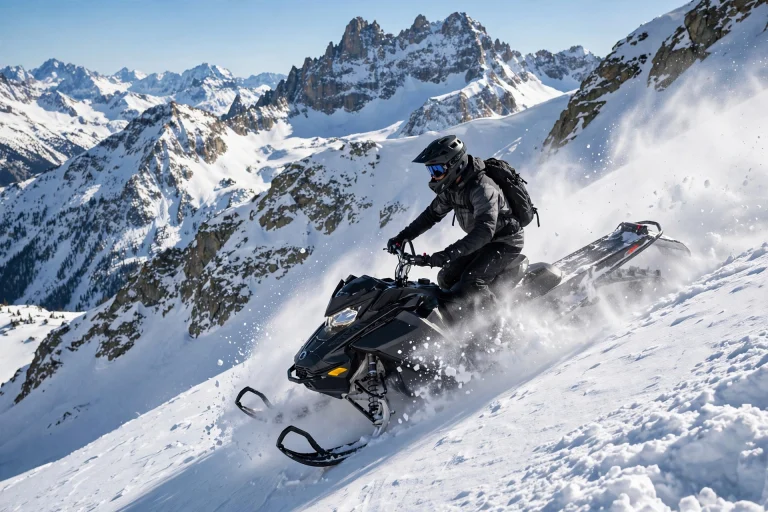
Yes, snowmobile helmets expire in the same way as every other helmet: the foam liner inside the shell ages, hardens, and slowly loses its ability to absorb impact, even if the helmet has never been crashed. In general terms, makers treat a helmet as a wear item with a service life of several years of use, and cold-weather riding adds its own stresses — deep cold, warm storage, sweat, and moisture — that age it along the way.
This guide explains why snowmobile helmets age out, the signs that yours is finished, and how to store and handle one so it reaches a full, honest service life.
Why Do Snowmobile Helmets Age Out Over Time?
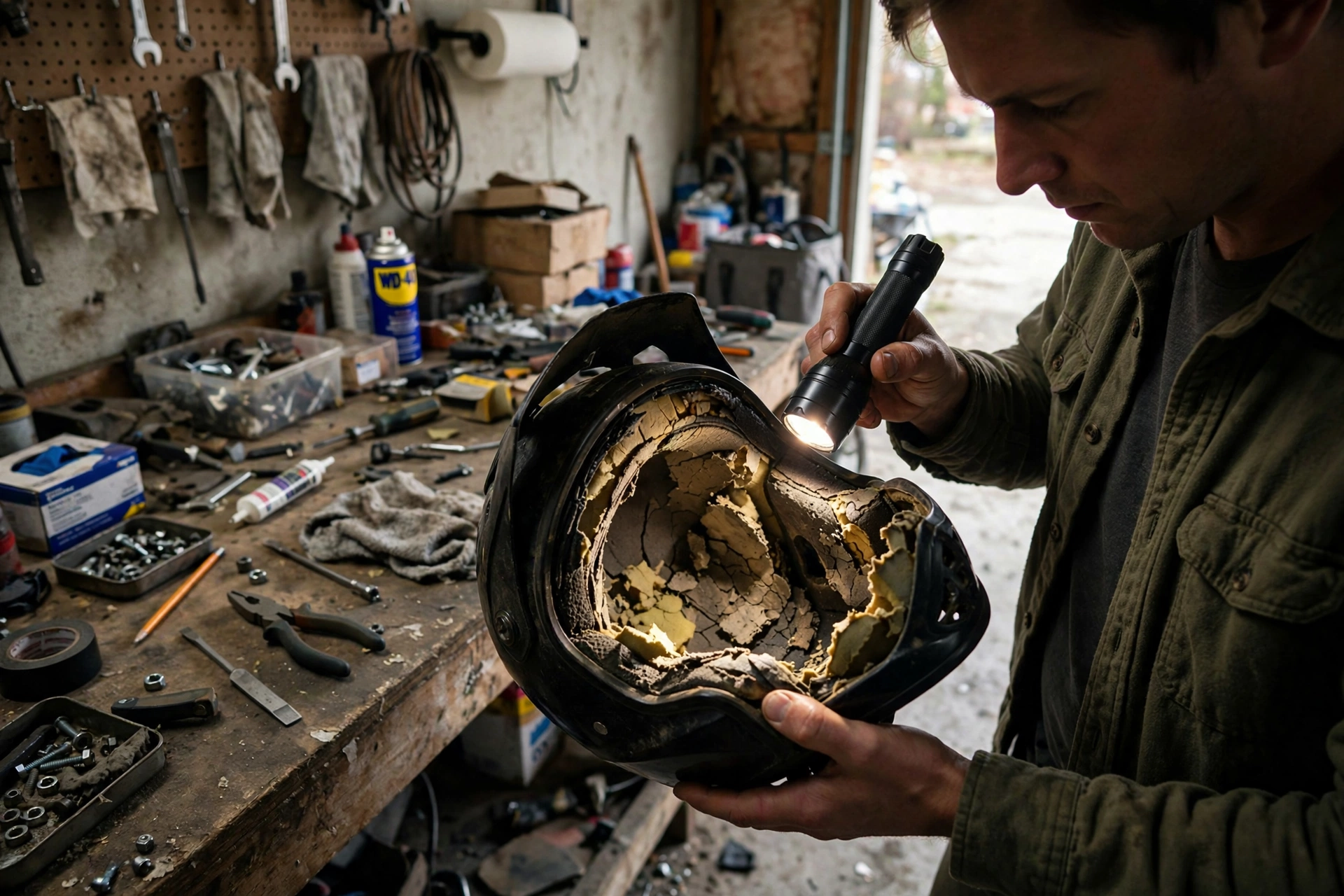
The protective core is the energy-absorbing liner, usually expanded polystyrene foam, designed to crush once in a crash and soak up energy before it reaches your head. With age that foam can become brittle and less able to compress, quietly reducing protection while the helmet still looks respectable.
Everything else ages with it. Comfort padding compresses until the fit goes loose, straps fray and stretch, shield seals fail, and the breath box and chin curtain materials stiffen and crack. On a snowmobile helmet the fog-control parts wear out first, which often masks the fact that the protective parts are ageing too.
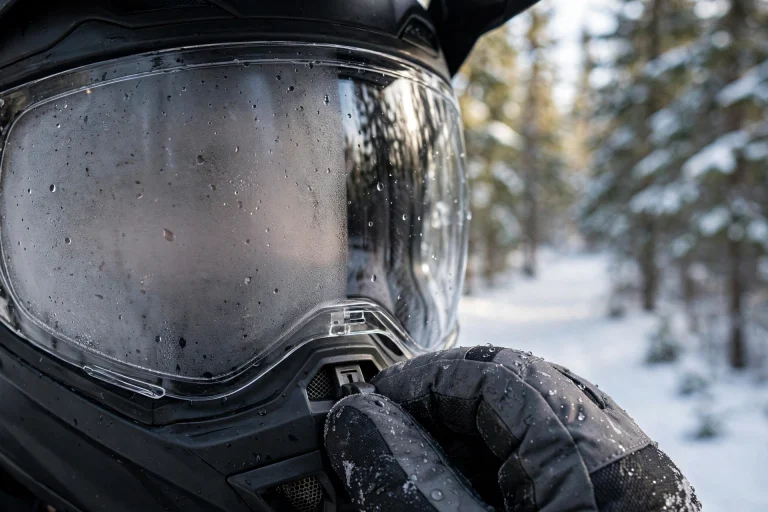
Winter use is its own kind of hard life. Repeated swings between deep cold on the trail and warm indoor storage, moisture from breath and melting snow soaking the liner ride after ride, and shields wiped and scraped through seasons of ice all take a toll that a summer-only helmet never sees.
What Are the Signs a Snowmobile Helmet Is Too Old?
Fit goes first, as with any helmet. If yours now rocks, lifts, or feels loose where it once sat snug, the comfort liner has compressed — and a loose helmet can shift in a fall on ice or hardpack, exactly where it must not.
Inspect the liner itself: cracked, crumbling, or flaking foam under the comfort padding, or foam that feels hard and dead rather than firm, is retirement evidence. So are frayed straps, a buckle that will not hold adjustment, and a shell with cracks or deep damage.
Finally, history rules. Any helmet that has taken a real impact — a fall where your head struck ice, a tree, another machine — should be replaced even if it looks untouched, because the foam may have crushed in one hidden spot and used up its one crash.
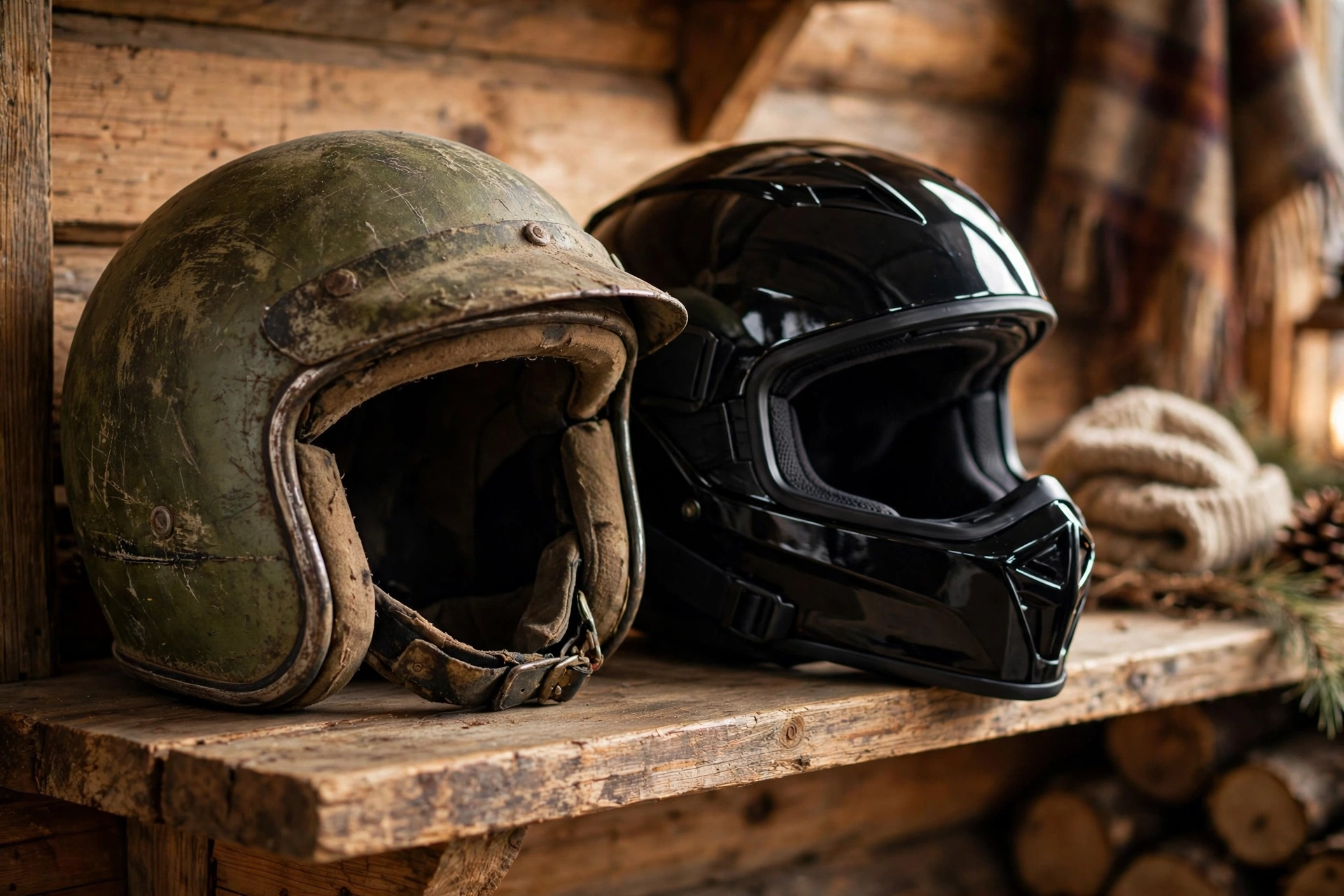
While you inspect, look for the maker’s labels inside the helmet — most carry a production date or model information on a sticker under the liner. It will not tell you the day protection runs out, because no such fixed day exists, but knowing a helmet’s true age stops the common trap of guessing it younger than it is. A helmet bought second-hand, or borrowed with an unknown past, deserves the most sceptical inspection of all, and often the honest answer is to start fresh with one whose history you know.
Does Cold Weather and Winter Storage Change a Helmet’s Life?
Cold itself is not the villain; helmets are designed to be used in it. The damaging pattern is the swing: frozen all day on the trail, then stored beside a hot stove or in a heated room, season after season. Heat accelerates the ageing of foam and adhesives far more than cold does, so where the helmet warms up matters.
Moisture is the other winter factor. A liner that goes away damp after every ride — breath, sweat, melted snow — ages and smells faster, and can grow mould in storage. Drying the helmet fully after rides is the single best life-extender a snowmobile helmet can get.
Sunlight does quiet damage too, on bright spring rides and through windows in storage. Ultraviolet light embrittles shell plastics and fades and weakens strap webbing over time. None of this sets a fixed date, which is why condition, not the calendar alone, should decide replacement.
How Can You Make a Snowmobile Helmet Last Longer?
Dry it properly after every ride: open the shield, remove wet liners if they come out, and let air circulate at room temperature. Never cook it on a radiator or with a hair dryer on hot — gentle, complete drying beats fast heat every time.
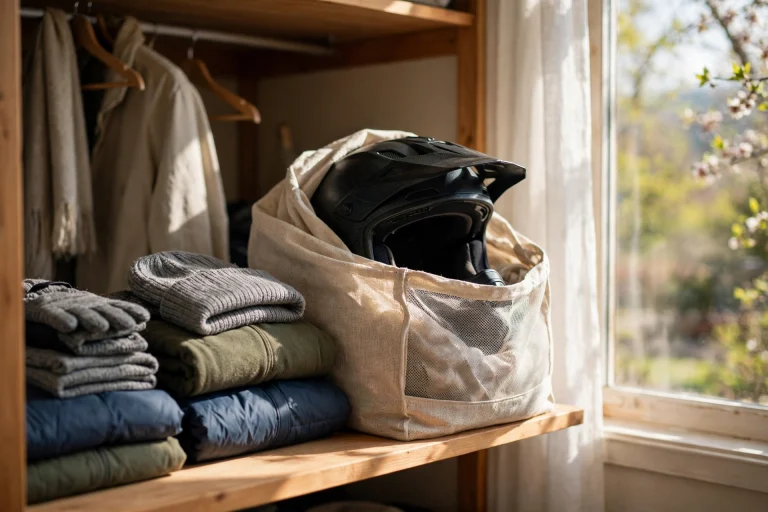
Store it like the other helmets in your life deserve: indoors, cool, dry, and dark, in its bag or on a shelf, away from fuel, solvents, and heat sources. A helmet that summers in a hot garage roof space will not be the same helmet by autumn.
Handle the fog gear kindly, since it usually wears first: clean shields with water and a soft cloth, never scrape ice with hard tools, and keep breath box seals clean so they keep sealing. A helmet you can still see out of is a helmet you will keep wearing — and wearing is the point.
When Should You Replace a Snowmobile Helmet Instead of Keeping It?
Replace it when the checks fail: loose fit that new pads do not fix, brittle or damaged foam, tired straps or buckle, shell damage, any known impact — or simply when it has given several seasons of regular use and age has accumulated even without visible faults.
When you shop for the replacement, look at how modern helmets manage angled impacts, because falls on ice and hardpack are rarely straight-on. Many current helmets include rotational-impact protection such as MIPS in the liner, designed to reduce twisting forces on the head in exactly those sliding, angled hits.
The rule of thumb is honest and simple: if you are inspecting an old helmet hoping it will pass, it has probably already told you the answer.
Frequently Asked Questions
Q: How many years does a snowmobile helmet last?
A: In general terms, makers commonly talk about several years of use — often around five — with condition mattering more than the calendar. Crashes, damage, or a loose fit end a helmet’s life sooner.
Q: Does the cold damage a helmet’s foam?
A: Normal winter cold is what the helmet is built for. The bigger ageing factors are heat in storage, repeated hot-cold swings, moisture left in the liner, and ultraviolet exposure.
Q: My snowmobile helmet has never been crashed. Can I keep it indefinitely?
A: No. Liners and straps age with time, heat, and use even without a crash. Inspect fit and foam honestly each season and retire the helmet when the signs appear or its age makes you doubt it.

Olivia
Writer at Helmet Today, covering helmet reviews, fit and riding safety.