For most trail riders, a shield helmet is better: it seals your whole face away from the wind, stays warmer, and is simpler to live with mile after mile. Goggles on a motocross-style helmet are better if you ride off-trail, work hard, and fog everything you wear — they vent better, clear faster, and swap in seconds when they ice up. Neither is wrong; they are built for different kinds of snowmobiling, and the better choice is the one that matches how you actually ride.
This guide compares the two setups honestly — warmth, fogging, convenience, and cost — so you can pick the one that suits your trails, your weather, and your riding effort.
How Does a Shield Helmet Work for Snowmobiling?
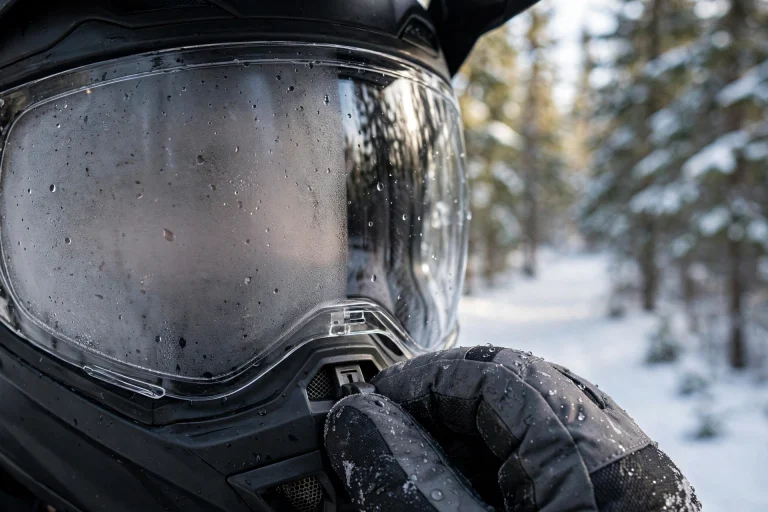
A snowmobile shield helmet is a full-face helmet with a hinged, full-width lens covering the whole eyeport. On snow versions, that shield is usually a dual-lens design with a sealed air gap, and it works with a breath box inside the chin bar and a chin curtain below to close the helmet into a warm, quiet pod.
The big advantage is sealing. With the shield down, there is no gap at your cheeks, forehead, or nose where wind can pour in at trail speed, and your whole face — not just your eyes — is out of the weather. On a long, cold, groomed-trail day, that difference in comfort is enormous, and it is why the large majority of trail riders choose shields.
Shields are also simple. Flip it down and ride; flip it up at a stop to talk, eat, or check a map. There is no separate piece of gear to strap on, lose, or leave in the truck, and a heated shield option exists for riders whose lenses ice in extreme cold.
How Do Goggles Compare for Cold and Fog?
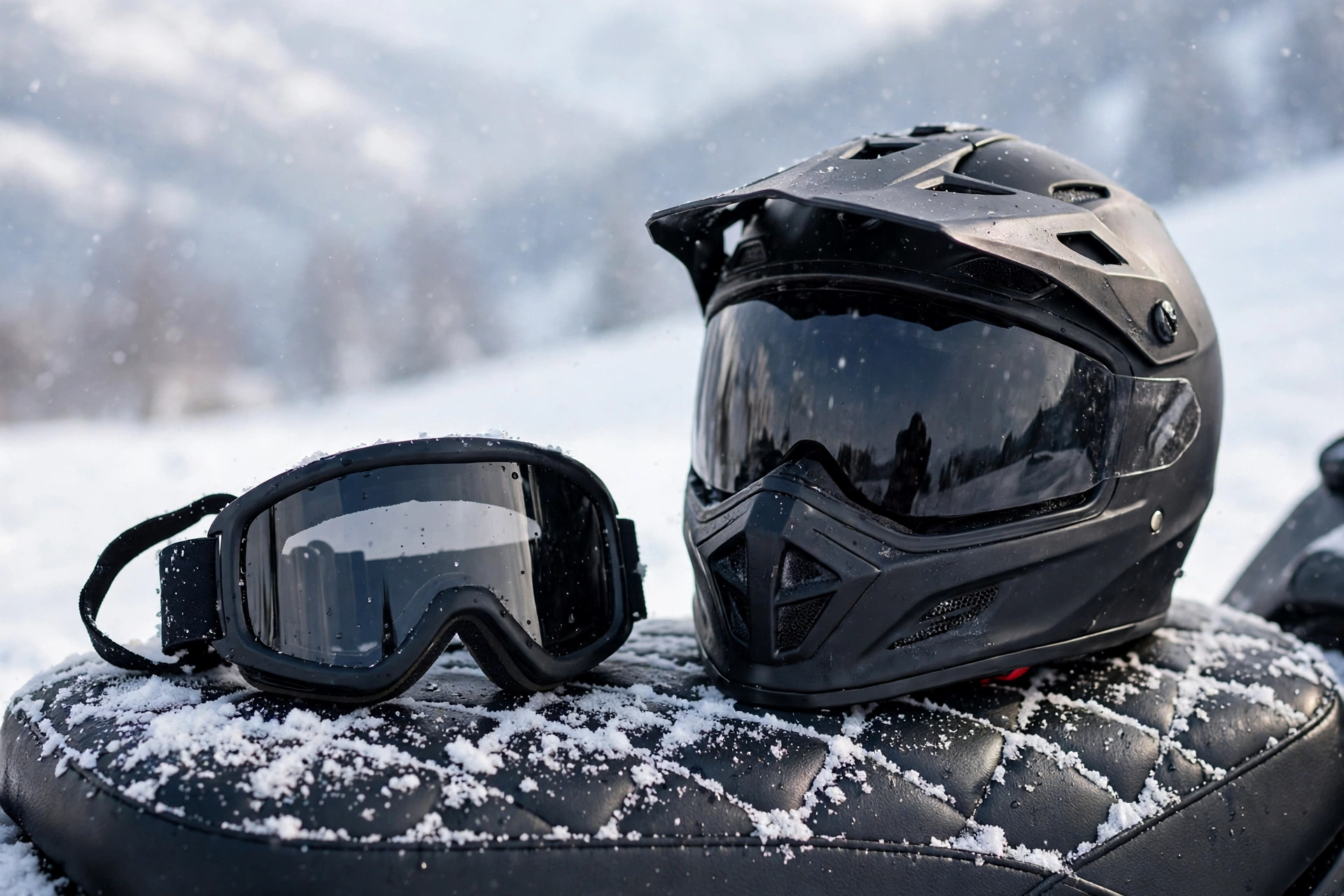
A goggle setup pairs a motocross-style helmet — extended chin bar, peak, open eyeport — with separate snow goggles sealed against your face. Because the goggles are their own sealed unit with dual-pane lenses and foam venting, they handle the fog problem differently: moisture management happens at the goggle, which sits away from your breath stream.
For hard-working riders, goggles fog less and recover faster. Off-trail and mountain riding involves digging out stuck sleds, side-hilling, and constant exertion, all of which pump out breath and body heat that overwhelm a shield’s defenses. Goggles vent that heat better, and when they do ice up, you swap to a spare pair in seconds instead of stopping to scrape and thaw a shield.
The cost is exposure and fuss. Your cheeks and forehead sit outside the goggle seal, so wind finds the gaps between goggle, helmet, and balaclava — the classic “goggle gap” forehead freeze. The setup also takes more fiddling to get sealed, and you are managing two pieces of gear instead of one.
Which Suits Trail Riding and Which Suits Off-Trail?
Trail riding means sustained speed, long distances, and relatively steady, seated effort — and it is shield country. The warmth and sealing win out, fog is manageable because your breathing stays even, and heated shields cover the coldest days. Most dedicated trail helmets are built exactly this way.
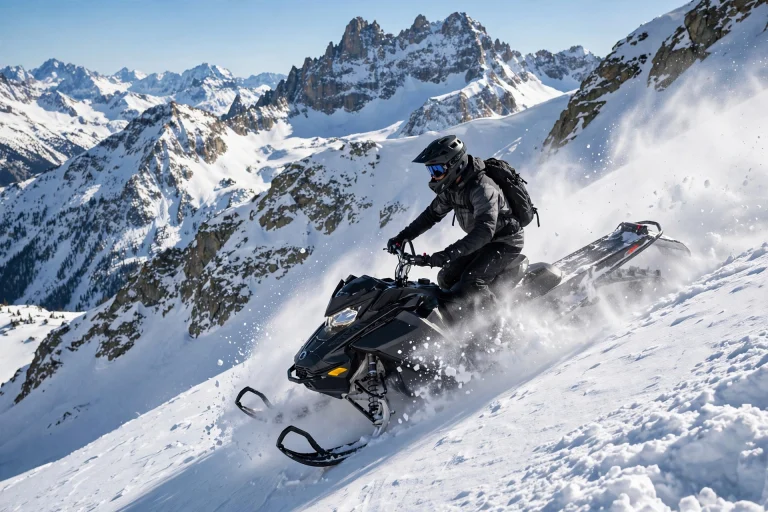
Off-trail, mountain, and snowcross riding means high exertion, frequent stops, deep snow, and big swings in effort — goggle country. Riders accept the extra fuss and some face exposure in exchange for fog control that keeps working when they are breathing hard, plus the peripheral vision and light weight that active riding rewards.
Mixed riders pick their pain. If you mostly tour trails with the occasional play area, a shield helmet with a good breath box serves you better. If you mostly ride off-trail and only use trails to reach the good snow, goggles serve you better. Be honest about the ratio, because each setup’s weaknesses show up exactly in the other’s territory.
What About Heated Shields and Other Middle Grounds?
A heated shield is the shield camp’s answer to its worst problem: icing in extreme cold or freezing fog. An element in the lens, powered from the sled, keeps the surface above the point where moisture can freeze onto it. For high-mileage riders in genuinely cold regions, it turns the shield’s biggest weakness into a non-issue — at the cost of a cord, an outlet on the sled, and a pricier replacement shield.
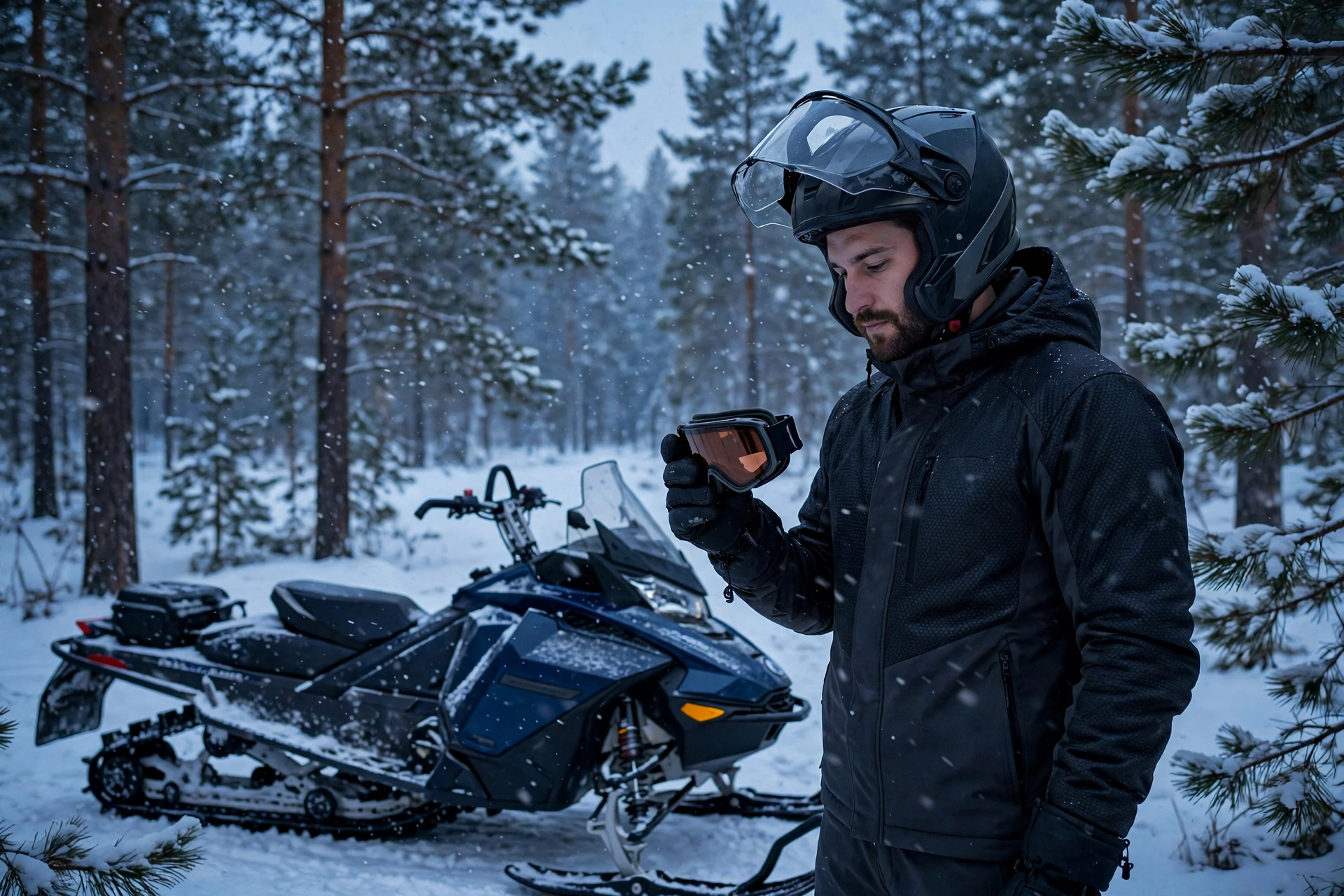
There are also hybrid approaches. Some riders carry goggles as a backup in a shield helmet’s storage or a tunnel bag, ready for the day the shield ices beyond clearing. Some helmets offer drop-down internal sun visors, which help with glare but are not a substitute for either main system in real cold.
What there is no substitute for is the helmet underneath doing its job. Whichever eye protection you choose, the helmet itself — shell, liner, and in many modern helmets rotational-impact systems such as MIPS — is what protects you in a fall on ice or a collision with a hidden stump. Choose the eye setup for your riding style; choose the helmet for its fit and certification.
How Do You Decide Which One You Need?
Ask three questions. First, where do you ride: groomed trails at speed, or off-trail and working hard? Second, how cold is it really: shields and heated shields dominate in deep cold, while goggles suffer less penalty in milder mountain weather. Third, how much do you fog: some riders mist every lens they own through sheer exertion, and those riders are happier in goggles no matter what the thermometer says.
If you are buying your first setup and ride trails, start with a shield helmet — it is the more forgiving, comfortable default, and the aftermarket will sell you a goggle setup later if your riding changes. If your riding is already off-trail, skip straight to goggles and spend the savings on a spare pair.
Either way, try the complete combination before a big trip: helmet, balaclava, and shield or goggles together, because the interfaces between them — gaps, pressure points, fog paths — are where both systems succeed or fail.
Frequently Asked Questions
Q: Are goggles warmer than a shield on a snowmobile?
A: No — a shield helmet is warmer overall because it seals your whole face from the wind. Goggles protect your eyes well, but your cheeks and forehead are more exposed, and gaps around the goggle seal can let cold air in at speed.
Q: Can I wear goggles with a regular shield helmet?
A: Usually not comfortably. A shield helmet’s eyeport is shaped for its lens, not for a goggle frame and strap. Goggles belong with motocross-style helmets that have a wide open eyeport designed for them.
Q: Do shields always fog more than goggles?
A: Not always. A dual-lens shield with a well-fitted breath box stays clear for steady trail riding, and a heated shield resists icing in extreme cold. Goggles pull ahead mainly when your exertion — and breath output — is high and variable.

Olivia
Writer at Helmet Today, covering helmet reviews, fit and riding safety.