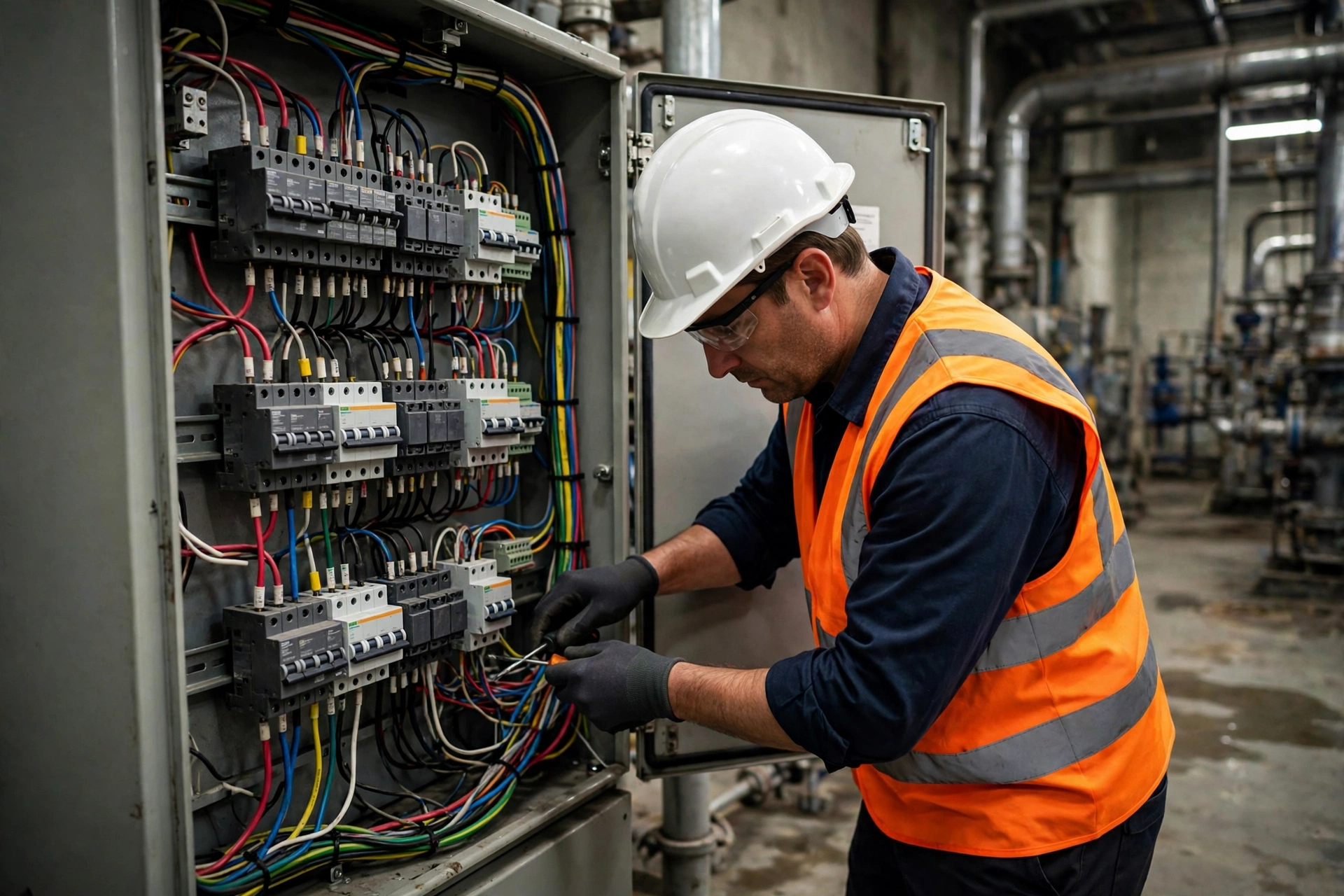
Electricians need a Class E hard hat in general terms: Class E is the hard hat class tested to provide the highest level of electrical insulation, which is why it is the default choice for work on or near live conductors. Class G offers a lower level of electrical protection suitable for general work where incidental contact is the concern, and Class C offers no electrical protection at all — never the right choice for an electrician.
The class letter inside the shell is the smallest marking on the hat and the most important one for electrical work. This guide explains the classes, how to check yours, and the choices that sit around it.
What Class Hard Hat Do Electricians Need?
Class E — the E stands for electrical — is the class designed for electrical work. In general terms, Class E hard hats are tested to insulate the wearer against high-voltage contact, far beyond what general-purpose headwear attempts, which is why utilities, line crews, and electricians treat it as the standard issue.
The insulation is a property of the whole hat: the shell material, its thickness, and above all its unbroken surface. That is why the class interacts with everything else about the hat — vents, modifications, and condition all matter, because anything that breaches or degrades the shell can breach the insulation.
Note what the hat does not do. A Class E hard hat is one item in an electrical safety system that includes gloves, procedures, and de-energizing work wherever possible. The hat protects against accidental head contact; it does not make live work safe by itself.
How Do Classes G and C Compare for Electrical Work?
Class G — general — is tested to a lower level of electrical insulation. It suits general construction and industrial work where the electrical risk is incidental: working in plants and buildings where low-voltage contact is possible but not the purpose of the job. Many electricians’ helpers and multi-trade workers wear Class G on sites where that matches the assessed risk.
Class C — conductive — provides no electrical insulation at all and may include vents or conductive elements, chosen for comfort in hot work where electricity is genuinely absent. For anyone whose work brings their head near conductors, Class C is simply out of the running, whatever the weather.
The practical rule: the class must match the highest electrical exposure your work can produce, not the average day. If your job can put you at a live panel, your hat should be the class made for it — Class E — even if most days involve no contact risk at all.
How Do You Check the Class of a Hard Hat?
The class is marked inside the shell, molded into the plastic or printed on a label along with the maker’s name, the standard the hat meets, its type, and date information. Turn the hat over, look under the brim and inside the crown, and find the letter: G, E, or C.
Check it on any hat you are handed rather than trusting the color or the previous wearer. Hats circulate on sites — a Class C hat looks exactly like a Class E hat from two paces — and the marking is the only reliable evidence of what you are wearing.
While you are in there, note the type too. Type describes the impact coverage — top-only or top-and-side — and your task or site policy may specify it alongside the class. Class and type together are the hat’s identity.
What Other Choices Matter for Electricians?
Vents are the first: vented hard hats belong to Class C by design, since openings in the shell break the insulation, so an electrician’s hat is unvented by necessity. If heat is a problem, answer it with sweatbands, shade, scheduling, and breaks rather than a vented shell.
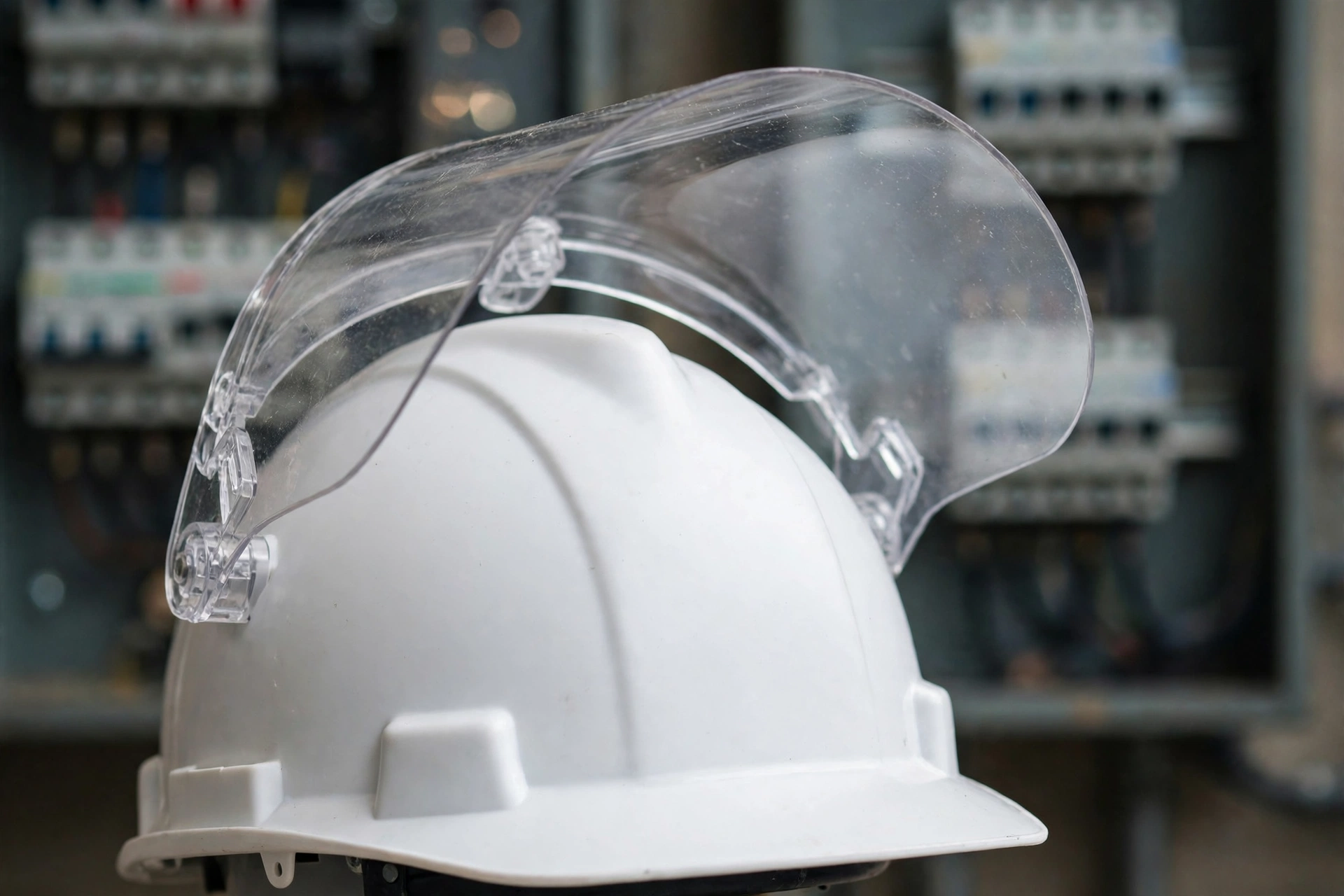
Modifications are the second. Drilling the shell, solvent paints, and even some stickers compromise the insulation the class certifies, so an electrician’s hat stays unmodified and fitted only with the maker’s approved accessories — face shields and lamps rated for the work, mounted as designed. Metal accessories that bridge the shell deserve the same suspicion.
The chin strap and suspension still matter as much as ever, and for the same reason they matter in every helmet: protection only works when the hat is in place and positioned as tested, whether the energy being managed is an impact or an electrical contact — sports helmets make the same point with fit systems and rotational-impact systems like MIPS that depend entirely on correct positioning.
When Should an Electrician Replace a Hard Hat?
After any electrical contact, arc exposure, or suspected insult to the shell — even if the hat looks unchanged. Electrical stress can damage insulation invisibly, and a hat whose class you can no longer trust is a hat whose whole purpose is gone. The same applies after a significant impact, which can crack the shell’s insulating structure.
Ordinary retirement applies too: sun, heat, chemicals, and age degrade shell plastics, and in general terms electricians should follow the maker’s service-life guidance for the shell and replace the suspension on its shorter cycle. A hat used around solvents or stored on a hot dashboard ages out faster than its dates suggest.
Keep the habit simple: check the class when the hat is issued, inspect the shell whenever you clean it, and treat any electrical event as the hat’s last shift. Insulation you cannot see is insulation you have to take on trust — and trust has to be earned by condition.
Frequently Asked Questions
Q: Can an electrician wear a Class G hard hat?
A: It depends on the assessed risk. Class G provides a lower level of electrical insulation and is widely used for general work with incidental contact risk, but for work on or near live electrical systems, Class E is the class made for the job and the one most electrical employers specify. Follow your employer’s assessment and policy.
Q: Does a Class E hard hat protect against any voltage?
A: No — it is tested to a defined level, not unlimited protection, and it is only one part of electrical safety alongside gloves, tools, and safe working procedures. Treat the hat as protection against accidental contact, never as permission to work live.
Q: Why can’t an electrician just use a vented hat in summer?
A: Because vents break the shell’s insulation, which is why vented hats are Class C — no electrical protection. For electrical work the shell must stay closed; manage heat with sweatbands, shade, and work-rest cycles instead.

Olivia
Writer at Helmet Today, covering helmet reviews, fit and riding safety.