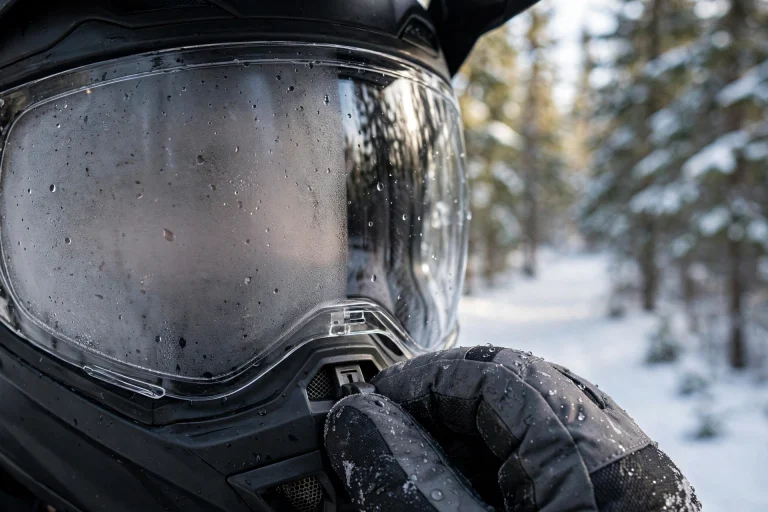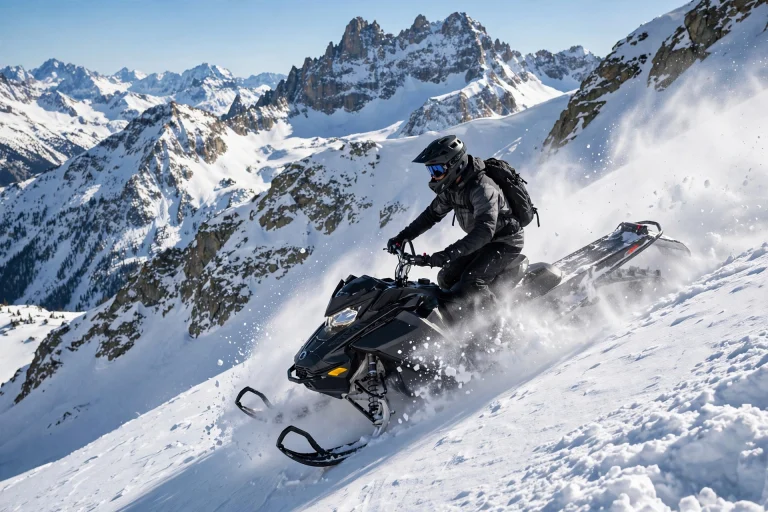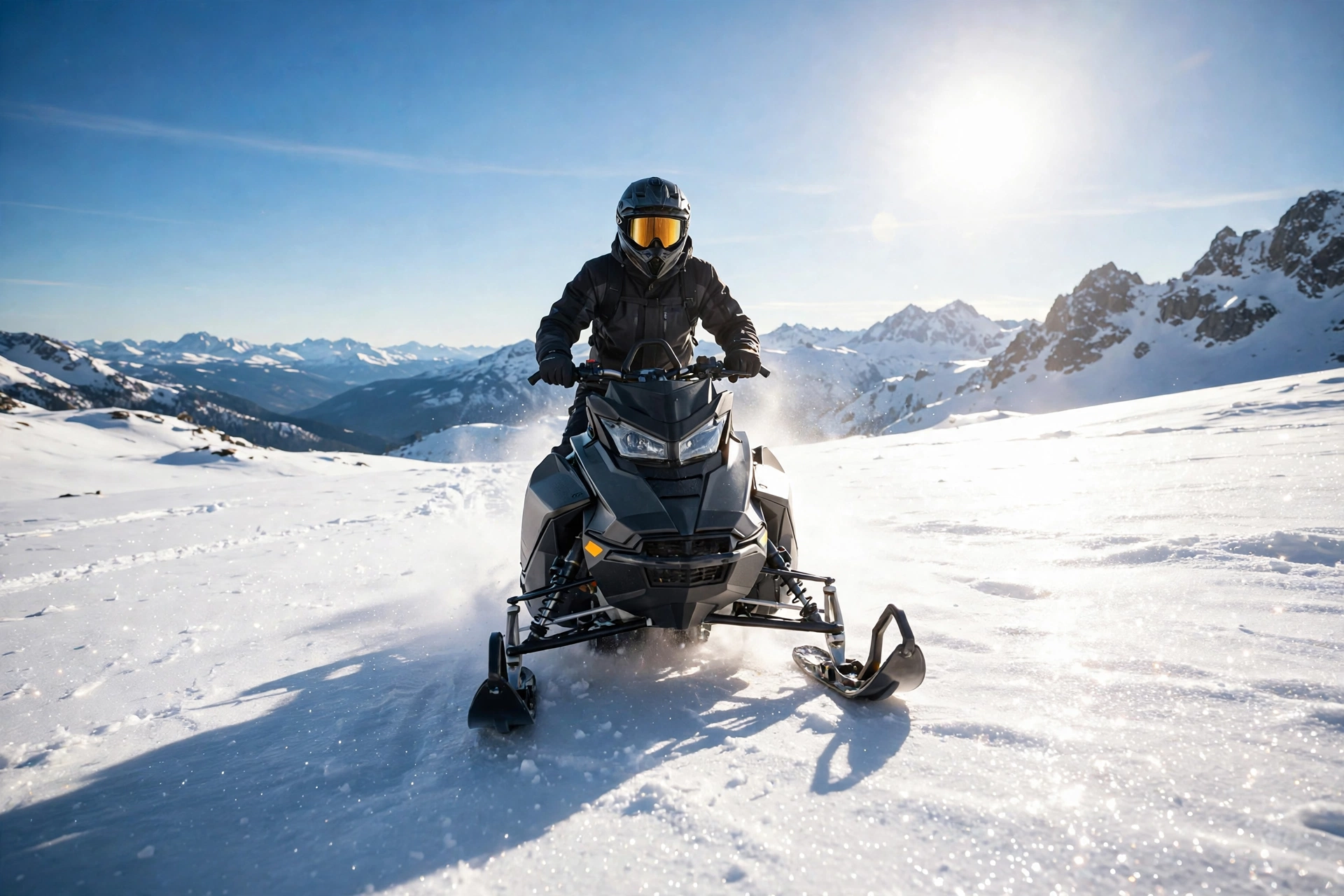
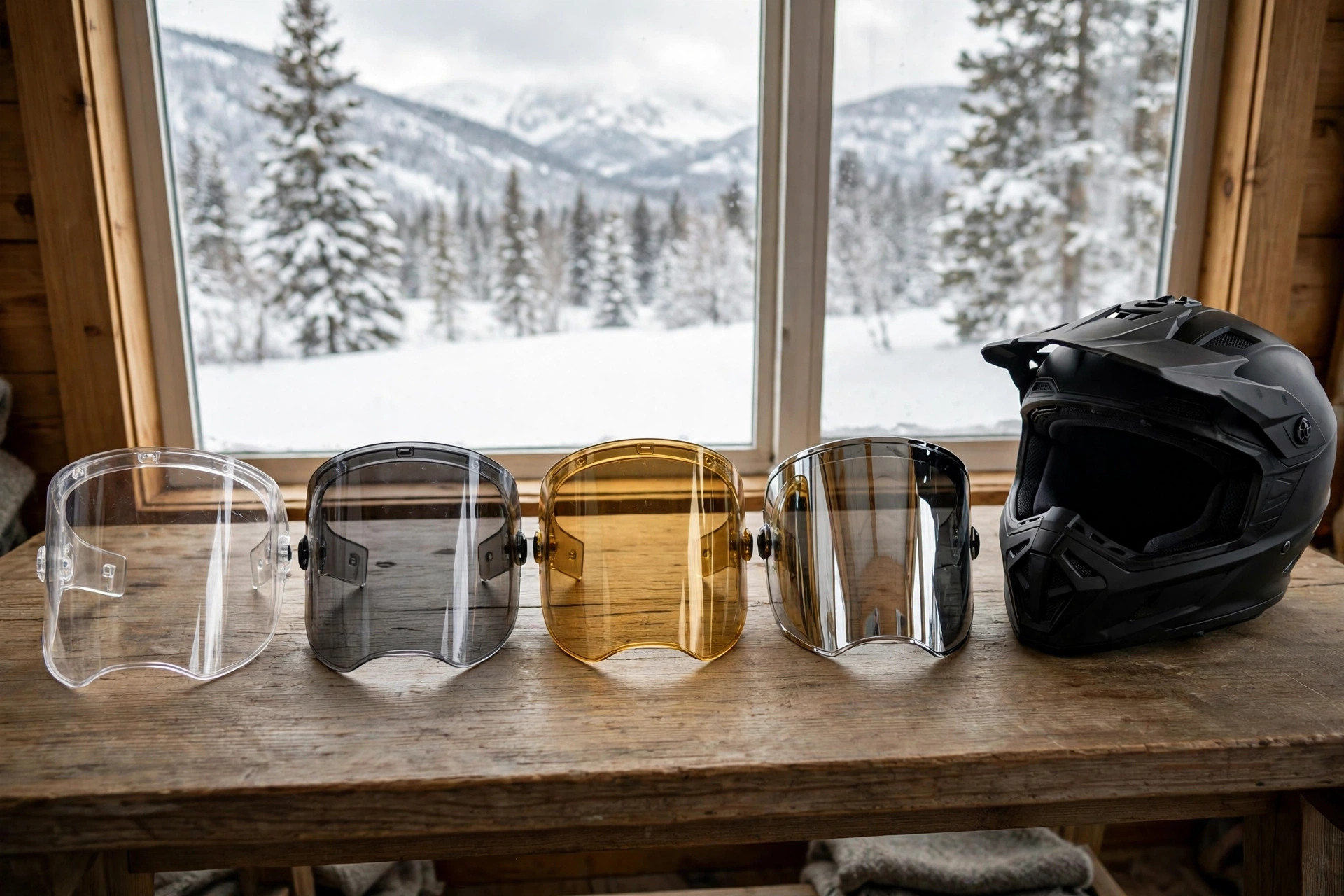
For bright snow days, choose a tinted shield in a smoke, amber, or rose tint that cuts glare without making the trail go flat: a medium smoke is the safe all-round pick, amber and rose add contrast that helps you read bumps and drifts, and a mirrored finish mainly adds scratch-prone style on top of a base tint. Keep your clear shield for night and flat light — no single tint does everything.
Snow reflects most of the sunlight that hits it, so a bright day on the trail is harder on your eyes than the same day on dirt. This guide explains tint colors, darkness, and the situations each one is actually for.
Why Is Snow Glare So Hard on Your Eyes?
Fresh snow bounces a large share of the sun’s light straight back up, so on a bright day you are lit from above and below at once, with almost no shade anywhere in your field of view. The result is squinting, eye fatigue, and headaches on long rides — and, more importantly, washed-out vision exactly when you need to judge the trail surface.
Contrast is the hidden casualty. In full glare, the shadows that reveal drifts, wind lips, ruts, and ice patches get bleached out, so the trail looks flat and featureless. Riders call the worst version flat light, but even in sunshine, glare can hide the shape of the snow in front of you.
A tinted shield attacks both problems: it cuts the total light reaching your eyes, and the right tint color restores some of the contrast the glare removed. That is why tint choice is about the color and the darkness, not just about looking dark.
What Do the Different Tint Colors Do?
Smoke (grey) tints cut brightness evenly without shifting colors, which makes them the natural default: everything looks like itself, just dimmer. If you want one tint for general bright-day use and do not want to think about it further, a medium smoke is the honest choice.
Amber, yellow, and rose tints filter more blue light, which increases contrast and makes the snow’s surface texture easier to read — bumps and edges stand out better. Many riders swear by amber or rose on bright-but-cloudy days and in changeable light, where a dark smoke would be too much but glare is still tiring. The trade-off is a warm color cast some riders dislike at first.
Mirrored finishes reflect some additional light and look striking, but the mirror is a coating over a base tint — the base tint decides how dark the shield actually is — and the coating scratches more easily and shows every mark. Treat mirror as a style choice layered on a functional one, not a function in itself.
How Dark Should a Snowmobile Shield Tint Be?
Shield darkness is often described by how much light it lets through, and snowmobile tints range from light tints that take the edge off, through medium tints for genuinely bright days, to very dark tints meant for intense sun at altitude or on wide-open lakes and fields. Darker is not automatically better: too dark, and shaded trail sections, tree cover, and late-afternoon light turn murky.
Match the tint to your worst regular conditions, not your brightest memory. A rider on wooded trails that alternate sun and deep shade is happier in a light-to-medium amber; a rider crossing open country at midday can use a darker smoke. If your rides run from bright afternoon into dusk, a lighter tint — or a plan to swap shields — is the safer bet.
Remember the shield is one half of a system. Your helmet’s fit and sealing decide how much stray light leaks in around the edges, and a breath box that keeps the inner surface fog-free matters as much as the tint on the outer one. And the shield is, in the end, an accessory: in a fall it is the helmet shell and liner — in many modern helmets with rotational-impact systems such as MIPS — that do the protective work, so never let tint shopping distract from fit and certification.
Can You Use a Tinted Shield at Night or in Flat Light?
At night, no. Any tint reduces the light reaching your eyes, and in darkness that reduction costs you vision you cannot spare — trail markers, wildlife, other riders’ lights against a dim background. In general terms, tinted shields are daytime equipment, and many carry markings saying exactly that. Swap to your clear shield before riding after dark, even for the ride home.
Flat light — overcast, shadowless conditions where the snow’s shape disappears — is the tinted shield’s hardest case. A dark tint makes it worse. Light amber or rose tints are the exception riders reach for here, because their contrast boost can recover some surface definition without dimming the scene much. If you ride a lot of overcast days, a light amber is arguably more useful than a dark smoke.
The practical answer for most riders is two shields: a clear and one tint, swapped in seconds at the trailhead as conditions dictate. Shields are far cheaper than helmets, and carrying the spare means the weather never gets a vote in how well you can see.
What About Drop-Down Sun Visors and Photochromic Shields?
Some helmets include an internal drop-down sun visor — a tinted inner shield that flips down behind the main clear shield. It is wonderfully convenient for changing light and means one less spare part to carry. Its limits are real, though: the tint level is fixed by the maker, usually medium; it sits close to your face where breath and moisture can mist it; and it is not a replacement for a proper tinted outer shield in sustained bright conditions.
Photochromic shields darken in sunlight and clear in shade or darkness, promising one shield for everything. In cold weather their chemistry slows down — they change more slowly and may not reach full darkness or full clarity as readily as in summer — so on a snowmobile they are a good compromise rather than a perfect one. Test the transition speed in the cold before trusting one for dawn-to-dark rides.
Either convenience option suits riders whose light changes constantly. Riders with settled patterns — bright midday trails, or night rides — are better served by dedicated shields swapped deliberately.
Frequently Asked Questions
Q: What is the best single tint color for snowmobiling?
A: A medium smoke is the best all-round single choice: it cuts glare without shifting colors. If your problem is reading the snow surface more than raw brightness, a light amber or rose gives better contrast. Many riders end up owning both.
Q: Is a mirrored shield darker than a normal tinted shield?
A: Not necessarily. The mirror is a reflective coating over a base tint, and the base tint sets how dark it is. Check the base tint specification rather than judging by the mirror’s looks — and expect the coating to need gentler cleaning.
Q: Can I ride home at dusk on a tinted shield?
A: Treat dusk as night for shield purposes. As light falls, a tint costs more vision than it saves, and tinted shields are generally marked for daytime use only. Swap to your clear shield before the light goes, not after.

Olivia
Writer at Helmet Today, covering helmet reviews, fit and riding safety.