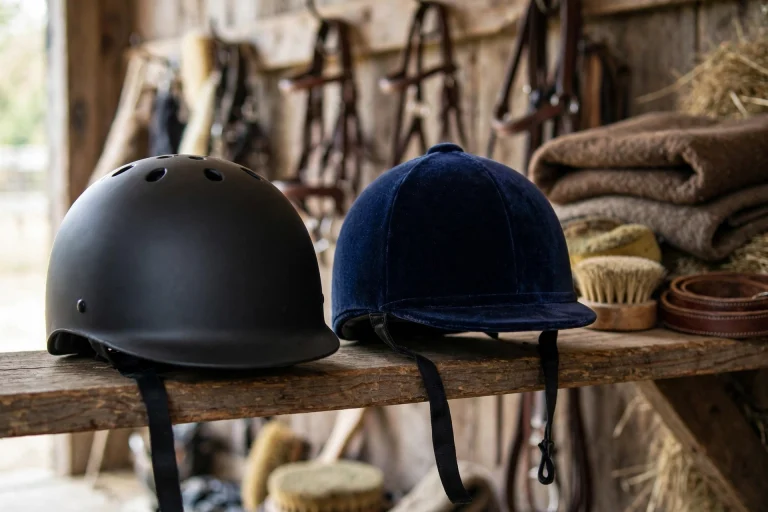
For most riders, yes — a MIPS-equipped riding helmet is worth it if it fits you well and the price difference is manageable, because the low-friction liner is designed to reduce the rotational forces that standard foam liners handle less directly, and rotational motion is a key factor in many head injuries. But MIPS sits on top of certification and fit, never instead of them: a certified, well-fitted helmet without MIPS protects better than a MIPS helmet that rocks on your head.
This guide explains what MIPS does in a riding helmet, what it cannot do, and how to decide whether the upgrade makes sense for you.
What Is MIPS in a Riding Helmet?
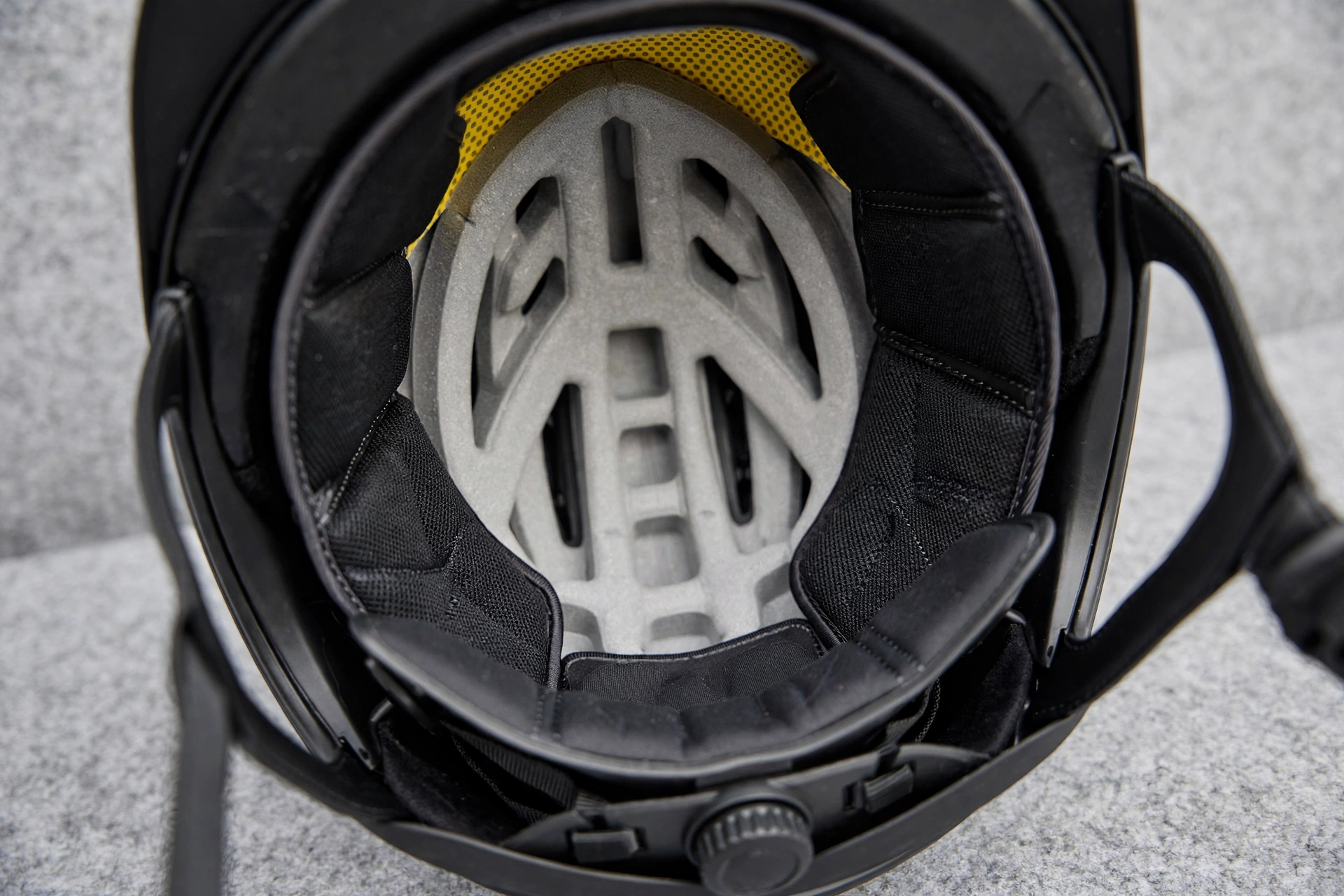
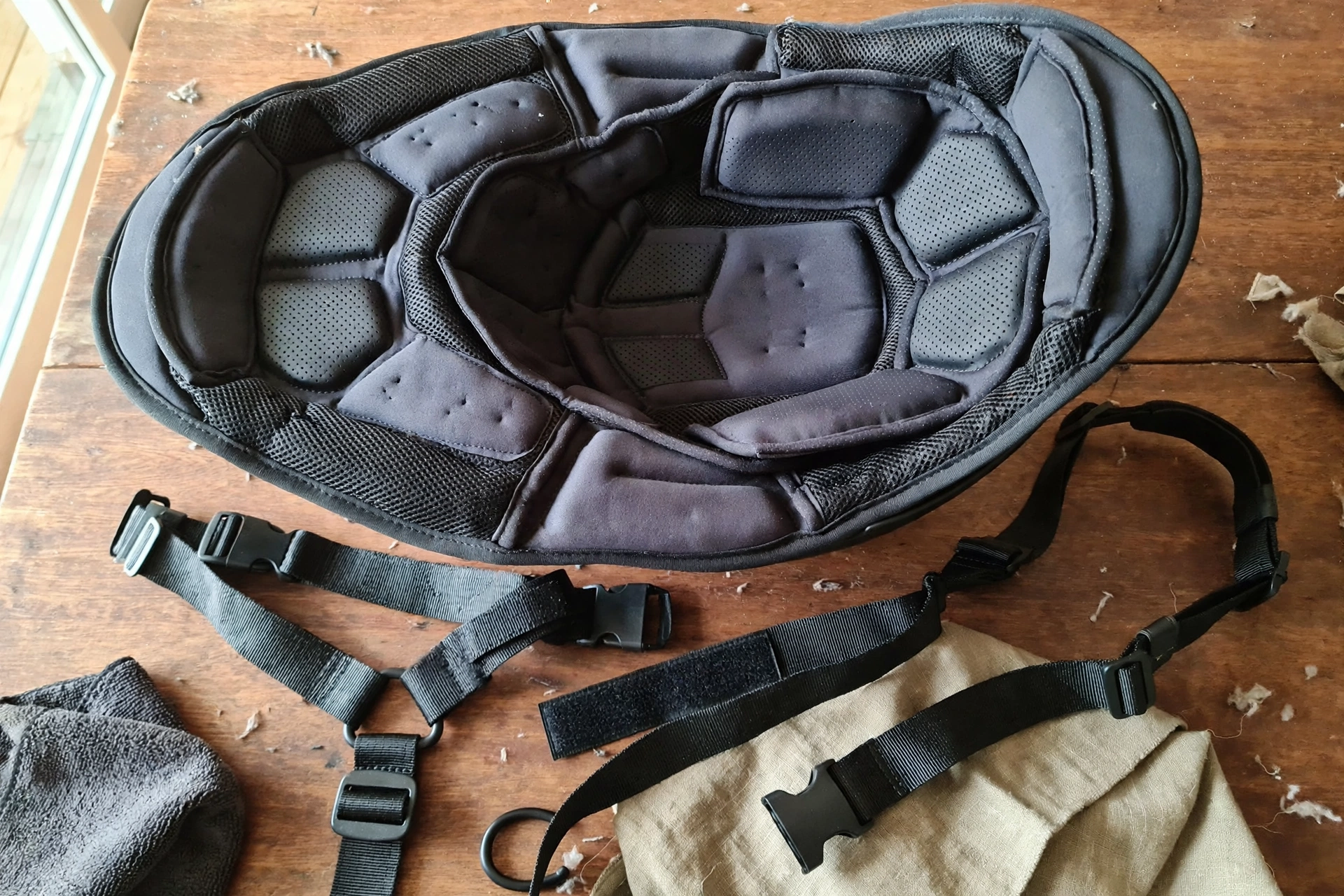
MIPS — Multi-directional Impact Protection System — is a thin, low-friction liner fitted inside the helmet, between the impact foam and your head. It is designed to move slightly, in general terms by a matter of millimetres, when the helmet takes an angled blow. That small amount of slip lets the helmet rotate a little around the head instead of dragging the head with it.
Why does that matter? Falls from a horse are rarely straight-down impacts. A rider usually hits the ground at an angle, often still moving forward, and that combination twists the head as it strikes. Standard expanded-foam liners are excellent at absorbing straight-line force by crushing; they are less specialised for that twisting, rotational component. MIPS exists specifically to address the rotational part of the impact.
You will usually spot a MIPS liner as a smooth inner layer, often in a contrasting colour, that can be felt to shift slightly when you press and rotate it inside the shell. Not every “rotational protection” system is MIPS — some brands use their own liner or cell technologies aimed at the same problem — but MIPS is the most widely licensed version across riding helmets.
How Is a Riding Helmet With MIPS Tested?
Start with what does not change: a MIPS riding helmet must still be a certified helmet. It has to meet the same standard as any other riding helmet — ASTM F1163 with SEI certification in North America, or one of the European standards such as PAS 015 or VG1 — and it carries the same label inside. MIPS is an added feature inside a helmet that already passed the baseline tests, not an alternative certification of its own.
The rotational benefit itself is demonstrated in laboratory testing by the system’s developers and licensees: helmets fitted with the liner are struck at angles on rigs that measure how much rotational motion is transferred. In general terms, the consistent finding across that testing is a reduction in rotational acceleration compared with the same helmet without the liner — which is the honest claim: reduced, not eliminated.
If you want the fuller picture of how the system works and where it came from, this explanation of what MIPS is for helmets goes deeper into the science and the test methods behind it.
What Does MIPS Not Do?
It does not make a helmet indestructible, and it does not prevent concussion. No helmet can promise that. MIPS addresses one component of one kind of impact; the foam still does the main work of absorbing energy, and plenty of injury mechanisms have nothing to do with rotation. Treat any product — with or without MIPS — that implies it makes head injury impossible as marketing, not fact.
It also does not fix a bad fit. The liner can only do its job if the helmet stays in position on your head during the fall, which means the usual rules apply in full: correct size, level position, snug all around, harness properly fastened. A MIPS helmet worn tilted back with a loose strap has given away much of what you paid for.
And it does not extend a helmet’s life. A MIPS helmet is replaced after a fall or significant impact exactly like any other, and it ages on the same rough schedule — in general terms, around five years of use — because the foam and materials around the liner age the same way.
How Much Extra Does MIPS Cost on a Riding Helmet?
In general terms, MIPS typically adds a modest premium over the same brand’s equivalent non-MIPS model rather than doubling the price — think of it as a step up within a range, not a jump into a different category. Prices vary widely between brands and models, and sales blur the comparison further, so the useful question is the difference between the two versions of the helmet you are actually choosing between.
Weighed against the cost of riding itself — board, lessons, tack, entry fees — the premium is usually one of the smaller safety-related expenses a rider faces, and unlike many upgrades it is aimed at the injury type riders most worry about. That said, a rider on a tight budget should never stretch to MIPS by buying a cheaper, worse-fitting helmet: spend first on certification and fit, and treat MIPS as the next dollar, not the first.
Also factor in replacement. If you fall and the helmet must be replaced, the premium is paid again. Riders who fall often — those backing young horses, for example — may reasonably weigh that recurring cost differently from a once-a-week school rider.
So, Is MIPS Worth It for You?
For most riders, the answer is a qualified yes. The reasoning is straightforward: rotational forces are involved in many real falls from horses, the liner is designed and lab-tested to reduce them, the premium is usually modest, and there is no protective downside to having it — provided the helmet is certified and fits. It is extra protection bought cheaply, in a sport where falls are a matter of when, not if.
The qualifications matter as much as the yes. If the MIPS model in your size does not fit your head shape and the non-MIPS one does, buy the one that fits. If choosing MIPS means settling for an uncertified or bargain-bin helmet, do not. And whatever you buy, the harness goes on fastened, every ride — the best liner in the world cannot help a helmet that is sitting in the tack room.
Try both versions on, check the label, check the fit, and then decide. For a helmet you will wear thousands of times, the modest extra for a well-fitting MIPS model is, for most riders, money sensibly spent.
Frequently Asked Questions
Q: Does a MIPS riding helmet still need to be certified?
A: Yes — MIPS is a feature, not a certification. A MIPS riding helmet should carry the same labels as any other: ASTM/SEI in North America or an accepted European standard. If a helmet has MIPS but no certification label naming a standard, do not buy it for riding.
Q: Can MIPS prevent a concussion?
A: No helmet can guarantee that. MIPS is designed to reduce rotational forces in an angled impact, and rotational motion is one contributor to brain injury — reducing it is worthwhile, but it lowers risk rather than removing it. Fit, certification, and replacing the helmet after a fall remain just as important.
Q: How can I tell if a riding helmet has MIPS?
A: Look for the MIPS branding — usually a small logo on the shell or box — and check inside: the low-friction liner is a smooth inner layer that shifts slightly when you press and turn it against the foam. If in doubt, check the manufacturer’s listing for that exact model.

Olivia
Writer at Helmet Today, covering helmet reviews, fit and riding safety.