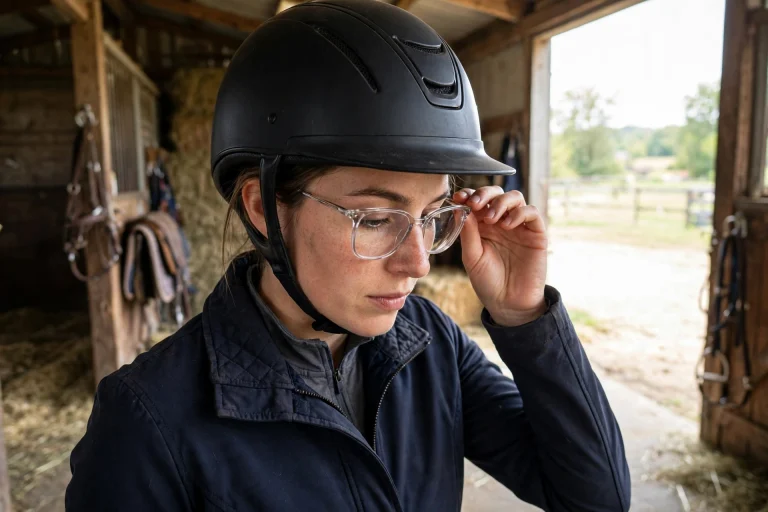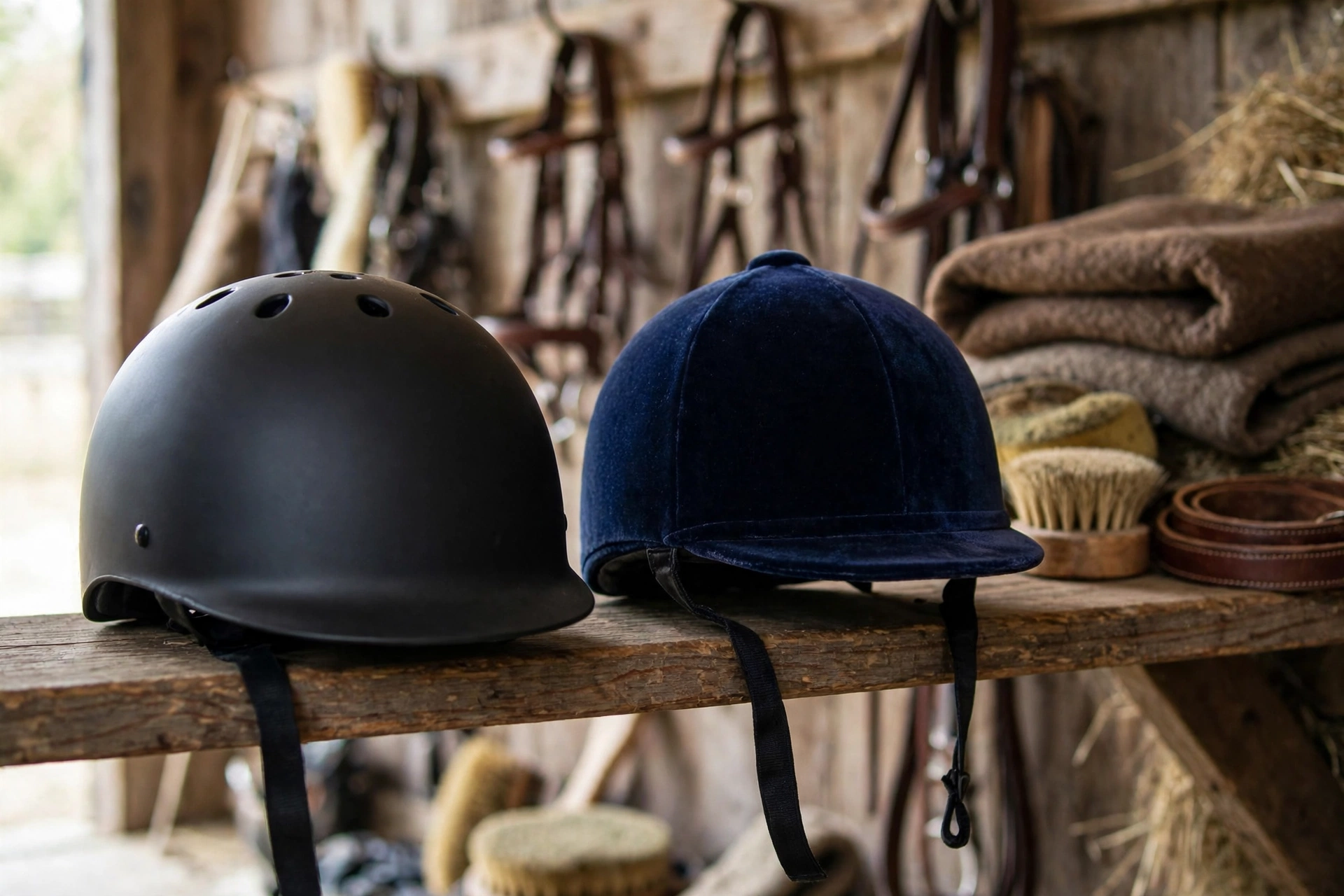
In general terms, the difference between schooling and show helmets is appearance and finish, not safety: both should meet the same recognised certification, fit the same way, and be worn with the harness fastened, while a show helmet simply has a smarter, more traditional finish suited to the ring and a schooling helmet is a plainer, hard-wearing everyday version. Many riders school in one helmet and keep a second, cleaner one for competing.
This guide explains what really differs, what must never differ, and how to decide whether you need one helmet or two.
What Is a Schooling Helmet and What Is a Show Helmet?
A schooling helmet is the everyday workhorse. It is usually finished in a matte, textured, or easy-clean shell that shrugs off dust, rain, daily handling, and being set down in the tack room. Ventilation is often generous, colours are practical, and the styling is simple because nobody is judging it.
A show helmet is the same kind of protective helmet dressed for the ring. In general terms it tends to have a smoother, more traditional finish, sometimes velvet or a refined matte surface, a tidier profile, and detailing that matches the expectations of disciplines such as dressage, hunter classes, or showing, where turnout is part of the picture.
The names are about use, not about separate safety categories. A helmet does not become safer because it is sold for showing, or less safe because it is sold for schooling. What matters underneath the finish is certification, condition, age, and fit, and those rules apply identically to both.
Do Schooling and Show Helmets Meet the Same Safety Standards?
Yes, in general terms they should. Both should carry certification to a recognised equestrian standard accepted in your country and by your discipline, such as ASTM/SEI or PAS 015, named here in general terms only. A helmet that is not certified is not suitable for either job, however smart or however cheap it is.
That also means an older show helmet is not automatically a good one. A beautiful velvet helmet that is old, damaged, or certified to an outdated expectation should not be kept for best while a newer certified helmet does the daily work. If anything, the logic runs the other way: the helmet you compete in should be beyond reproach at a rules check.
Inside, both types may offer similar protective features, including liners designed to help with rotational force in a fall, as explained in this overview of what MIPS is for helmets. Such features are found at several price and finish levels, so choose on fit and certification first, and treat finish as the final deciding factor, not the first.

What Are the Practical Differences That Actually Matter?
Finish and care come first. A schooling shell wipes clean and hides scuffs; a velvet or delicate show finish marks easily, hates rain and dust, and needs careful storage, often in a bag or box. Using your show helmet daily usually means it stops looking like a show helmet long before it wears out as protection.
Comfort features often differ too. Schooling models aimed at daily use may prioritise vents, removable washable liners, and dial adjustment for different hairstyles or liners across seasons. Show models may prioritise a low, neat profile and a traditional look, sometimes with fewer visible vents. Neither is better in the abstract; they are answers to different days.
- Schooling: durable matte finish, strong ventilation, easy-clean liner, lower replacement worry.
- Show: smarter traditional finish, tidy profile, careful storage, kept clean for the ring.
- Both: same certification need, same fit rules, same replacement after a fall.
Price usually follows finish and brand rather than protection. In general terms, you pay more for refined materials, styling, and detailing, not for a higher safety pass. A modestly priced certified schooling helmet that fits perfectly protects better than an expensive show helmet that rocks on your head.
Can You School in a Show Helmet or Show in a Schooling Helmet?
You can school in a show helmet, and many riders with one helmet do exactly that. The only cost is wear: dust, sweat, rain, and daily knocks will age the finish, and you will need to clean and smarten it before an event. If it is your only helmet, a cover used at home, where rules and the maker allow, can protect the finish during daily work.
Showing in a schooling helmet depends on your discipline and level. In general terms, a clean, correctly certified, well-fitting schooling helmet is acceptable at many local and lower-level events, especially where rules focus on safety rather than turnout tradition. At higher levels, or in classes where presentation is judged closely, a plainer or brighter schooling finish may look out of place even if it is perfectly legal.
Check the rule book and the culture of your class before the day. The safety question is settled by certification and fit; the showing question is about expectations for appearance. Confusing the two leads riders to buy an uncertified traditional hat for looks, which is the one choice that is never acceptable.
Do You Need Two Helmets, and How Should You Care for Each?
Two helmets make sense if you compete regularly. Your schooling helmet takes the daily sweat, dust, and knocks, while your show helmet stays clean, checked, and ready, which also gives you a backup if one is damaged the week of a show. Riders who compete rarely, or only locally, often manage well with one good certified helmet kept clean and inspected.
Care for both the same way at heart. Store them dry, indoors, and out of harsh heat or cold, let liners air after riding, clean only as the maker directs, and inspect shells and harnesses regularly. Keep the show helmet in a protective bag so its finish survives, and do not let either helmet become the yard’s spare that everyone borrows, because a helmet’s history matters and borrowing scrambles it.
Replace either helmet after a fall or impact, and in general terms follow the maker’s guidance on age and replacement even without a fall. When the show helmet is retired, do not demote an old, tired helmet into schooling use to save money if its age or condition is the reason it left the ring. Retired means retired, for every job.
Frequently Asked Questions
Q: Is a show helmet safer than a schooling helmet?
A: No, in general terms. Safety comes from certification, fit, condition, and age, not from whether a helmet is marketed for schooling or showing. A certified, well-fitting schooling helmet and a certified, well-fitting show helmet meet the same basic safety expectation.
Q: Can I wear my schooling helmet at a show?
A: Often yes, especially at local and lower-level events, provided it is certified, clean, and correctly fitted and your discipline’s rules allow its style. Check the event rules for turnout expectations, which vary by discipline and level.
Q: Should I keep my old show helmet as a spare?
A: Only if it is still within the maker’s recommended life, undamaged, and truly fits. A helmet retired because it is old, has taken a fall, or no longer fits is not a safe spare for anyone, including guests.

Olivia
Writer at Helmet Today, covering helmet reviews, fit and riding safety.