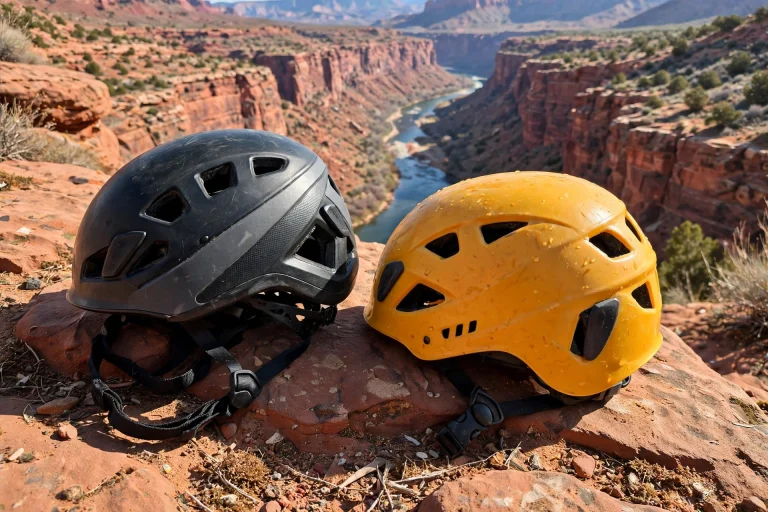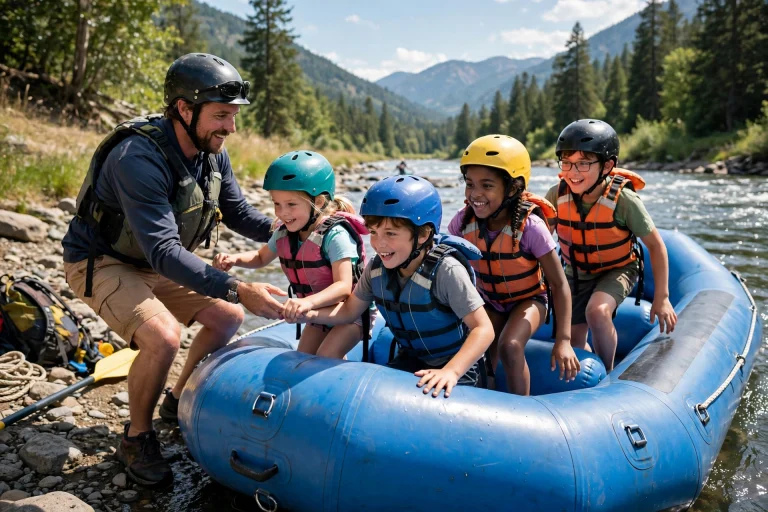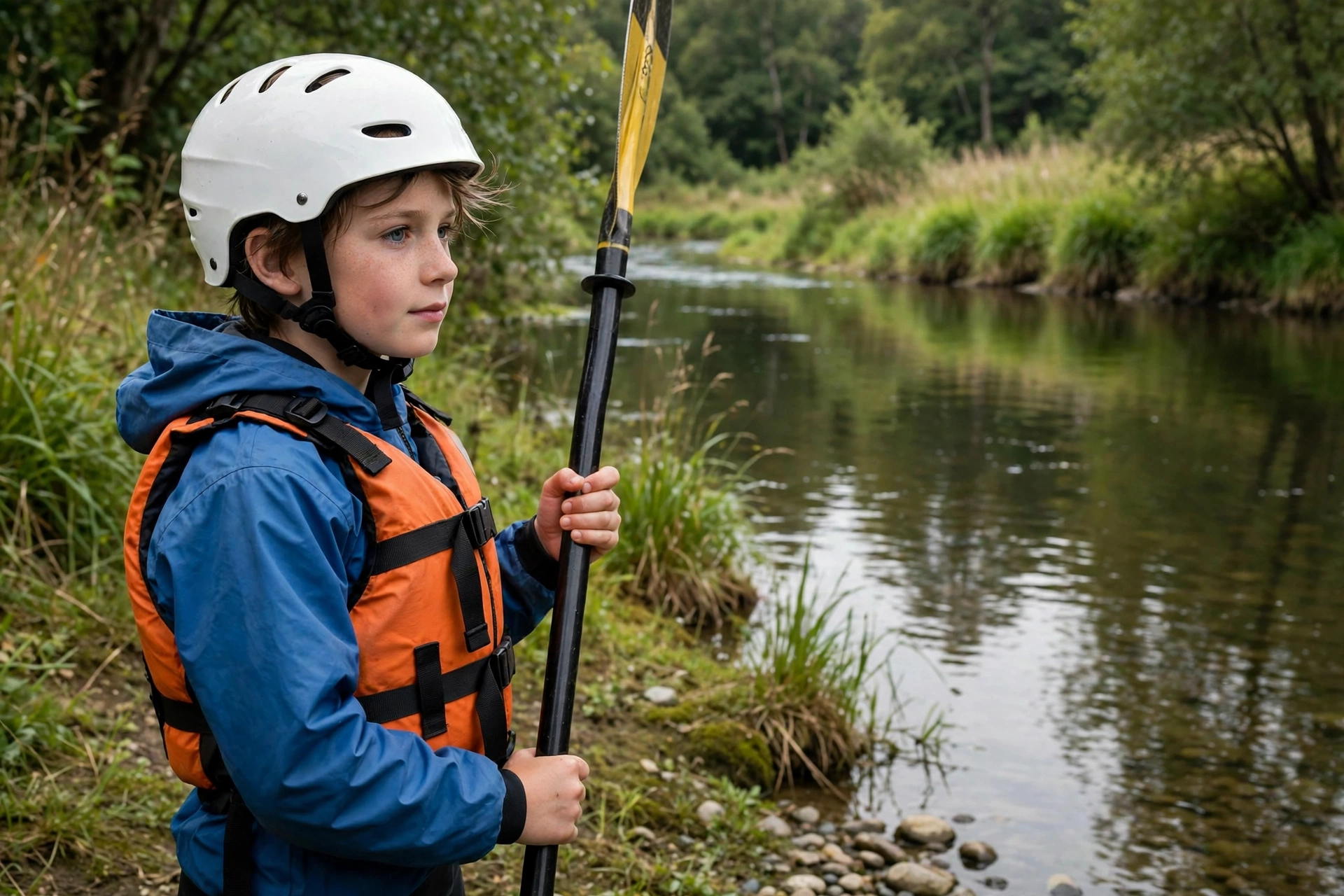
For kids whitewater helmets, measure your child’s head just above the eyebrows, choose a helmet made for children for paddling in that size, and check it sits low, level, and snug with the strap fastened and no rocking in any direction. Never size up for growing room, and never use a loose adult helmet on a child.
This parent-focused guide covers sizing, fit checks, and the mistakes that most often undo good intentions.
Why Do Kids Need a Whitewater Helmet Made for Children?
Children are not small adults in the water. Their heads are proportionally larger, their necks are weaker, and they are less able to manage a helmet that shifts during a swim or to tell you clearly that it hurts, wobbles, or blocks their view. A kids whitewater helmet is sized, shaped, and weighted with that reality in mind.
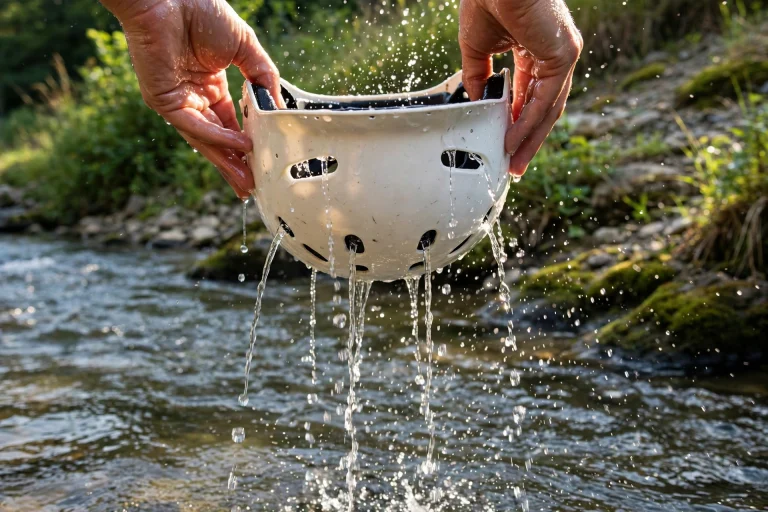
A helmet made for paddling also handles the river itself: it stays on in current, drains water, and covers the forehead, sides, and back of the head where rock contact happens. A bike helmet, a ski helmet, or a hand-me-down adult paddling helmet fails on fit even when it looks close enough on the bank.
There is a behaviour point too. Children copy what they see and resist what feels wrong. A light, comfortable, well-fitted helmet in a colour they like is far more likely to stay on happily for a whole trip than an oversized helmet that slides into their eyes every few minutes.
How Do You Measure a Child’s Head for a Whitewater Helmet?
Use a soft tape, or a cord marked and laid against a ruler, and make it a calm game rather than a struggle. Measure around the widest part of the head, just above the eyebrows and ears, keeping the tape level and snug but not tight. Repeat it two or three times, because children wriggle, and use the consistent reading.
- Measure with hair as it will be worn on the water, including any cap underneath
- Compare the number with the child-specific size chart for that exact model
- If your child is between sizes, follow the maker’s guidance and use the model’s padding system rather than jumping a size up
Write the measurement down with the date. Children’s heads grow, sometimes quickly, so a size that was right at the start of one season cannot be assumed right for the next. Re-measure before each season and whenever a helmet starts to sit higher, feel tighter, or leave a pressure mark.
In general terms, youth size ranges differ a lot between brands, so the label small, medium, or youth on its own tells you very little. The tape number and the fit check together are what count.
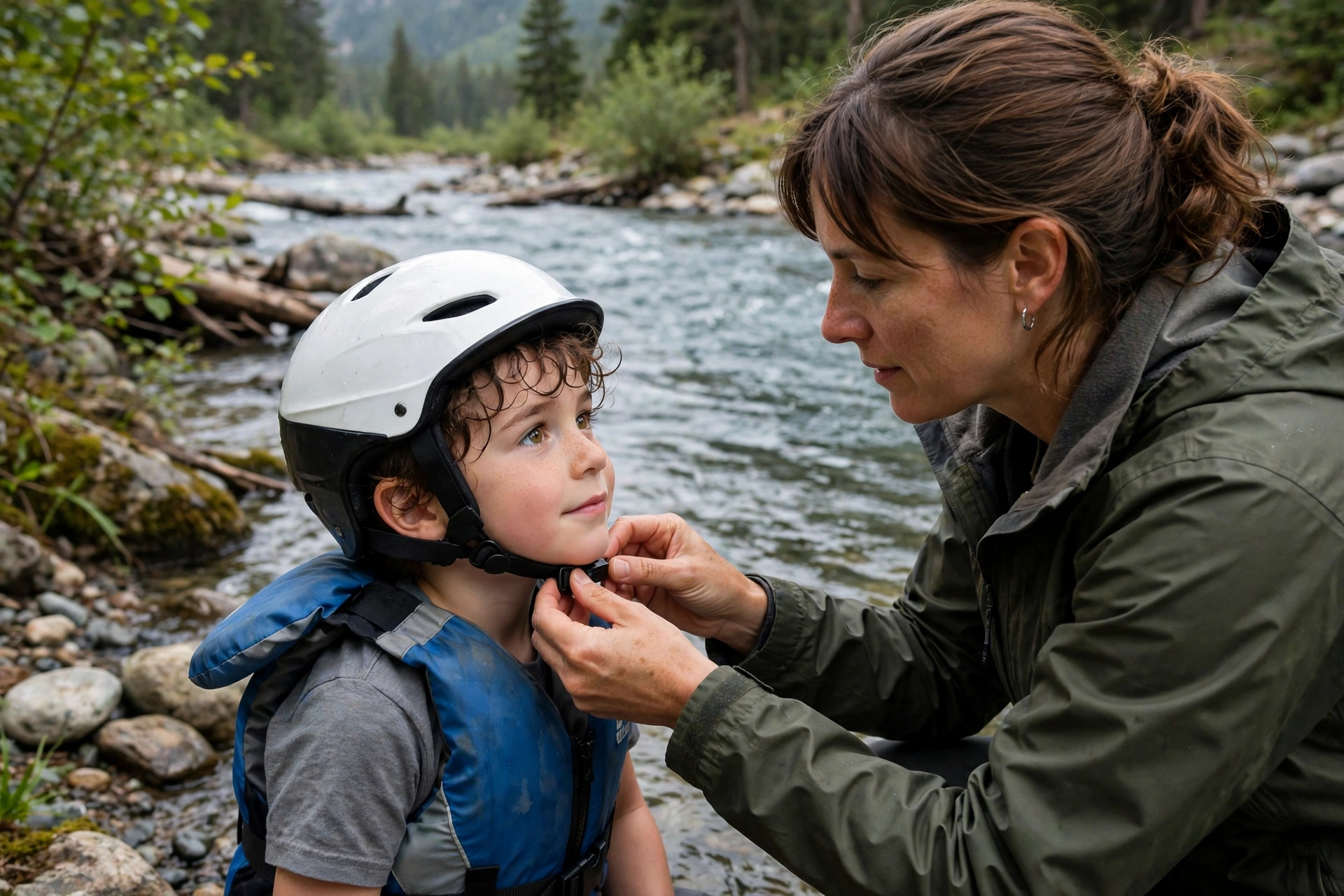
How Should a Kids Whitewater Helmet Fit and Feel?
Fitted well, the helmet sits low and level, covering the forehead, with even pressure all round and no gap you can slide fingers into easily at the sides. Ask your child to shake their head, nod, and look side to side as if watching for your signal. The helmet should move with the head, not lag behind it or tip over the eyes.
Fasten the chin strap and do the parent checks a child cannot do reliably alone. The strap should be snug and centred, the buckle should sit comfortably, and you should not be able to roll the helmet forward or backward off the head with a firm push. Check ears are not folded or crushed, and that your child can hear you clearly.
- Ask directly: does it pinch, hurt, or feel wobbly anywhere?
- Watch, do not just listen: repeated pushing up or tilting means the fit is wrong
- Recheck wet: fit can change once straps and pads are soaked, so check again after the first swim or splash session
Comfort is a safety feature for children. A helmet that passes every push test but makes a child miserable will be loosened, unbuckled, or argued off at the worst moment.
What Mistakes Do Parents Make With Kids Helmet Sizing?
The most common mistake is buying growing room. In helmets, extra room is not thrift; it is movement, and movement means lost coverage and a helmet that can shift or come off in current. Buy the size that fits now, use adjustable pads as the child grows within that size range, and replace it when the fit is outgrown.
The second mistake is handing down without checking. A sibling’s old helmet may be the wrong size, may have taken a hard hit you did not see, or may have aged straps and foam. Hand-me-downs need the same inspection and fit check as a new helmet, and any doubt about a past impact means it should not be used.
The third mistake is trusting the bankside check only. Fit changes with a hood in cold water, with wet hair, and after twenty minutes of paddling. Build a quick recheck into every trip: strap, position, and a head shake before the first rapid and after any swim.
How Does Impact and Rotational Protection Work for Smaller Heads?
A child’s helmet works the same basic way as an adult one: the shell spreads the force of a knock and the liner absorbs part of it, protecting the point of contact with a rock, a dock, or another boat. Coverage matters because children fall and tumble unpredictably, and in moving water the head can strike at almost any angle.
Angled strikes create rotational force, a twisting effect that modern helmet design tries to reduce, as parents can read in this explanation of what MIPS is for helmets. For a child, the foundation comes first: a rotational feature cannot help if the helmet is oversized and already sliding around before any designed system can work.
In general terms, prioritise in this order: a helmet made for children’s paddling, the correct measured size, a secure strap your child will keep fastened, and honest replacement after a hard hit or when outgrown. Features add to that foundation; they never replace it.
Frequently Asked Questions
Q: Can my child wear an adult whitewater helmet in a small size?
A: Only if that exact model is made and sized for smaller heads and it passes a full fit check on your child with no rocking or gaps. In general terms, a helmet designed for children is the safer starting point, because shape, weight, and strap geometry differ, not just the size label.
Q: How often should I replace a kids whitewater helmet?
A: Replace it when your child outgrows the fit, after a hard impact, or when straps, pads, shell, or liner show damage or wear, following the maker’s guidance. Re-measure each season, because growth alone can retire a helmet that still looks fine.
Q: Should kids wear a helmet for gentle paddling and raft trips too?
A: In general terms, yes for raft trips and any moving or rocky water, and organised trips normally require one for children and adults alike. On any water, if a helmet is worn, it should be a properly fitted paddling helmet, fastened for the whole trip.

Olivia
Writer at Helmet Today, covering helmet reviews, fit and riding safety.