To clean and dry a kayak helmet, rinse it inside and out with clean fresh water after every trip, wash it occasionally with mild soap if it smells or carries grit, then drain it upside down and air-dry it completely out of direct sun before storing it. That simple routine is how to clean a kayak helmet without shortening its life.
Water helmets live a wet, salty, sandy life. Their care is mostly about rinsing, draining, and drying well.
Why Does a Kayak Helmet Need Rinsing After Every Trip?
Salt, sand, and river grit do not stop working when you leave the water. Salt crystals form in straps and padding as a helmet dries, stiffening webbing and irritating skin. Sand works into buckles, adjustment dials, and pad edges, grinding at moving parts and making straps harder to tighten smoothly and safely.
Fresh water is not innocent either. Lake and river water leaves silt in the liner, feeds the damp smell that builds in foam pads, and can leave a helmet quietly growing mildew in a car boot or gear bag. A quick rinse while the helmet is still wet from the trip takes a minute and prevents most of that slow damage.
Rinsing is also inspection. Running your hands over the shell, straps, and liner as you rinse is how you notice a crack, a fraying strap, a loose pad, or grit jammed in a buckle early, rather than discovering it at the next put-in when there is no spare helmet.
How Do You Wash a Kayak Helmet Step by Step?
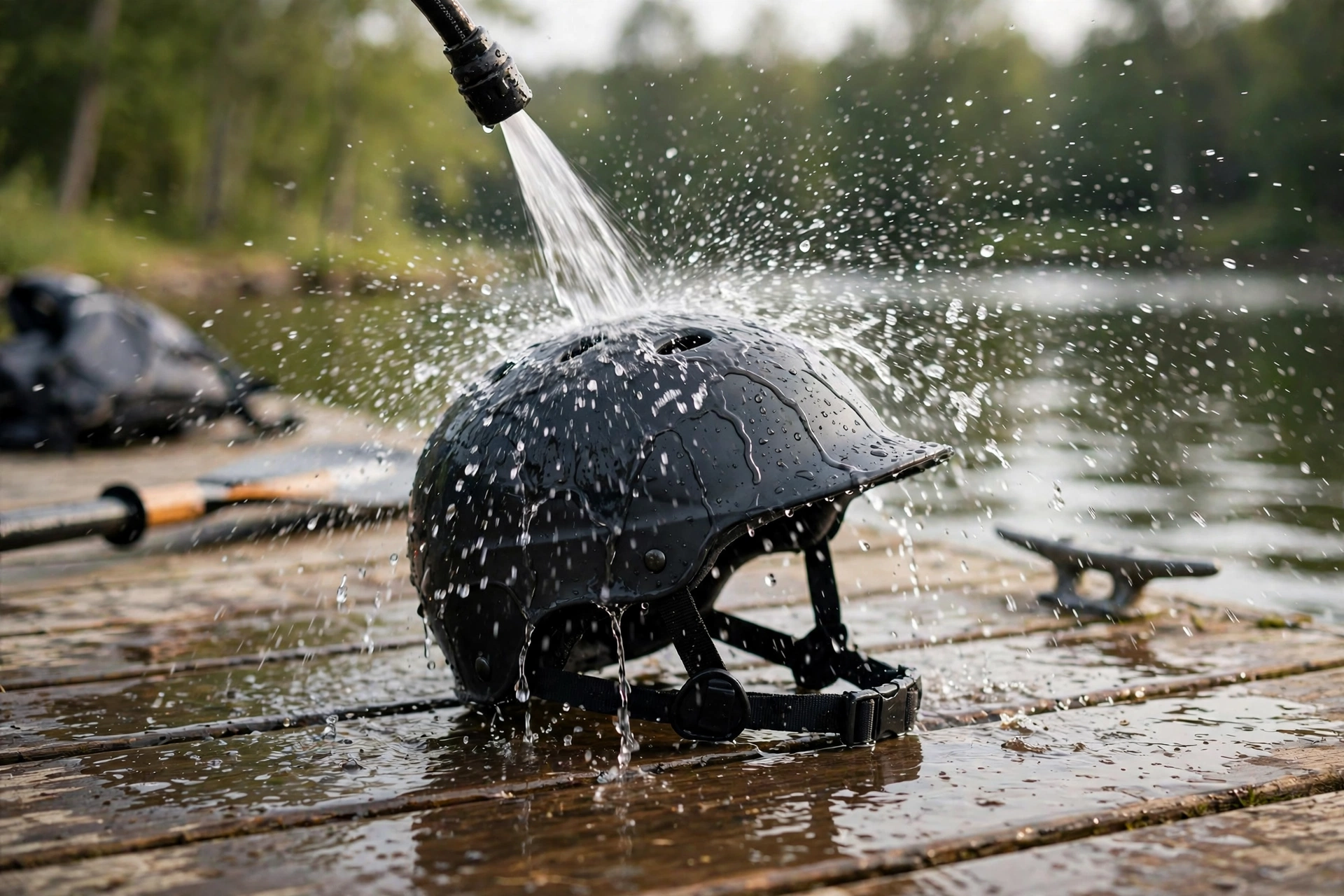
For a normal trip, fresh water alone is enough. Hold the helmet under a tap, hose, or shower, or dunk it in a bucket of clean water, and rinse the shell, liner, pads, and straps until the water runs clear and no sand falls out when you shake it. Pay attention to the strap under the chin and around the buckle, where salt and sweat concentrate.
- Rinse everything first to remove loose sand before rubbing anything, so grit does not scratch the shell
- If it smells or is visibly dirty, wash gently by hand with mild soap and lukewarm water, using a soft cloth
- Remove pads only if the maker designed them to come out, and wash and rinse them separately
- Rinse again thoroughly, because soap left in pads holds moisture and irritates skin
Avoid harsh detergents, solvents, bleach, and stiff brushes. In general terms, strong chemicals and heat can damage foam, adhesives, and strap webbing, and a helmet’s protective materials are exactly the parts you cannot judge by eye once they are weakened. If the maker gives specific washing instructions for your model, those come first.
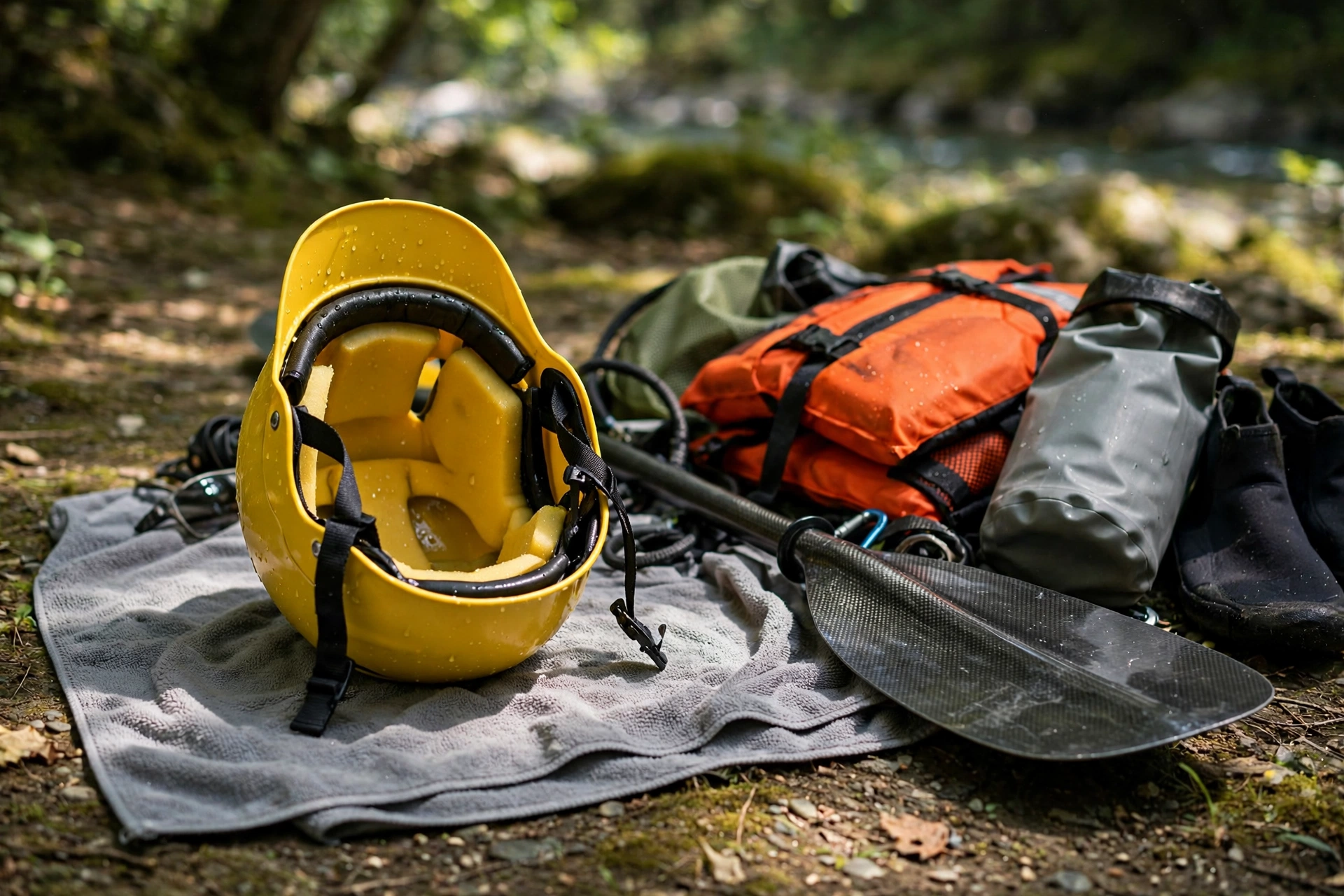
How Do You Dry a Kayak Helmet Without Damaging It?
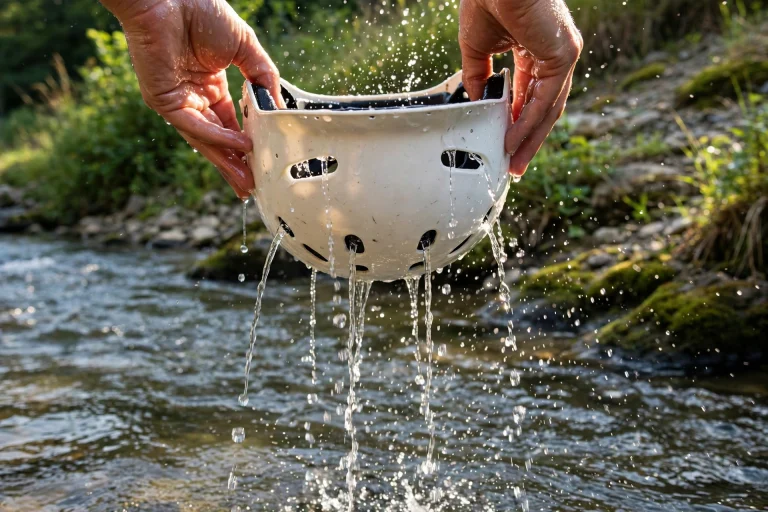
Drain first. Turn the helmet upside down, shake out the loose water, and let it sit crown-down for a while so water escapes from the liner and ear areas instead of pooling in them. Press pads gently with a clean towel to lift out more moisture; do not wring straps or twist pads, which stresses stitching and foam.
Then air-dry it in shade with moving air: a breezy porch, a fan indoors, or a ventilated gear room all work well. Keep it out of direct sun while it dries. Sunlight and heat age shells, fade and stiffen straps, and in general terms can harm the foam liner over time, so the sunny dashboard, radiator, and tumble dryer are all the wrong places for a helmet.
Allow real time. A helmet can feel dry on the shell while its pads and strap are still damp inside, and packing it away in that state invites mildew. It is ready to store only when pads, liner, and webbing all feel dry to the touch, which can take overnight or longer in humid weather.
How Do You Prevent Mildew, Smell and Strap Damage?
Mildew prevention is mostly a drying and storage habit. Never seal a damp helmet in a closed bag, box, or car boot. Store it in open, moving air once fully dry, away from sun and heat, ideally where it is not crushed under heavier gear. If a helmet already smells, a thorough mild-soap wash followed by complete drying usually helps more than sprays that mask the smell while the pads stay damp.
Straps deserve their own care because they hold the helmet on. Rinse them every trip, especially after salt water, work the buckle open and closed while rinsing to clear grit, and let webbing dry fully so it does not stay stiff or musty. Check buckles and adjustment points for cracks and smooth action as part of the same routine.
- After salt water: rinse longer, and flex straps and buckles under the water to flush crystals out
- After sandy launches: shake, rinse, and re-rinse ear pads and vents where grit hides
- Between trips: store dry, loose, and uncrushed, never damp in a sealed bag
If smell or visible mildew keeps returning in the same pads, and the maker offers replacement pads for your model, replacing them is cleaner and safer than repeated harsh cleaning.
When Does Cleaning Reveal Damage You Should Not Ignore?
Cleaning time is when damage shows itself. Look for cracks or deep dents in the shell, foam that feels compressed, crumbly, or detached, pads that no longer sit in place, frayed or stiff straps, and buckles that slip or fail to click positively. Any of those findings means the helmet should be taken out of use and assessed against the maker’s guidance, not washed and hoped for the best.
Think about protection as you inspect. A liner that has already absorbed a hard, angled hit may have done the job it was designed for, including managing part of the twisting force discussed in this guide to what MIPS is for helmets. Damage to a rotational system, liner, or shell is not a cosmetic issue, because the next impact will not check whether the helmet looks clean.
In general terms, when in doubt, retire it. A kayak helmet is comparatively simple safety equipment, its condition is your responsibility between trips, and careful rinsing and drying are what let you spot the moment it stops being trustworthy.
Frequently Asked Questions
Q: Can I put a kayak helmet in a washing machine or dishwasher?
A: In general terms, no. Heat, strong detergents, and tumbling can damage foam, adhesives, pads, and straps, and the damage may not be visible afterwards. Hand washing with fresh water and, when needed, mild soap is the safe method unless the maker states otherwise for your exact model.
Q: How do I stop a kayak helmet smelling after sea kayaking?
A: Rinse it thoroughly in fresh water the same day to remove salt and organic matter, wash the pads and straps gently with mild soap if the smell persists, then dry it completely in shaded, moving air. Most kayak helmet smell is trapped moisture and residue, so full drying matters as much as washing.
Q: Can I dry a kayak helmet quickly in the sun before the next trip?
A: It is better not to make a habit of it. Direct sun and heat age the shell, straps, and foam over time. Drain it upside down, towel the pads, and use shade with a breeze or a fan instead; if time is short, start drying earlier rather than drying hotter.

Olivia
Writer at Helmet Today, covering helmet reviews, fit and riding safety.